Last year I reviewed fabric samples from three suppliers for a 200-room property in the Gulf region. All three marketed their sheets as "bamboo." All three were viscose rayon. Two of the suppliers couldn’t tell me the difference when I asked.
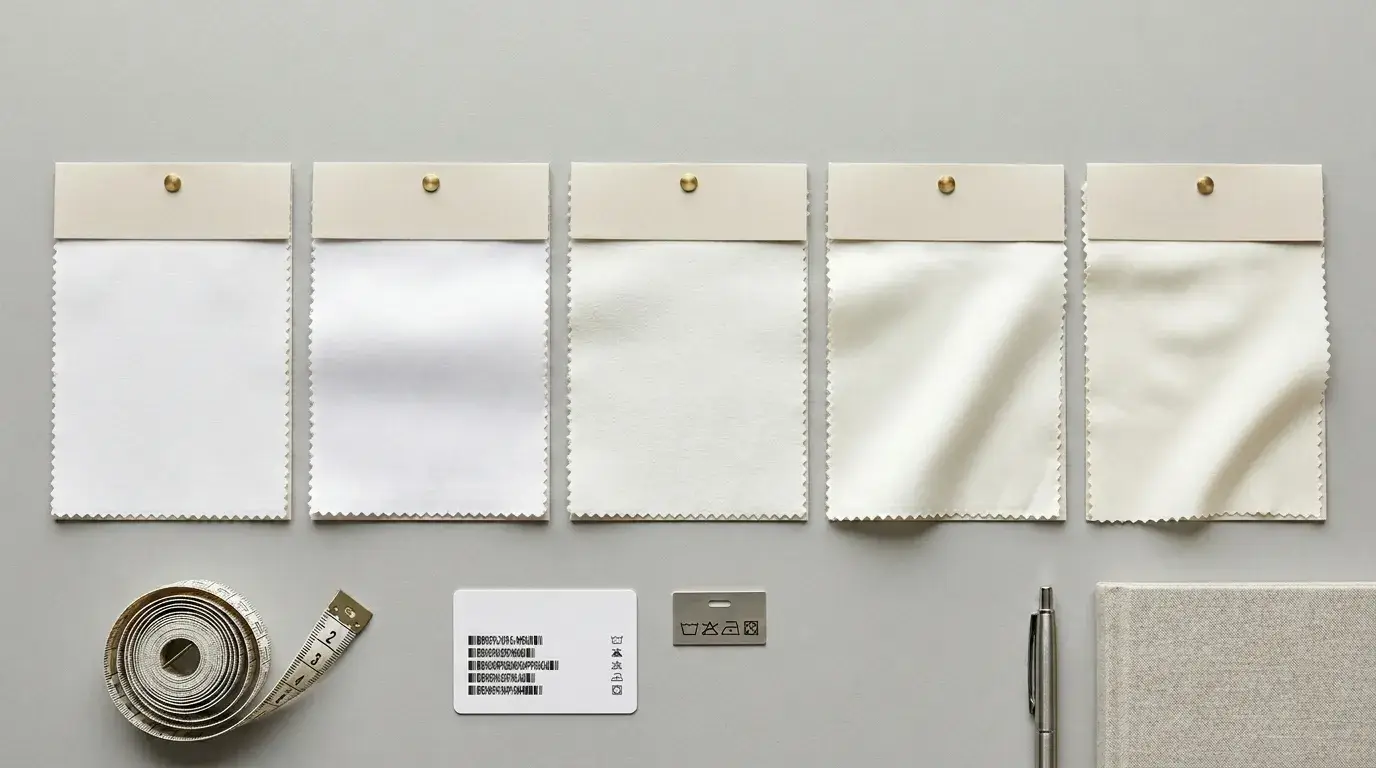
That experience captures the state of the hotel linen market right now. New fabric options are entering procurement conversations, but the information around them is unreliable. Tencel and bamboo get pitched as softer, cooler, and more sustainable than cotton. Sometimes that’s true. Sometimes it’s marketing that falls apart the moment you run the sheets through a commercial laundry.
This guide compares cotton, polyester, Tencel, and bamboo for hotel bed linens, specifically through the lens of commercial hotel operations. I’ll cover guest comfort, laundering durability, lifecycle costs, sustainability realities, and what to watch for when evaluating suppliers.
What Makes Each Fabric Different at the Fiber Level?
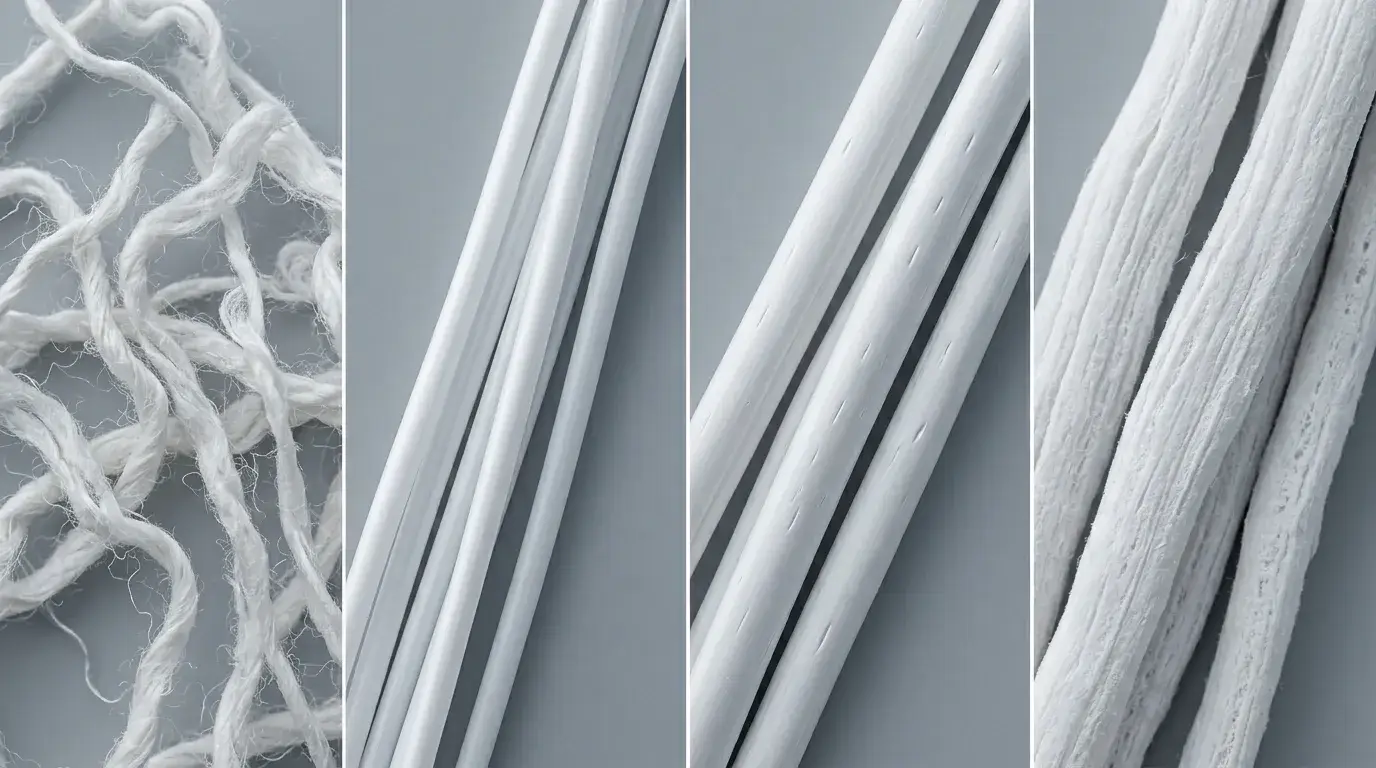
Before comparing performance, it helps to understand what each fabric actually is. Some of these materials are not what their marketing suggests.
Cotton
Cotton is a natural fiber from the cotton plant. It’s been the hotel industry standard for decades. It’s soft, breathable, and absorbs moisture well.
But "cotton" covers a wide quality range. That range depends on staple length, which is the length of the individual fibers:
- Short-staple (Upland cotton): The most common type. Used in budget to mid-range hotel linens. Affordable but less durable.
- Long-staple (Pima, Supima): Stronger, smoother fibers. Better durability and a softer feel. Common in luxury retail sheets but expensive for volume hotel purchasing.
- Extra-long-staple (Egyptian cotton): The premium tier. Exceptionally smooth and durable. Used primarily in 5-star properties.
Most commercial hotel linens use Upland medium-staple cotton or cotton-polyester blends. Long-staple and Egyptian cotton are reserved for properties where brand positioning justifies the higher cost.
Polyester
Polyester is a synthetic fiber made from petroleum-based polyethylene terephthalate (PET). It’s extremely strong, wrinkle-resistant, and dimensionally stable.
The key thing to understand: polyester fibers don’t absorb water. They’re hydrophobic. That makes polyester quick-drying and easy to launder, but also less breathable and less comfortable against skin.
In hospitality, you’ll rarely see 100% polyester sheets on a guest bed above the economy tier. Polyester’s main role in hotel linens is as a blending fiber with cotton to boost durability.
Tencel (Lyocell)
Tencel is a brand name owned by Lenzing AG, an Austrian company. It refers to lyocell fiber made from wood pulp, usually eucalyptus, beech, or spruce trees.
The production process dissolves wood cellulose in a non-toxic organic solvent using a closed-loop system that recovers over 99% of the solvent1 for reuse. The result is a smooth, strong, biodegradable fiber with good moisture-wicking properties.
Tencel has a verified environmental edge over conventional cotton and standard viscose rayon. It uses less water, less energy, and generates fewer emissions in production.
Bamboo (Viscose/Rayon)
I need to be direct here, because the marketing around bamboo fabric is misleading at an industry level.
Almost all commercial "bamboo" textiles are actually rayon (viscose) made from bamboo. The raw bamboo is chemically dissolved using sodium hydroxide and carbon disulfide, both hazardous chemicals, then regenerated into fiber. This process strips away the natural properties of the bamboo plant.
The U.S. Federal Trade Commission (FTC) has fined major retailers millions for mislabeling rayon products as "bamboo."2 Kohl’s paid $2.5 million and Walmart paid $3 million. The FTC’s position is clear: once bamboo undergoes chemical processing, the resulting fiber is rayon. It must be labeled "rayon made from bamboo."
The FTC has also stated there is no scientific evidence that rayon made from bamboo retains antimicrobial or biodegradable properties from the original plant.
A cleaner alternative called bamboo lyocell does exist. It uses a closed-loop process similar to Tencel. But according to Textile Exchange’s 2024 data3, over 85% of global bamboo textiles are still viscose, not lyocell.
For procurement teams: When a supplier says "bamboo sheets," ask specifically — is this bamboo viscose or bamboo lyocell? The answer changes everything about the product’s sustainability credentials and care requirements.
How Does Each Fabric Feel to Hotel Guests?
Guest comfort drives reviews, repeat bookings, and brand perception. This table summarizes how each fabric performs on the bed:
| Fabric | Hand Feel | Temperature | Moisture Management | Visual Presentation |
|---|---|---|---|---|
| Cotton (Percale) | Crisp, cool, matte | Breathable; moderate cooling | Good absorption | Clean, sharp look |
| Cotton (Sateen) | Smooth, silky, slight sheen | Warmer than percale | Good absorption | Luxurious drape; can pill over time |
| Polyester | Smooth but can feel synthetic | Traps heat; not breathable | Poor; repels moisture | Wrinkle-free; looks crisp |
| Tencel | Silky, cool to the touch | Excellent cooling | Excellent moisture wicking | Slight sheen; smooth drape |
| Bamboo Viscose | Very soft, draping | Good cooling | Good moisture wicking | Prone to wrinkling; less crisp appearance |
In general, guests consistently rate pure cotton higher for softness than polycotton blends, though the gap narrows with quality blends above 300TC. Cotton is still what most guests associate with "hotel quality."
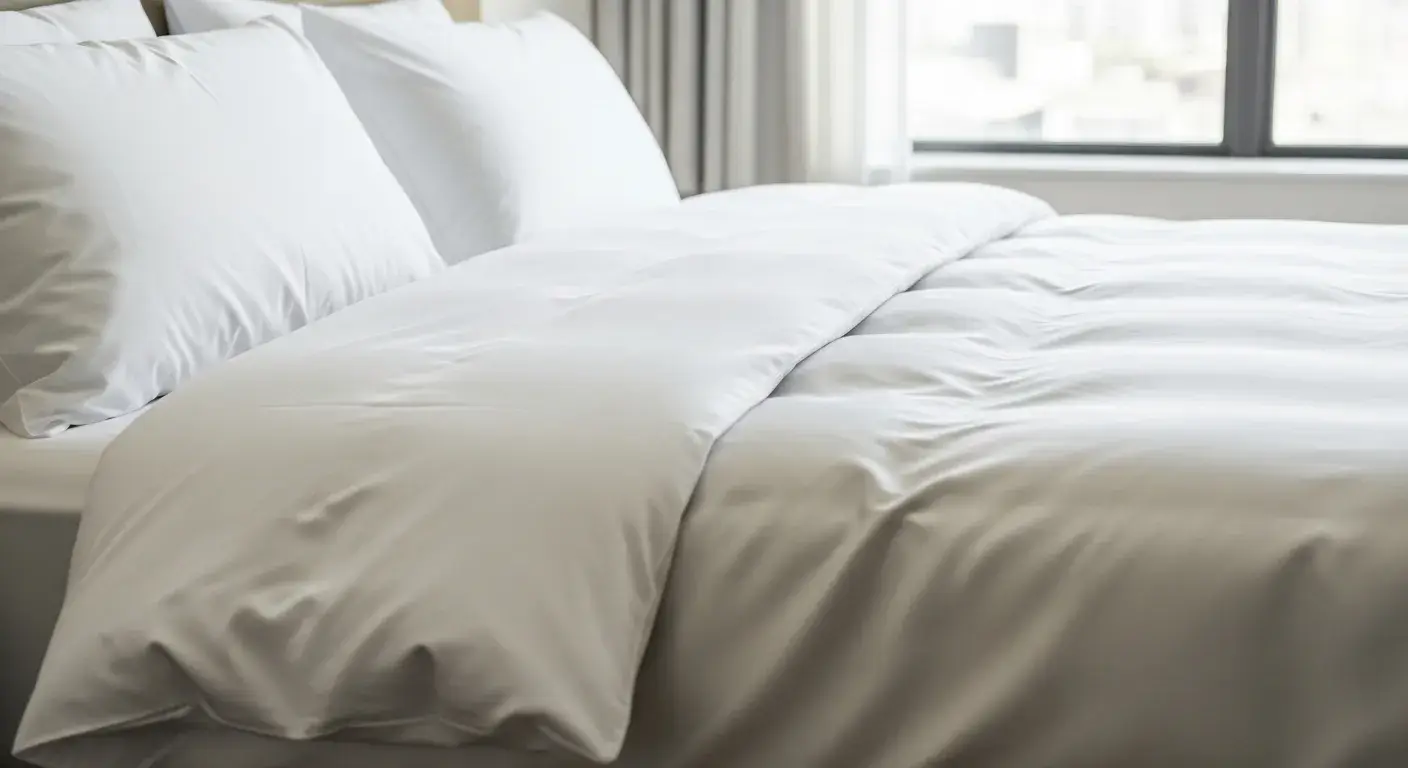
In hot or humid climates like tropical Asia, the Middle East, or the Caribbean, Tencel and bamboo viscose can offer a cooler sleep experience. The question is whether that comfort advantage survives the realities of commercial laundering.
Which Fabric Survives Commercial Hotel Laundering Best?
This is the question that separates hotel-grade fabric decisions from consumer bedsheet reviews. And it’s where the comparison shifts in ways most online guides don’t cover.
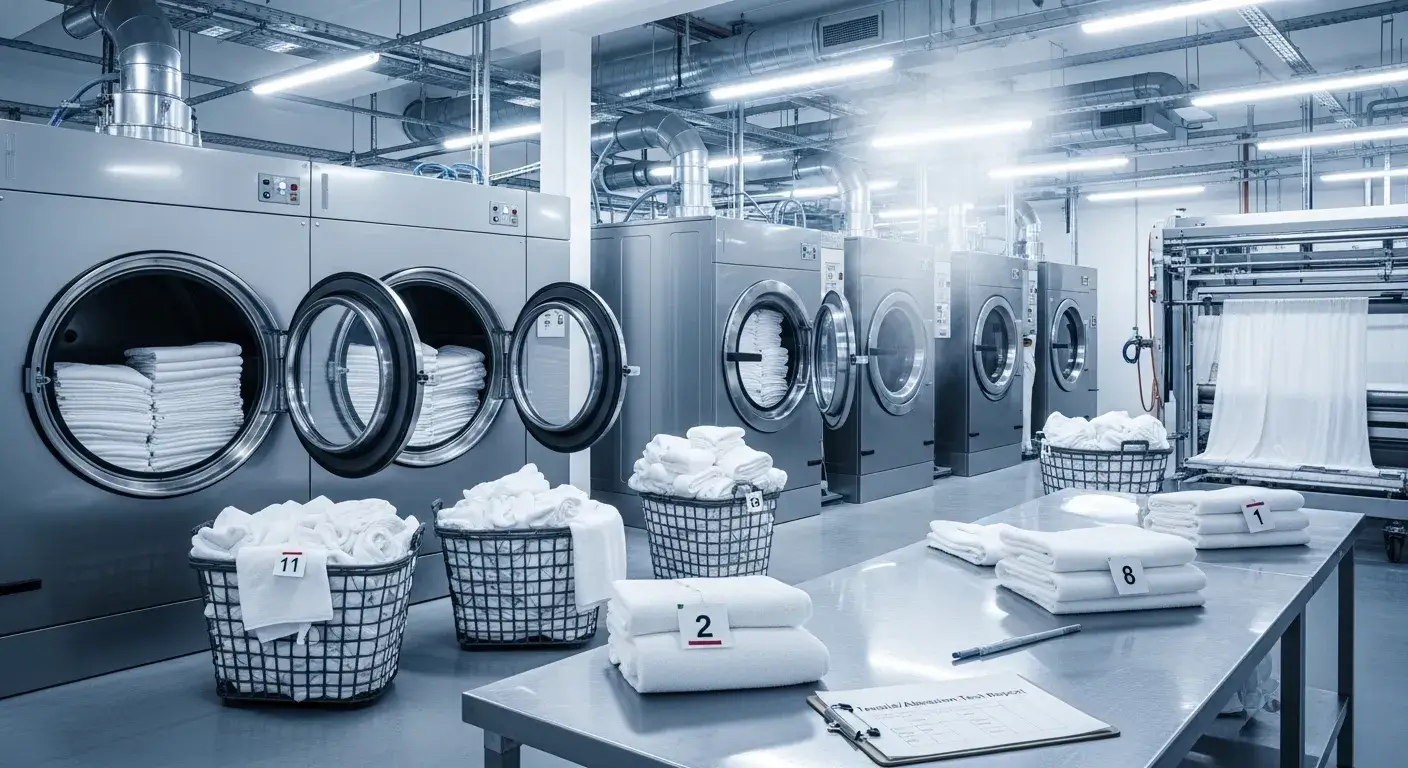
Commercial hotel laundries use water at 60–80°C, industrial-strength detergents, high-heat tumble drying, and sometimes chlorine bleach. A busy property can put sheets through 150–200+ wash cycles per year.
Polyester: The Durability Champion
Polyester retains over 90% of its tensile strength after 500+ industrial wash cycles. It resists shrinkage, color fading, pilling, and wrinkling under aggressive laundering conditions. Drying time is fast, which cuts turnaround and energy costs.

This is why polyester exists in hotel linens. Not for guest comfort, but for structural reinforcement when blended with cotton.
Cotton-Polyester Blends: The Industry Workhorse
According to one supplier’s internal testing, a 65/35 cotton-polyester blend achieved approximately 34,000 Martindale abrasion cycles4 compared to roughly 17,500 for 100% cotton of similar weight. Actual results will vary by fabric weight, weave, and finishing treatment, but the directional point is consistent across the industry: blends resist pilling and surface wear far better than pure cotton.
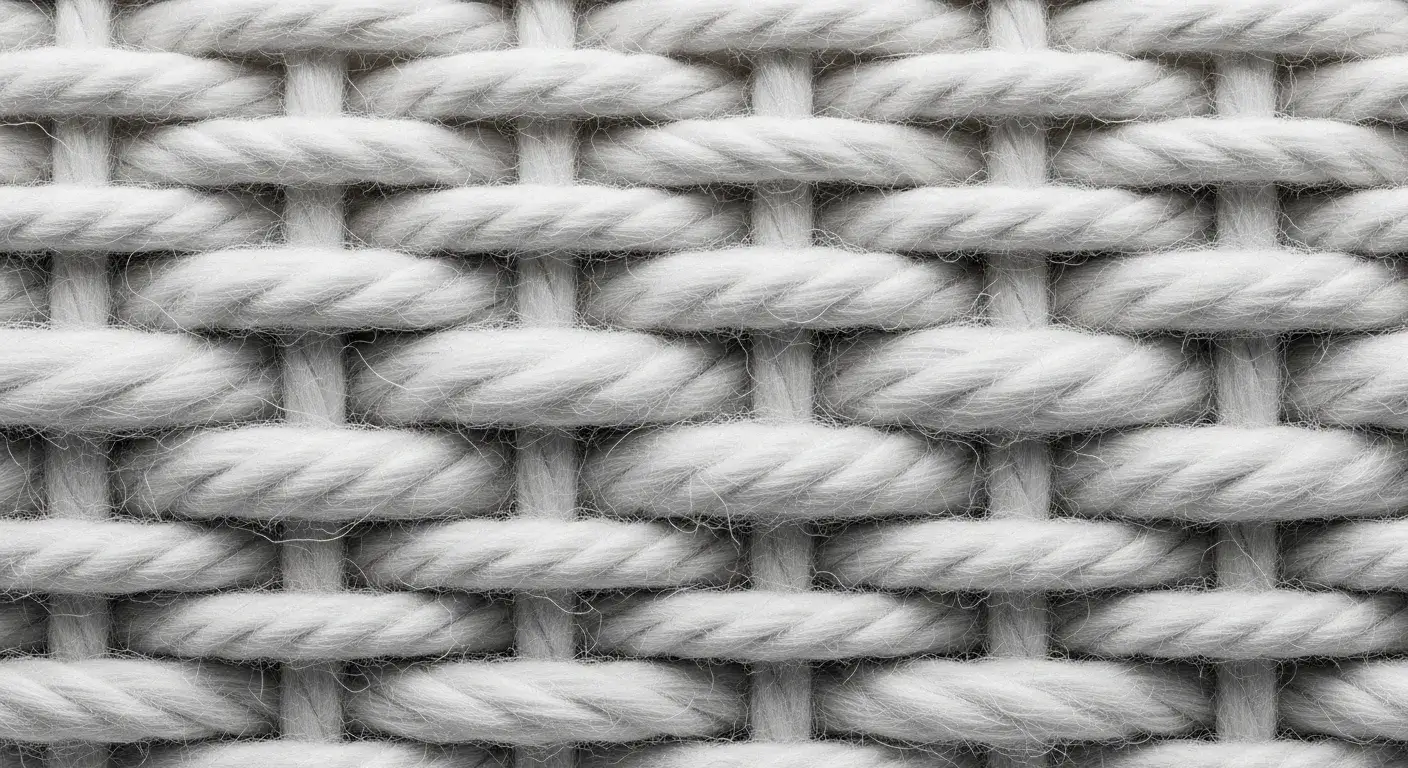
One supplier case study reported a 35% reduction in linen replacement costs for a mid-scale hotel chain that switched from 100% cotton to 65/35 cotton-poly blends. Results depend on laundering conditions, occupancy rates, and the cotton quality being replaced, but the overall pattern is well established. Cotton-poly blends in the 60/40 to 70/30 range typically survive 300–500 commercial wash cycles, about 2–4 times the lifespan of pure cotton under the same conditions.
Cotton (100%): Comfortable but Fragile Under Pressure
Cotton loses up to 20% of its tensile strength after roughly 200 high-temperature wash cycles. Cotton fibers are prone to shrinkage above 60°C, pilling, and color fading under aggressive commercial laundering.
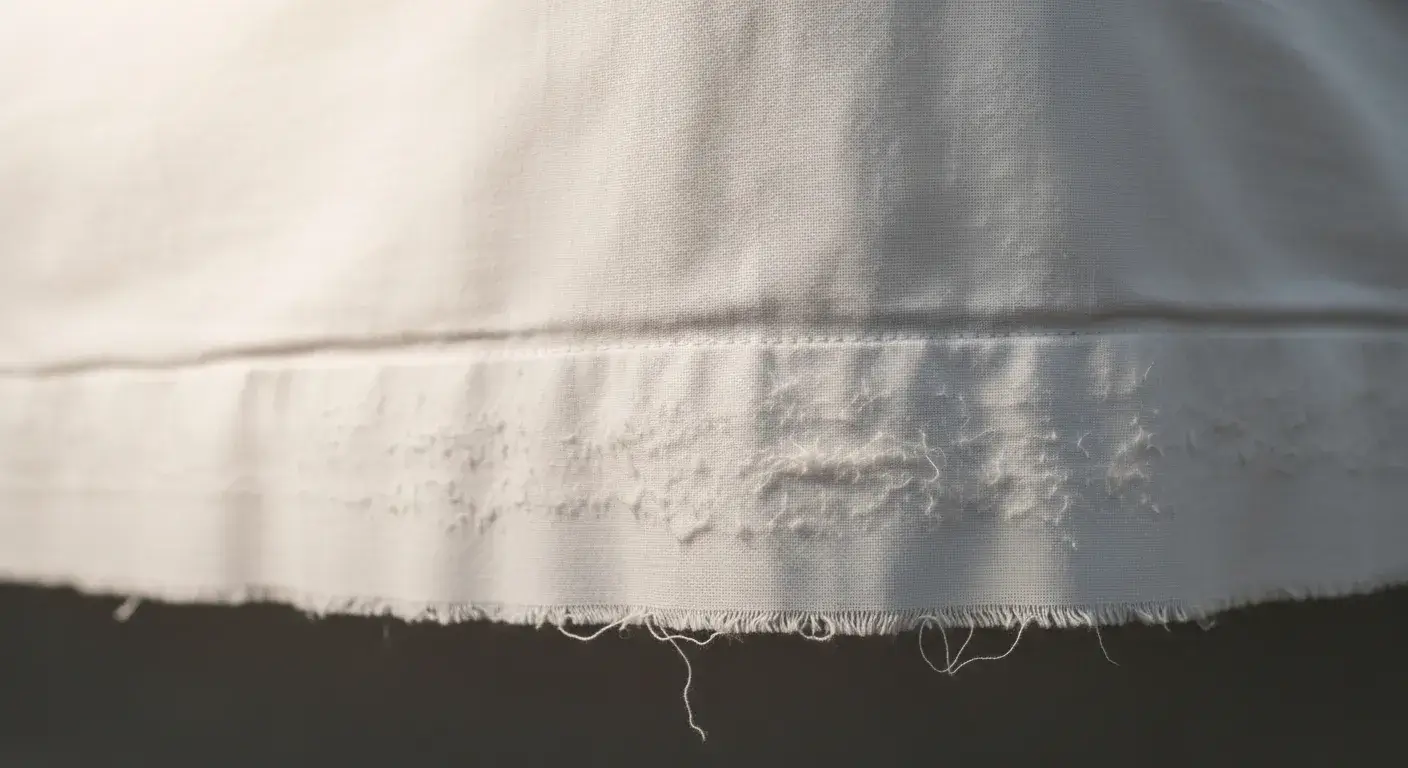
There’s an important operational detail most procurement guides skip. Cotton fibers normally hold about 8% moisture content, which keeps the fiber flexible and strong. Industrial drying strips that moisture. Without about 24 hours of shelf rest to rehydrate from ambient humidity, the fibers become weaker and more brittle. This accelerates tearing, fraying, and premature end-of-life.
Hotels with tight par stock (less than 3x rooms inventory) that cycle sheets from dryer to bed same-day are cutting their cotton linen lifespan significantly. Increasing par stock to allow proper rotation is one of the simplest ways to reduce long-term linen costs.
Tencel: Promising but Problematic at Scale
Tencel manufacturers consistently recommend cool water, gentle cycle, no chlorine bleach, and low-heat or air drying. These requirements conflict with standard commercial hotel laundry protocols.
Tencel can shrink during the first wash. High heat damages the fibers. It doesn’t survive the same aggressive conditions that cotton-poly blends handle routinely.
The Westin Store sells a cotton-Tencel lyocell blend sheet5 (310TC sateen) as part of its Heavenly Bed retail line, suggesting that major hospitality brands see Tencel blends as commercially viable. The blend approach, where cotton provides structural resilience and Tencel adds softness and cooling, is likely the path for Tencel in hospitality rather than standalone use.
Bamboo Viscose: Not Built for Hotel Laundries
Every bamboo viscose care guide says the same thing: cold water only (below 30°C), gentle cycle, no bleach, no fabric softener, low-heat drying. Hot water causes pilling, shrinkage, and fiber breakdown.
Expected household lifespan is 4–6 years with gentle care. Under commercial hotel laundering, there is very little published data. That absence is itself a red flag for procurement. Any fabric that can’t survive standard commercial laundry protocols needs either a dedicated gentle-care process (higher labor and equipment costs) or more frequent replacement.
What Does Each Fabric Actually Cost Per Use?
Purchase price tells you almost nothing about the real cost of hotel linens. The metric that matters is cost per use: purchase price divided by the number of wash-and-use cycles before replacement.
| Fabric | Approx. Wholesale Cost (Queen Set) | Commercial Wash Life | Est. Cost Per Use |
|---|---|---|---|
| Cotton-Poly Blend (65/35) | $50–$70 | 300–500 cycles | ~$0.12–$0.23 |
| 100% Polyester (Microfiber) | $25–$45 | 500+ cycles | ~$0.05–$0.09 |
| 100% Cotton (Mid-Grade, 300TC) | $65–$85 | 150–200 cycles | ~$0.35–$0.55 |
| Tencel (100% Lyocell) | $90–$150+ | Insufficient commercial data | Not reliably calculable |
| Bamboo Viscose (100%) | $70–$120 | Insufficient commercial data | Not reliably calculable |
Note: Wholesale costs vary by supplier, region, and order volume. Wash life estimates for cotton, polyester, and blends are based on widely reported industry data. Tencel and bamboo viscose lack sufficient commercial laundering data to calculate reliable cost-per-use figures.
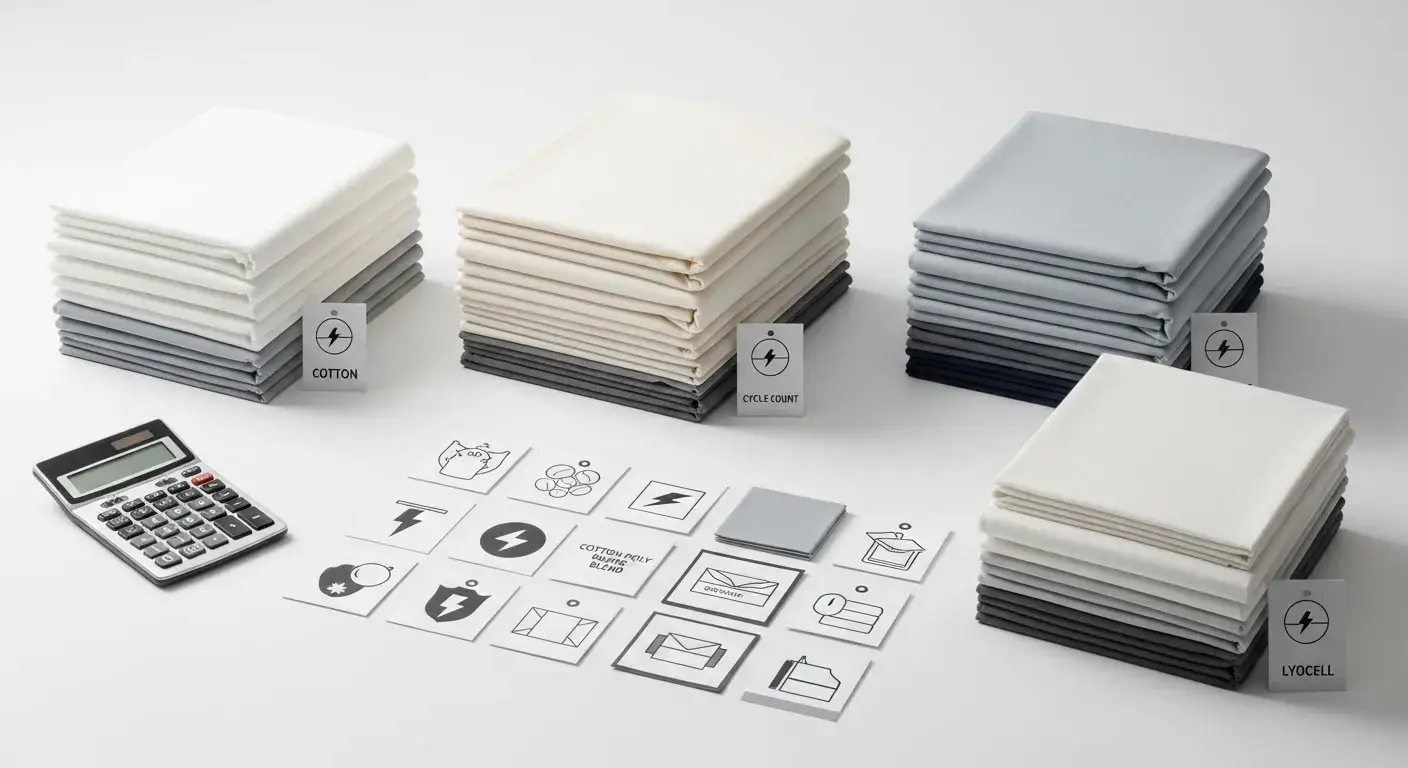
Cotton-polyester blends deliver the lowest cost per use among guest-acceptable fabrics. They cost less upfront and last significantly longer. The savings compound when you factor in reduced drying time (lower energy costs), less shrinkage (fewer size-related replacements), and less wrinkling (less ironing labor).
100% cotton costs more per use, but at luxury properties that premium buys higher guest satisfaction. That’s a deliberate investment in brand experience, not a default best practice.
For Tencel and bamboo, the honest answer is that we don’t have enough commercial-scale data to calculate a reliable cost per use. Their supply chains are less developed for bulk hospitality purchasing, and their durability under standard hotel laundering is unproven.
How Do These Fabrics Perform Across Different Hotel Categories?
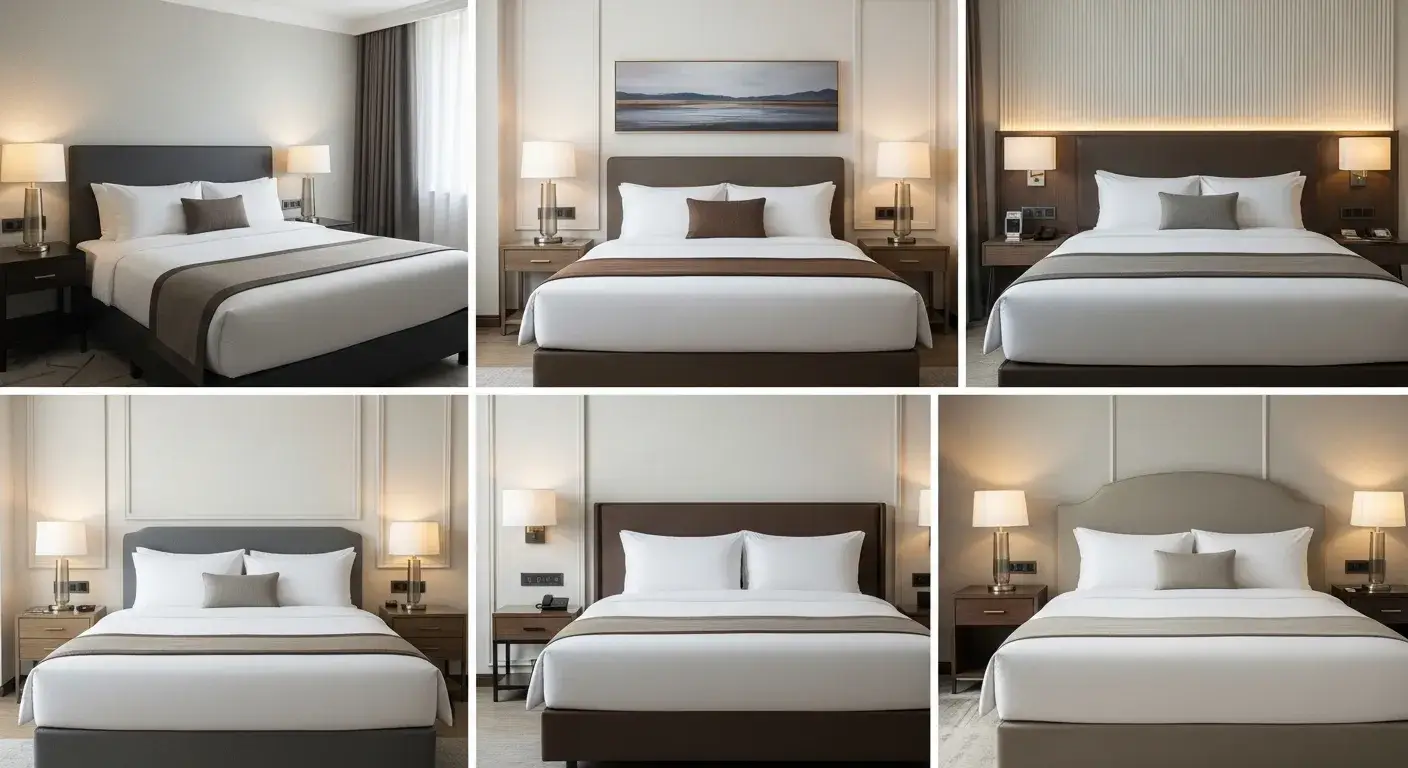
There is no single best fabric for all hotels. The right choice depends on your property’s positioning, climate, and operational priorities.
| Hotel Category | Recommended Fabric | Why It Works |
|---|---|---|
| Luxury (5-Star) | 100% long-staple cotton (Egyptian, Pima) in sateen or percale | Maximum guest comfort; premium perception |
| Upper Midscale | Cotton-poly blend (60/40 to 80/20 cotton-rich) or cotton-Tencel blend | Balances guest comfort with operational durability |
| Midscale / Select Service | Cotton-poly blend (50/50 to 65/35) | Optimizes total cost of ownership; fast turnaround |
| Economy / Extended Stay | Polyester-rich blends or 100% microfiber | Maximum durability; lowest replacement cost |
| Eco-Boutique / Resort | Cotton-Tencel blend or bamboo lyocell blend | Sustainability differentiator; accepts higher replacement cost |
Climate Should Drive Fabric Choice
Hotels in hot, humid climates like Southeast Asia, the Gulf, and the Caribbean face different challenges than properties in temperate or cool regions. High humidity accelerates bacterial growth on moisture-retaining fabrics, makes slow-drying materials susceptible to mildew, and amplifies how guests perceive heat on the sheets.

In these environments, cotton percale (crisp, cool, breathable) remains the most practical choice for most properties. Tencel and bamboo offer better moisture wicking, but their laundering limitations are harder to manage in tropical climates where hygiene standards are critical.
What Are the Real Sustainability Facts?
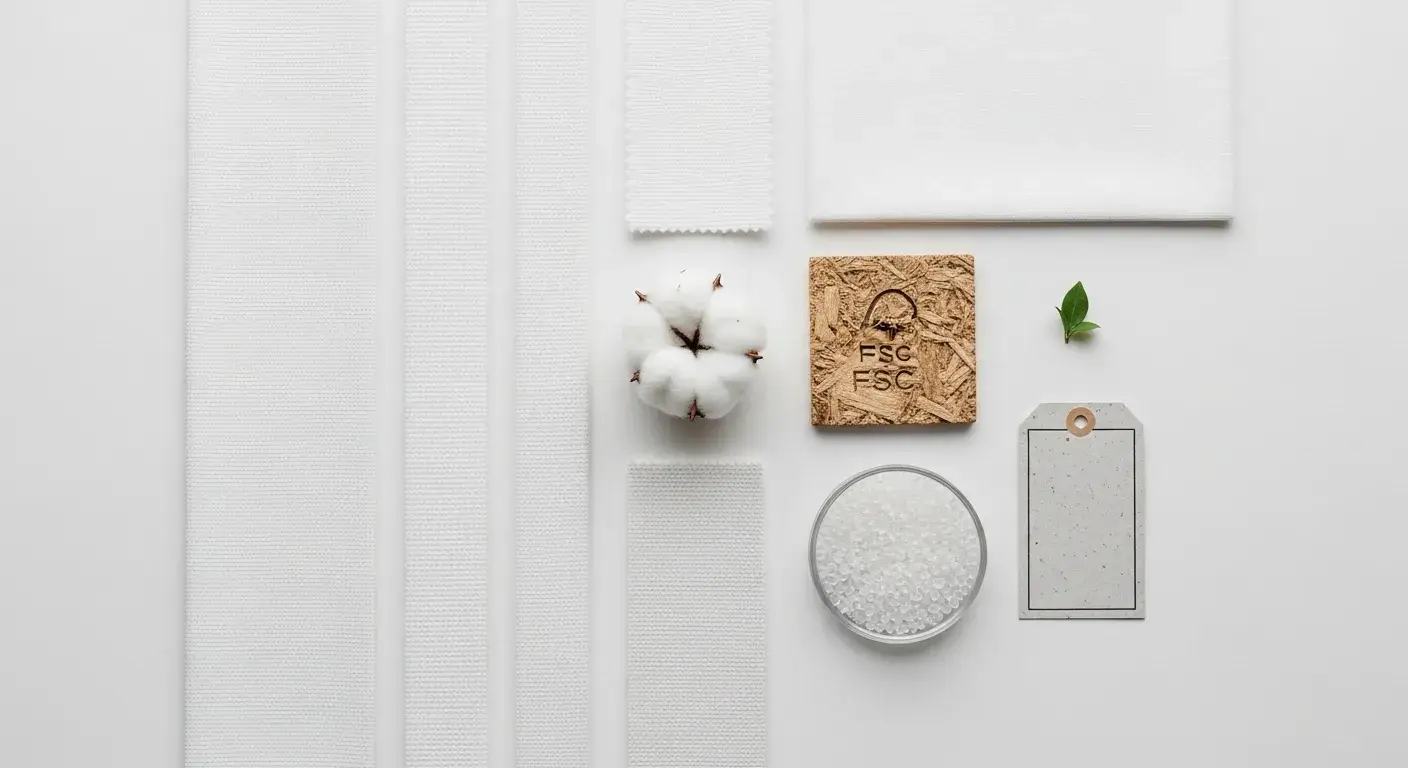
Sustainability claims are everywhere in the linen market. The facts are more complicated than the labels suggest.
Cotton
Conventional cotton is water-intensive, requiring about 10,000 liters per kilogram of fiber. It relies on pesticides and fertilizers. But GOTS-certified organic cotton6 eliminates synthetic chemicals and is measurably more sustainable. Cotton is biodegradable. Its environmental cost also depends on lifespan: shorter-lived linens mean more replacements and more total resources consumed over time.
Polyester
Polyester comes from petroleum. Its production generates CO₂ emissions. It’s not biodegradable and it sheds microplastics during washing. But something sustainability rankings often miss is that polyester’s exceptional durability means fewer replacements over time, which means less total waste. Recycled polyester (rPET) further reduces virgin resource use and is increasingly available in hospitality textiles.
Tencel
Tencel has the strongest verified sustainability profile among these four fabrics. Lenzing’s closed-loop production recovers 99%+ of chemicals for reuse. The eucalyptus source trees grow on marginal land without irrigation or pesticides. Tencel fibers are biodegradable and compostable. The tradeoff is higher cost and limited supply chain scale for bulk hospitality orders.
Bamboo Viscose
This is the most overstated sustainability story in the linen market. Raw bamboo does grow quickly without pesticides. But the dominant viscose manufacturing process uses hazardous chemicals including carbon disulfide. The FTC has stated that rayon made from bamboo is neither antimicrobial nor biodegradable. The cleaner bamboo lyocell process exists but represents a small minority of commercial supply.
A 2024 study in Environmental Science & Technology found that microfibers from biobased materials like viscose and lyocell were more toxic to soil organisms7 (earthworms) than polyester microfibers. It was a small study, but it challenges the assumption that plant-derived textiles are automatically safer for the environment across all impact categories.
How to Think About Sustainability Comparisons
There is no single correct sustainability ranking because the answer depends on what you measure. If you prioritize water use, Tencel leads. If you prioritize durability and waste reduction (fewer replacements over time), polyester-rich blends rank higher than most people expect. If you prioritize biodegradability, cotton and Tencel lead. If you prioritize chemical safety in manufacturing, Tencel and organic cotton are the safest bets while bamboo viscose carries the most risk.
The practical approach: pick the sustainability dimension that matters most to your brand, then verify the claim with a third-party certification. An OEKO-TEX label is verifiable. A "100% natural bamboo" label is probably not.
Can Hotels Blend Fabrics to Get the Best of Both Worlds?
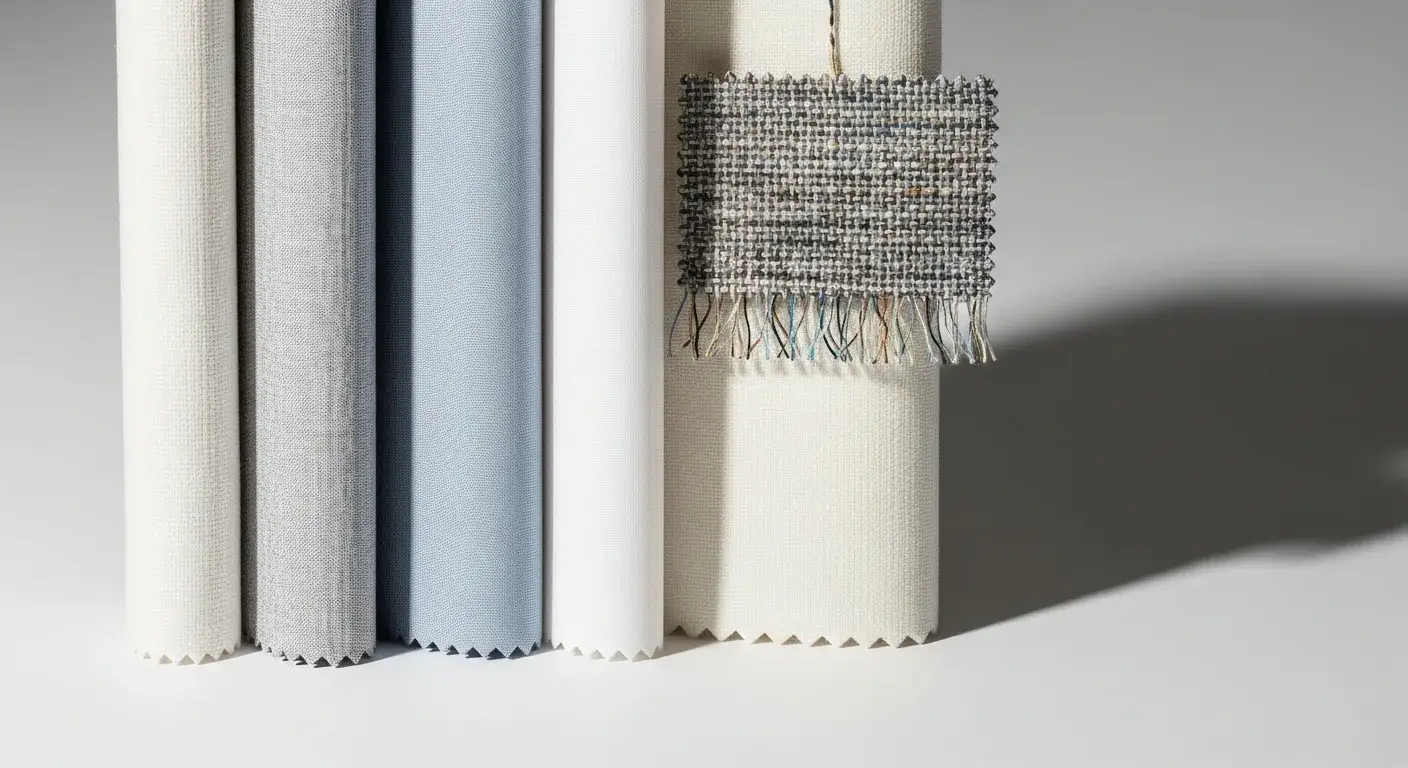
Blending is the most practical approach for most hotel operations. It lets you combine the guest-facing qualities of natural fibers with the operational durability of synthetics or semi-synthetics.
Proven Blend Options
Cotton-Polyester (65/35 or 60/40 cotton-rich): The industry standard. Cotton dominates the feel while polyester adds structural strength. Survives 300–500 commercial wash cycles. Available from every major hospitality linen supplier.
The 65/35 ratio isn’t random. It’s the point where cotton still controls the softness, breathability, and moisture absorption while polyester provides enough reinforcement to resist commercial laundering damage. Move to 50/50 and durability improves further, but guests start to notice the difference in feel. Move to 80/20 cotton-heavy and you lose much of the durability benefit.
Cotton-Tencel Lyocell blends: An emerging option. The Westin Store sells a cotton-Tencel lyocell blend (310TC sateen) as part of its retail bedding line, and Marriott’s Bonvoy Boutiques retail store also carries Tencel lyocell sheets. Cotton provides the structural base for commercial laundering. Tencel adds cooling and silky softness. These blends cost more and aren’t yet widely available through standard hospitality distributors, but they represent the direction the industry is moving.
Cotton-Bamboo Viscose blends (65/35): Some niche suppliers offer these. They combine bamboo’s softness with cotton’s laundering resilience. Not yet adopted by major chains. Care requirements are less restrictive than 100% bamboo viscose but still more demanding than standard cotton-poly blends.
A practical approach: Don’t overhaul your entire linen inventory based on a trend. Test a Tencel-blend or bamboo-blend product in a limited number of rooms. Monitor guest feedback and laundering performance over 6–12 months. Then decide whether to scale up. This phased approach minimizes risk while still letting you evaluate newer fabrics under real conditions.
What Should Procurement Teams Look for When Evaluating Samples?
Before you commit to a bulk order, these are the metrics and practices that matter most.
Thread Count: Useful Within a Range, Easily Inflated Beyond It
For hotel sheets, the practical sweet spot is 250–400TC. Above 400TC, comfort and durability gains plateau while costs rise sharply. Above 600TC, you’re almost certainly paying for inflated numbers.
The inflation works like this: some manufacturers use multi-ply yarns (two thinner yarns twisted together) and count each ply as a separate thread. A "1000TC" sheet made from 2-ply yarn is functionally a 500TC sheet. It may be heavier and less breathable than a genuine 400TC single-ply sheet.
Always ask suppliers whether the thread count is single-ply or multi-ply.
GSM: A More Reliable Metric
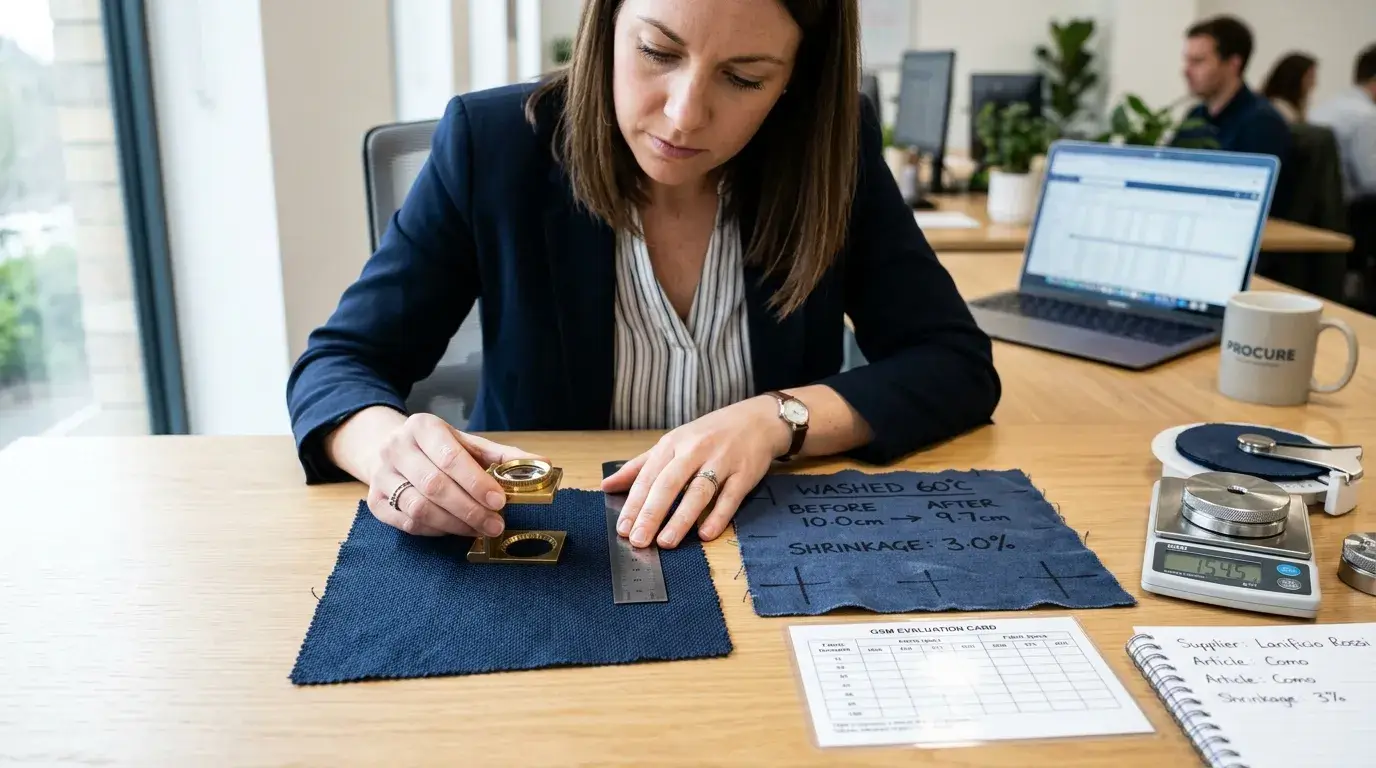
GSM (grams per square meter) measures fabric weight and density. For hotel sheets, 130–200 GSM is typical. For towels, 350–450 GSM works well in commercial laundering. GSM is harder for manufacturers to manipulate than thread count, and it gives a more useful read on fabric substance and durability.
Weave Type: Match It to Climate and Guest Profile
- Percale: Crisp, cool, matte finish. Best for warm climates. Minimum 200TC for quality.
- Sateen: Smooth, silky, slight sheen. Warmer feel. More luxurious drape, but can pill over time.
- Twill: Diagonal weave. Durable and wrinkle-resistant. Less common in guest sheets but used in some commercial blends.
Before Signing the Purchase Order
Test wash samples 10–20 times in your actual commercial laundry equipment before committing to a large order. Check shrinkage, pilling resistance, color retention, and hand feel after repeated cycles.
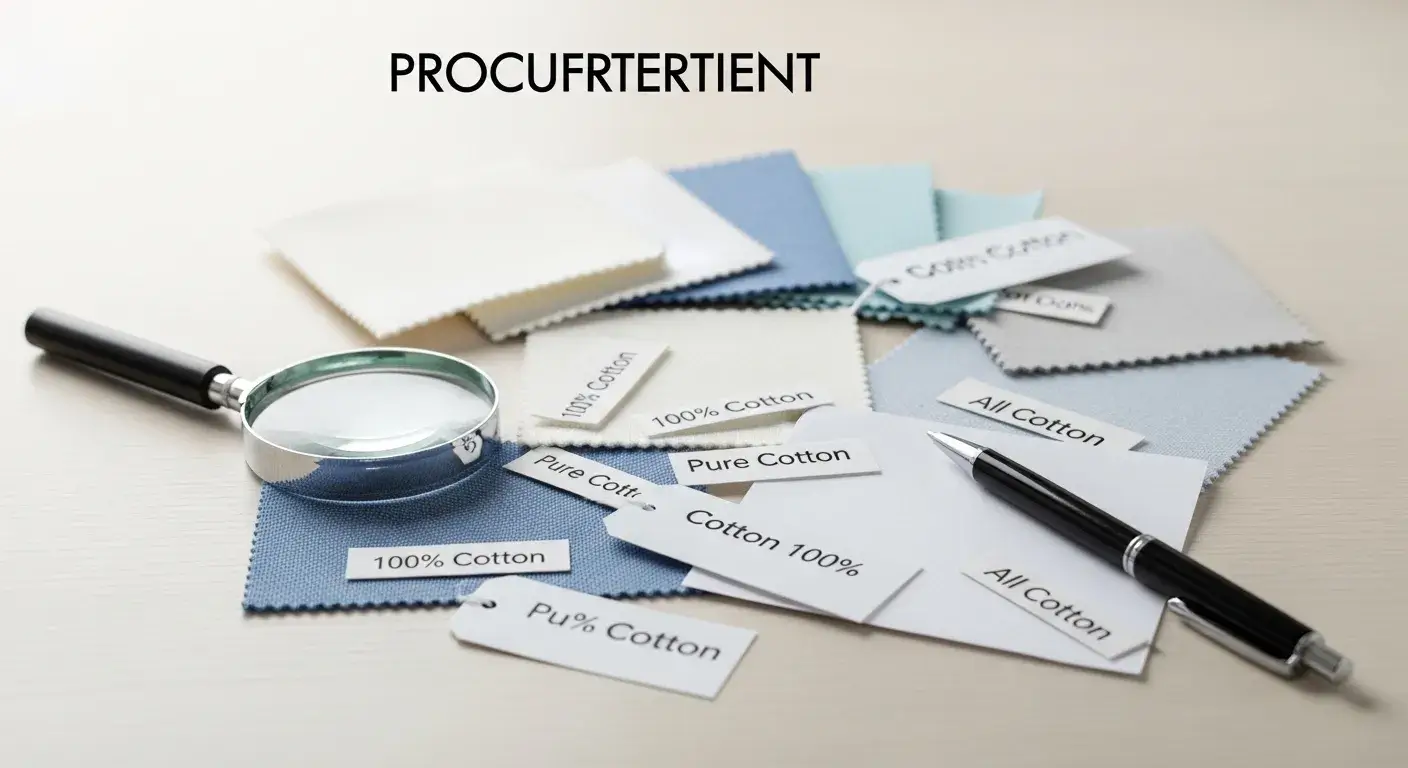
Verify fiber content independently. Lab testing services like those offered through OEKO-TEX or independent textile testing labs (SGS, Bureau Veritas, Intertek) can confirm whether the fiber content matches the label. This is worth doing for large orders.
Check certifications. OEKO-TEX Standard 1008 verifies the finished product is free from harmful substances. GOTS certifies organic fiber claims. FSC verifies responsible forest management for Tencel and bamboo lyocell source materials.
Red Flags From Suppliers
- Labels claiming "100% bamboo" instead of "rayon/viscose made from bamboo" — the supplier either doesn’t know or doesn’t follow textile labeling regulations
- Thread counts above 600 promoted as the primary quality differentiator
- Sustainability claims without any third-party certification to back them
- Refusal to provide samples for commercial wash testing
- No clear information on fiber origin, manufacturing country, or compliance standards
What Sheets Do 5-Star Hotels Actually Use?
Most luxury hotels use 100% long-staple cotton (Egyptian, Pima, or Supima) in percale or sateen weave, typically between 300TC and 500TC. That’s the standard at the top tier.
But cotton-polyester blends are more common at the luxury level than most guests realize. Guests in high-end hotels often assume they’re sleeping on pure cotton when the sheets are actually a well-made cotton-poly blend. Very few people can feel the difference between quality 100% cotton and a quality cotton-rich blend, according to industry sources.
Marriott’s Bonvoy Boutiques retail store now sells Tencel lyocell sheets as part of its at-home bedding line, which signals that major hospitality brands see this material gaining ground. Pure cotton remains the default at the most demanding luxury properties, but blended alternatives are entering the conversation at every tier.
How Long Do Hotel Sheets Actually Last?
Lifespan depends on fabric type, laundering practices, and how well the hotel manages linen rotation.
| Fabric | Commercial Wash Life | Approx. Lifespan (High Occupancy) |
|---|---|---|
| 100% Polyester/Microfiber | 500+ cycles | 3–5+ years |
| Cotton-Poly Blend (65/35) | 300–500 cycles | 2–4+ years |
| 100% Cotton | 150–200 cycles | 12–24 months |
| Tencel / Bamboo Viscose | Insufficient commercial data | Likely shorter than cotton under standard commercial protocols |
One of the simplest ways to extend cotton linen lifespan is maintaining adequate par stock. Cotton fibers rehydrate from ambient humidity during shelf rest, regaining the moisture they need to stay flexible and strong. Hotels that rotate linens through at least 24 hours of rest between laundry and room placement can meaningfully extend usable life. Hotels that skip this step and cycle sheets straight from dryer to bed are accelerating fiber degradation with every turn.
Conclusion: The Decision Is a Matrix, Not a Ranking
The real fabric decision comes down to four variables:
- Guest experience — What do your guests expect? What does your brand promise?
- Laundering compatibility — Can your laundry facility handle this fabric at volume?
- Total cost of ownership — What’s the true cost per use, including replacement and energy?
- Sustainability — Are your claims verifiable? Do you have the certifications to back them up?
A fabric that scores well on one dimension may score poorly on another. Cotton-polyester blends deliver the strongest total operational value for most properties. Pure cotton wins for guest luxury perception at the top tier. Tencel has the strongest verified sustainability story. Bamboo viscose has the weakest overall case once you look past the marketing to the manufacturing realities and laundering limitations.
The industry is moving toward engineered blends. Cotton-Tencel blends, cotton-recycled polyester blends, and eventually bamboo lyocell-cotton blends will gain share as supply chains mature. Hotels that understand blending ratios and their tradeoffs will make better purchasing decisions than those chasing single-fiber marketing claims.
Start with the comparison data above. Test samples in your own laundry. And talk to suppliers who can explain the why behind their recommendations, not just the what.
-
Lenzing AG’s official TENCEL™ fiber page detailing the closed-loop lyocell production process, solvent recovery rates, and environmental certifications. Primary source for verifying Tencel manufacturing claims. ↩
-
FTC press release documenting the $5.5 million combined enforcement action against Kohl’s ($2.5M) and Walmart ($3M) for mislabeling rayon products as "bamboo." Essential reading for procurement teams assessing bamboo textile labeling compliance. ↩
-
Textile Exchange’s 2024 Materials Market Report — the leading annual dataset on global fiber production volumes, market share breakdowns, and sustainability program adoption across the textile industry. ↩
-
Overview of the ISO 12947 Martindale abrasion testing standard used to evaluate fabric durability and pilling resistance. Explains the testing methodology referenced in the cotton vs. cotton-poly blend comparison. ↩
-
Westin Store product page for their Hotel Sheet Set featuring the cotton and Tencel+Plus™ Lyocell blend (310TC sateen). Direct verification of the Westin cotton-Tencel blend retail product referenced in this article. ↩
-
The Global Organic Textile Standard (GOTS) official page explaining certification requirements for organic textiles, covering environmental criteria, social standards, and supply chain traceability from raw fiber to finished product. ↩
-
Peer-reviewed study published in Environmental Science & Technology (2024) by Courtene-Jones et al. examining the ecotoxicity of biobased microfibers (viscose, lyocell) compared to polyester on earthworms. Challenges assumptions about plant-derived textile safety. ↩
-
OEKO-TEX® Standard 100 official certification page. Explains the testing and certification process for verifying textiles are free from harmful substances — the most widely recognized product safety label in the textile industry. ↩