
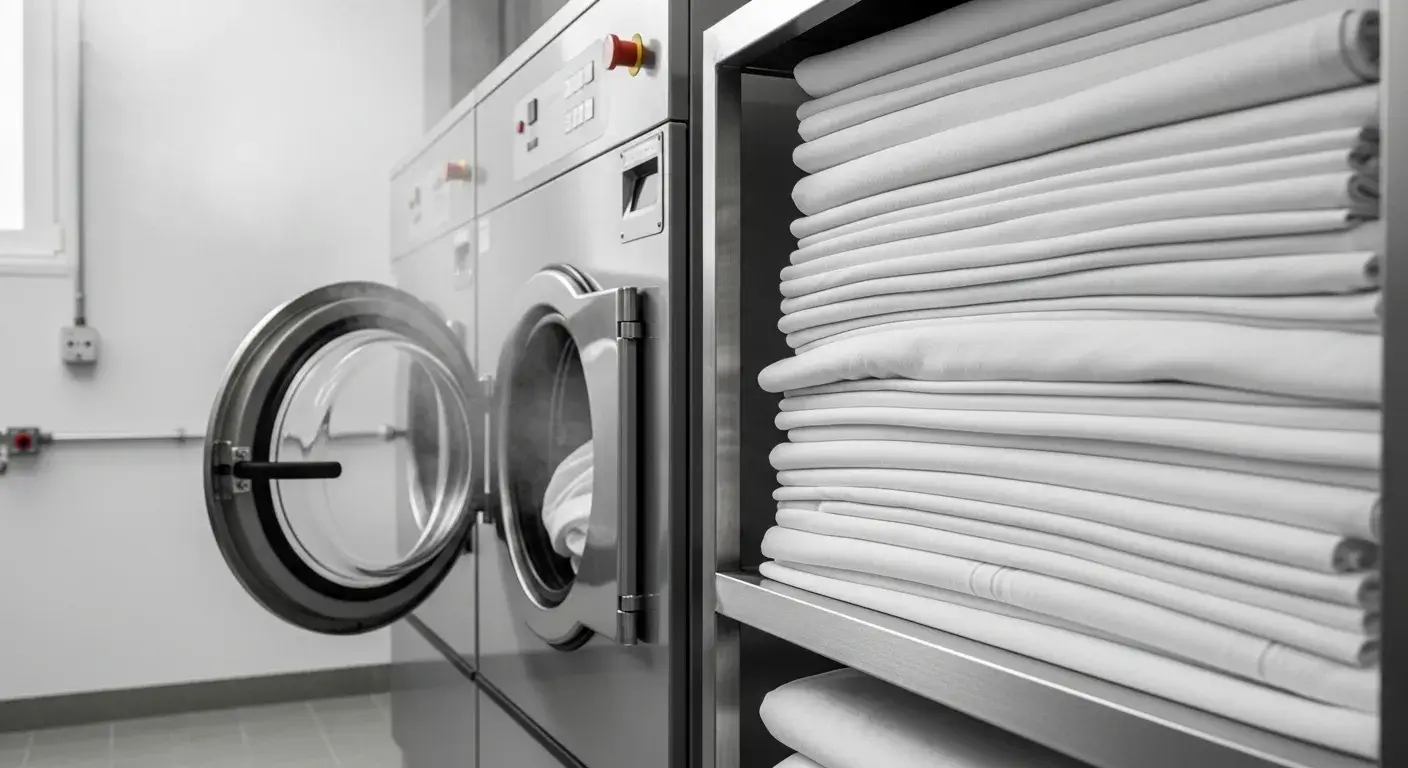
You buy expensive hotel sheets. They tear after a few months. This ruins your budget. I will show you the exact standards that make hotel linens last longer.
Hotel linens must survive 200 to 250 commercial wash cycles. To meet this standard, fabrics undergo strict testing. These tests check tensile strength, tear resistance, shrinkage, and chemical survival against bleach and heavy extractors.
Let us explore the exact lab rules and operational standards. You will learn how to choose sheets that save your hotel money and please your guests.
Why is the 200-Wash Benchmark the Golden Rule for Hospitality?
Replacing sheets often hurts your profits. Retail sheets fail quickly in big machines. I recommend the 200-wash benchmark to ensure your investment actually lasts in a real hotel.
A standard hospitality sheet should last 200 to 250 washes. In a typical hotel using a three-par inventory system, a sheet is washed every three days. This equals about 1.5 to 2 years of heavy operational use.
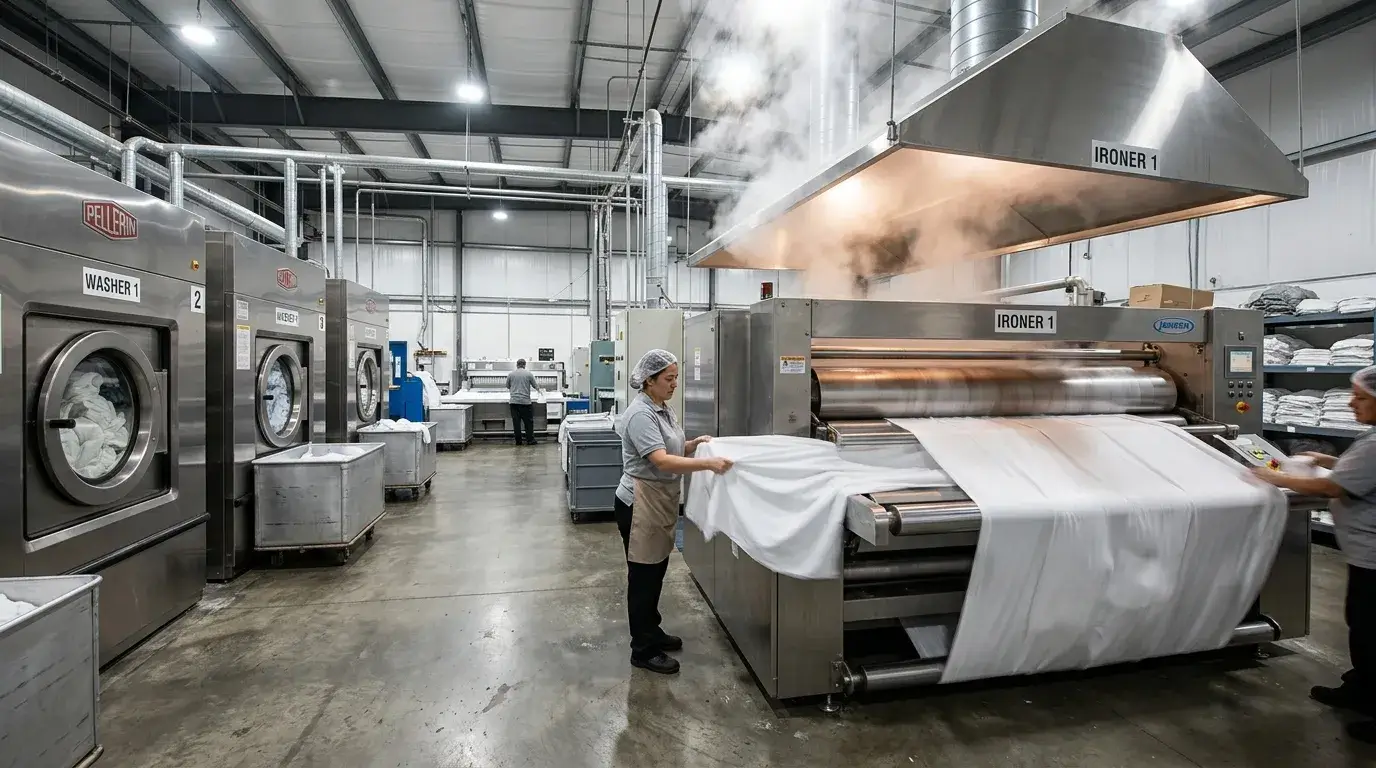
I always tell my clients to stop looking at retail sheets. A 200-wash cycle is very different from home laundry. Home washing is gentle. Commercial washing is a brutal process. It involves massive machines, boiling heat, and strong chemicals.
The Difference Between Home and Hotel Washes
A commercial cycle has several harsh steps. It uses a "break" cycle with highly alkaline water. This opens the fibers to release body oils. Then, it uses strong bleach at very high temperatures. Finally, it uses a ["sour" step1 to fix the pH level.
| Feature | Home Washing | Commercial Washing |
|---|---|---|
| Cycle Count | 50 washes | 200+ washes |
| Chemicals | Mild soap | Strong bleach, alkalis, sours |
| Heat | Low to medium | Extreme heat (ironers at 350°F) |
You must buy sheets built for this exact process.
Watch: The Journey of a Hotel Sheet Through a Commercial Laundry
I want to point out the ideal fabric weight. A sheet weighing under 120 GSM (Grams per Square Meter)2 will tear easily. A sheet over 250 GSM holds too much water. This puts stress on the seams during the spin cycle. The strict hospitality standard for a 200-wash life is between 180 and 220 GSM.
"The true test of a hotel sheet is not how it feels in the box, but how it feels after 100 trips through a flatwork ironer."
Which ASTM Textile Standards Guarantee Mechanical Strength?
Weak sheets rip in heavy extractors. Guests complain about torn bedding. I use strict ASTM mechanical standards to prevent sudden fabric failures in your hotel.
Labs test commercial linens using ASTM D50343 to ensure high tensile strength. They also use the ASTM D1424 Elmendorf Tearing Test4. These tests prove the fabric can handle the extreme pulling forces of 200-pound commercial laundry extractors.
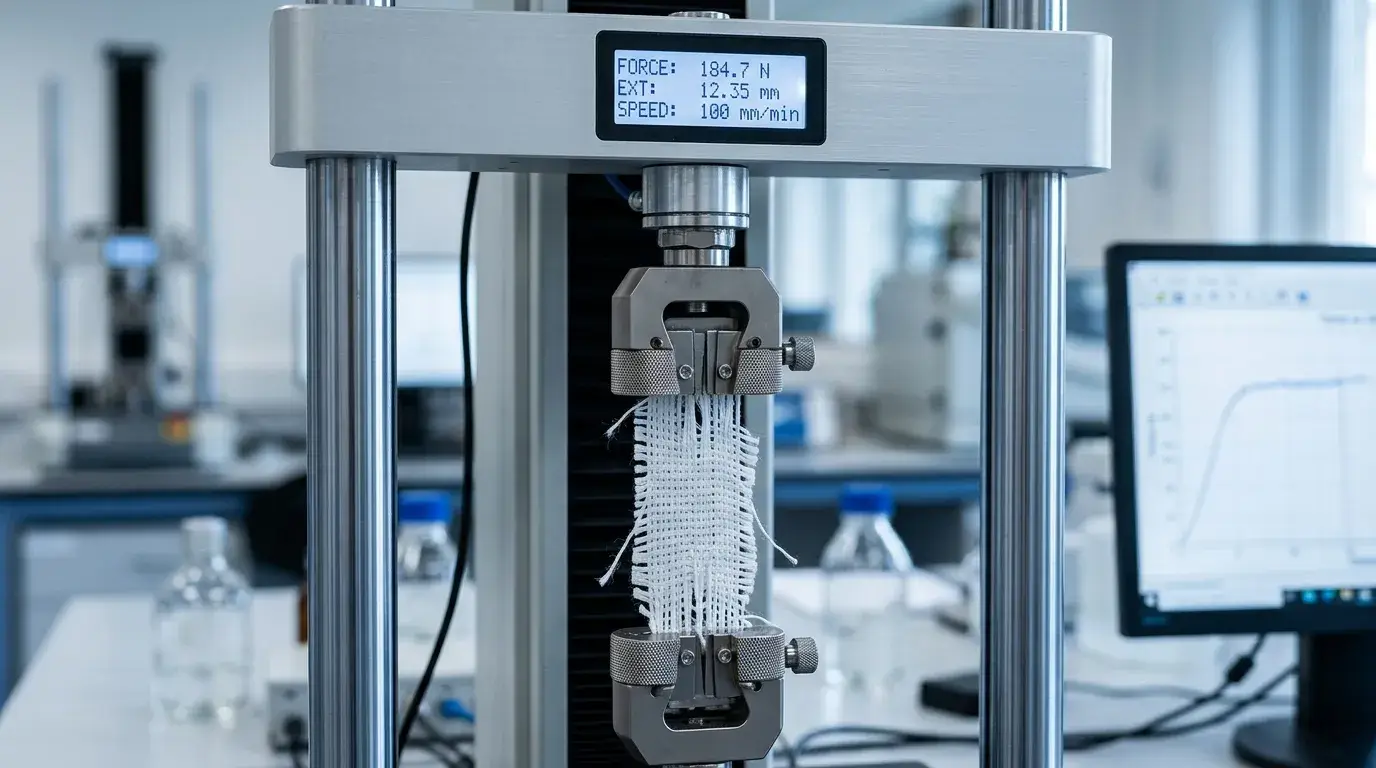
We cannot guess if a sheet is strong. We must test it. I rely on strict laboratory standards.
How Tensile Strength is Tracked
A high-quality commercial sheet loses strength over time. It loses about 10 to 15 percent of its tensile strength every 50 washes. Quality control labs test the fabric at 50, 100, and 200 washes. They use this data to draw a degradation curve.
Important Testing Methods
- ASTM D5034 (Grab Test): A machine grabs both ends of the fabric. It pulls hard. It measures the exact force needed to break the sheet.
- ASTM D1424 (Elmendorf Tear): The lab cuts a tiny slit in the fabric. A heavy pendulum drops and rips the fabric. This measures how fast a small nick turns into a giant hole.
I also look at the polyester skeleton. Many 200-wash sheets use a cotton-rich blend. They wrap soft cotton around a strong polyester core. This gives the sheet the tensile strength of plastic. But it keeps the soft feel of cotton.
Another important standard is the seam engineering. A sheet usually fails at the edges. Hotel standards require lock-stitched hems. They must have 10 to 12 stitches per inch. This stops the edges from fraying in the heavy extractors.
How Do Shrinkage and Dimensional Stability Standards Keep Sheets Usable?
Shrinking sheets do not fit deep hotel mattresses. Housekeeping struggles to make beds. I check dimensional stability standards so your sheets stay the correct size forever.
Hospitality standards require fabric shrinkage to remain below 5 percent after repeated commercial washes. If a sheet shrinks more than this limit, housekeeping staff cannot stretch it over mattress corners, making it completely useless before reaching 200 washes.
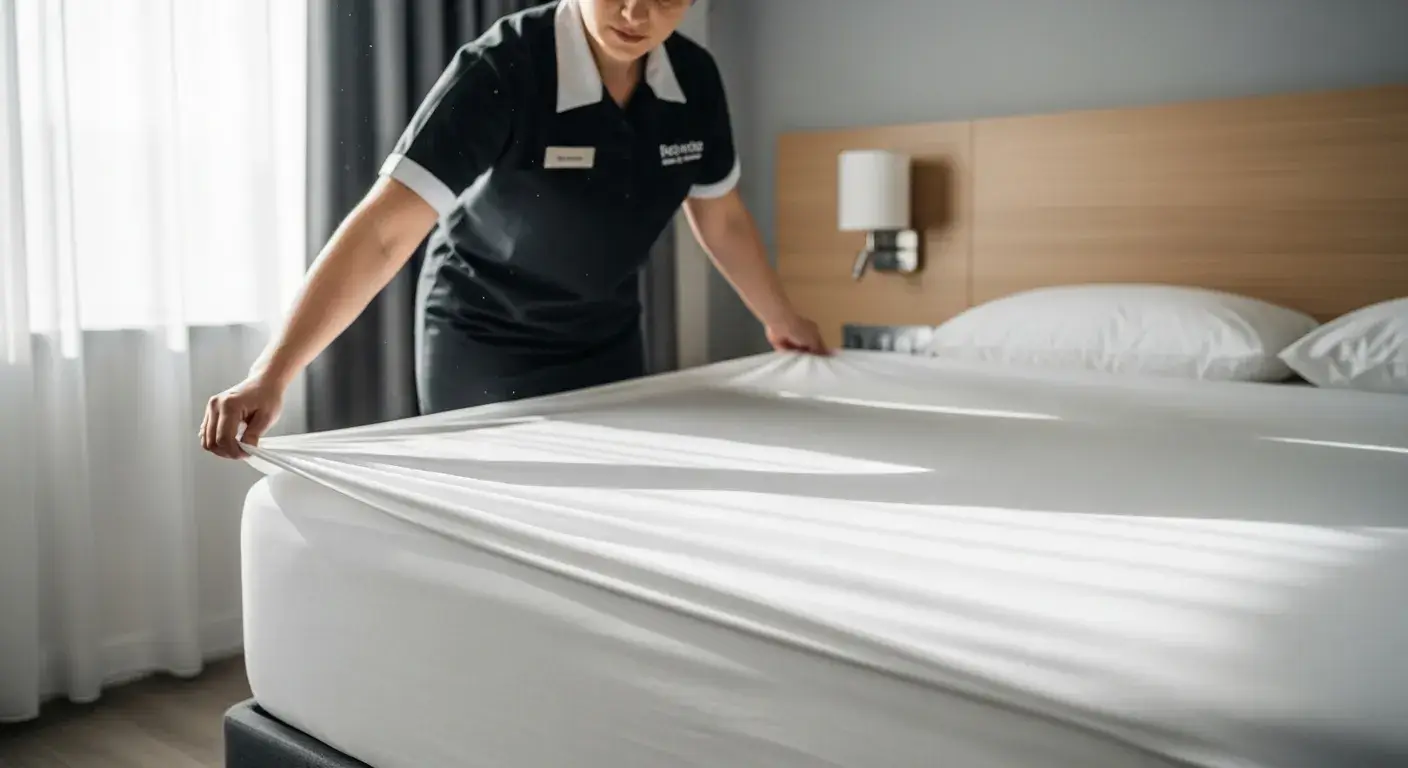
A sheet can be very strong. But if it shrinks, you must throw it away. I see this happen very often. A hotel buys cheap sheets. After 50 washes, the fitted sheets are too tight.
The Real Cost of Shrinkage
Housekeepers work fast. They do not have time to fight with a tight sheet. If they pull too hard, the corners rip. The hospitality standard for shrinkage is strict. It must be under 5 percent in both directions. This applies to the warp (length) and the weft (width).
To stop shrinkage, the factory must pre-shrink the fabric. They use high heat and steam before sewing the hems.
Pilling and Abrasion Testing
Surviving 200 washes means nothing if the sheet is scratchy. A shrinking sheet often pills. Pilling creates tiny, rough fuzz balls. We test for this using the Martindale Abrasion Test5.
- The machine rubs the fabric thousands of times.
- It checks if short fibers break and tangle.
- True hotel sheets use long-staple cotton to pass this test.
I want to remind you that the ironing process also changes the size. A commercial flatwork ironer pulls the damp fabric. This stretching hides some shrinkage. But a bad sheet will still fail eventually.
What Role Does Chemical Resistance Testing Play in Bleach Environments?
Strong chemicals destroy bad fabrics. Sheets turn yellow and brittle. I review chemical resistance standards so your linens survive the harsh bleach used in hotel laundries.
Commercial laundries use harsh chemicals like sodium hypochlorite. If the anti-chlorine standard is ignored, trapped bleach burns the fabric during hot ironing. Testing ensures fibers resist chemical degradation and maintain their tensile strength over 200 cycles.
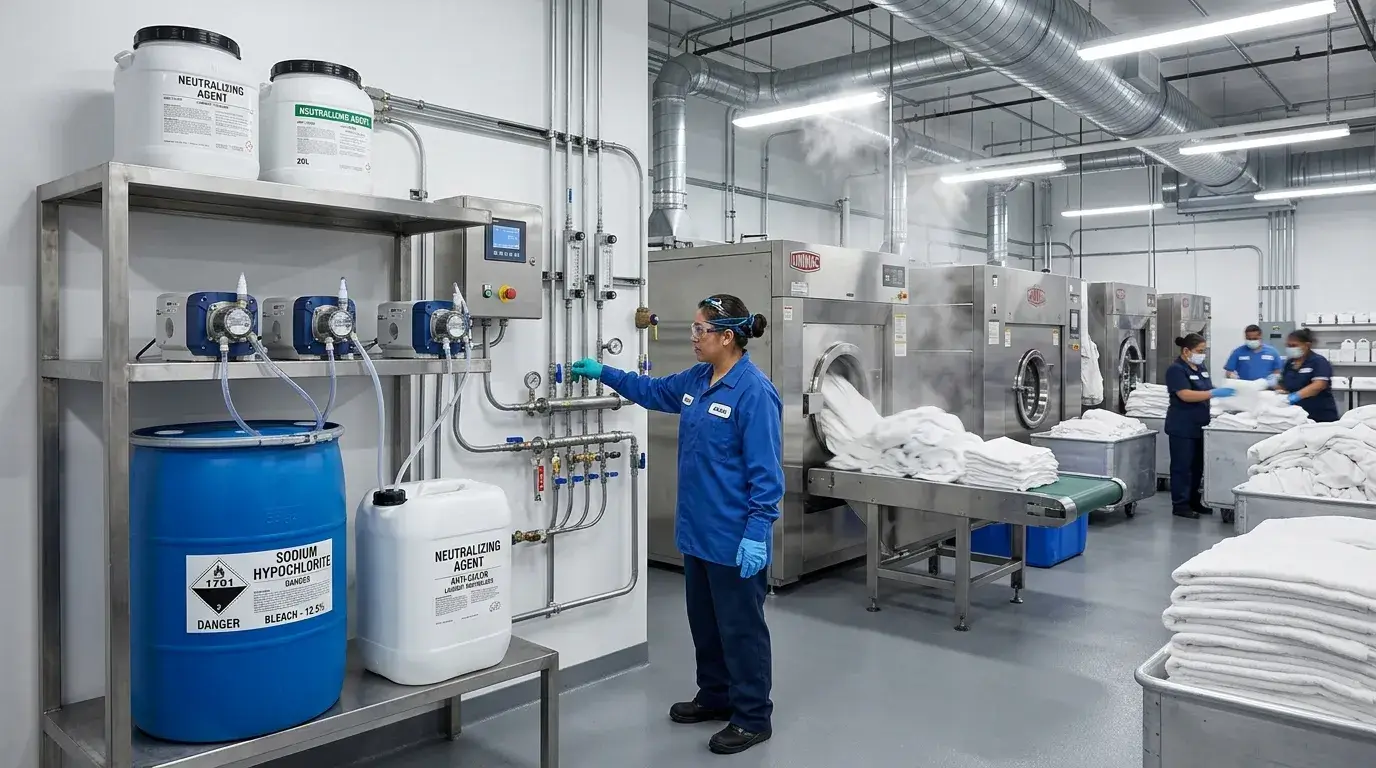
Water and soap do not clean hotel sheets. Heavy chemistry cleans them. I want to explain how these chemicals affect your linens.
The Danger of Retained Bleach
Commercial laundries use strong bleach to remove stains. But they must remove the bleach afterward. They use an anti-chlorine standard. They add a special chemical during the rinse. This neutralizes the bleach.
If this step fails, bleach stays in the fabric. When the sheet goes through the 350°F ironer, the heat activates the trapped bleach. The sheet burns from the inside. It turns yellow and snaps.
The Souring Process
The "sour" step is also critical. Laundries must adjust the final pH of the linen. The standard pH is between 5.5 and 6.5.
- High pH means alkaline residue remains.
- This residue acts like tiny pieces of glass.
- It shreds the cotton fibers during drying.
I also tell my clients about hard water. If a laundry uses water with high calcium, these minerals attach to the cotton. The fibers become hard and brittle. This can drop a sheet’s lifespan from 200 washes down to just 80 washes.
Finally, many hotels now use ozone washing6. They inject $O_3$ gas into cold water. Ozone cleans very well. It does not destroy the cellulose in cotton. This can extend linen life by up to 50 percent.
How Does the "Par Level" Standard Prevent Premature Fiber Fatigue?
Overworked sheets wear out fast. You buy replacements too often. I advise using the par level standard to give your linens time to rest and recover.
Cotton fibers experience fatigue. Standard hospitality guidelines require a three-par inventory system. Linens need at least 24 hours of rest on a shelf after washing. This allows fibers to re-absorb ambient moisture, preventing them from snapping prematurely.
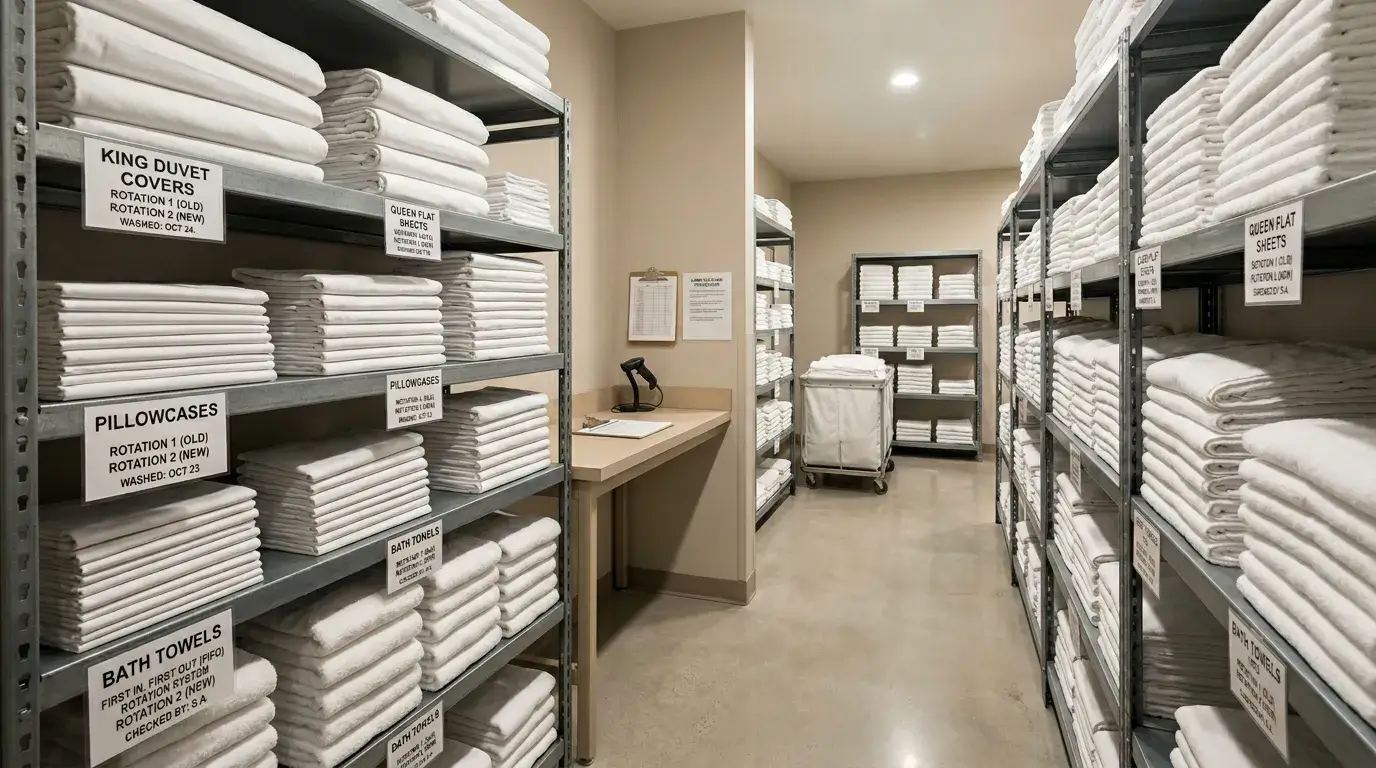
Physical lab tests are only half the story. The way you manage your inventory is just as important. I always check a hotel’s par level.
What is a Par Level?
"Par" means the total number of items needed to outfit all rooms one time. A standard hotel must have a minimum of a three-par system.
- One par is on the guest beds.
- One par is in the laundry being washed.
- One par is resting on the storage shelves.
Why Fibers Need Rest
Cotton is a natural fiber. It acts like a sponge. When a sheet goes through a 350°F ironer, it loses all its water. It becomes extremely dry and fragile. If you put that bone-dry sheet directly on a bed, the fibers will snap when a guest pulls on them.
I teach my clients about the 24-hour rest rule. You must let the clean sheets sit on a shelf for a full day. The cotton needs this time to absorb natural moisture from the air. This moisture makes the fibers flexible and strong again.
I also warn against leaving dirty sheets in carts. If damp linens sit in a laundry cart for more than 24 hours, mildew grows. Mildew actively eats the cellulose in cotton. Strict processing times stop this biological damage.
"Proper inventory rotation is the cheapest way to extend the life of your hotel linens."
Conclusion
Strict mechanical testing, chemical resistance standards, and proper inventory par levels ensure hotel linens survive 200 heavy commercial washes.
-
Understand the importance of the laundry sour process in neutralizing pH levels to protect fabric fibers. ↩
-
Learn how fabric weight is measured and why it is a critical indicator of durability for hotel linens. ↩
-
Access the official testing standard for fabric breaking strength to understand how labs verify tensile durability. ↩
-
Discover how the falling pendulum method works to measure tear resistance in commercial textiles. ↩
-
Read about the standard for abrasion resistance and how it accurately predicts real-world wear and pilling. ↩
-
Explore the benefits of ozone laundry systems, which clean effectively in cold water while extending linen life. ↩