
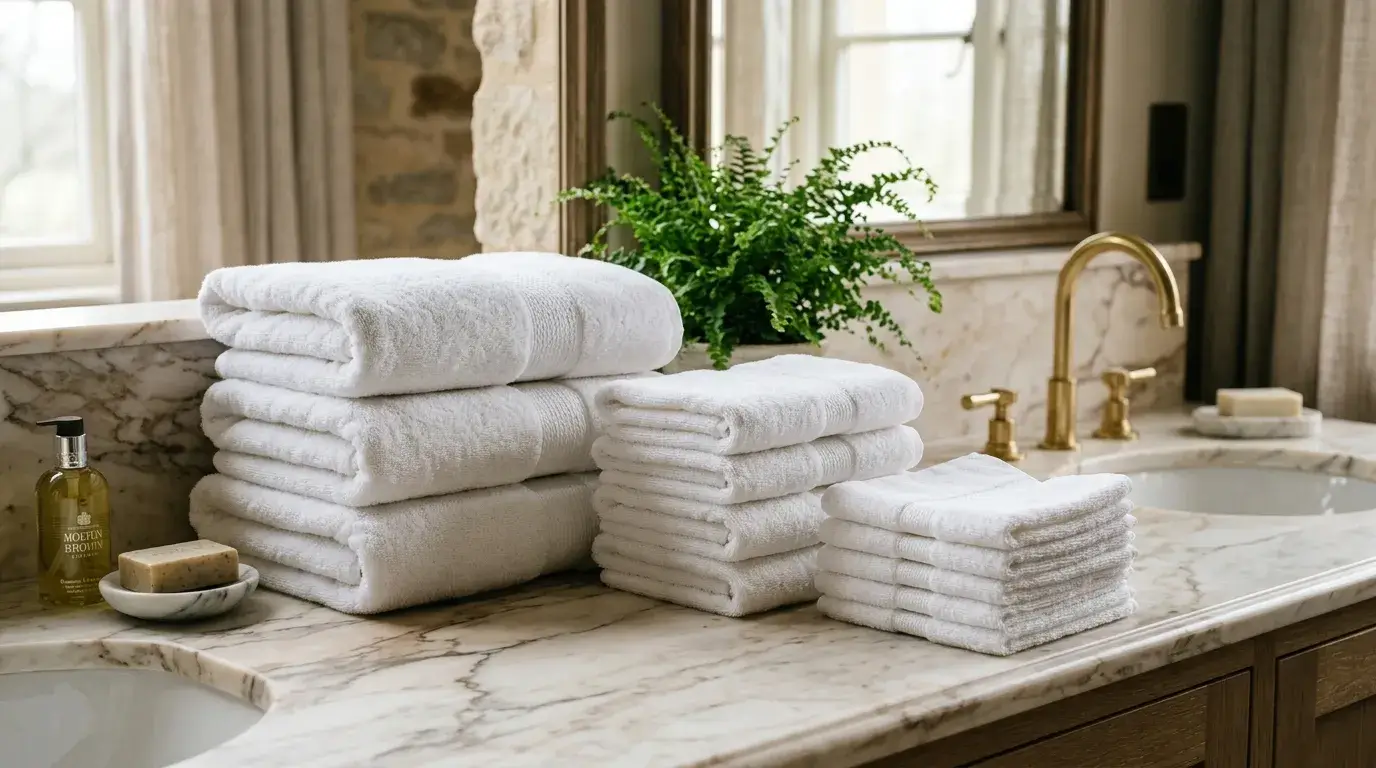
Guests hate thin, scratchy towels. But buying heavy linens spikes your laundry bills. I will show you how to pick the perfect weight to save money and please guests.
GSM stands for Grams Per Square Meter1. It measures fabric weight and density. For hotels, the ideal bath towel is 450 to 600 GSM. Robes sit around 400 GSM. Duvet inserts range from 150 to 400 GSM based on season.
Keep reading to find out why heavier is not always better. I will break down the exact numbers you need for your hotel purchasing strategy.
What Does Grams Per Square Meter Mean for Hospitality?
Confused by linen specs? Buying the wrong density ruins your budget and guest reviews. I will explain exactly what these numbers mean for your hotel operations.
GSM measures the density of fabric. A higher number means more cotton loops per square meter. This makes the fabric thicker and more absorbent, but it also increases weight and drying time in commercial laundries.
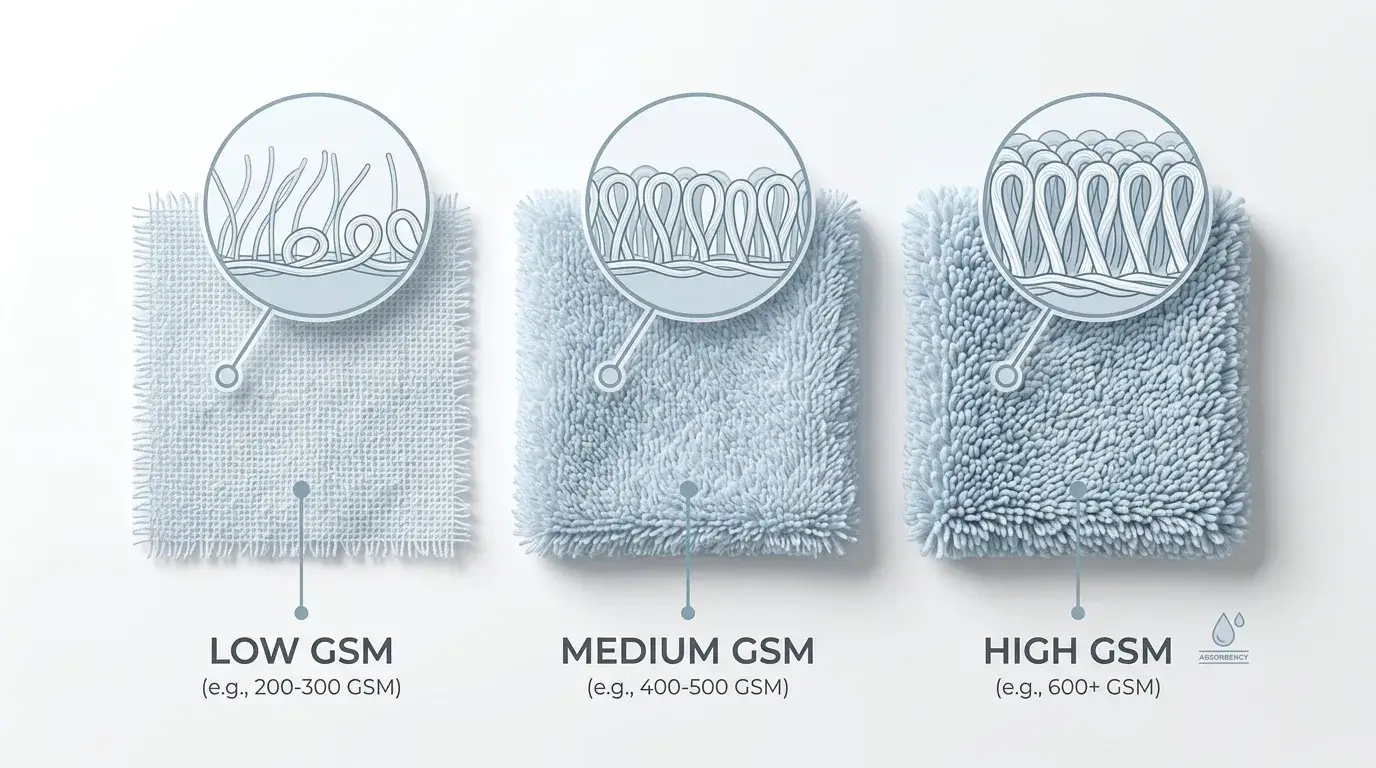
I often see hotel buyers make a huge mistake. They think GSM is the only thing that matters. They believe a high number automatically means high quality. This is simply not true. We need to look at both sides of the coin.
Yes, a dense fabric feels soft. But density does not equal durability. You must also consider the cotton type. Let me show you why staple length matters more than weight.
The Truth About Cotton Quality
If you buy a 700 GSM towel made of short-staple cotton, it will shed. It will pill. It will fall apart in your commercial wash. On the other hand, a 500 GSM towel made of long-staple Turkish cotton2 will last much longer. It will also feel softer to your guests.
Here is a quick breakdown of how we evaluate towel quality:
- Short-staple cotton: Cheap, weak, sheds easily.
- Long-staple cotton: Strong, soft, lasts through hundreds of washes.
- Zero-twist yarn: Fluffy, fast-drying, feels heavy but weighs less.
"Hotels can cheat the scale by using zero-twist cotton3. A 500 GSM zero-twist towel feels like 700 GSM but dries in half the time."
I always tell my clients to test the fabric first. Feel the loops. Check the stitching. Do not just read the tag. A smart buyer knows that true luxury comes from the fiber itself, not just the sheer weight of the fabric.
What is the Sweet Spot for Hotel Towels?
Guests complain about thin towels, but housekeepers struggle with heavy ones. Finding the right balance is hard. I have found the exact range that solves both problems.
The ideal GSM for luxury hotel bath towels is between 600 and 650. Standard commercial hotels should use 450 to 550 GSM. Bath mats require a much heavier weight, ideally between 700 and 900 GSM.
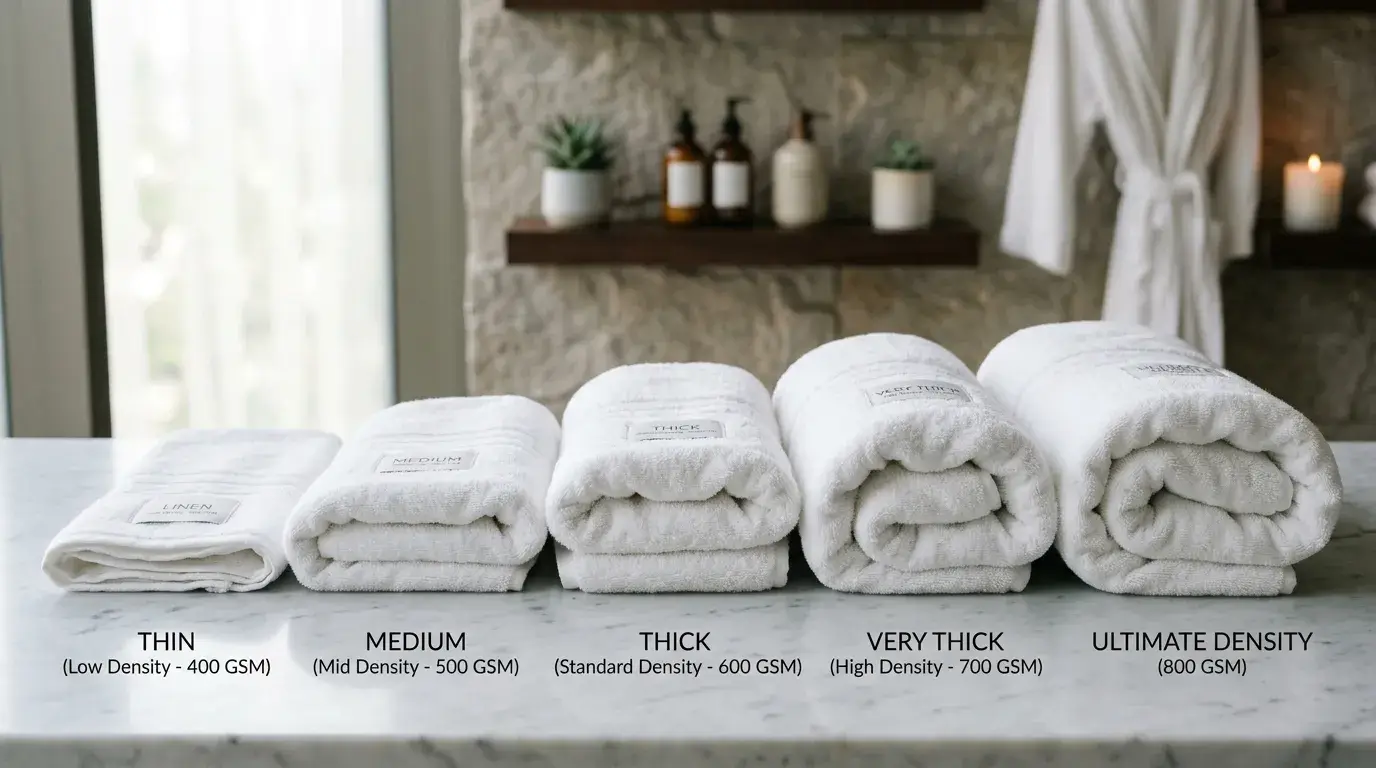
Many consumer blogs tell you to buy 800 or 900 GSM towels. They say this is the ultimate luxury. I disagree. While ultra-luxury spas might use them, these heavy towels are a nightmare for standard hotels.
Let us look at the facts. Heavy towels hold too much water. They take forever to dry. If you run a hotel in a humid place like Florida, heavy towels will stay damp. They will even start to smell bad on the rack.
The Right Weight for Your Property
You need to match the towel to your specific hotel type and climate. Here is a guide I created for my buyers:
| Hotel Type | Ideal Towel GSM | Climate Best Fit |
|---|---|---|
| Standard Business | 450 – 500 | All climates |
| High-End Resort | 600 – 650 | Dry or AC-controlled |
| Tropical Resort | 450 – 550 | Humid / Beach |
| Spa Facility | 650 – 700 | Dry / Indoor |
We must also think about bath mats. Bath mats are different. They need to protect the floor. They stop guests from slipping. Therefore, a bath mat should be much heavier than a bath towel. I recommend 700 to 900 GSM for mats.
Do not let marketing trick you. You can give your guests a five-star feel without buying the heaviest towel on the market. A 550 GSM towel made of great cotton is the true sweet spot for most properties.
Why Might the Best Hotel Robe Have a Lower GSM?
Heavy robes make guests sweat and feel trapped. A bad robe ruins a relaxing spa day. I will show you how lighter fabrics actually create a better guest experience.
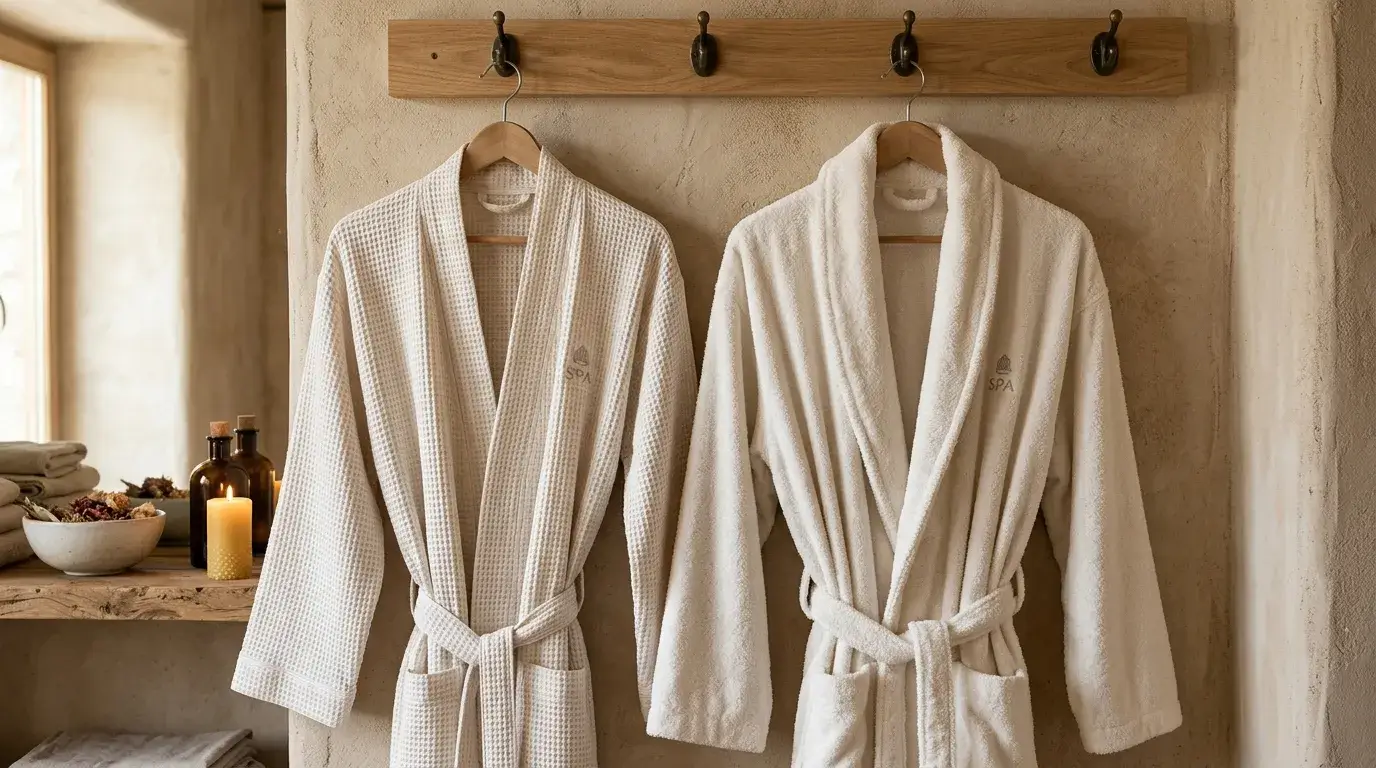
Terry cloth and velour hotel robes should be 400 to 500 GSM. Waffle weave robes4 are much lighter, typically 200 to 250 GSM. Lower density keeps the robes comfortable and prevents guests from feeling weighed down.
Towels and robes do different jobs. A towel dries you off quickly. A robe stays on your body for a long time. This means weight is a big issue. A 700 GSM robe feels like a heavy winter coat. Guests do not want that after a hot shower.
I always advise my clients to go lighter on robes. But you might ask, does a light robe feel cheap? Not if you choose the right texture.
Terry Cloth vs. Waffle Weave
There are two main types of robes we supply at Hotemax. Each has a different purpose.
- Terry or Velour Robes: These are plush and warm. They sit around 400 to 500 GSM. They offer warmth but do not crush the wearer.
- Waffle Weave Robes: These are my secret weapon for spas. They sit at 200 to 250 GSM.
Why are waffle robes so great? They use an illusion. The waffle texture creates a huge surface area. This means they absorb water very well. However, they remain very light.
"Waffle robes have a low density but absorb water perfectly. They are a secret weapon for luxury spas managing laundry overhead."
You must think about how the guest moves. A lighter robe allows them to relax, read, or get ready without sweating. Lower density is actually a premium feature for wearable linens.
Why Does GSM Mean Something Entirely Different for Duvets?
Buying bedding based on towel metrics is a huge mistake. It leads to hot, uncomfortable beds. I will clear up the confusion between bedding covers and inserts.
For duvet inserts, GSM measures the fill weight, not the fabric density. A lightweight summer insert is 150-200 GSM. An all-season insert is 250-300 GSM. For duvet covers, thread count is the primary metric, not GSM.
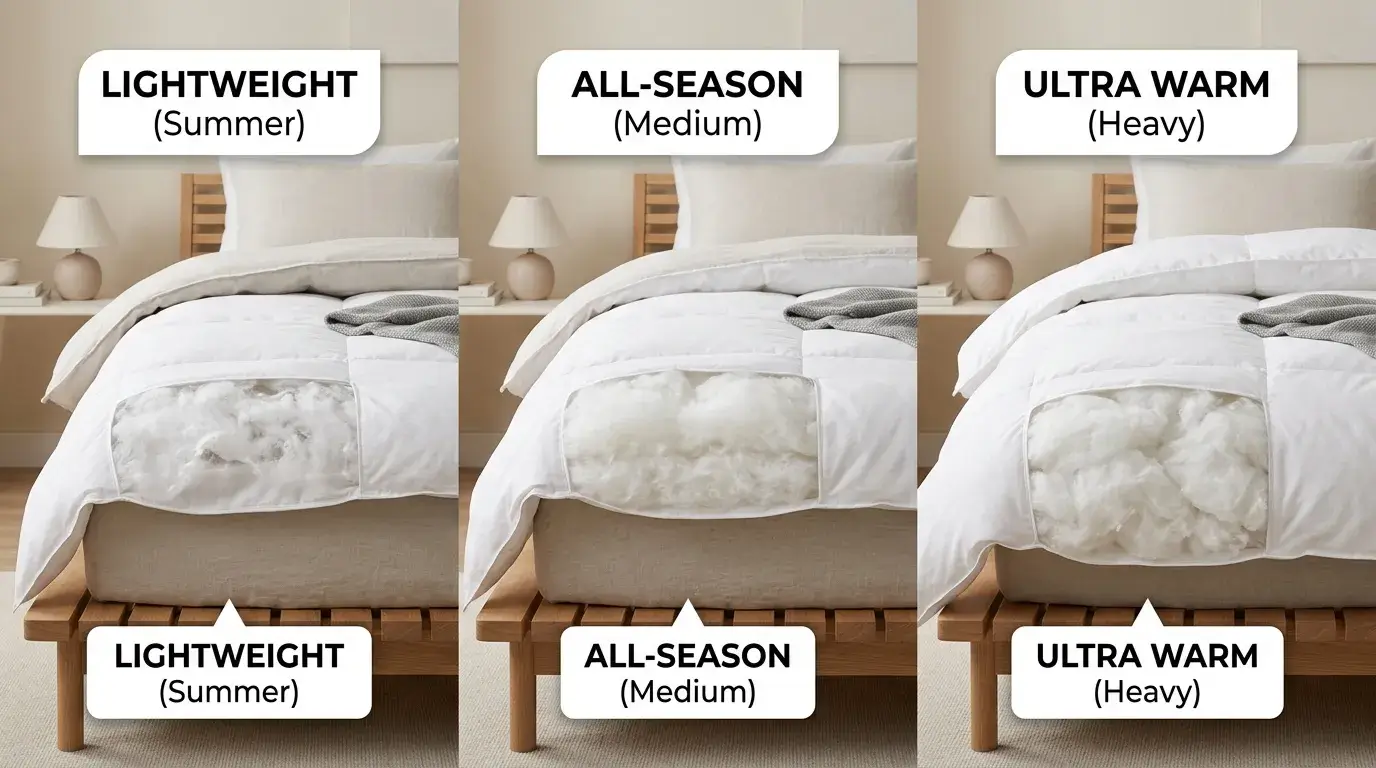
This is the biggest curveball in hotel procurement. I see buyers confuse this all the time. They ask me for an 800 GSM duvet cover. I have to stop them. If you put an 800 GSM fabric on a bed, the guest will overheat instantly.
When we talk about duvets, we must separate the cover from the insert. They use different rules.
Covers vs. Inserts: The Big Difference
For a cotton duvet cover, we use Thread Count (TC)5. We do not use grams per square meter. The only time we use weight for covers is with cheap microfiber6. If you use microfiber, 120 GSM is the minimum for commercial durability.
For the duvet insert, the rules change again. Here, the number measures the fluff inside the blanket. It measures the insulation.
- Summer/Lightweight: 150 to 200 GSM
- All-Season: 250 to 300 GSM
- Winter/Heavyweight: 400+ GSM
Think about your room temperature. Most hotels keep rooms around 68 to 72 degrees Fahrenheit. Therefore, an all-season insert (250-300 GSM) is perfect. It keeps guests warm but not sweaty. Do not mix up your bathroom math with your bedroom math. They are two totally different worlds.
Do High GSM Linens Hurt Your Operational Costs?
Rising laundry bills eat your profits. Heavy linens slow down your entire housekeeping team. I will explain why thick towels might be the hidden leak in your budget.
High GSM towels increase operational costs significantly7. Jumping from 500 to 800 GSM can increase drying times by 40%. This drives up electricity and gas bills, delays room readiness, and causes faster wear on commercial dryers.
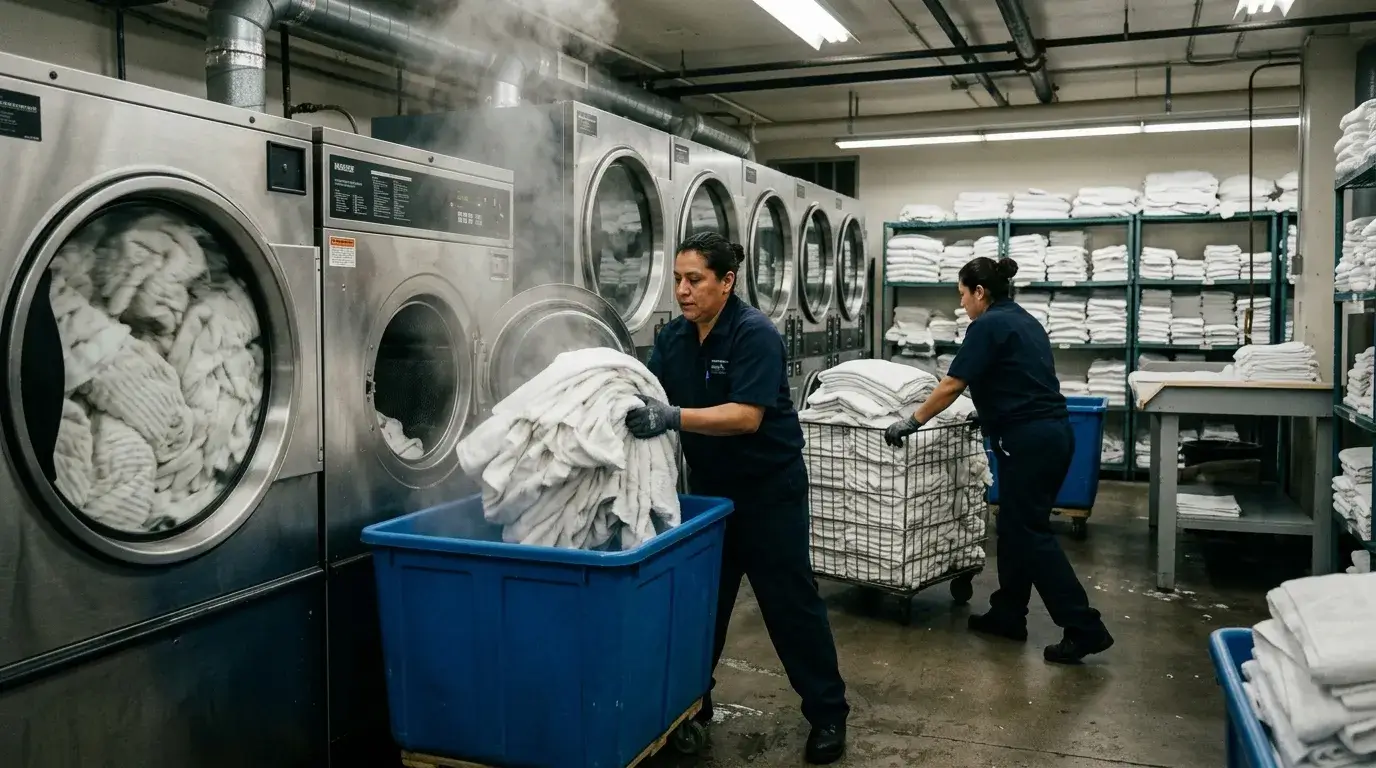
We must talk about the bottom line. It is easy to buy the thickest towel. It is hard to wash thousands of them every single day. I always look at the hidden costs of heavy linens.
Let us look at a simple math problem. High density means more cotton. More cotton holds more water. More water requires more heat and time to dry.
The Machine Capacity Strain
Heavy towels take up more physical space in your washing machines. This creates a huge bottleneck for your staff.
| Towel Density | Towels Per Wash Load | Drying Time Increase |
|---|---|---|
| 500 GSM | 50 towels | Baseline (0%) |
| 650 GSM | 40 towels | +20% |
| 800 GSM | 30 towels | +40% |
As you can see, heavy items drastically reduce your operational throughput. Your staff has to run more loads. Your gas and electric bills go up.
There is also a wear-and-tear paradox. Denser fabrics are technically stronger. But they spend much more time tumbling in a hot commercial dryer. This extra heat breaks their fibers down faster. A medium-weight towel dries quickly and escapes the heat sooner.
"A commercial washer that holds fifty 500-GSM towels might only fit thirty 800-GSM towels. This ruins laundry efficiency."
You must balance guest comfort with laundry reality. A 550 GSM towel saves you money every time you wash it. Over a year, that is a massive amount of saved profit.
Conclusion
Choose medium-weight towels for laundry efficiency, light waffle robes for guest comfort, and pick duvet inserts based on room temperatures.
-
This resource explains the technical definition of GSM and how fabric density impacts the thickness and absorbency of commercial hotel towels. ↩
-
Discover the differences between Turkish and Egyptian cotton, and why long-staple Turkish fibers provide the best balance of softness and quick-drying capabilities. ↩
-
Learn about the zero-twist manufacturing process, which dissolves synthetic casings to leave untwisted cotton fibers that feel incredibly fluffy while remaining lightweight. ↩
-
Explore the functional benefits of the three-dimensional waffle weave pattern, including its high breathability, quick-drying nature, and lightweight comfort. ↩
-
Read this comprehensive guide on why thread count is the primary metric for hotel sheeting and duvet covers, and how it balances durability and guest comfort. ↩
-
Check out this overview of wholesale microfiber bed sheets and why synthetic materials are favored in budget-conscious hospitality environments. ↩
-
Understand how towel weight directly impacts a hotel’s laundry efficiency, energy consumption, and long-term operational costs. ↩