
A Practical Procurement Guide for Hotel Buyers
When I speak with hotel procurement teams, I hear the same concern:
“We see ISO, OEKO-TEX, BSCI on every supplier website. But which ones actually matter for our hotel?”
I understand the confusion. Certifications can look impressive. But not all certifications reduce risk. Some prove product safety. Some prove management systems. Some are only audit frameworks. And some are misused in marketing.
In this guide, I will explain what truly matters when sourcing hotel linen from China. I will also explain how to verify certifications properly. I will write this from a hotel buyer’s perspective. I focus on risk control, compliance, and operational durability.
Why Certifications Matter in Hotel Linen Procurement
Hotel linen touches your guests directly. Guests sleep on sheets. Guests use towels daily. Guests expect comfort and safety.

Certifications help reduce three major risks:
- Guest safety risk – chemical residues, skin irritation
- Operational risk – shrinkage, tearing, color fading after industrial washing
- Brand risk – social compliance failures or sustainability misclaims
For example, in the European Union, textiles must comply with REACH regulations1, which restrict harmful substances in products. REACH compliance is mandatory, not optional. Hotels operating in the EU cannot ignore this.
So certifications are not decoration. They are risk management tools.
The Three Certification Categories Every Hotel Buyer Must Understand
I always divide certifications into three categories. This helps prevent confusion.
| Category | What It Proves | Examples |
|---|---|---|
| Product Safety | Harmful substance testing | OEKO-TEX® STANDARD 1002 |
| Management Systems | Factory process control | ISO 90013, ISO 140014 |
| Social Compliance | Ethical labor standards | BSCI (learn more via amfori here)5, SMETA (see Sedex official explanation here)6 |
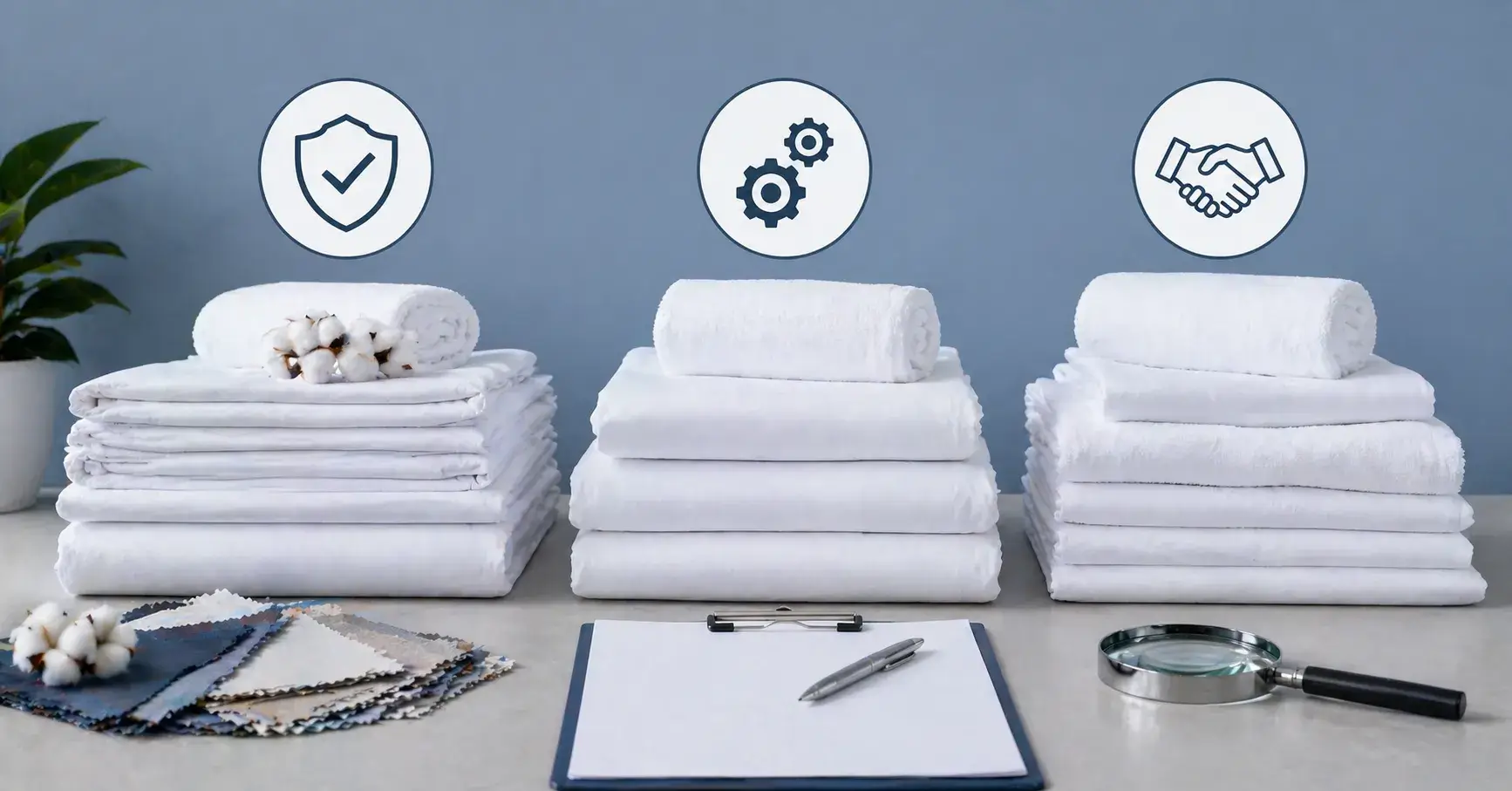
Each category serves a different purpose. Mixing them leads to poor decisions.
Product Safety: OEKO-TEX® STANDARD
When I evaluate bedding or towels, OEKO-TEX® STANDARD 100 is the first certificate I check.

OEKO-TEX tests textiles for harmful substances. It sets strict limit values for chemicals that may affect human health. It applies to products with direct skin contact, such as:
- Bed sheets
- Pillowcases
- Duvet covers
- Towels
- Bathrobes
However, I always verify carefully.
What I Always Check:
- Is the certificate valid this year?
- Does the legal factory name match?
- Does it cover the finished product or only fabric?
- Does it include accessories like elastic bands or zippers?
I once reviewed a supplier’s OEKO-TEX certificate. The certificate covered woven fabric only. The finished product was assembled at a different site. That mismatch created compliance risk. The buyer avoided a costly mistake by checking scope.
Certification logos alone are not enough. Scope verification matters.
Quality Management: ISO 9001
ISO 9001 is a quality management system certification. It proves that the factory follows structured procedures. It includes:
- Documentation control
- Process monitoring
- Corrective actions
- Internal audits
ISO 9001 reduces process chaos. But it does not guarantee sheet durability.
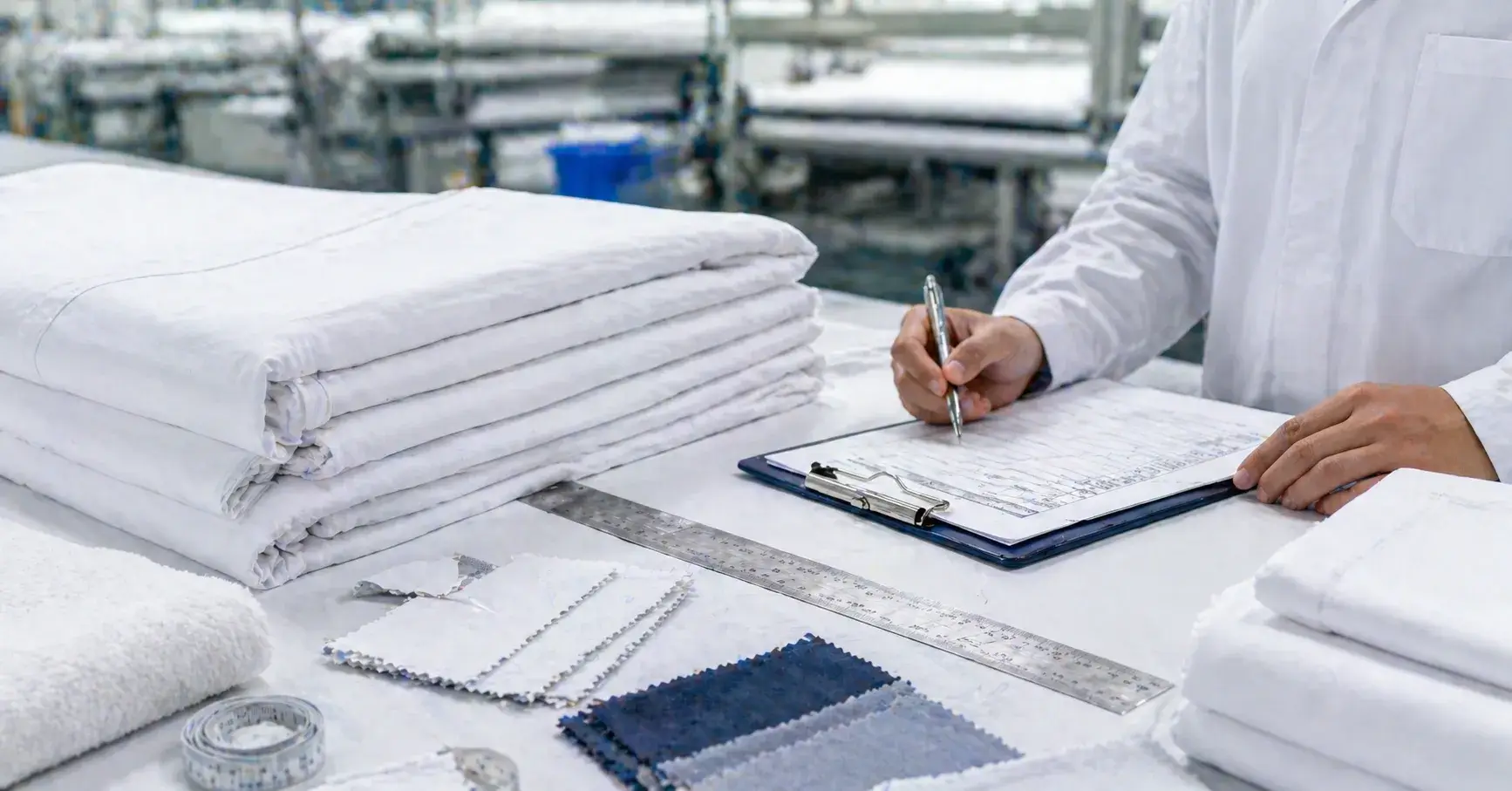
If a sheet shrinks 7% after 40 industrial washes, ISO 9001 does not prevent that. Only product specification control and laboratory testing prevent that.
So I always combine ISO 9001 with performance test reports.
What Performance Tests Matter for Hotel Linen?
Here are the most relevant tests I request:
| Test | Why It Matters | Example Standard |
|---|---|---|
| Shrinkage | Controls size stability | ISO 6330 (see official standard description here)7 |
| Colorfastness to washing | Prevents fading | ISO 105-C06 |
| Tearing strength | Ensures durability | ISO 13937 |
| Pilling resistance | Maintains appearance | ISO 12945 |
Hotels with industrial laundries often wash linens at 60–90°C. I ask for test data that reflects real hotel conditions.
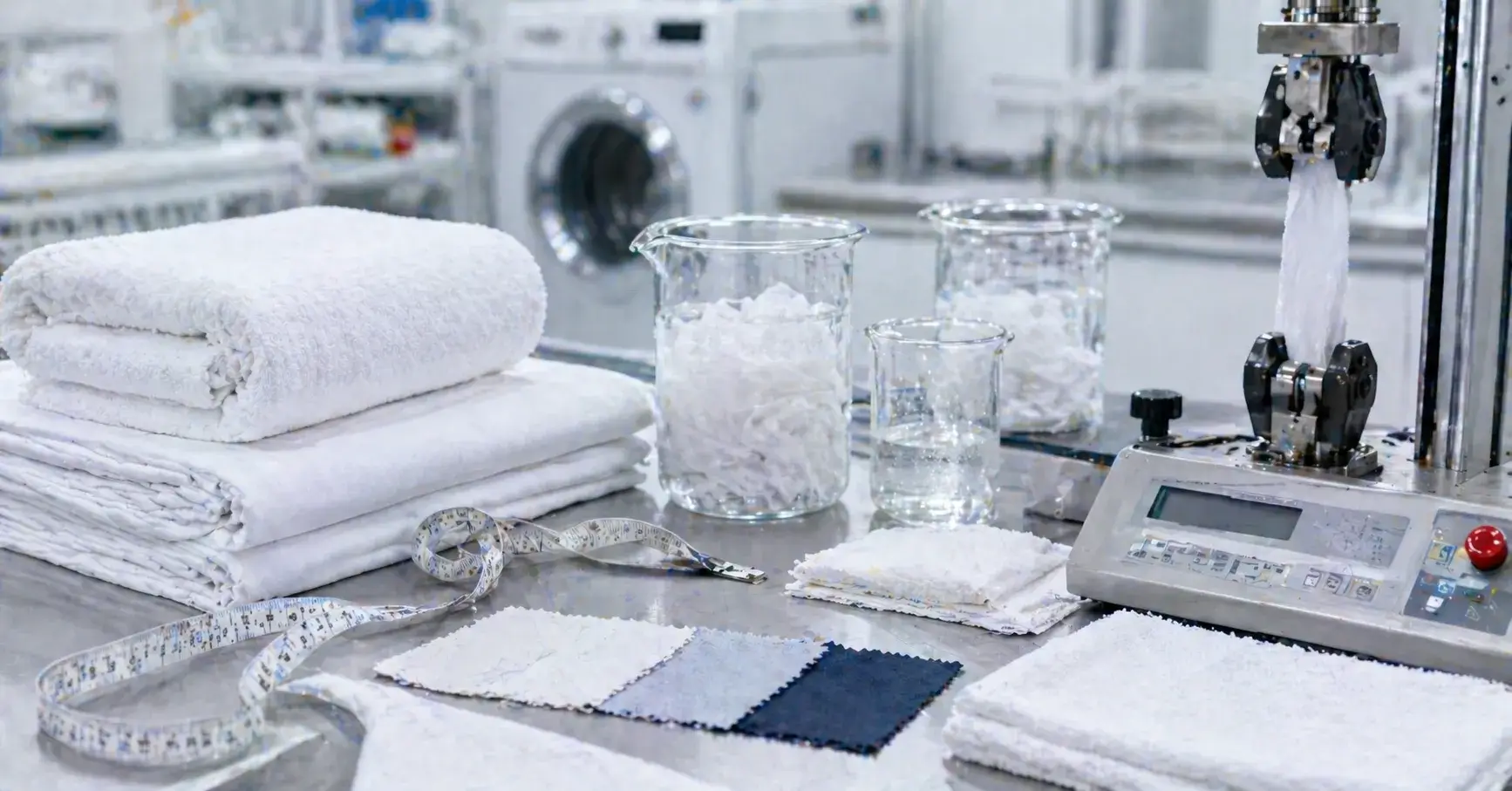
This level of detail separates professional suppliers from trading companies.
Environmental Management: ISO 14001
ISO 14001 certifies that a factory manages environmental impact systematically.
It covers:
- Waste control
- Emission monitoring
- Resource management
ISO 14001 does not mean the product is organic. It means the factory follows environmental procedures.
Large hotel chains often include ISO 14001 in supplier qualification lists, especially in Europe and the Middle East.
Social Compliance: BSCI and SMETA
Many suppliers say “Sedex certified.” That wording is inaccurate.

Sedex is a data-sharing platform.
SMETA is the audit methodology.
BSCI is another social compliance audit system.
These audits evaluate:
- Working conditions
- Health and safety
- Labor standards
- Ethical practices
I always check:
- Audit date
- Audit scope
- Corrective action status
Expired audits are common. I verify validity before shortlisting.
For global hotel groups, at least one recognized social audit is often required.
REACH Compliance for EU Buyers
REACH is a European regulation governing chemicals in products.

It is not a framed certificate. It is a legal requirement.
For EU buyers, I request:
- Declaration of Conformity
- Restricted substance testing reports
- SVHC communication statements
Without this documentation, EU market access may be blocked.
What About Organic or Recycled Claims?
If a supplier claims “organic cotton,” I request GOTS certification (see official site here)8.

If they claim “recycled content,” I request GRS certification.
Chain-of-custody verification is essential. Marketing claims without certification create brand risk.
Conclusion: What Should You Require?
If I were sourcing hotel linen from China today, my minimum baseline would include:
- ISO 9001
- OEKO-TEX® STANDARD 100
- Performance test reports aligned with hotel wash conditions
- Social audit (BSCI or SMETA) for large brand projects
- REACH compliance documentation for EU markets
Certifications reduce risk. Verification reduces uncertainty.
In hospitality, guests see softness. But procurement must see compliance behind the fabric.
If you are reviewing supplier certifications and want a second professional opinion, I am always open to discussing compliance frameworks and documentation evaluation.
Because strong hotels protect their brand not only through service, but also through responsible sourcing.
-
Official European Chemicals Agency overview of REACH regulation requirements for products sold in the EU. ↩
-
Official OEKO-TEX® explanation of STANDARD 100 testing criteria and certification scope. ↩
-
ISO’s official page explaining ISO 9001 quality management systems and certification framework. ↩
-
ISO official explanation of ISO 14001 environmental management systems. ↩
-
amfori’s official explanation of BSCI social compliance framework. ↩
-
Sedex official explanation of SMETA social audit methodology and scope. ↩
-
ISO official description of ISO 6330 textile washing and drying procedures standard. ↩
-
Official Global Organic Textile Standard (GOTS) explanation of organic textile certification requirements. ↩