
China is one of the main sourcing destinations for disposable, luxury, and custom hotel slippers. Its supplier base covers everything from low-cost non-woven slippers to cotton terry, waffle, velour, coral fleece, linen, cork, and reusable designs.
The difficult part is not finding a supplier. It is finding one that can reproduce the approved sample across thousands of pairs, deliver on schedule, and document what goes into the product.
I evaluated ten hotel slipper suppliers using publicly available information current to August 23, 2026. The assessment considers product range, disclosed capacity, customization, MOQ, delivery information, quality documentation, export support, and the transparency of each supplier’s claims.
This is a procurement-oriented shortlist, not an official market-share ranking. Public information cannot prove which company is the largest or objectively “best.” Buyers should use the list to create an RFQ shortlist and then complete their own factory, sample, certificate, and production checks.
A supplier website can help you build a shortlist. Only an approved sample, written specification, factory review, and shipment inspection can qualify the actual order.
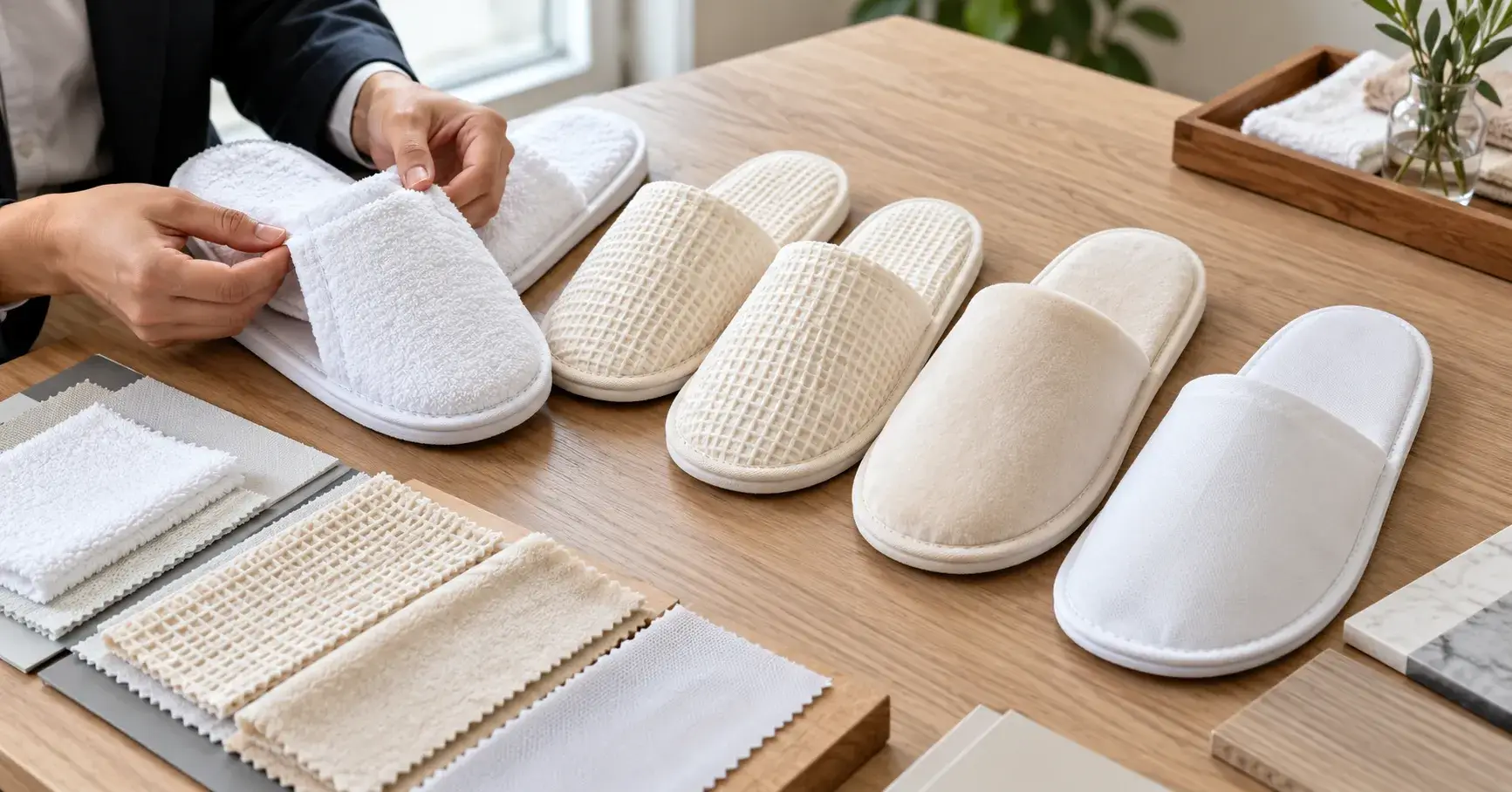
Why Do Hotels Source Slippers From China?
Many of the suppliers in this guide are located in or near Yangzhou, Jiangsu Province. The area has an established hotel-amenity supply chain covering slippers, toiletries, toothbrushes, packaging, towels, bathrobes, and other guest-room products.
This concentration offers several practical benefits:
- Access to many upper fabrics, sole materials, and packaging suppliers
- Efficient development of custom designs
- Production options for economy through luxury hotels
- Logo embroidery, printing, woven labels, and custom packaging
- Opportunities to consolidate slippers with other hotel amenities
The same concentration creates risks. Some companies manufacture in-house, some outsource selected processes, and others mainly coordinate production through partner factories. A low quotation may also hide a thinner EVA sole, lighter fabric, less padding, loose size tolerances, or simpler packaging.
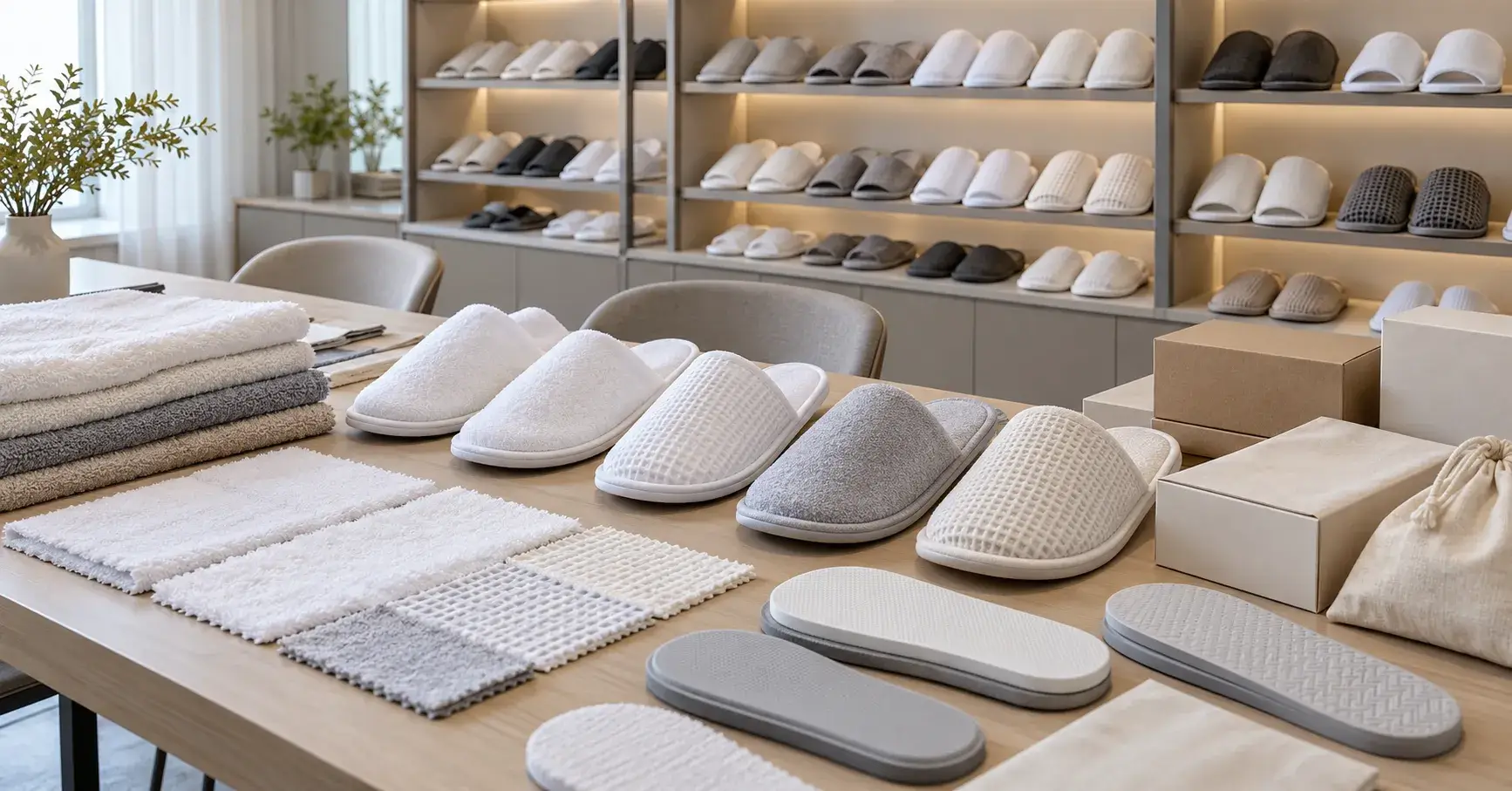
Hotels should therefore compare a controlled bill of materials, or BOM, instead of comparing product names alone.
How I Evaluated These Hotel Slipper Suppliers
The ranking uses the following procurement factors:
| Evaluation factor | What hotel buyers should look for |
|---|---|
| Quality and compliance | Current certificates, test reports, audit records, defined QC processes, and traceability |
| Capacity and delivery | Slipper-specific capacity, equipment, staffing, sample time, bulk lead time, and peak-season planning |
| Product suitability | Disposable and premium styles, material range, sizes, sole structures, and hotel-segment fit |
| Customization | OEM/ODM, embroidery, printing, labels, colors, sole patterns, and packaging |
| Commercial terms | MOQ, sample policy, price transparency, payment terms, and trade terms |
| Export support | Export markets, documentation, communication, shipping support, and issue resolution |
| Evidence quality | Consistency between company websites, audits, marketplace profiles, and other public records |
Supplier statements about capacity, customers, certificates, or performance should still be verified. An SGS supplier audit or TÜV-verified profile, for example, is not automatically a product-performance certification.
Top 10 China Hotel Slipper Suppliers to Evaluate in 2026
| Rank | Supplier | Best For | Key Strength | Buyer Caution |
|---|---|---|---|---|
| 1 | LMZ (Jiangsu) Industrial Co., Ltd. | Large hotel groups and consolidated amenity orders | Broad product range and publicly listed management and material credentials | Confirm certificate scope, slipper capacity, and current lead time |
| 2 | Yangzhou Yingteji Trading Co., Ltd. | Large-volume hotel and airline programs | Strong disclosed slipper capacity and OEM development | Verify certificates and peak-season delivery commitments |
| 3 | Yangzhou Haisheng Slipper Co., Ltd. | Medium and large orders requiring a slipper specialist | Focused manufacturing and relatively transparent commercial data | Confirm current capacity and outsourced processes |
| 4 | iHotel Guest Amenities Co., Ltd. | Boutique hotels and highly customized designs | Detailed decoration options and cork-based products | Confirm slipper-specific certificates and annual capacity |
| 5 | Jiangsu Guanghao Hotel Supplies Group | Combined slippers, towels, bathrobes, and linen projects | Integrated hotel textile sourcing | Slipper MOQ, price, capacity, and lead time are not widely published |
| 6 | Yangzhou Mingchi Hotel Products Co., Ltd. | Medium-MOQ development orders | Broad fabric selection and accessible published MOQs | Current legal entity is relatively new |
| 7 | Yangzhou New Lotus Plastic & Daily Chemicals Co., Ltd. | Exporters needing slippers plus guest amenities | Broad price and product positioning | Verify current production capacity and product-level certificates |
| 8 | Yangzhou Aplus Amenities International Co., Ltd. | Buyers comparing many ready-developed designs | Large public product catalog and standardized MOQs | Limited public capacity and lead-time data |
| 9 | Yangzhou Eco Nature Hotel Supply Co., Ltd. | Eco-positioned slipper development | Clear focus on alternative-material products | Verify material claims, traceability, and in-house processes |
| 10 | Yangzhou Zunzhu Tourism Supplies Co., Ltd. | Small test orders and price-sensitive projects | Low published entry MOQ | Raw-material traceability and QC resources need close review |
These positions reflect public-data transparency and purchasing suitability. They do not mean that supplier number one fits every project better than supplier number ten.
1. LMZ (Jiangsu) Industrial Co., Ltd.
LMZ offers hotel slippers across several material and price levels.1 Its publicly visible range includes terry, nap fabric, cotton velour, coral fleece, waffle, linen, EVA, and other sole constructions.
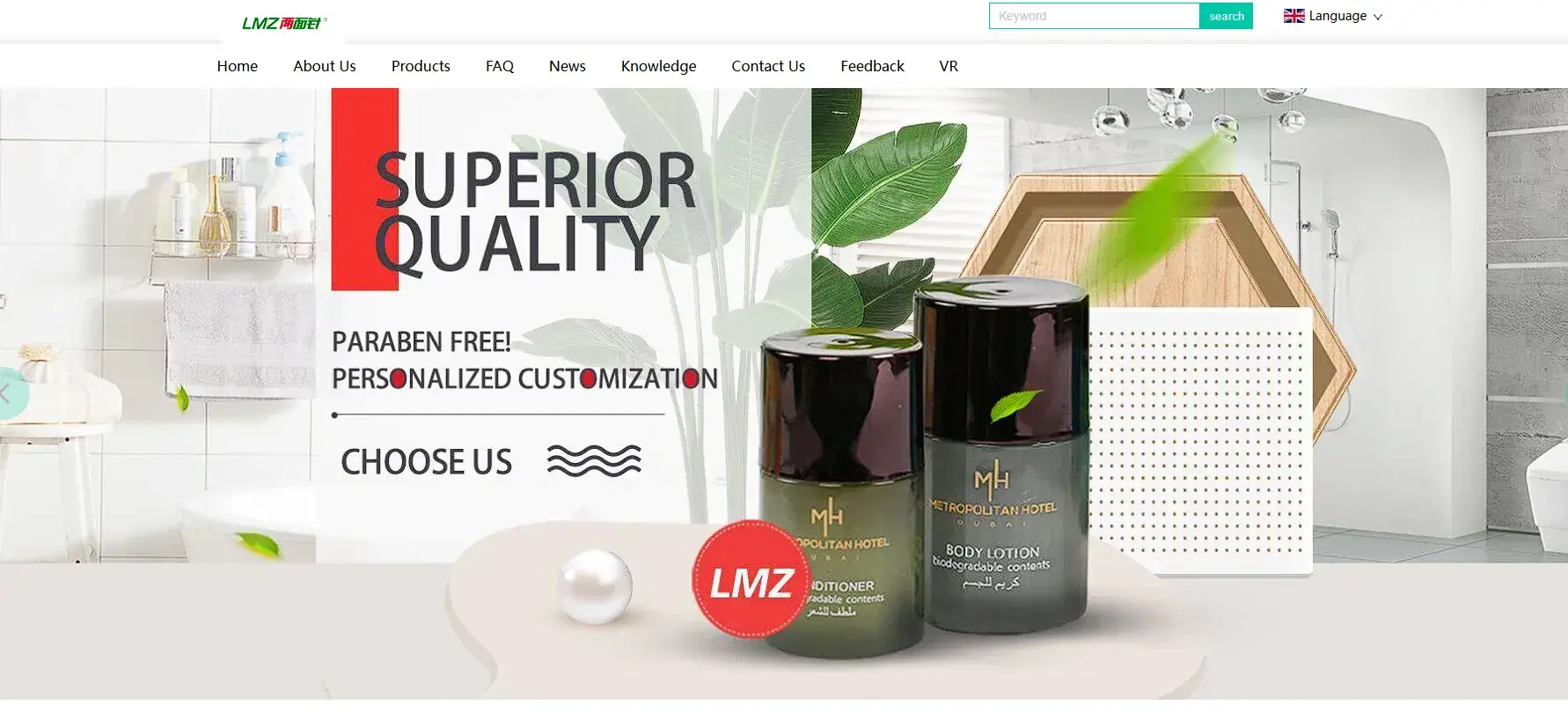
I place LMZ first because it combines hotel slippers with a broader amenity supply system. Public profiles also describe a relatively large organization and list several management, social-compliance, forestry, and recycled-material credentials.
Why hotel buyers evaluate LMZ:
- Wide selection for economy, upscale, and luxury properties
- OEM/ODM, embroidery, printing, and packaging customization
- Ability to combine slippers with toiletries and other guest amenities
- Public product examples spanning several material and price levels
What to verify before ordering:
- Slipper-specific monthly capacity
- Current sample and bulk-production schedules
- Certificate number, owner, expiration date, and scope
- Whether each certificate covers the ordered material or finished slipper
- MOQ for each material, color, size, and logo method
Best fit: Large hotel groups, international distributors, and buyers consolidating several amenity categories.
2. Yangzhou Yingteji Trading Co., Ltd.
Yangzhou Yingteji specializes in slippers for hotels, airlines, and other hospitality applications.2 Its website states annual capacity above 30 million pairs, supported by approximately 4,000 square meters of workshop space, 160 machines, and 150 employees.
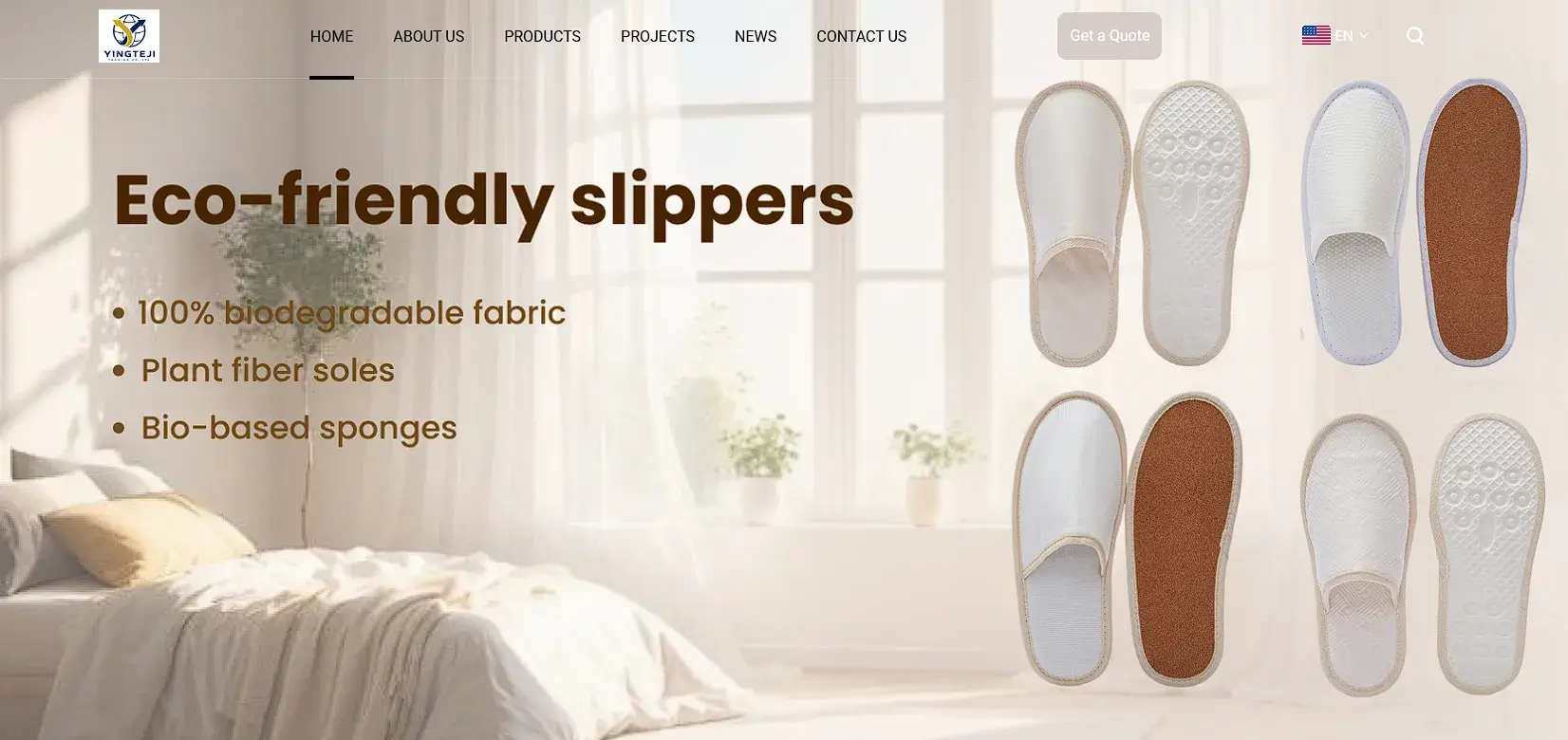
Those figures make Yingteji one of the strongest large-volume candidates in this comparison. However, they are company-published figures and should be confirmed before an annual contract.
Why hotel buyers evaluate Yingteji:
- Strong publicly disclosed slipper capacity
- Disposable, coral fleece, cotton-linen, thicker-sole, and alternative-material options
- OEM/ODM support and an in-house design function
- Publicly described hotel and airline project experience
- Published product examples with relatively accessible MOQs
What to verify before ordering:
- Current capacity by month and by production line
- Peak-season production availability
- Standard lead time after sample approval
- Certification documents for the exact product
- Percentage of cutting, sewing, bonding, logo work, and packing completed in-house
Best fit: Hotel chains, airlines, distributors, and buyers planning high-volume annual programs.
3. Yangzhou Haisheng Slipper Co., Ltd.
Haisheng is a more specialized slipper supplier. Public materials describe cutting, sewing, punching, and bonding equipment, together with OEM/ODM services.
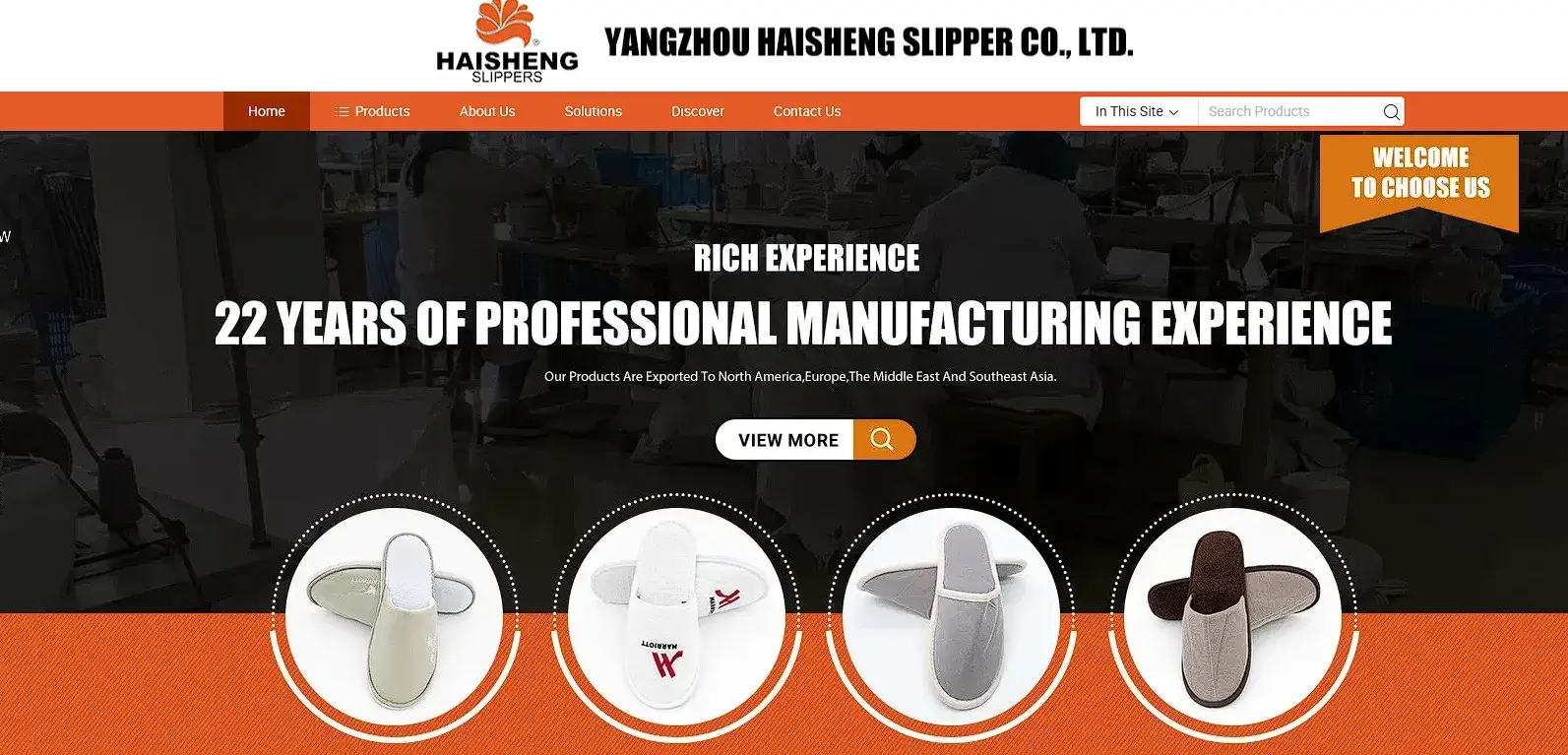
Its range includes coral fleece, velour, waffle, towel fabrics, and alternative sole materials. Published commercial information also gives buyers useful starting points for MOQ, pricing, and seasonal lead times.
Why hotel buyers evaluate Haisheng:
- Business focus centered on slippers
- Styles for hotels and airline applications
- Embroidery, printing, labels, colors, and thickness customization
- Public indications of orders serving North America, Europe, Asia, and the Middle East
- Relatively clear peak- and off-season delivery estimates
What to verify before ordering:
- Current annual capacity, because the widely published figure is older
- The difference between its company-establishment and factory-history dates
- Whether any production stages are subcontracted
- Current ISO or other quality certificates
- Wet- and dry-surface grip performance for the proposed sole
Best fit: Hotels, amenity distributors, and importers seeking a focused slipper manufacturer with competitive commercial options.
4. iHotel Guest Amenities Co., Ltd.
iHotel Guest Amenities stands out for design development.3 The company publishes specific information about screen printing, laser decoration, and heat-transfer processes for slipper soles. It also offers cork and other eco-positioned designs.

This capability can be useful for boutique hotels that want the slipper to become part of the room’s visual identity rather than a generic white amenity.
Why hotel buyers evaluate iHotel:
- Screen printing, laser decoration, and heat-transfer options
- Custom upper, sole, logo, color, thickness, and packaging
- Cork and other differentiated material choices
- Publicly described sample and production timelines
- Broader hotel and spa amenity range
What to verify before ordering:
- Annual slipper capacity
- Material composition of every “eco” product
- Product-level certificates and test reports
- Color and logo tolerances for decorated soles
- Actual lead time when special materials are not in stock
Best fit: Boutique hotels, resorts, spas, and hospitality brands requiring distinctive product design.
5. Jiangsu Guanghao Hotel Supplies Group
Guanghao differs from slipper-only suppliers because its broader strength is hotel textiles. Its public range covers bedding, towels, bathrobes, slippers, toiletries, and miscellaneous guest-room products.
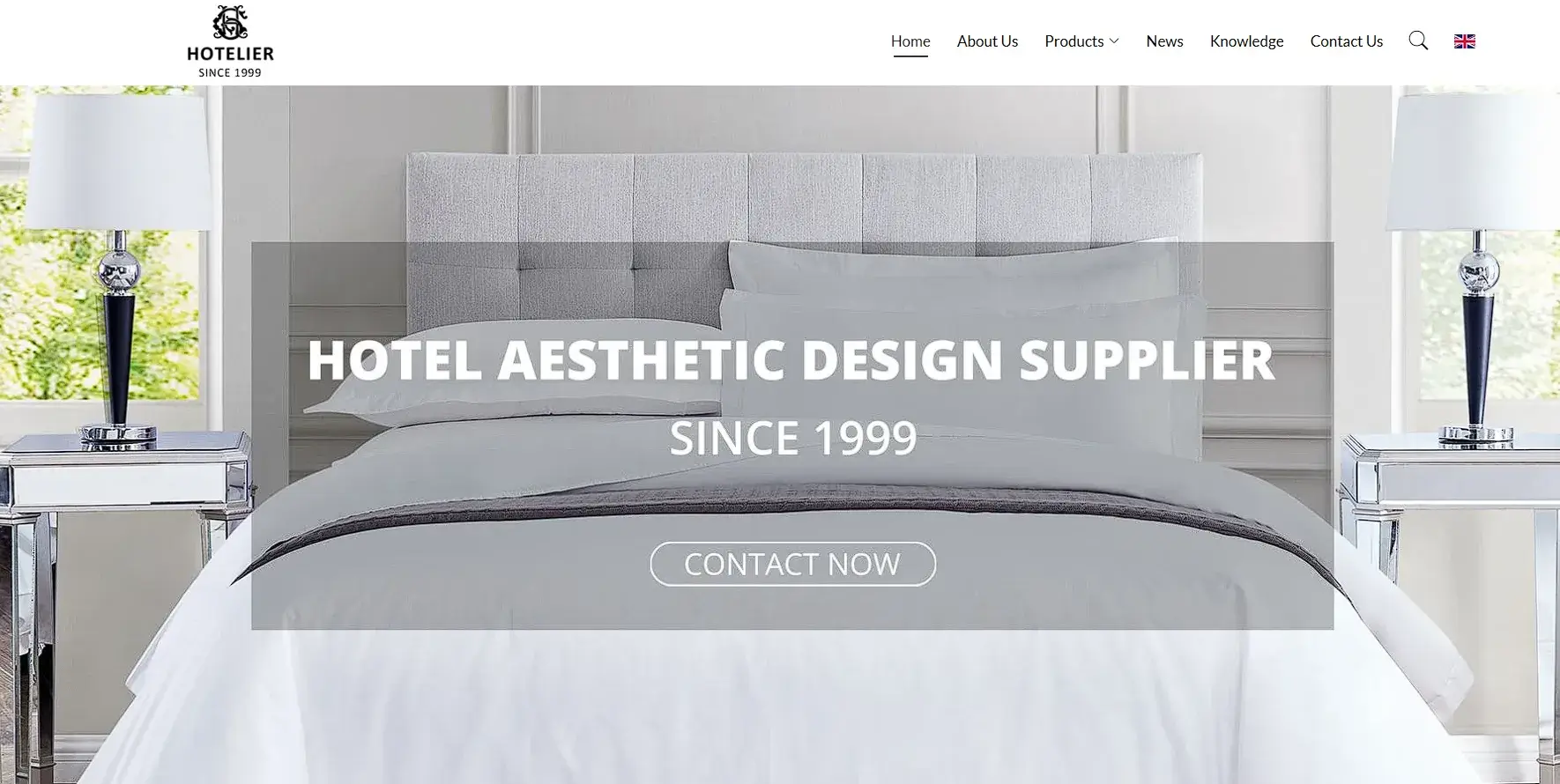
This structure may be valuable when a hotel wants slippers to match its towels, bathrobes, and room presentation.
Why hotel buyers evaluate Guanghao:
- Integrated hotel textile and amenity assortment
- Potential to coordinate fabric, color, and branding across products
- Publicly listed ISO and OEKO-TEX-related information
- Factory-visit and customization support
- Suitable for project-based hotel purchasing
What to verify before ordering:
- Whether certificates cover the slipper upper or complete product
- Slipper-specific capacity and production equipment
- MOQ and production time
- Sole, adhesive, and foam testing
- Which components are made internally and which are purchased
Best fit: Upscale hotels, resort projects, and buyers combining slippers with linens, towels, and bathrobes.
6. Yangzhou Mingchi Hotel Products Co., Ltd.
Mingchi offers terry, coral fleece, waffle, velour, cotton, open-toe, closed-toe, and alternative-material slippers. Public product listings often show an MOQ of around 2,000 pairs, making it more accessible than some high-volume suppliers.
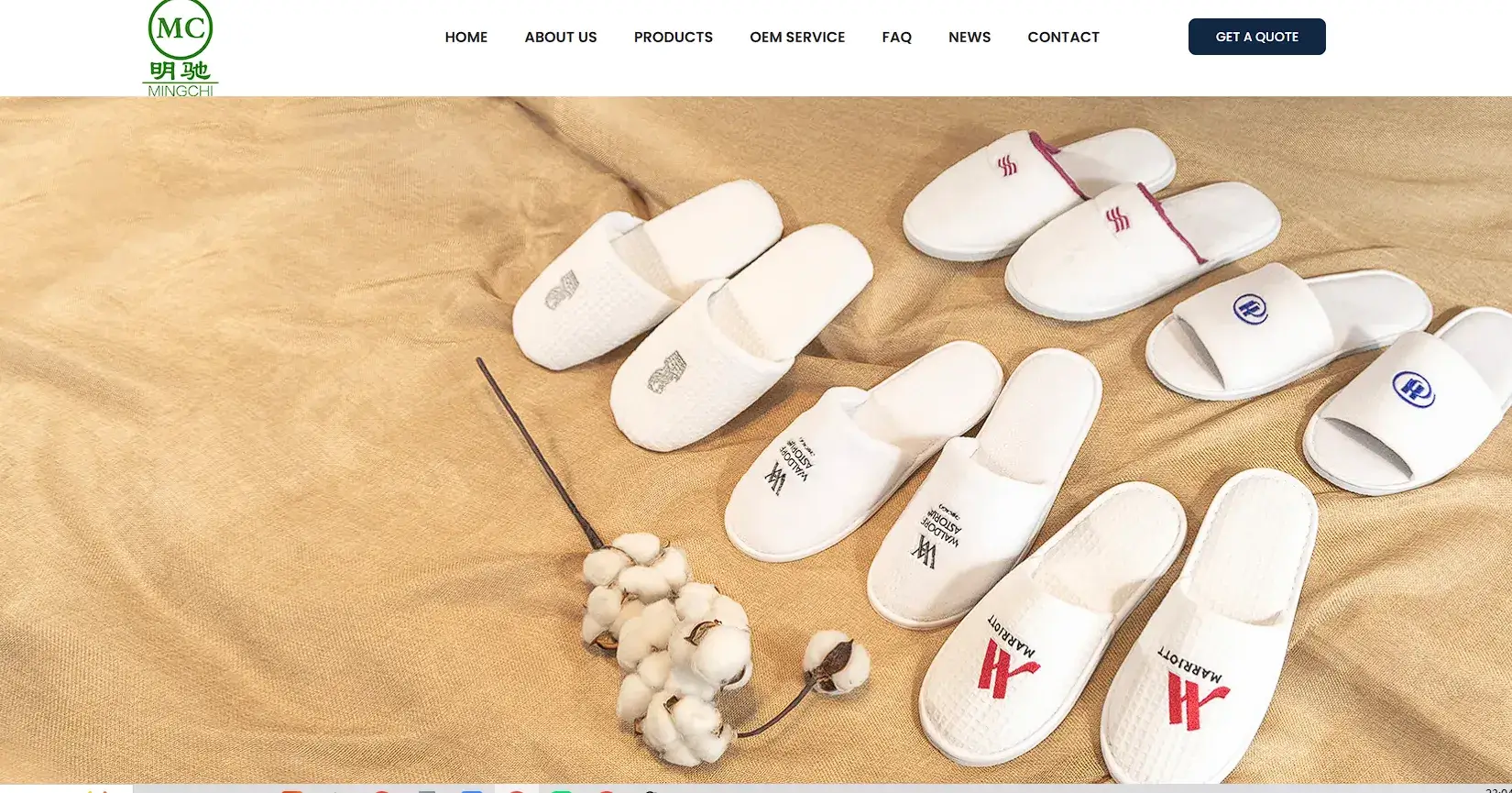
The current legal entity was established in 2024. The company describes an older manufacturing background, but buyers should separate the experience of a predecessor operation from the operating history of the current company.
Why hotel buyers evaluate Mingchi:
- Broad fabric and style selection
- Moderate published MOQs
- OEM/ODM and embroidered-logo options
- Public supplier-audit information
- Potential fit for development and backup-supplier orders
What to verify before ordering:
- Legal relationship with the claimed predecessor factory
- Current equipment, staffing, and capacity
- Export records under the present legal entity
- Product liability and quality responsibilities
- Consistency across at least three separate sample batches
Best fit: Regional hotel groups, importers, and buyers testing orders in the 2,000–10,000-pair range.
7. Yangzhou New Lotus Plastic & Daily Chemicals Co., Ltd.
New Lotus supplies hotel slippers alongside personal-care and other guest amenities. Its public slipper range extends from standard coral velvet designs to higher-priced cotton velour, plush, and luxury products.
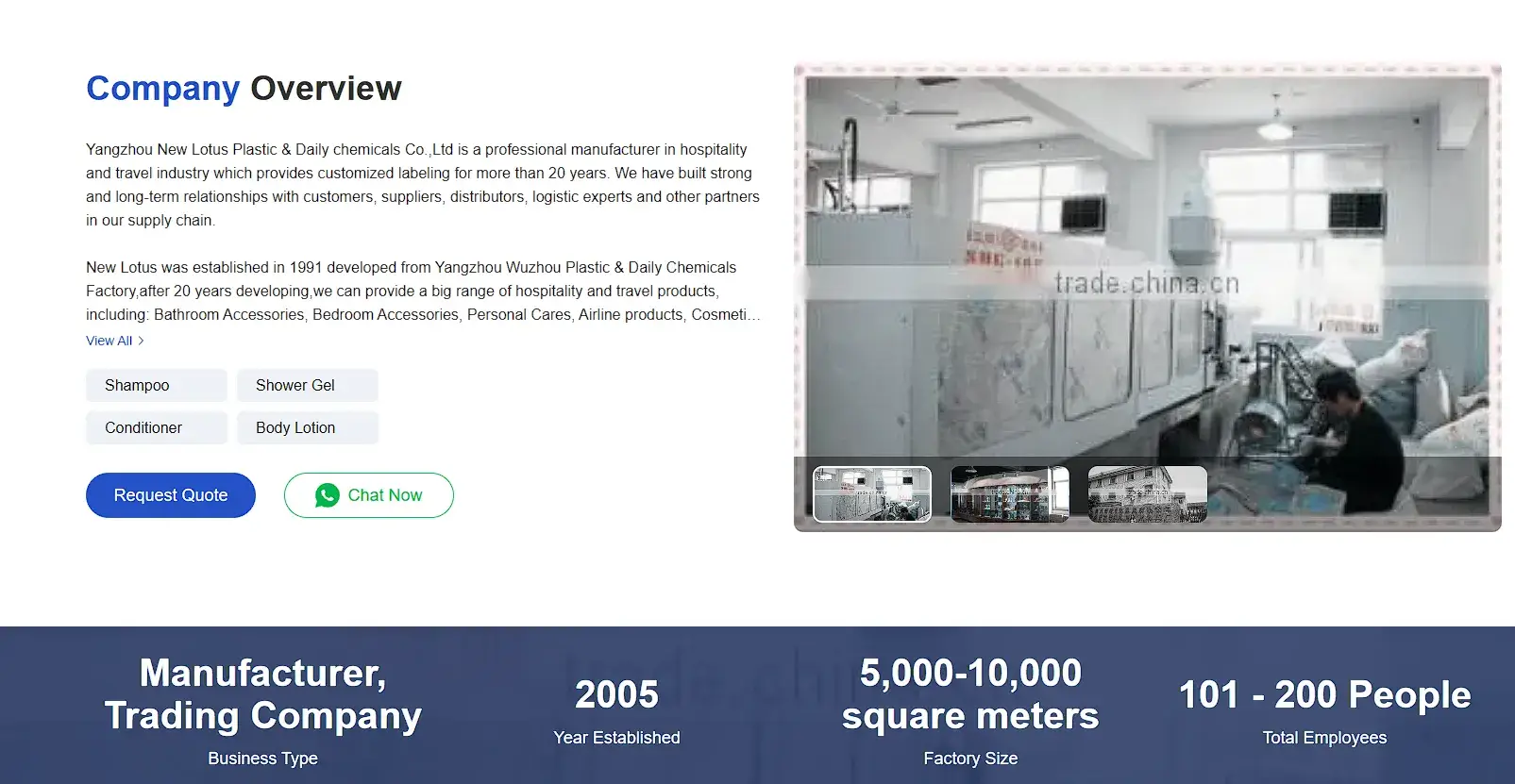
The company’s broad range may help importers source an entire guest-room program, but buyers should not assume every category is produced through the same factory or quality system.
Why hotel buyers evaluate New Lotus:
- Standard and premium slipper selections
- Hotel toiletries and other amenity products
- Long-standing export-oriented business information
- Logo and packaging customization
- Public products targeting North America, Northern Europe, and Southeast Asia
What to verify before ordering:
- Current slipper production capacity
- The legal entity’s establishment and operating history
- Product-level certificates
- Whether premium styles are disposable, take-home, or genuinely washable
- Named-customer claims, which require independent confirmation
Best fit: Hotel-supply distributors and buyers sourcing higher-end slippers together with toiletries.
8. Yangzhou Aplus Amenities International Co., Ltd.
Aplus has a large visible catalog of hotel slipper designs. Public marketplace records show options ranging from basic disposable models to EVA, imitation-cotton, linen-look, and more premium constructions.
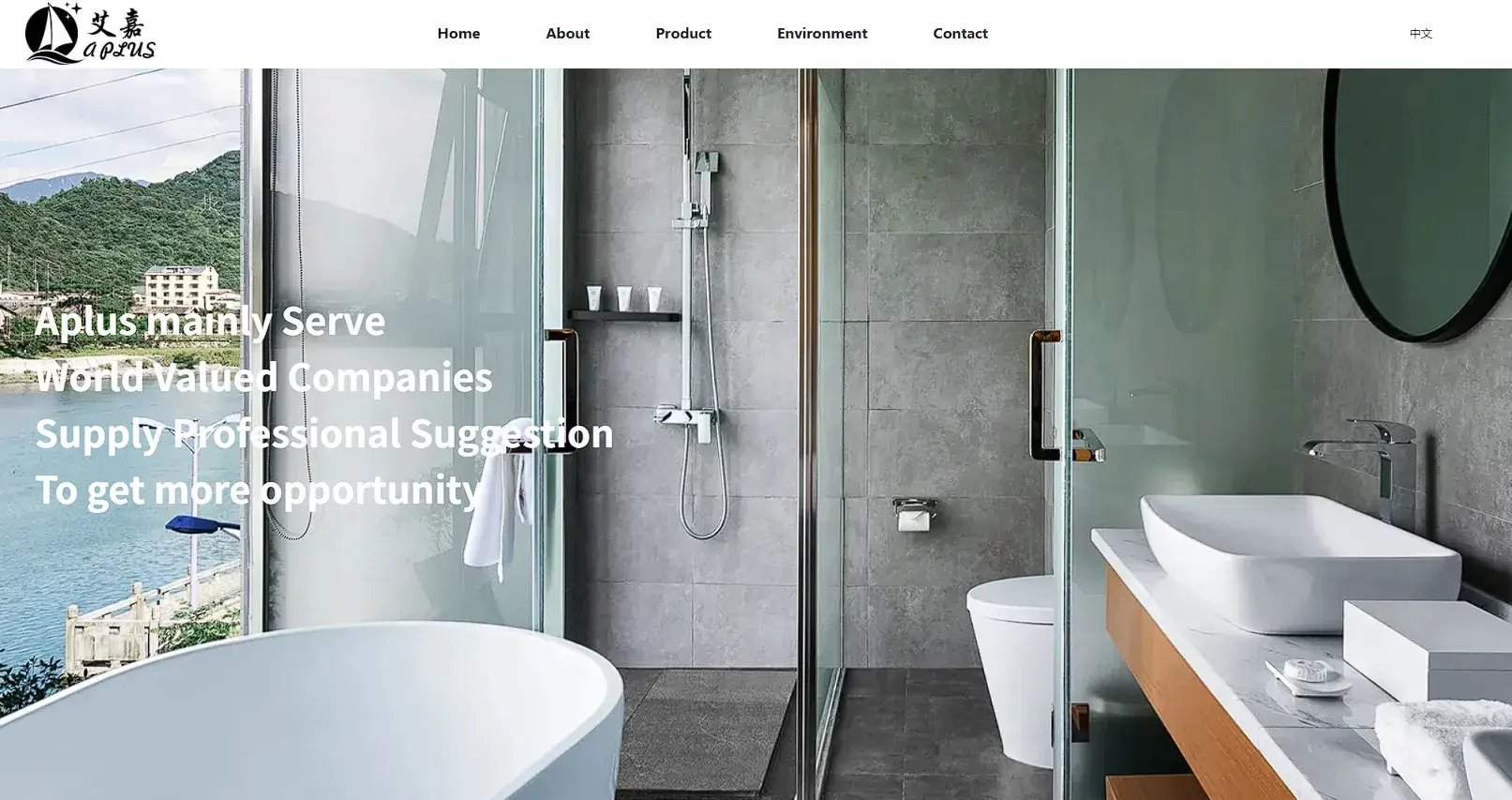
Its large catalog is useful during early product selection. A high number of SKUs, however, does not prove that every model is manufactured in-house or kept in stock.
Why hotel buyers evaluate Aplus:
- Hundreds of publicly visible slipper SKUs
- Clear examples of MOQ and reference prices
- OEM/ODM and logo customization
- Slippers, linens, toiletries, bottles, and room accessories
- Useful starting point for one-stop product selection
What to verify before ordering:
- In-house versus outsourced manufacturing
- Monthly capacity for the selected construction
- Standard sample and bulk lead times
- Material and product certificates
- Availability of raw materials for repeat orders
Best fit: Distributors and hotel buyers who want to compare many existing designs before developing a custom specification.
9. Yangzhou Eco Nature Hotel Supply Co., Ltd.
Eco Nature focuses heavily on hotel slippers marketed with environmental features. Public listings include terry, linen-look, EVA, and biodegradable-positioned products.
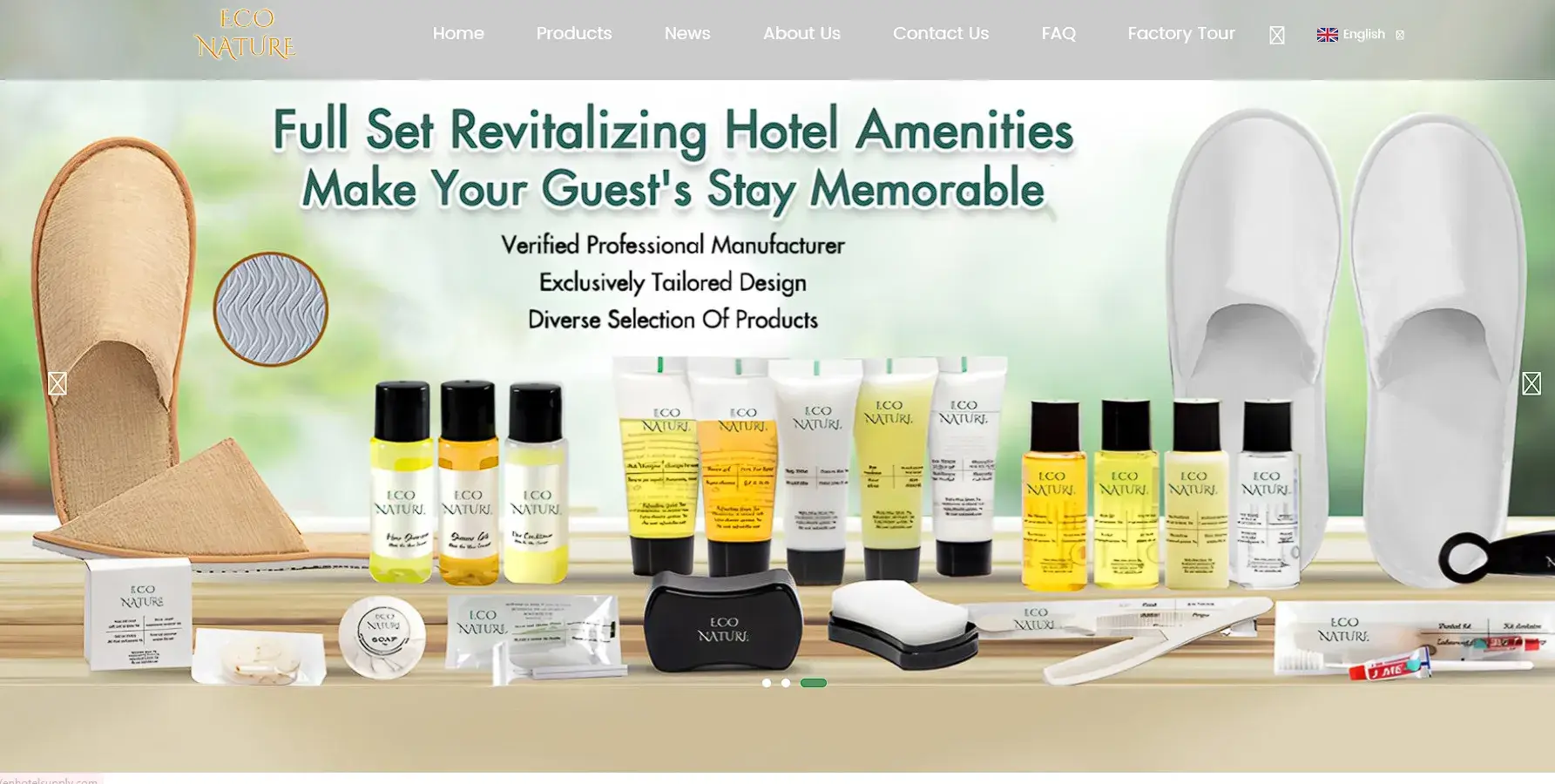
Its specialization makes it a relevant development candidate. Yet terms such as “green,” “eco-friendly,” and “biodegradable” need evidence. A natural-looking upper does not make the complete slipper biodegradable if the sole, adhesive, thread, or packaging uses conventional materials.
Why hotel buyers evaluate Eco Nature:
- Clear focus on alternative-material hotel slippers
- Public MOQ and price examples
- OEM/ODM and branded amenity support
- Potential source for secondary development projects
- Product options beyond standard white non-woven slippers
What to verify before ordering:
- Complete material breakdown by percentage
- Biodegradation test method and disposal conditions
- Recycled-content and chain-of-custody documents
- Factory size and in-house production stages
- Raw-material and finished-product traceability
Best fit: Hotels and amenity brands developing eco-positioned products after completing material and factory verification.
10. Yangzhou Zunzhu Tourism Supplies Co., Ltd.
Zunzhu has one of the lowest published entry MOQs in the shortlist. Public examples cover coral fleece, non-woven, pearl cotton, waffle, and cut-velvet constructions.
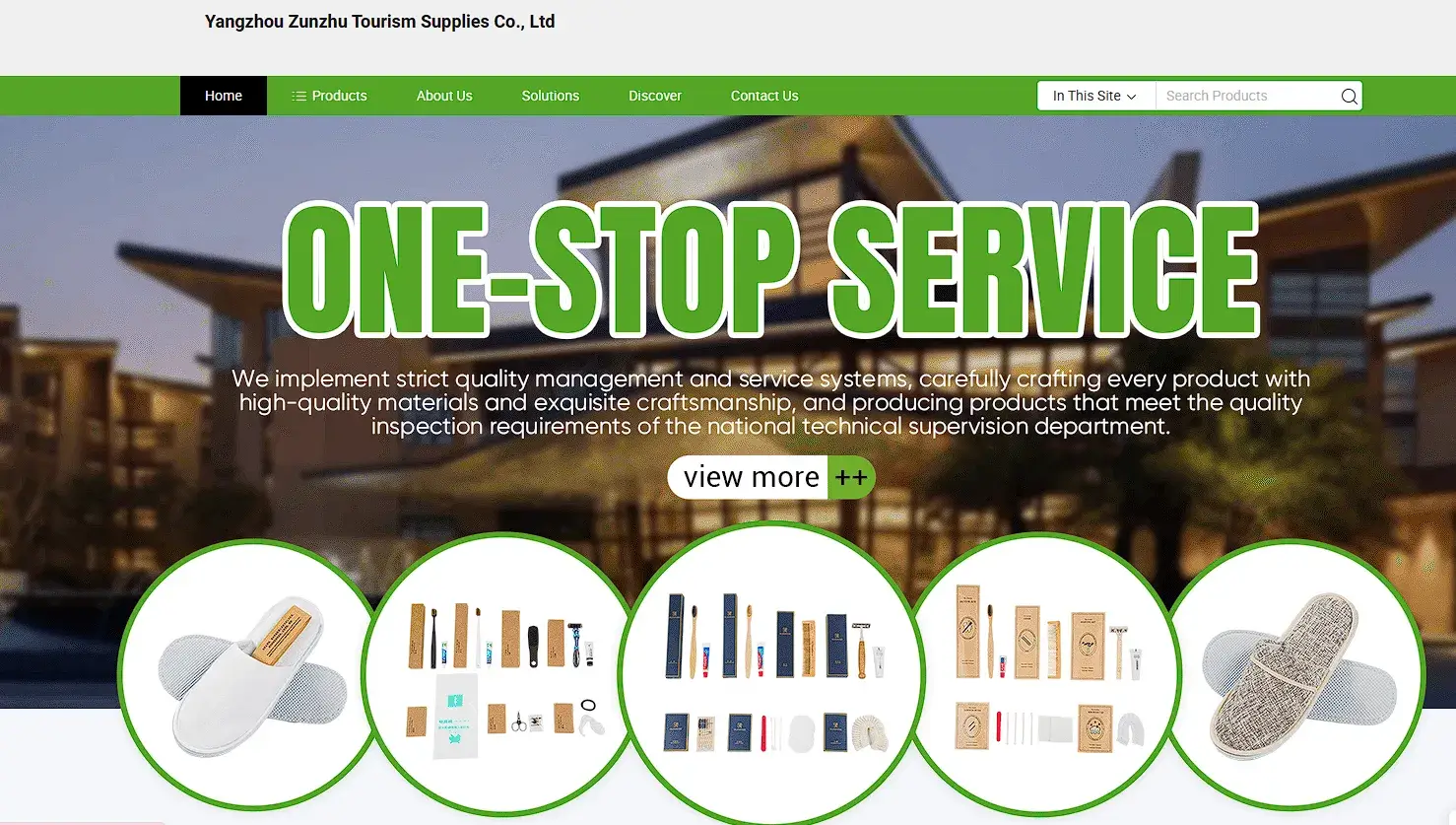
This makes it relevant for test purchases, but its public supplier-audit information indicates limited quality staffing and insufficient raw-material traceability. Buyers should respond with tighter controls rather than relying on a low price.
Why hotel buyers evaluate Zunzhu:
- Published MOQ from around 1,000 pieces on selected products
- Low-cost product options
- Several fabric combinations
- OEM/ODM and logo services
- Multiple supported trade terms
What to verify before ordering:
- Raw-material supplier and batch records
- In-house and outsourced operations
- Dedicated QC staffing
- Foam density, EVA thickness, fabric weight, and size tolerances
- Pre-shipment inspection acceptance criteria
Best fit: Small hotels, distributors, and price-sensitive buyers running a controlled trial order.
Which Supplier Type Fits Your Hotel Project?
A numerical rank does not replace a project-specific decision. I would create the shortlist according to the intended hotel program.
| Purchasing scenario | Suppliers to compare first | Main reason |
|---|---|---|
| High-volume disposable slippers | Yingteji, LMZ, Haisheng | Disclosed scale, broad products, or slipper specialization |
| Luxury fabric slippers | LMZ, Yingteji, Guanghao, New Lotus | Wider selection of terry, velour, waffle, coral, and linen styles |
| Complex logo or sole decoration | iHotel, Yingteji, LMZ, Mingchi | Stronger visible customization options |
| Slippers plus towels or bathrobes | Guanghao, LMZ | Integrated hotel textile or amenity sourcing |
| Alternative-material development | iHotel, Yingteji, Eco Nature, Haisheng | Cork, linen, sugarcane-based, or other eco-positioned options |
| Moderate-MOQ trial | Mingchi, Haisheng | More accessible published order quantities on selected styles |
| Low-MOQ price test | Zunzhu | Low entry quantity, subject to stricter QC |
| Broad ready-design selection | Aplus | Large visible product catalog |
For a new program, I would normally invite four different supplier types into the first RFQ:
- A scaled, integrated supplier
- A slipper specialist
- A customization-focused supplier
- A medium-MOQ challenger
This gives the buyer a more useful comparison than requesting prices from four nearly identical marketplace sellers.
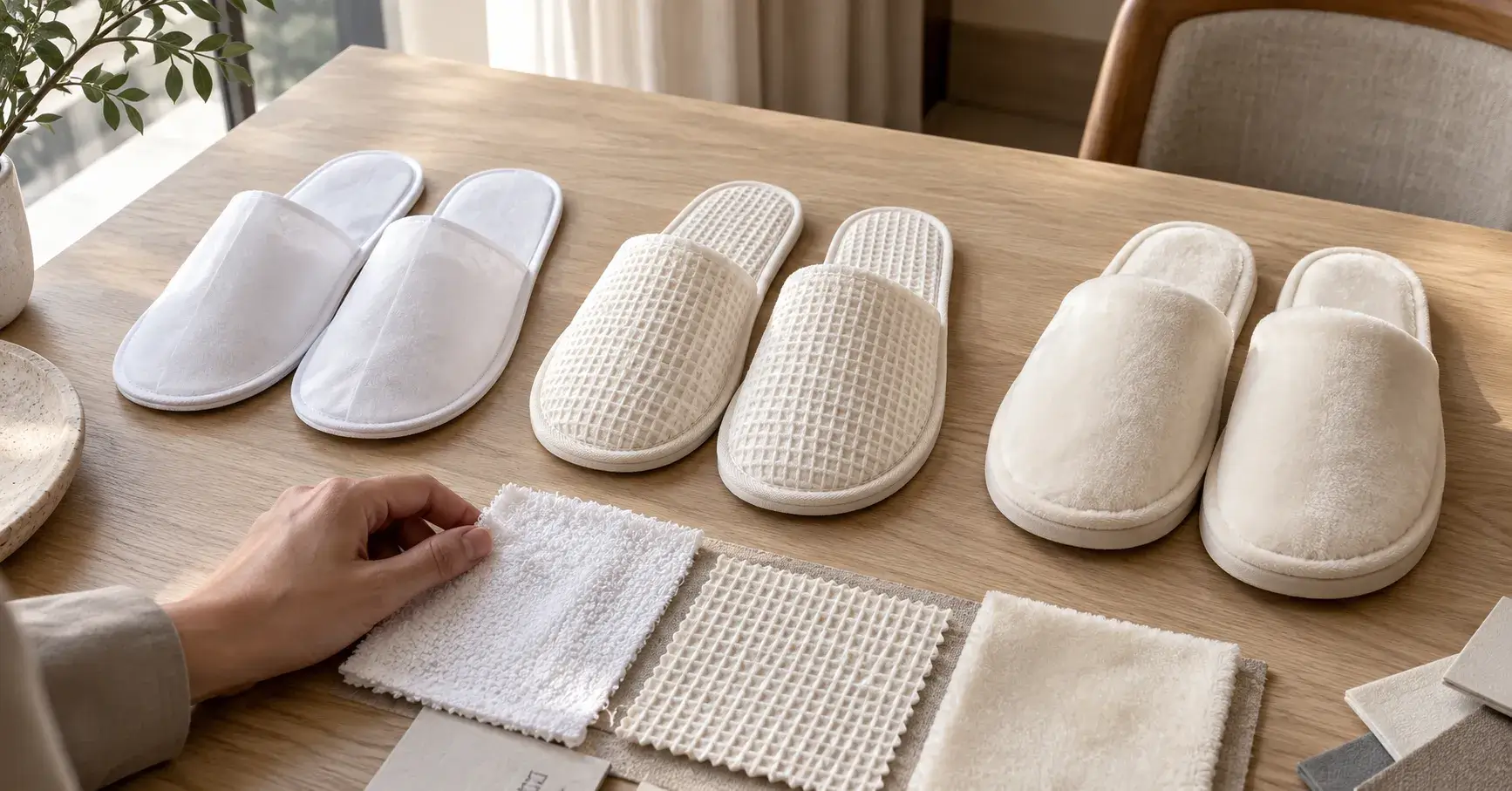
Define the Slipper Before Comparing Prices
“White hotel slipper with logo” is not an adequate RFQ. Two slippers with the same photograph can have different fabrics, foam density, sole thickness, dimensions, stitching, and packaging.
A usable specification should cover the following fields.
| Specification | Questions to answer |
|---|---|
| Use case | Guest room, spa, pool, airline, hospital, or retail |
| Design | Open-toe or closed-toe; open-back or closed-back |
| Upper | Non-woven, terry, waffle, velour, coral fleece, linen, or another fabric |
| Lining | Material, color, and feel |
| Padding | Material, thickness, density, and recovery |
| Sole | EVA, TPR, cork, composite, or another material |
| Grip | Pattern and required wet/dry test conditions |
| Size | Finished length, width, upper opening, and tolerance |
| Branding | Embroidery, printing, woven label, heat transfer, or debossing |
| Packaging | Paper band, polybag, non-woven bag, box, or bulk carton |
| Quantity | Quantity per design, color, size, and shipment |
| Market | Destination country and applicable labeling requirements |
| Delivery | Required shipping date, port, and Incoterm |
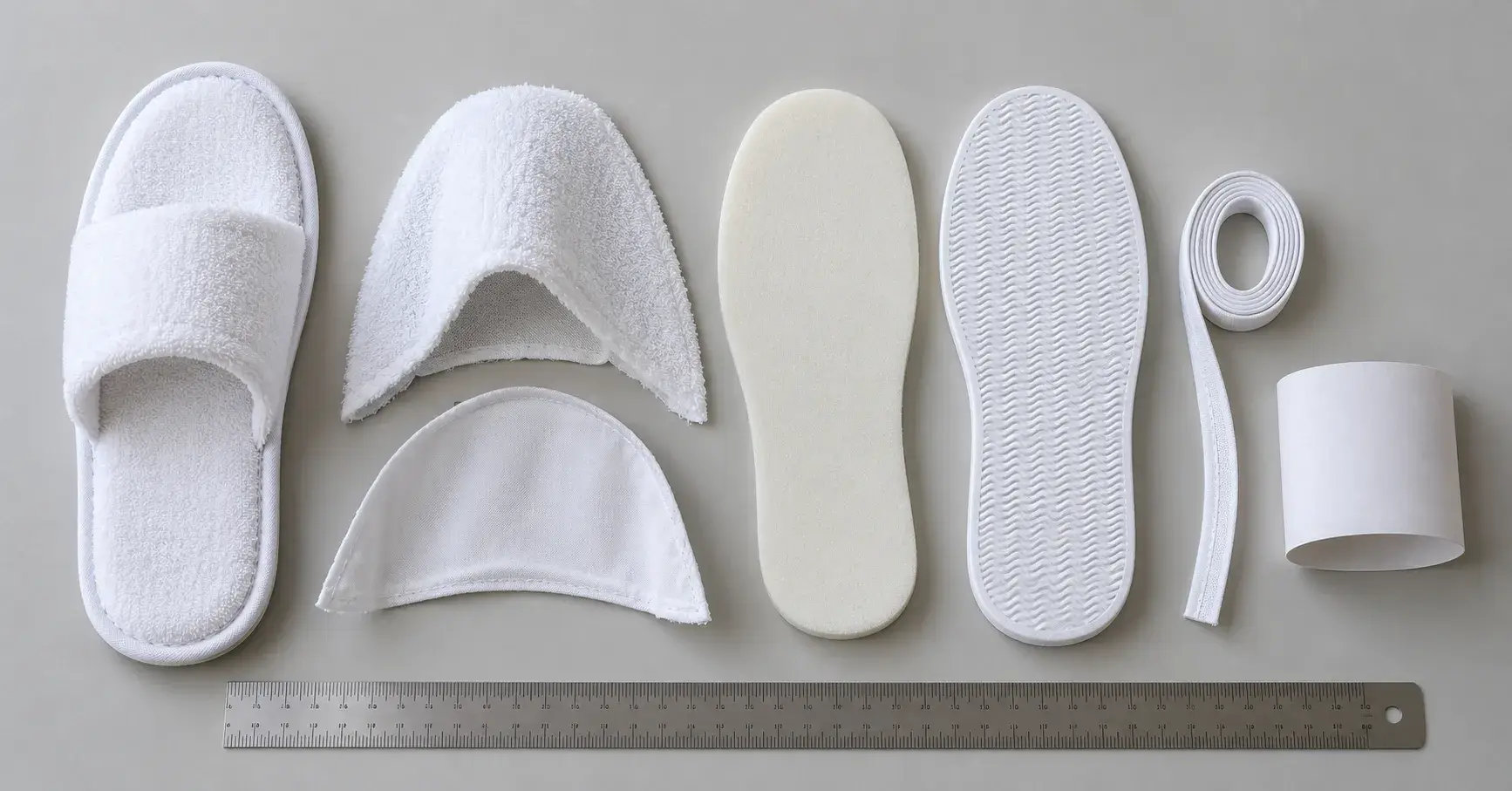
Upper Material Does Not Define the Entire Quality Level
A terry slipper is not automatically luxurious. It can still use light fabric, weak padding, thin EVA, or poor stitching.
When comparing terry, waffle, velour, or coral fleece slippers, ask for:
- Fabric composition and weight
- Padding thickness and density
- Finished sole thickness
- Stitch construction
- Size tolerance
- Pair-weight tolerance
- Logo method
- Packaging specification
The final product is a system. Focusing on the visible upper while ignoring the sole is like choosing a hotel bed by the pillowcase alone.
“Anti-Slip” Is a Claim, Not a Complete Specification
Many suppliers describe their EVA soles as anti-slip. That description is not enough for a spa, bathroom, or poolside application.
Ask the supplier to identify:
- The test method
- The floor surface
- Wet or dry conditions
- The outsole pattern
- The material hardness
- The tested production model
- The date and laboratory shown on the report
A thicker sole may provide more cushioning, but thickness alone does not prove better grip.
How to Approve Hotel Slipper Samples
Hotels should test the sample as a purchasing standard, not just as a sales demonstration.
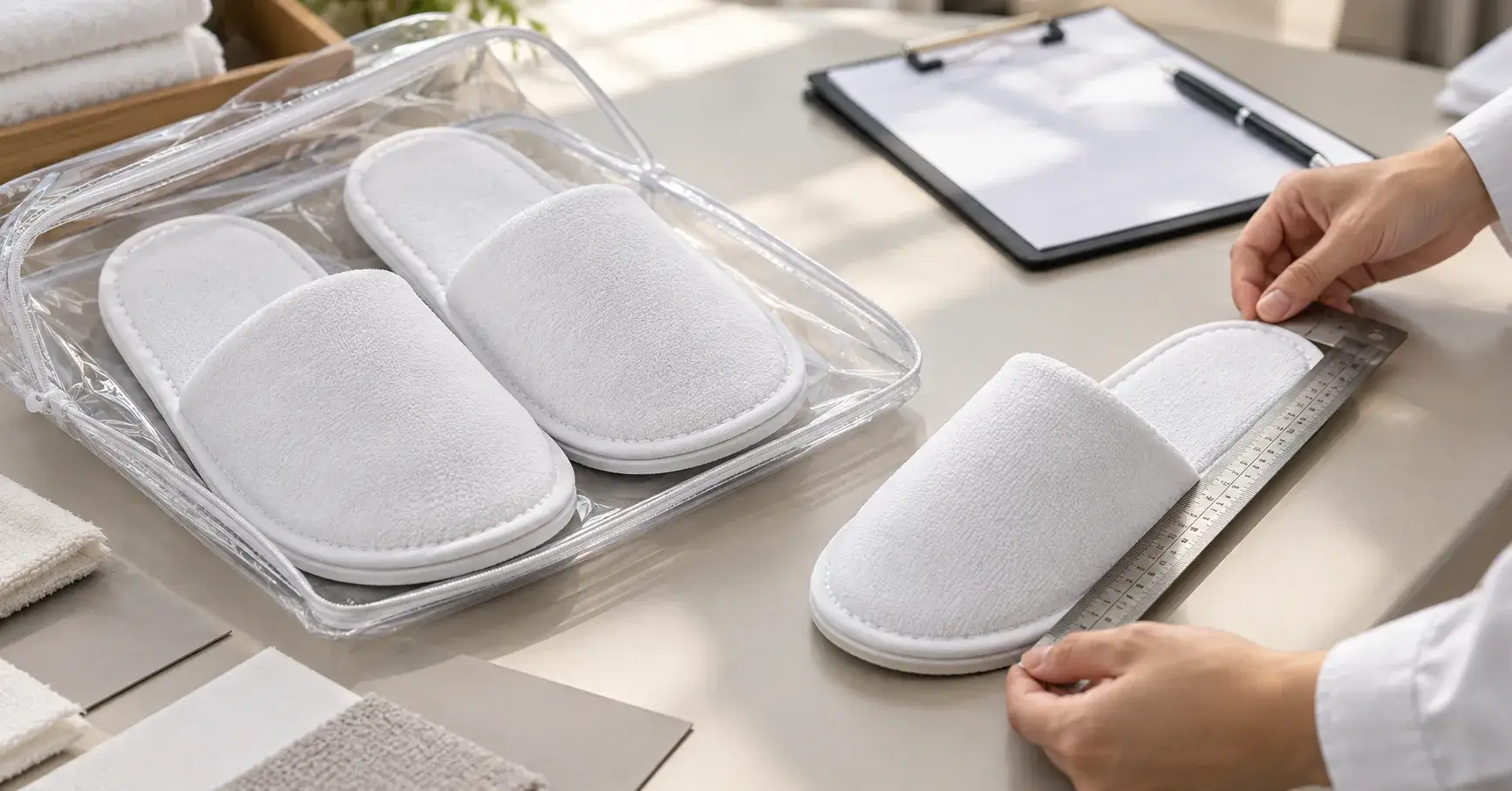
Inspect the physical construction
Check:
- Finished length and width
- Left and right pair consistency
- Upper opening and fit
- Fabric feel and visible defects
- Foam recovery after compression
- Sole thickness
- Stitch alignment
- Loose threads
- Bonding strength
- Odor
- Logo position and color
- Packaging and carton marks
Approve a golden sample
A golden sample is the physical version accepted for mass production. Both the buyer and supplier should retain matching samples.
The written order should refer to that sample and still list measurable tolerances. “Same as approved sample” is helpful, but it should not replace a proper specification.
Test more than one sample batch
A perfect sample made by a development technician does not prove routine production consistency. For an important annual program, ask for samples from separate production or material batches.
Use a pilot order when risk is high
A pilot order can reveal:
- Communication problems
- Material substitutions
- Logo inconsistency
- Delayed production
- Weak carton packing
- Size variation
- Poor after-sales response
The lowest MOQ is useful only when the trial generates evidence for the next decision.
How to Verify Certificates and Supplier Audits
Hotel buyers should distinguish among three different documents:
- Management-system certificates relate to how an organization manages processes.
- Material or product certificates relate to specified materials or finished products.
- Supplier audits confirm selected information about a business or facility.
An audited-supplier badge does not mean that every slipper passed a performance test. A certificate held by a toiletries division may also have no relevance to a slipper. ISO itself explains that certification is performed by external certification bodies, not by ISO.4

Request:
- Full certificate, not a cropped logo
- Certificate number
- Legal entity name
- Factory address
- Issue and expiration dates
- Certification scope
- Product or material attachment
- Transaction or chain-of-custody record where relevant
- Test report for the actual construction
For OEKO-TEX claims, buyers can use the official OEKO-TEX Label Check to verify whether a label number is valid.5
For Europe, buyers should also review applicable footwear material-labeling obligations and the responsibilities of the party placing the product on the market.6
Disposable, Reusable, and Sustainable Hotel Slippers
Hotels should not classify a slipper as reusable simply because it has a fabric upper. A reusable program needs a product designed and tested for laundering.
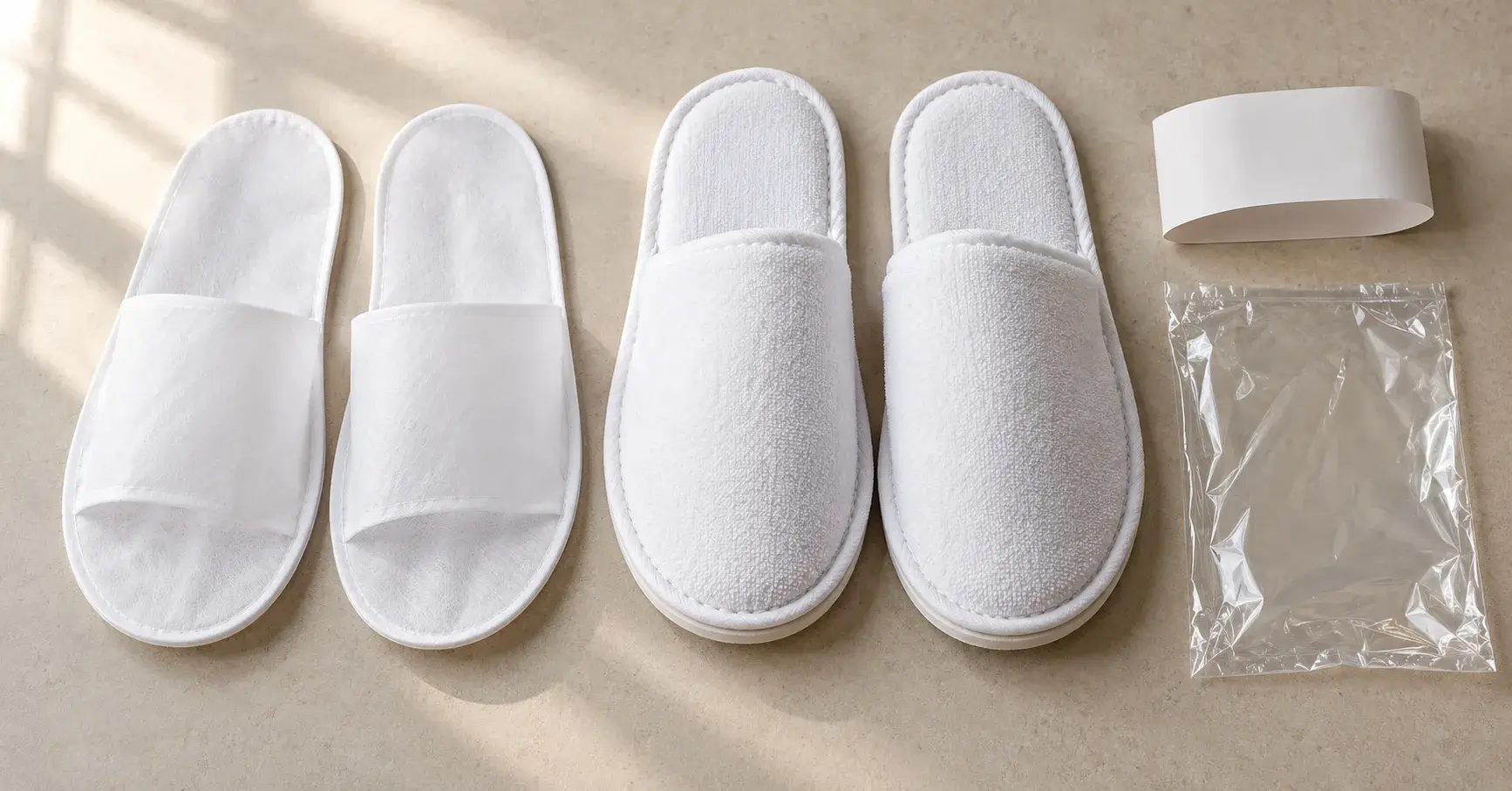
For a washable slipper, request evidence covering:
- Recommended washing and drying method
- Intended number of cycles
- Dimensional change after washing
- Sole separation
- Grip after washing
- Logo durability
- Color change
- Hygiene and batch-control procedures
The hotel must then decide whether it can collect, wash, inspect, redistribute, and explain the product to guests consistently.
For disposable slippers, hotels can consider an on-request distribution policy.7 This may reduce waste and avoid placing unused slippers in every room.
For any sustainability claim, examine the whole product:
- Upper
- Lining
- Padding
- Sole
- Adhesive
- Thread
- Ink
- Label
- Individual packaging
- Shipping carton
“Bamboo,” “linen,” “cork,” or “recycled” in a product title does not describe the environmental impact of the finished pair. The FTC’s environmental marketing guidance also explains why broad claims such as “green,” “eco-friendly,” and “biodegradable” need clear qualification and reliable substantiation.8
Hotel Slipper RFQ Template
Buyers can send the following information to every shortlisted supplier:
Hotel type and destination market:
Property or group size:
Annual estimated quantity:
Quantity for first order:

Slipper style:
Open-toe or closed-toe:
Finished length and width:
Upper material and fabric weight:
Lining material:
Padding material and thickness:
Sole material and finished thickness:
Required outsole pattern or grip test:
Color and Pantone reference:
Logo method, size, and position:
Individual packaging:
Carton requirements:
Required certificates or test reports:
Sample quantity:
Required sample date:
Required shipment date:
Destination port:
Requested Incoterm:
Inspection standard:
Payment terms:
Ask each supplier to quote the same specification at several quantity levels. For example:
- 5,000 pairs
- 20,000 pairs
- 100,000 pairs
- Annual forecast quantity
The quotation should separate product cost, logo setup, custom packaging, tests, tooling, sample charges, and freight. The International Chamber of Commerce explains how Incoterms rules allocate delivery tasks, costs, and risks between buyers and sellers.9
Calculate More Than the Unit Price
The cheapest slipper can become expensive after product failures, large cartons, late delivery, or inconsistent reorders.
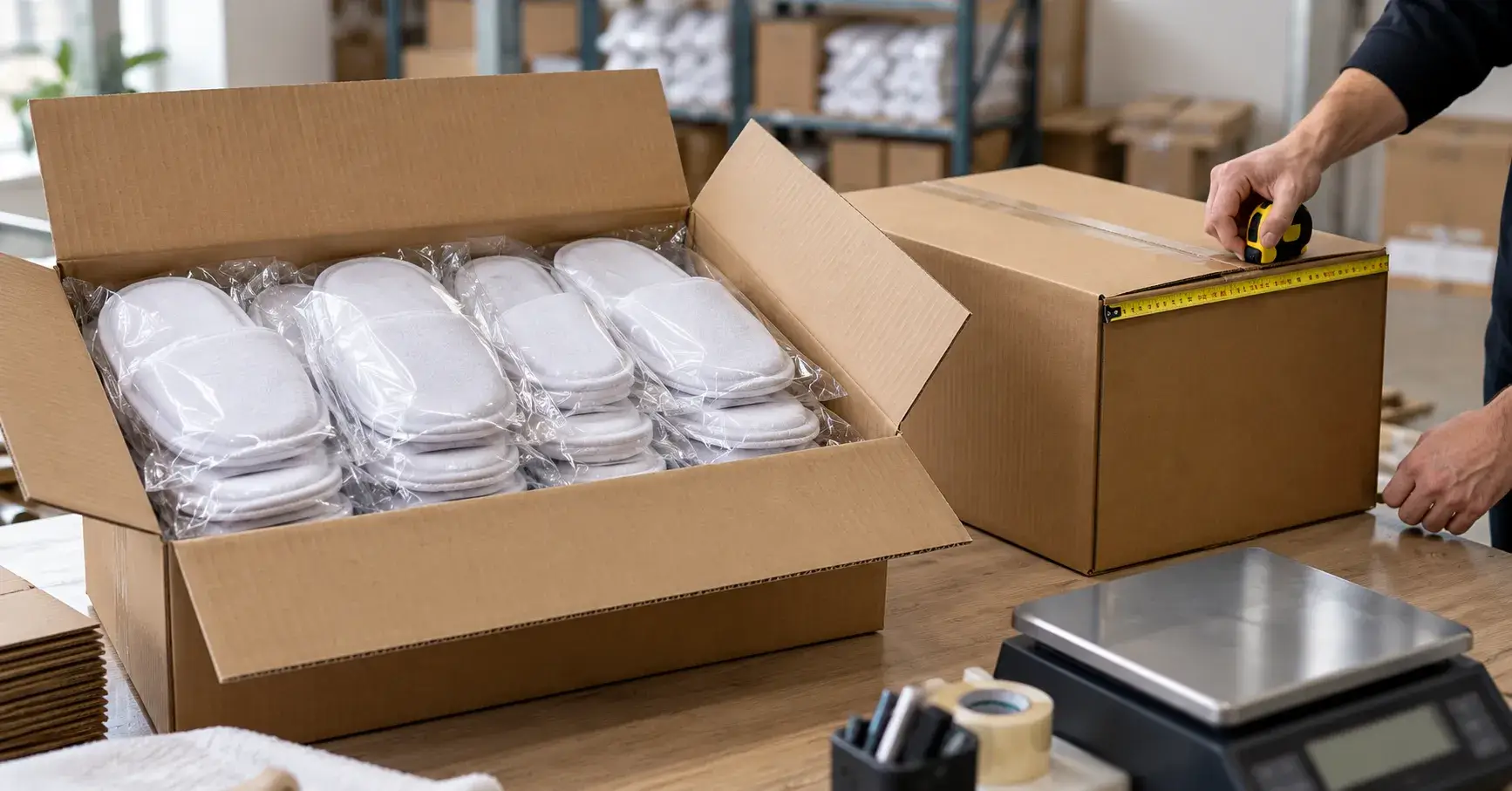
Compare:
Total landed cost = product price + customization + packaging + inspection + freight + duty + inventory cost + expected defect and delay cost
Carton dimensions matter because slippers are light but bulky. A small difference in packing efficiency can affect freight and warehouse space across a large annual order.
Hotels should also consider the cost of guest complaints. A slipper that feels visibly thin, collapses under the heel, or slides on a bathroom floor can damage the guest experience even when its purchase price looks excellent.
For lot-by-lot inspections, procurement teams can review the ISO 2859 sampling framework when defining an acceptance-sampling approach with their inspection provider.10
Frequently Asked Questions
What is the MOQ for custom hotel slippers in China?
Public examples range from about 1,000 pieces for selected low-MOQ products to 5,000 or 10,000 pairs for many custom programs. MOQ depends on material, logo process, color, size range, packaging, and whether the supplier can use existing components.
Always ask whether the MOQ applies per order, design, color, size, or packaging format.
How long does hotel slipper production take?
Simple custom samples may take several days. Bulk production can range from a few weeks to more than a month, depending on quantity, material availability, customization, and season.
Do not treat a website lead time as a contractual promise. Confirm the schedule after sample approval and include it in the purchase order.
Can Chinese suppliers embroider a hotel logo?
Yes. Common branding methods include embroidery, printing, heat transfer, woven labels, debossing, and decorated soles. The best method depends on the fabric, logo detail, order size, budget, and intended appearance.
How much do wholesale hotel slippers cost?
Public marketplace prices vary widely, from very basic disposable products to premium velour or plush designs. These listings are not directly comparable because they may use different materials, thicknesses, quantities, packaging, and trade terms.
Request prices against one controlled BOM.
Should hotels choose open-toe or closed-toe slippers?
Open-toe slippers may feel cooler and use less material. Closed-toe slippers offer more coverage and warmth. Climate, hotel level, guest profile, and room use should guide the decision.
How can I confirm that a supplier is a factory?
Review its business license, factory address, equipment list, staffing, production flow, and audit report. Conduct a live video or physical audit. Ask the supplier to show the selected product moving through cutting, sewing, bonding, logo application, QC, and packing.
Should I order reusable hotel slippers?
Only if the product is designed for reuse and the hotel can operate a controlled cleaning, inspection, storage, and guest-communication system. A fabric upper alone does not make a slipper reusable.
How Hotemax Helps Buyers Develop Hotel Slippers
Choosing from ten suppliers is useful, but the real purchasing work starts when the hotel turns its expectations into a measurable product.
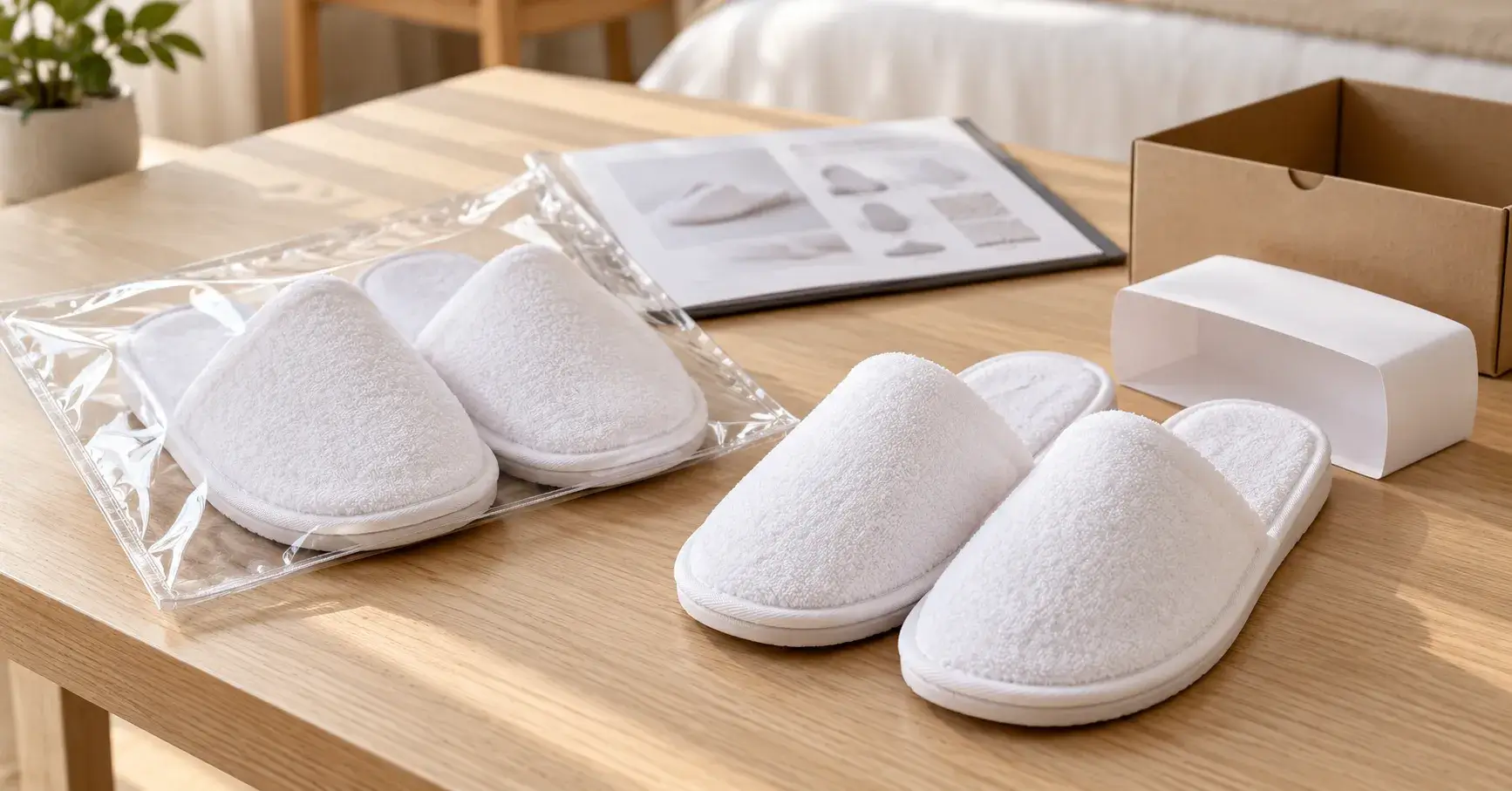
At Hotemax, we help hotel groups, resorts, distributors, and project buyers develop hotel slippers around their actual operating needs. Our available options include disposable and reusable constructions, different upper and sole materials, open- and closed-toe designs, customized sizes, color matching, logo application, and branded packaging.
We can support buyers through:
- Material and construction selection
- Logo embroidery, printing, woven labels, heat transfer, and debossing
- Pantone color matching
- Sample development
- Specification confirmation
- Production quality control
- Custom packaging
- Bulk-order planning
- Export and shipping coordination
Our goal is not to recommend the thickest or most expensive slipper. It is to match comfort, appearance, durability, budget, and hotel operations.
When requesting a quotation, send us the preferred material, size, sole thickness, quantity, logo, packaging, destination, and required delivery date. If the specification is not ready, our hotel-supply development process can help compare practical options for economy hotels, upscale properties, luxury resorts, spas, and distribution programs.
Conclusion
The top hotel slipper suppliers in China serve different types of buyers. LMZ and Guanghao are relevant for consolidated hotel-supply programs. Yingteji and Haisheng deserve attention for volume and slipper specialization. iHotel is strong in visible customization. Mingchi and Zunzhu offer more accessible trial-order options, while Eco Nature focuses on alternative-material development.
A ranking should begin the sourcing process, not finish it.
The safest approach is to shortlist three to five suppliers, send them the same specification, inspect physical samples, verify documents, approve a golden sample, and conduct a pre-shipment inspection. This process will reveal more than a supplier’s product title or lowest advertised price.
For hotels and distributors seeking custom hotel slippers from China, Hotemax can provide material recommendations, customized samples, branding options, production support, and a specification-based quotation.
-
Review LMZ’s product page to confirm its publicly presented hotel-slipper materials and customization options. Treat factory, certification, MOQ, and production claims as supplier-published information that still requires order-level verification. ↩
-
Review Yingteji’s official website for its slipper range and company-published production information. Request current capacity records and supporting documents before relying on these figures in a supply contract. ↩
-
Use iHotel’s company profile to review its publicly stated manufacturing and hotel-amenity capabilities. Confirm which processes and certifications apply to the selected slipper SKU. ↩
-
Review ISO’s certification guidance to understand the difference between an ISO standard, an independent certification body, and a supplier’s certificate. ↩
-
Use OEKO-TEX’s official Label Check to verify the status of a certificate or label number supplied for a textile component or finished article. ↩
-
Review the EUR-Lex footwear-labeling summary for the components that must be identified and the responsibilities of importers placing footwear on the EU market. ↩
-
Green Key’s hotel criteria discuss making slippers and other single-use guest amenities available on request as a waste-reduction measure. ↩
-
Review the FTC Green Guides before using environmental claims in the United States. The guidance explains how claims such as recyclable, recycled, compostable, and degradable should be substantiated and qualified. ↩
-
Use the ICC’s official Incoterms resource to define which party carries specified delivery tasks, costs, and risks under the sales contract. ↩
-
Review the ISO 2859 series introduction with your inspection provider when developing a lot-by-lot acceptance-sampling plan. The appropriate inspection level and acceptance criteria should be agreed before production. ↩