
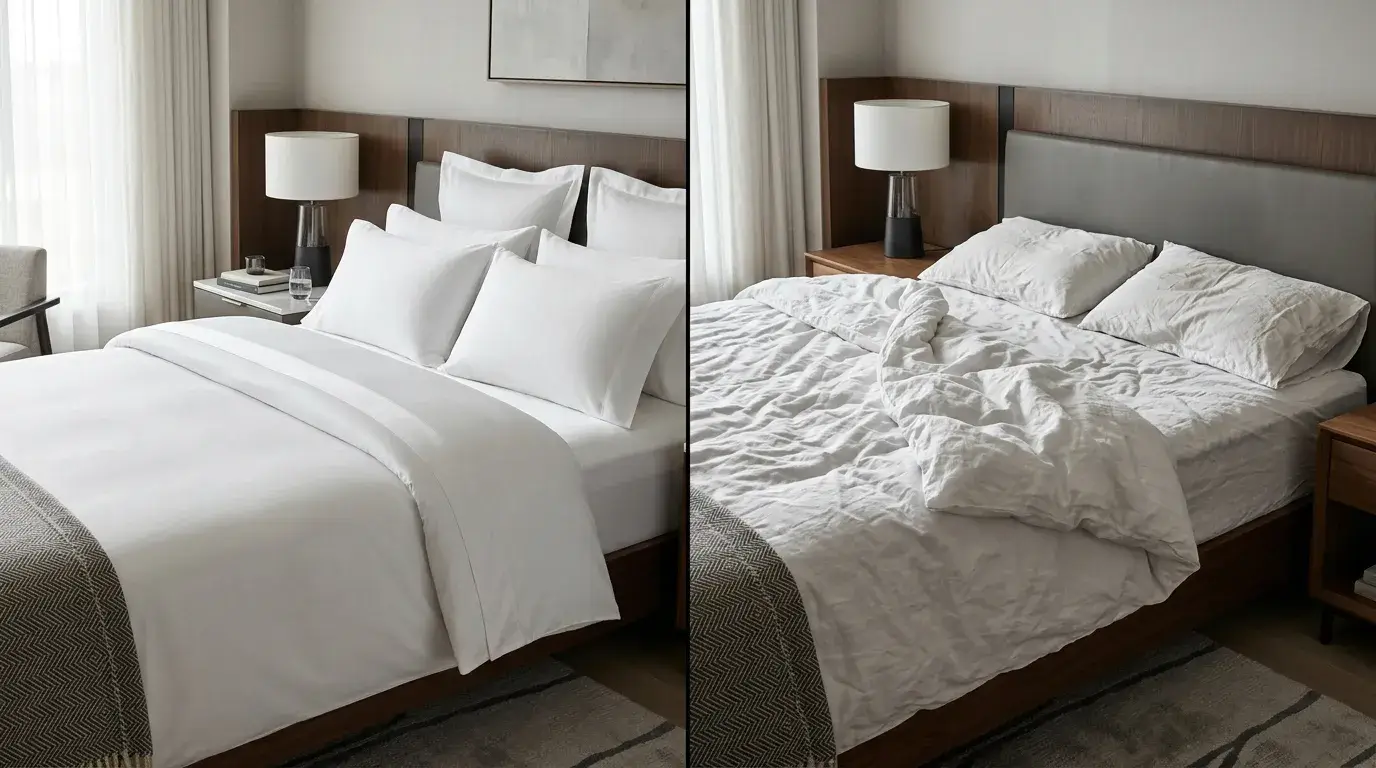
Guests complain about rough sheets? Buying expensive high thread count linens will not always fix this problem. I will show you how to choose the perfect hotel bedding.
Thread count measures the number of horizontal and vertical threads1 in one square inch of fabric. However, a higher number does not automatically guarantee softer or more durable hotel sheets.
Keep reading to discover the hidden truth behind sheet marketing. I will help you buy the best hotel linens for your guests.
What Exactly Is Thread Count and Does It Matter?
Confused by complex sheet labels? Buying the wrong linen wastes your entire hotel budget. I will explain what this number actually means for your hotel beds.
Thread count adds the number of lengthwise and widthwise threads in a square inch. A standard 300 thread count means 150 vertical and 150 horizontal threads. It matters, but it is not the only quality factor.
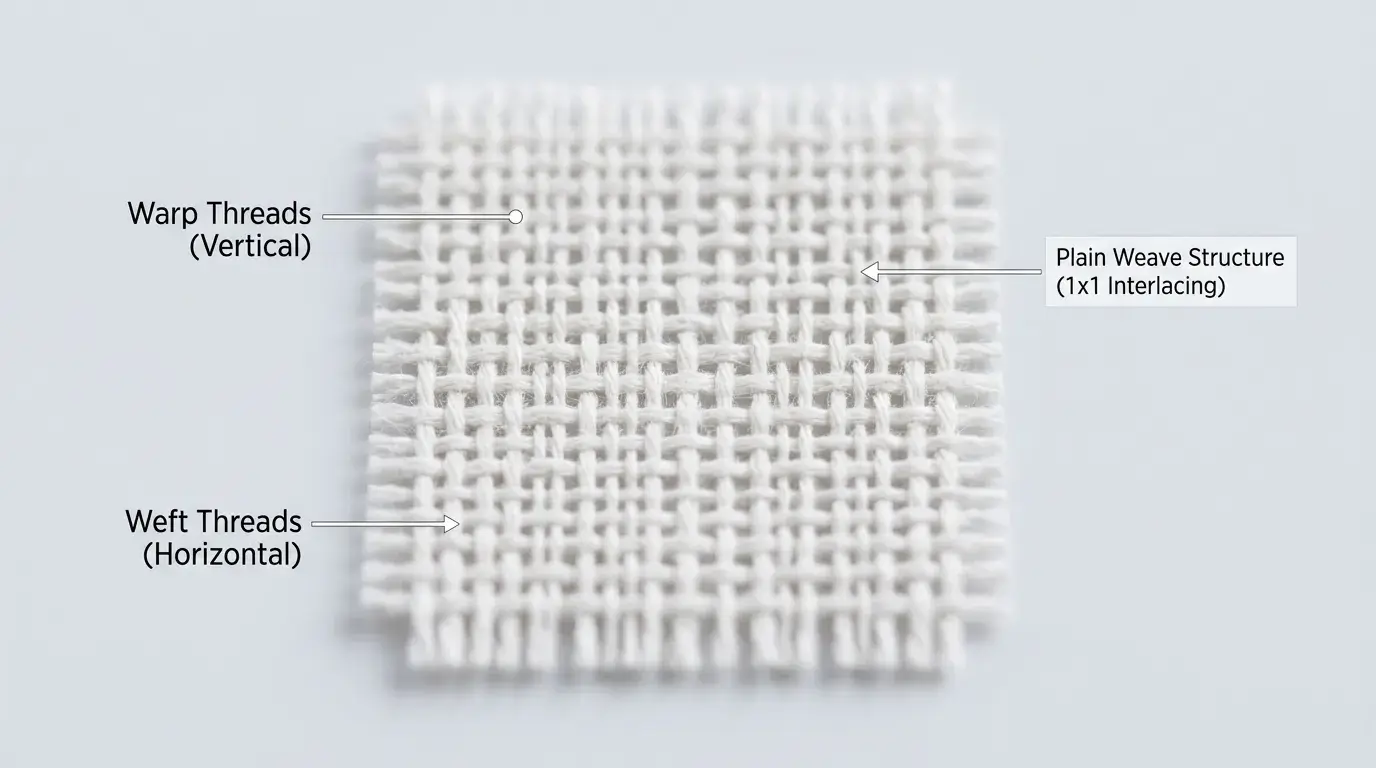
I often see hotel buyers make a big mistake. They look only at the thread count on the box. But we need to look much closer. Thread count is just a basic measure of fabric density. It tells you how tightly the mill packed the threads together. It does not tell you if the cotton is actually good.
The Real Definition of Quality
Think about building a brick house. You can use many cheap bricks or a few strong bricks. The same rule applies to sheets. I tell my clients to focus on the yarn quality first. The actual material is more important than the density.
"Thread count is simply a math equation, not a magic formula for luxury."
Here is what actually matters more than the basic count:
- Fiber Length: Long-staple cotton is much better than short-staple cotton.
- Yarn Ply: Single-ply yarn is stronger and softer than multi-ply yarn.
- Weave Type: Percale and sateen weaves feel very different to the skin.
Comparing Quality Metrics
| Feature | Why It Matters | Hotel Impact |
|---|---|---|
| Thread Count | Measures density | Affects weight and heat |
| Fiber Length | Measures smoothness | Prevents pilling over time |
| Ply | Measures yarn strength | Prevents tearing in laundry |
I want you to see how this works in a real factory.
When you buy linens for a busy hotel, you wash them hundreds of times. If you only chase a high number, you might buy bad yarn. Bad yarn breaks very fast in industrial washing machines. You must look at the whole picture to make a smart choice.
Does a Higher Thread Count Always Mean Softer Sheets?
Are your expensive sheets feeling scratchy? Guests hate sleeping in rough beds. I will reveal why higher numbers can actually make sheets feel much worse.
Higher thread counts do not always mean softer sheets. Softness comes from the length of the cotton fiber2. A 300-count sheet made from long-staple Egyptian cotton feels much softer than an 800-count sheet made from short fibers.
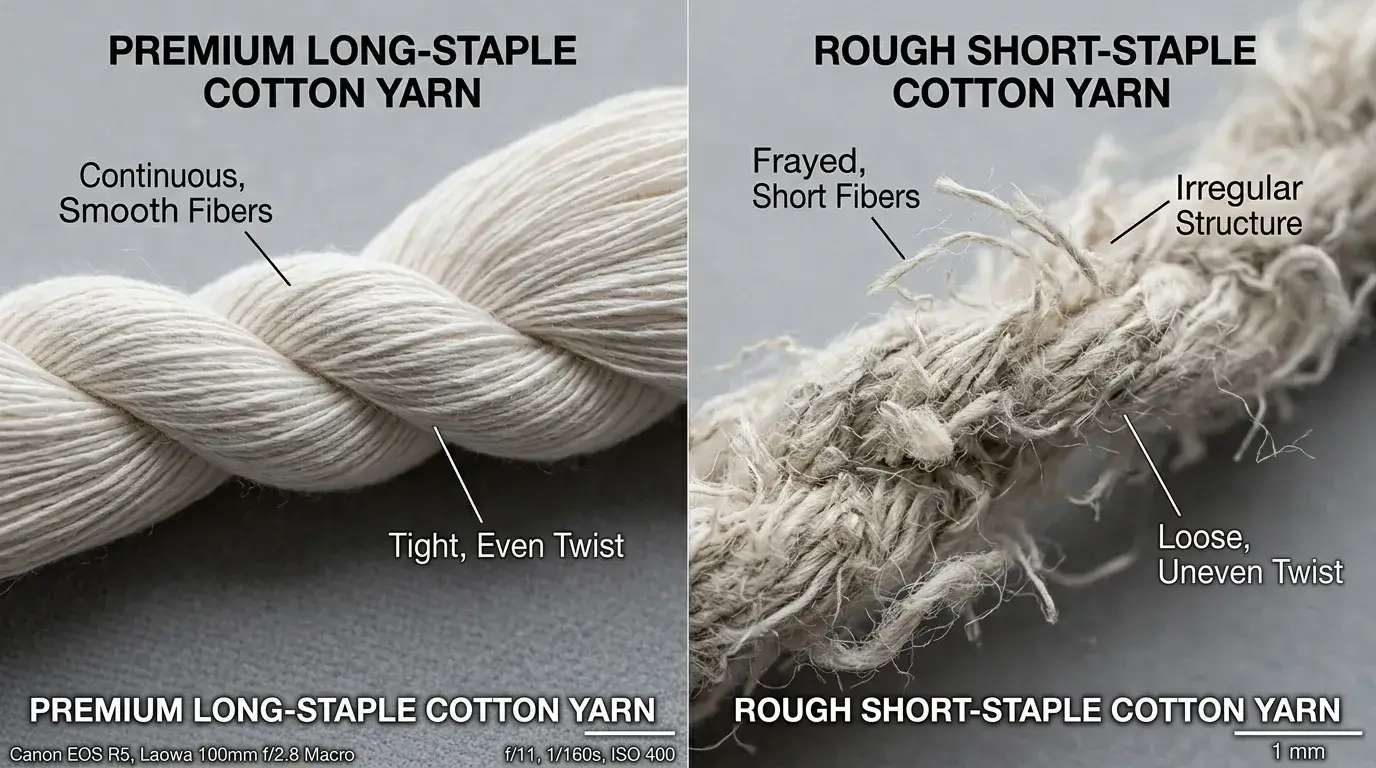
I need to share a hard truth with you. Softness does not come from packing more threads into a square inch. In fact, packing too many threads can make the fabric feel very stiff.
The Secret to Softness
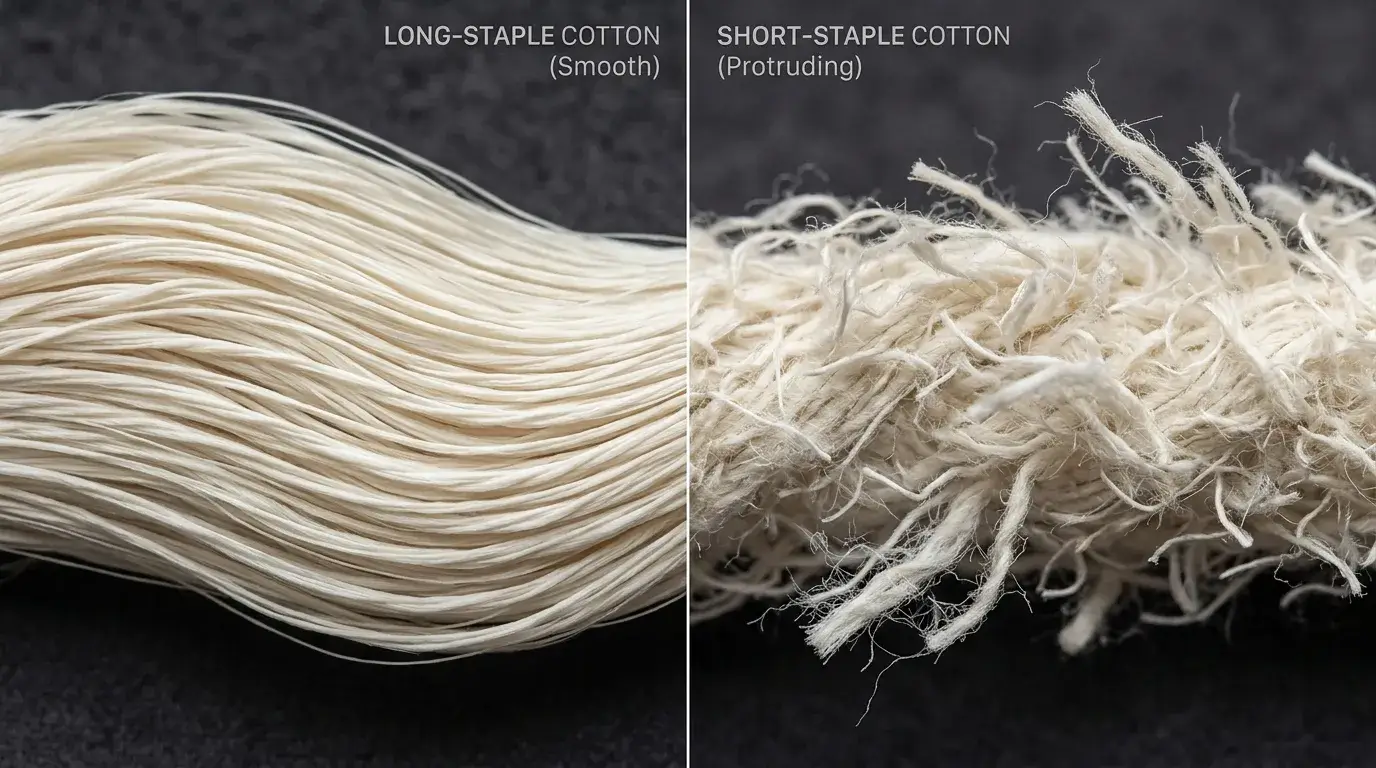
When I source linens for Hotemax, I always look at the staple length. The staple is the individual cotton fiber. Short fibers have many tiny ends. These ends stick out of the yarn. When you rub the sheet, those tiny ends poke your skin. That makes the sheet feel scratchy.
Long fibers have very few ends. They spin into a very smooth yarn.
- Short-staple cotton: Feels rough, breaks easily, forms annoying pills3.
- Long-staple cotton: Feels silky, stays strong, gets softer after washing.
The Fake Softness Trap
Many cheap, high-count sheets feel very soft in the store. Why does this happen? Manufacturers coat them with heavy chemical softeners. I call this fake softness. After your hotel laundry washes them three times, the chemicals wash away. The sheets become rough and ugly.
"True luxury sheets get softer with every single wash, rather than degrading after the first cycle."
Look at this comparison to understand fiber lengths.
How to Buy Truly Soft Sheets
When you order your next batch of linens, change your request. Do not ask for 800-thread sheets. Ask your supplier for single-ply, long-staple cotton. A 300-thread single-ply sheet will give your guests a perfect night of sleep.
Watch Video: The Difference Between Short and Long Staple Cotton
How Does Thread Count Actually Affect Fabric Durability?
Are your linens tearing too soon? Replacing sheets constantly ruins your operating profits. Let me show you how to pick sheets that easily survive the laundry.
A moderate thread count between 300 and 500 offers the best durability. Ultra-high counts use very thin, weak threads that break easily in industrial laundries. Lower counts with strong yarn last much longer.
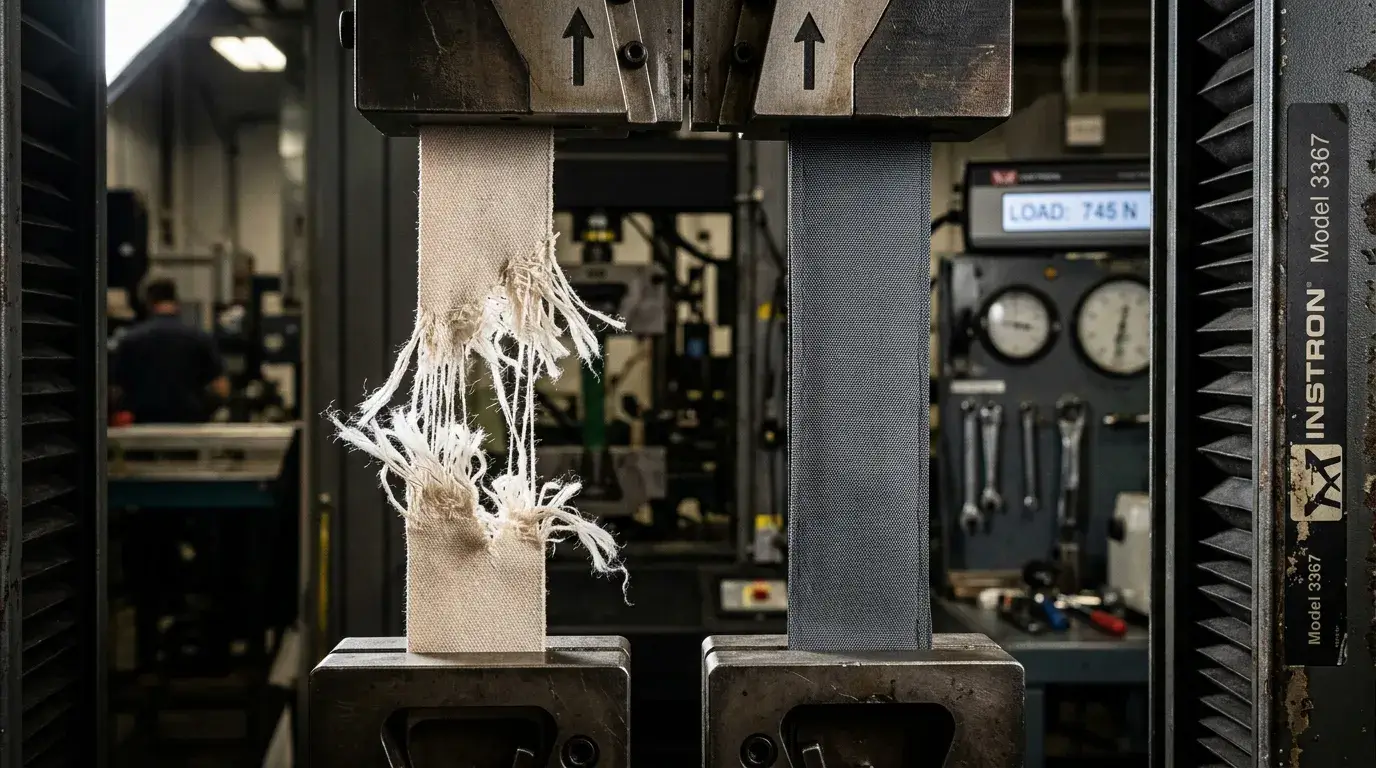
Durability is the most important word in hotel procurement. You wash sheets every single day. The harsh chemicals and giant machines destroy weak fabrics. I have seen hotels lose thousands of dollars buying the wrong items.
The Physics of Strong Sheets
You might think more threads make a stronger sheet. This is only true up to a certain point. A 400-count sheet is usually stronger than a 200-count sheet. But an 800-count sheet is often much weaker than a 400-count sheet.
How is this possible? There is limited space in one square inch. To fit 800 threads in that tiny space, the factory must use extremely thin yarn.
The Danger of Thin Threads
Think about a thick rope versus a thin fishing line. Which one breaks first under heavy stress?
- Thin threads snap under pressure.
- Broken threads cause ugly pilling.
- Pilling turns into large holes.
| Thread Count | Yarn Thickness | Durability in Hotel Laundry |
|---|---|---|
| 200 – 300 | Thick and strong | High (lasts many washes) |
| 400 – 500 | Medium | Very High (best balance) |
| 800 – 1000 | Microscopic and weak | Low (tears and pills quickly) |
"The sweet spot for true hotel linen durability sits firmly between 300 and 500."
I always advise my clients to test new linens first. Wash a sample 50 times in your own machines. You will see the ultra-high count sheets fall apart. The moderate count sheets will still look brand new.
Are 1,000 Thread Count Sheets Just a Marketing Scam?
Overpaying for high-numbered sheets? Fake marketing drains your daily operating budget. I will expose the tricks brands use to deceive honest buyers.
Many 1,000 thread count sheets use deceptive math. Manufacturers twist four cheap, weak fibers together to make one yarn. They count each small fiber to inflate the final number artificially4 and charge more.
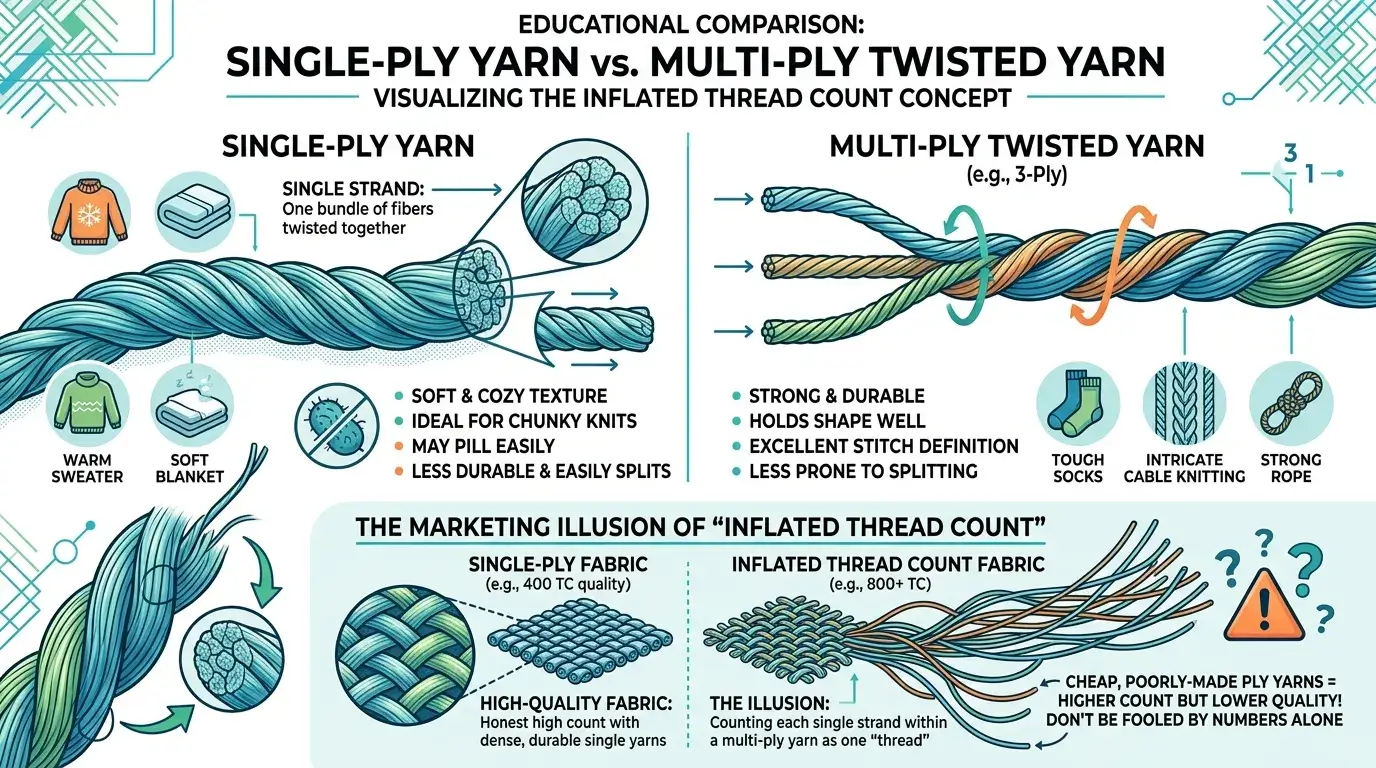
I get very frustrated by modern bedding marketing. The "1000 TC" label is often a complete lie. It is a terrible trick played on consumers and hotel buyers alike. Let me explain the bad math behind this scam.
The Deceptive Multi-Ply Trick
Weavers can only fit about 400 to 500 high-quality, single threads into one square inch. That is a strict physical limit. So, how do brands claim 1,000 threads? They use a trick called multi-ply yarn5.
They take four very cheap, weak fibers. They twist them together to make one thick yarn. They weave 250 of these twisted yarns into an inch. Then, they multiply 250 by 4. Suddenly, they print "1,000 Thread Count" on the fancy box.
Why This Scam Hurts Your Hotel
This trick creates terrible sheets for your hotel beds. They cause many problems.
- They are heavy: The twisted yarn makes the sheet feel like a thick blanket.
- They do not breathe: The dense fabric traps heat and sweat.
- They break easily: The cheap fibers untwist and snap in the wash.
"A 1000-count multi-ply sheet is really just a 250-count sheet made of low-grade cotton."
When I review a hotel’s procurement list, I always check for the word "single-ply." If a supplier will not confirm single-ply yarn, I tell the hotel to walk away. You should only buy honest products for your valuable guests.
| Yarn Type | Honest Count | Fake Count | Quality |
|---|---|---|---|
| Single-Ply | 300 | 300 | Excellent |
| Two-Ply | 250 | 500 | Fair |
| Four-Ply | 250 | 1000 | Poor |
What Is the Best Thread Count for Hot and Cold Sleepers?
Guests waking up sweating? Trapped body heat causes bad online reviews. Let me guide you to the perfect breathable sheets for every climate.
Lower thread counts breathe much better. Hot sleepers need a crisp 200 to 300 count percale sheet for maximum airflow. Cold sleepers prefer a 400 to 600 count sateen sheet to retain body heat.
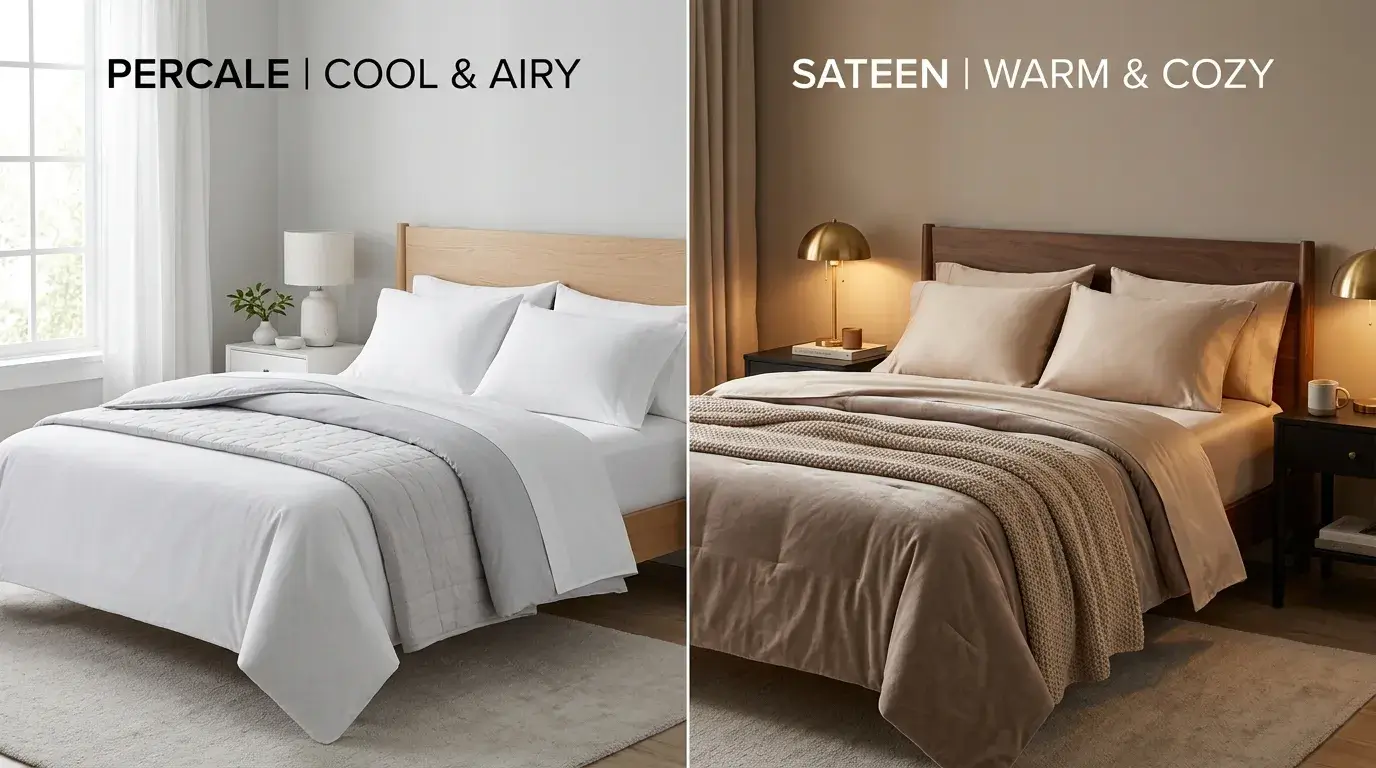
Guest comfort is the main goal of your hotel. Temperature control is a huge part of that comfort. I always ask my clients about their local climate before we order any linens. The sheet density directly impacts how warm the guest feels at night.
Airflow and Fabric Density
Thread count changes the amount of empty space in the fabric. A 250-count sheet has tiny gaps between the threads. These gaps do two important things. They let cool air flow in. They let body heat escape.
An 800-count sheet has almost no gaps. It forms a solid wall. This wall traps all the body heat inside the bed. This is a nightmare for a hotel in a hot climate.
Pairing Count with Weave
You must combine the right count with the right weave to succeed.
- For Hot Climates (Florida, Dubai): Buy 200-300 TC Percale. Percale is a basic over-under weave6. It feels very crisp and cool. It dries very fast in the laundry.
- For Cold Climates (Canada, Alps): Buy 400-600 TC Sateen. Sateen uses a heavier, smooth weave7. It feels silky and drapes over the body. It holds warmth very well.
"Match the fabric density to your hotel’s climate to completely prevent guest complaints about night sweats."
The 144 Count Exception
I have worked with amazing resorts in extreme tropical areas. Sometimes, a standard 250-count is still too hot for the guests. In these severe cases, we use a 144-count sheet. It sounds very low, but it is incredibly light and airy. It is the absolute best choice for severe heat.
| Guest Type | Weave Choice | Ideal Density | Feel |
|---|---|---|---|
| Hot Sleeper | Percale | 200 – 300 | Crisp, cool, airy |
| Cold Sleeper | Sateen | 400 – 600 | Smooth, warm, heavy |
Conclusion
Stop chasing high thread counts. Choose single-ply, long-staple cotton between 300 and 500 for the best hotel sheet durability.
-
Sleep Foundation: Provides the official definition of how thread count is calculated to measure fabric density. ↩
-
Peacock Alley: Explains why long-staple cotton fibers produce inherently softer and longer-lasting bedding. ↩
-
Q for Quinn: Illustrates the science behind fiber length and how short cotton fibers lead to fabric pilling over time. ↩
-
The Hotel Sheet: Exposes the marketing deception of how brands manipulate thread count numbers to inflate the perceived value. ↩
-
Peacock Alley: Details the difference between high-quality single-ply and inferior multi-ply yarns used in bedding. ↩
-
Good Housekeeping: Provides an in-depth comparison of percale vs. sateen sheets, confirming percale’s breathable, over-under structure. ↩
-
Casper: Validates how sateen’s specialized weave structure makes it naturally heavier and better at retaining heat. ↩