
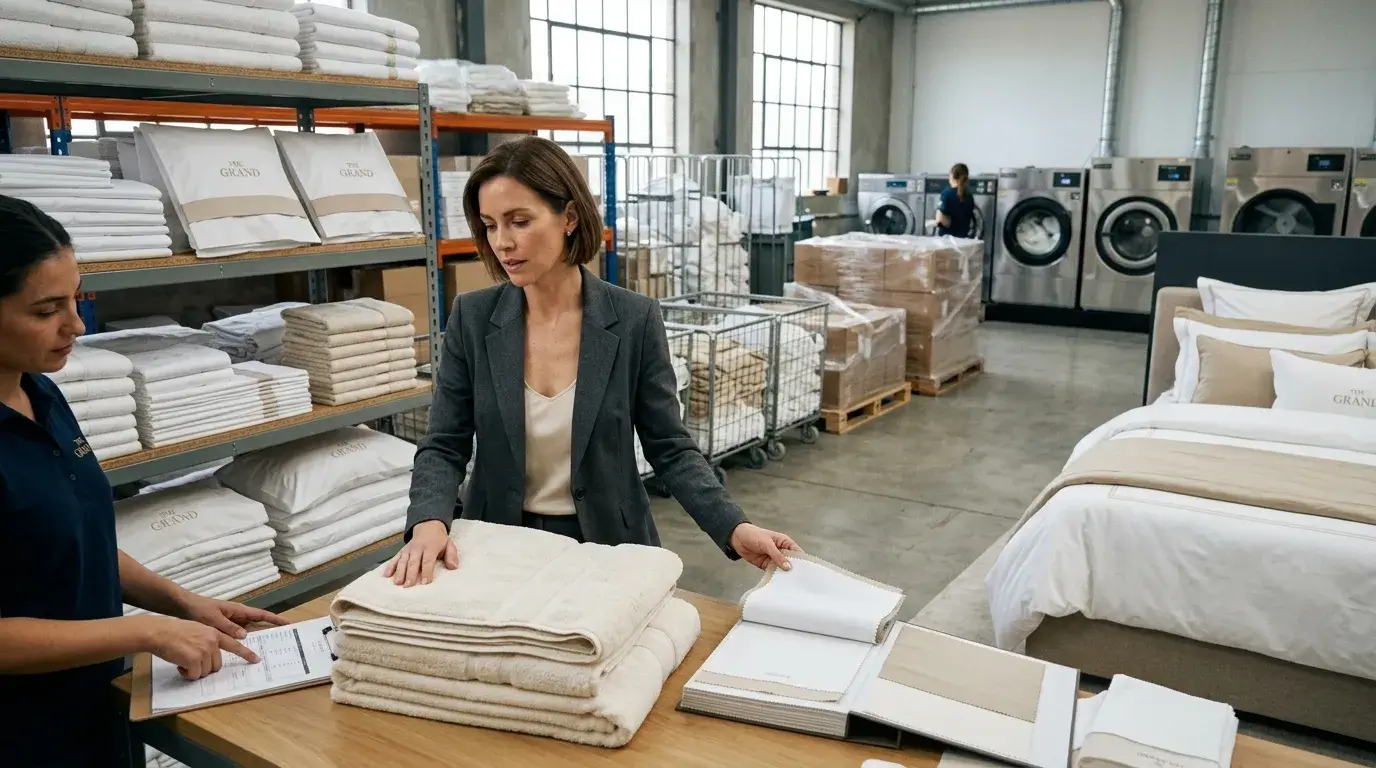
I get asked this question a lot. People stay in nice hotels. They sleep on crisp, clean sheets. Then, they wonder who supplies those sheets. They think about starting a hotel linen company.
At Hotemax, we supply hotel textiles all over the world. We make sheets, towels, slippers, and toiletries. I know this industry inside and out. I see what works and what fails.
Many articles online give bad advice. They tell you it is easy money. They say you can start with a few hundred dollars. This is simply not true. The hotel linen business is tough. It is a low-margin, high-volume industry. You need scale, good logistics, and hard work to succeed. But if you do it right, it is very profitable.
Let me show you how to start a hotel linen company the right way.
What Exactly Is a Hotel Linen Company?
First, you must pick your business model. People often mix up different types of linen businesses. There are three main ways to build this company. Which one is right for you?
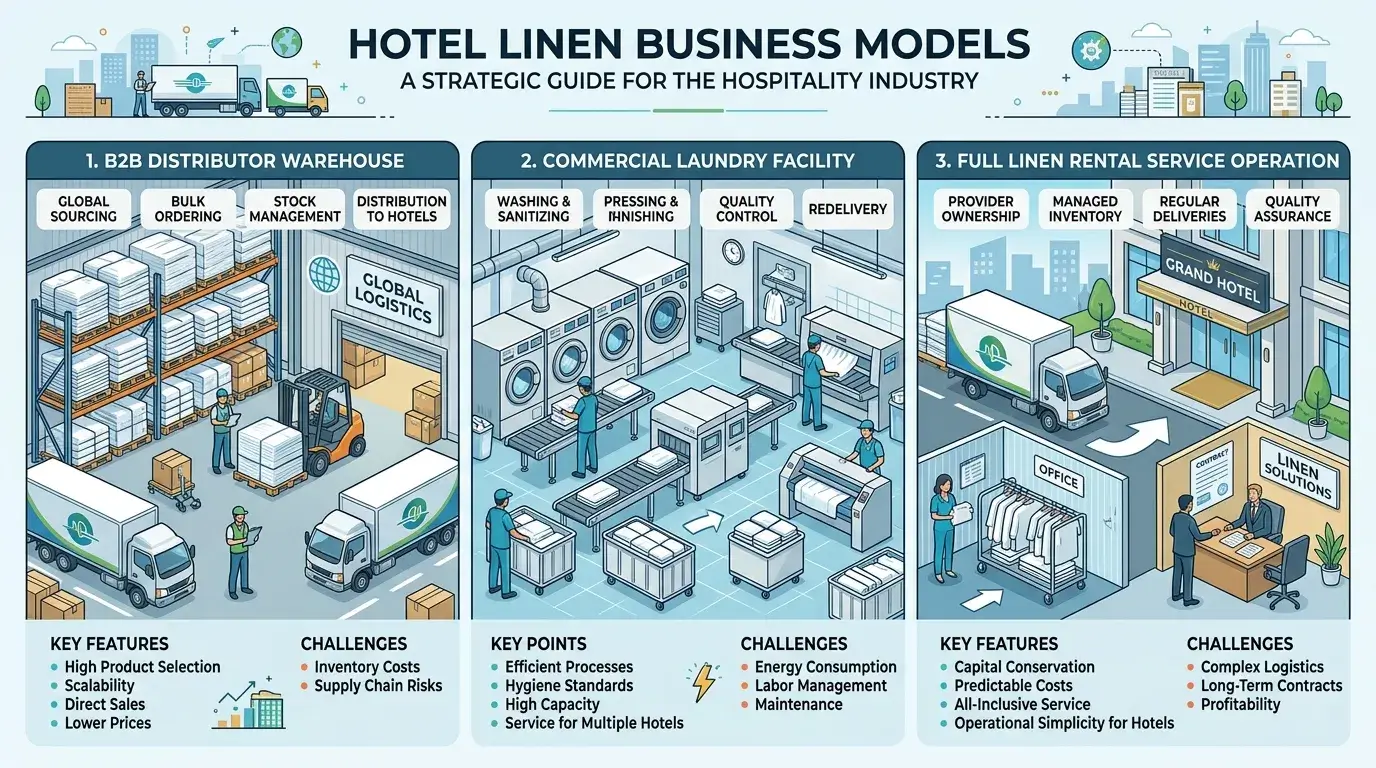
1. The B2B Distributor
You buy wholesale linens from a manufacturer like Hotemax. Then, you sell them directly to hotels. The hotel owns the sheets. The hotel washes the sheets.
- Pros: You need less money to start. You do not buy washing machines.
- Cons: You rely on one-time sales. It is hard to get recurring revenue.
2. The Commercial Laundry Service
You do not sell the linens. The hotel already owns them. You just pick them up, wash them, iron them, and return them.
- Pros: You get steady, daily work.
- Cons: You need a massive commercial space. You pay high utility bills for water and power.
3. The Full Linen Rental Service
This is the big one. You own the linens. You rent them to the hotel. You also wash them and deliver them. Boutique hotels and Airbnbs love this. They do not want to buy their own sheets.
- Pros: You get high recurring revenue. Hotels sign long contracts.
- Cons: You need a lot of upfront capital. You must buy the sheets and the heavy machinery.
What Are the Real Startup Costs?
Do not believe the blogs that say you can start for $500. A true commercial operation takes real money. You need industrial-grade equipment. You need heavy-duty plumbing. You need high-capacity electrical setups.
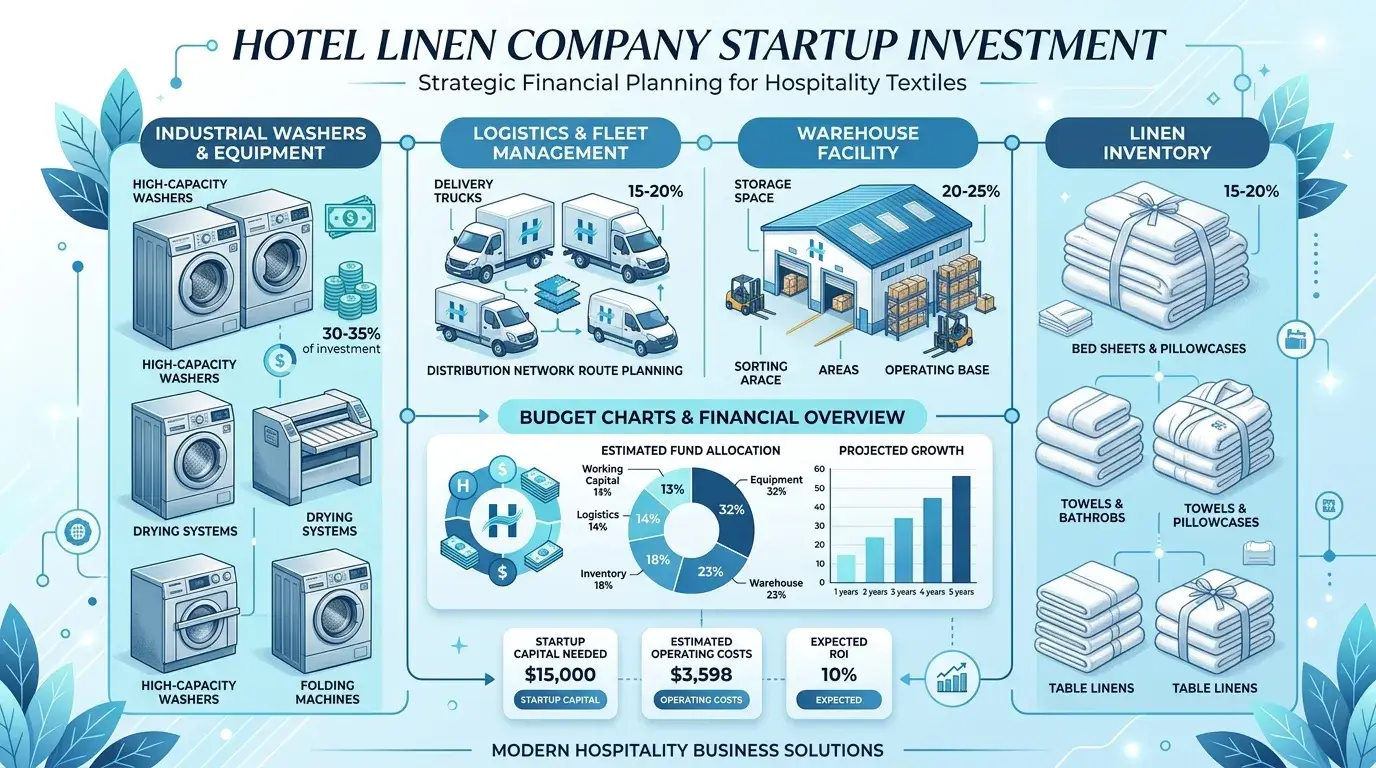
Here is a simple breakdown of estimated startup costs:
| Business Model | Estimated Startup Cost | Biggest Expenses |
|---|---|---|
| Distributor | $50,000 – $100,000 | Wholesale inventory, warehouse space, marketing. |
| Commercial Laundry | $200,000 – $400,000 | Washer-extractors1, flatwork ironers, delivery trucks. |
| Rental Service | $300,000 – $500,000+ | Machinery, huge linen inventory, warehouse, staff. |
The Secret to Par Levels: Avoiding Inventory Nightmares
If you rent or sell linens, you must understand "par levels." A par is the total amount of linen needed to outfit all rooms in a hotel exactly one time.
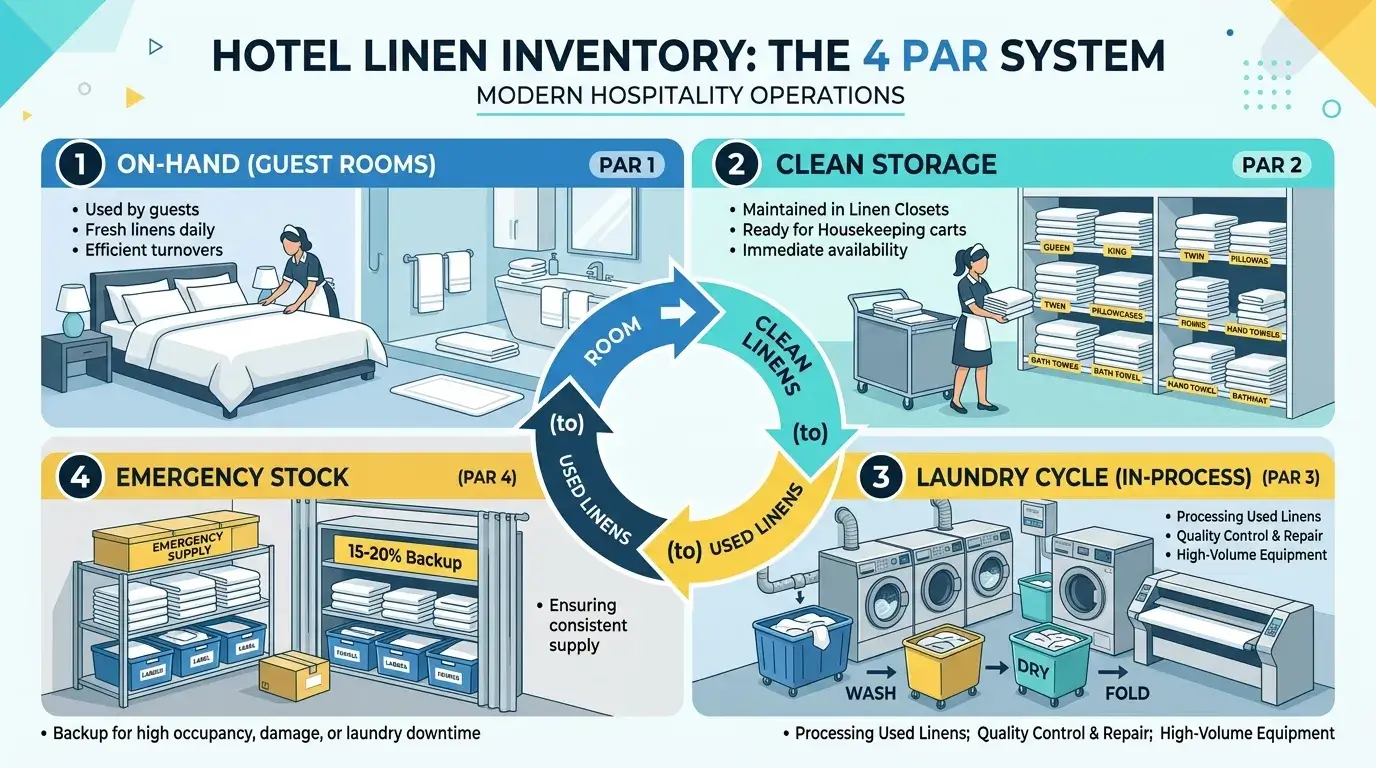
Many beginners think a 100-room hotel needs 100 sets of sheets. This is a huge mistake. Hotels actually need a minimum of 3.5 to 4 par to function properly.
"You can never run a hotel on 1 par. If one sheet gets a stain, you have a bed you cannot sell."
Here is how the 4 par system breaks down:
- 1 Par: On the beds in the guest rooms.
- 1 Par: Soiled and sitting in the laundry process.
- 1 Par: Clean and resting on the shelves.
- 1 Par: In storage for emergencies or replacements.
Why Do Linens Need to Rest?
Here is a secret that most people do not know. Commercial linens must "rest" for 24 hours after you wash and iron them. If you take a hot, freshly washed sheet and put it straight onto a bed, the cotton fibers will stretch. The fibers will stress and snap. Resting makes the linens last much longer.
Sourcing Linens: What Do 5-Star Hotels Actually Use?
If you want to win contracts, you must sell the right products. The market has changed. You cannot sell cheap stuff anymore.
The Death of T-180
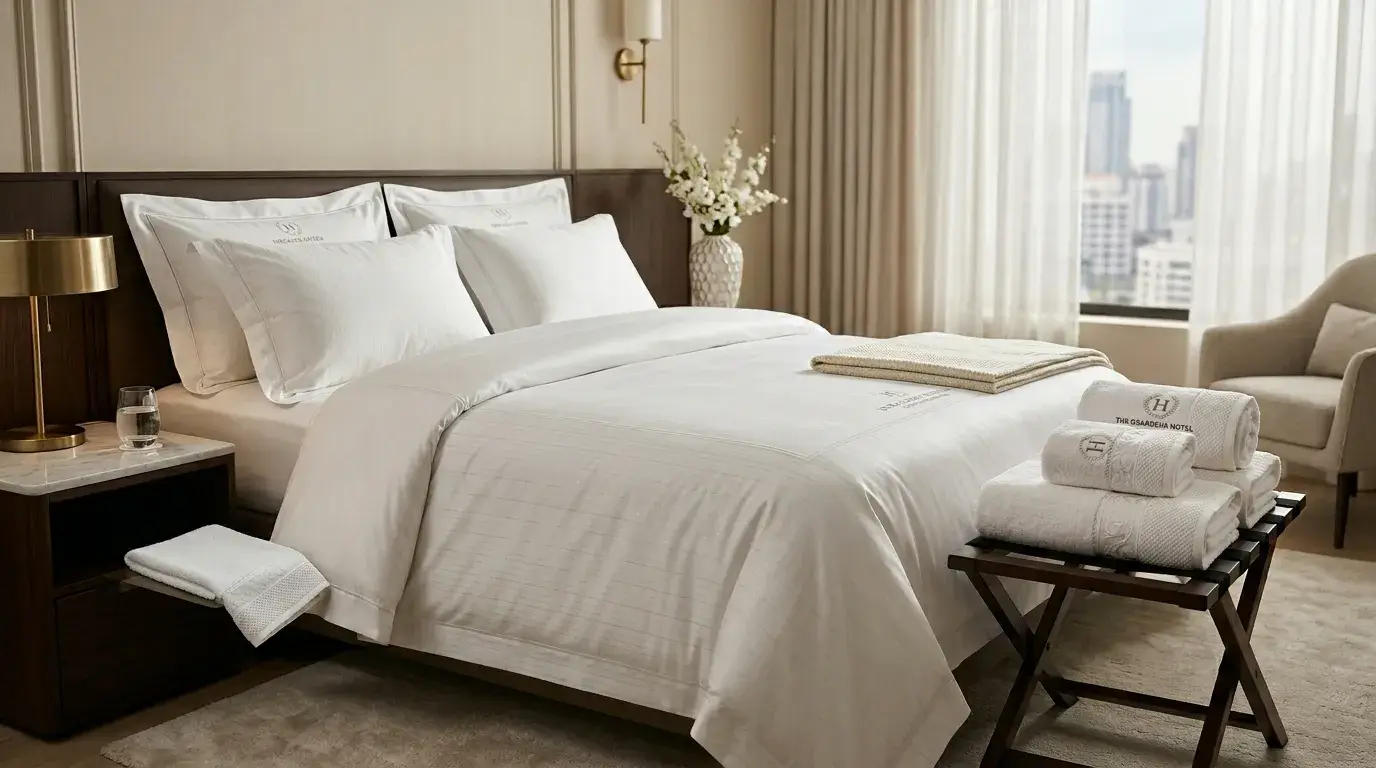
Ten years ago, budget motels used T-180 sheets. This means the fabric has a thread count of 180. Today, T-180 is dead. The modern baseline for hospitality is T-250. Even cheap hotels want T-250 blends because they feel softer and last longer.
Luxury 5-star properties buy T-300 cotton percale or sateen weaves2. Percale is very crisp. It breathes well in warm climates. Sateen feels silky and smooth.
Quick-Dry Towels
Heavy, 100% ring-spun cotton towels feel amazing. But they hold a lot of water. They take a long time to dry. Smart hotel managers want quick-dry towels. These towels use special blends. They reduce a hotel’s drying time by 30% to 40%. This saves the hotel thousands of dollars in gas and electric bills. It is a massive selling point for you.
Smart Textiles are Trending
Hotels now want smart textiles. These are linens with silver-ion or copper threads3 woven inside. These metals fight bacteria. They stop bad odors. This means the hotel does not have to use harsh chemicals to get smells out.
The Power of Dobby Borders
Look closely at a good hotel towel. You will see a woven pattern near the edge. This is called a dobby border4. It might look like a Greek key or a diamond. This border is not just for looks. It helps the towel hold its shape. It stops the edges from fraying after hundreds of heavy wash cycles.
Protecting Your Profits: Shrinkage and Fiber Health
In the linen business, you make pennies on every pound of laundry. You must protect your profits.
Shrinkage is the Silent Killer
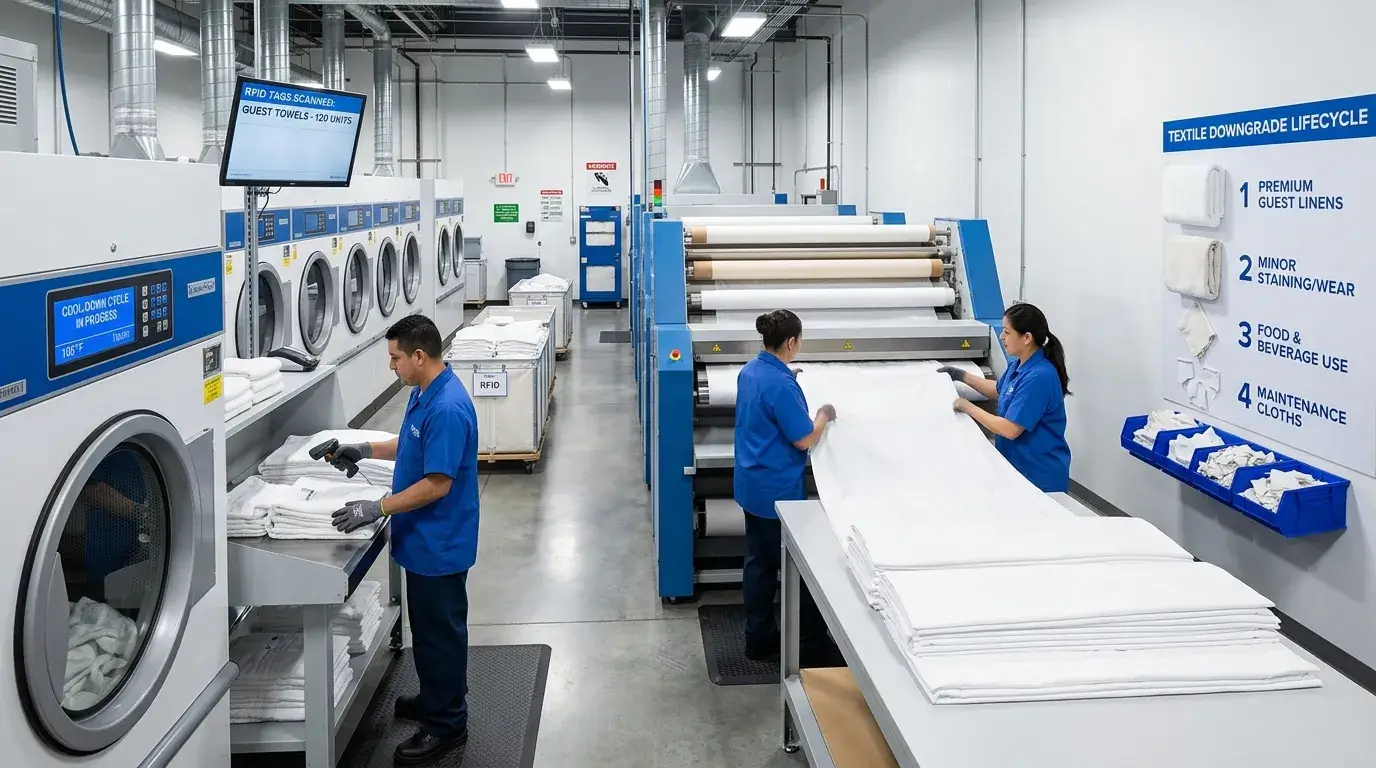
When laundry experts say "shrinkage," they do not mean the fabric got smaller in the wash. Shrinkage means lost inventory. Guests steal towels. Housekeepers use facecloths to wipe dirty sinks. Delivery drivers lose bags. Shrinkage eats your profits directly. You must use software to track every single item5.
The Cool-Down Cycle
Over-drying is the number one cause of damaged linens. Commercial dryers get very hot. Expert launderers always use a specific cool-down cycle at the end. This cycle blows cool air on the sheets. It relaxes the fibers. It prevents irreversible damage.
Ironing is Mandatory
You cannot just wash and fold sheets. You must iron them. Commercial companies use giant machines called flatwork ironers6. These rollers press the sheets with high heat. Even top sheets and pillowcases must be mechanically pressed. This is the only way to get that crisp, smooth "hotel look."
The Textile Downgrade Lifecycle
Linens do not last forever. Smart companies help hotels use a grading system to save money.
- Grade A: Perfect linens. These go in the guest rooms.
- Grade B: Slightly worn or faded. These go to the staff quarters or massage tables.
- Grade C: Stained or frayed. These get cut up into cleaning rags for the maintenance team.
How Do You Pitch Hotel General Managers?
You have your business set up. You have high-quality textiles. Now, you need customers. How do you win B2B contracts?
Do not just walk into a hotel and say, "I have soft sheets." Hotel General Managers do not care about softness as much as they care about numbers. You must sell operational efficiency.
Understand CPOR
CPOR stands for Cost Per Occupied Room7. This is the exact metric hotel managers use. They track exactly how much it costs to clean and supply a room for one night.
If you want their business, show them how you lower their CPOR. Tell them your quick-dry towels will save housekeeping time. Prove that your high-quality T-250 sheets last longer, so they do not have to buy replacements as often. Offer a clear Service Level Agreement (SLA). Guarantee your delivery times.
Beat the Giants on Service
You will face huge corporate linen suppliers. You cannot beat them on price. They buy in massive bulk. So, how do you win? You beat them on niche service. Offer flawless, on-time delivery. Offer customized embroidery. Offer eco-friendly washing practices. Be flexible when they have an emergency shortage.
Take the Next Step
Starting a hotel linen company is a big project. But hotels will always need clean sheets. It is a stable, strong market. The key is to start with the best possible products. You cannot build a great business on bad fabric.
At Hotemax, we help new and established linen companies succeed. We supply the high-quality, durable textiles you need to impress hotel managers. If you want to build a profitable linen business, you need a reliable wholesale partner.
-
UniMac. "High Performance Industrial Washer Extractors." Details the heavy-duty machinery required for commercial laundry setups. ↩
-
1Concier. "Sateen vs. Percale: Choose the Right Sheets for Your Hotel." A breakdown of hotel sheet weaves and their impact on guest comfort. ↩
-
Textile School. "The Science of Anti-Microbial Fabrics." Explores the use of metal-ion technologies like silver and copper in textiles. ↩
-
Guest Supply. "Crown Touch Hand Towel, Cotton Dobby Border." Real-world example of a classic hospitality towel featuring a dobby border. ↩
-
Xerafy. "Hotel Linen Service RFID." Explores how commercial laundries use RFID chips to track inventory and reduce linen shrinkage. ↩
-
Continental Girbau. "Commercial X-Series Ironers." Overviews the mechanics of using commercial flatwork ironers for pressing flat goods. ↩
-
Canary Technologies. "Hotel Glossary – What is CPOR (Cost per Occupied Room)." Explains how hotels calculate and optimize room-related operational expenses. ↩