
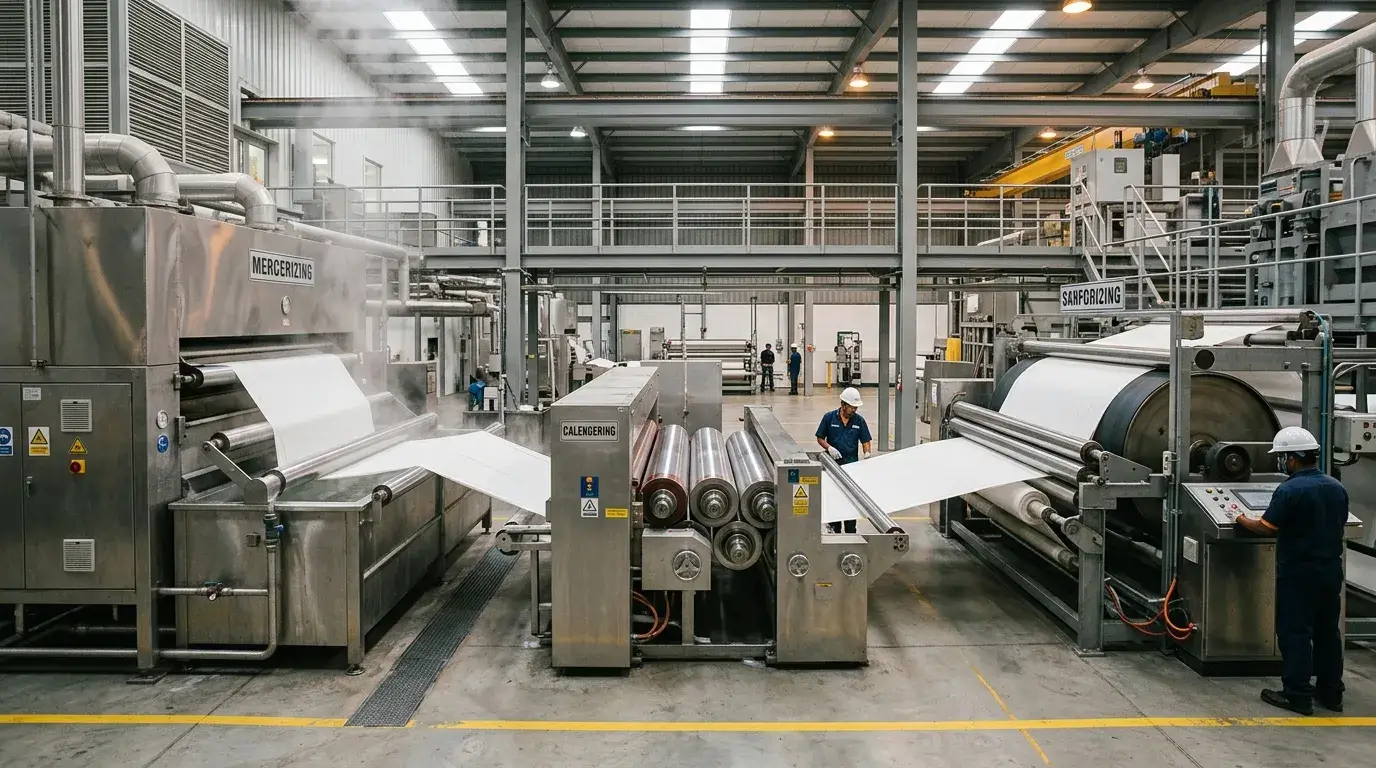
Faded, shrinking hotel sheets frustrate guests and hurt your budget. The secret to long-lasting linens is proper finishing. I will show you how textile treatments solve this problem.
Textile finishing processes like mercerizing, calendering, and anti-shrink treatments transform raw woven fabrics into durable, smooth, and shrink-resistant hotel linens. These industrial techniques enhance fiber strength, visual appeal, and lifespan.
Understanding these specific fabric treatments helps hotel procurement teams make smarter buying choices. Let us explore exactly how these textile finishes protect your hospitality investment today.
How Does Mercerization Transform Ordinary Cotton into Hotel-Grade Luxury?
Weak, dull cotton tears easily and looks cheap. Mercerizing treats cotton to make it stronger and shinier. I recommend this process for high-quality hotel bed sheets.
Mercerization is a chemical finish1 where cotton is treated with caustic soda under tension. This process swells the fibers, increasing tensile strength by up to 20%, improving dye absorption, and creating a silk-like luster.
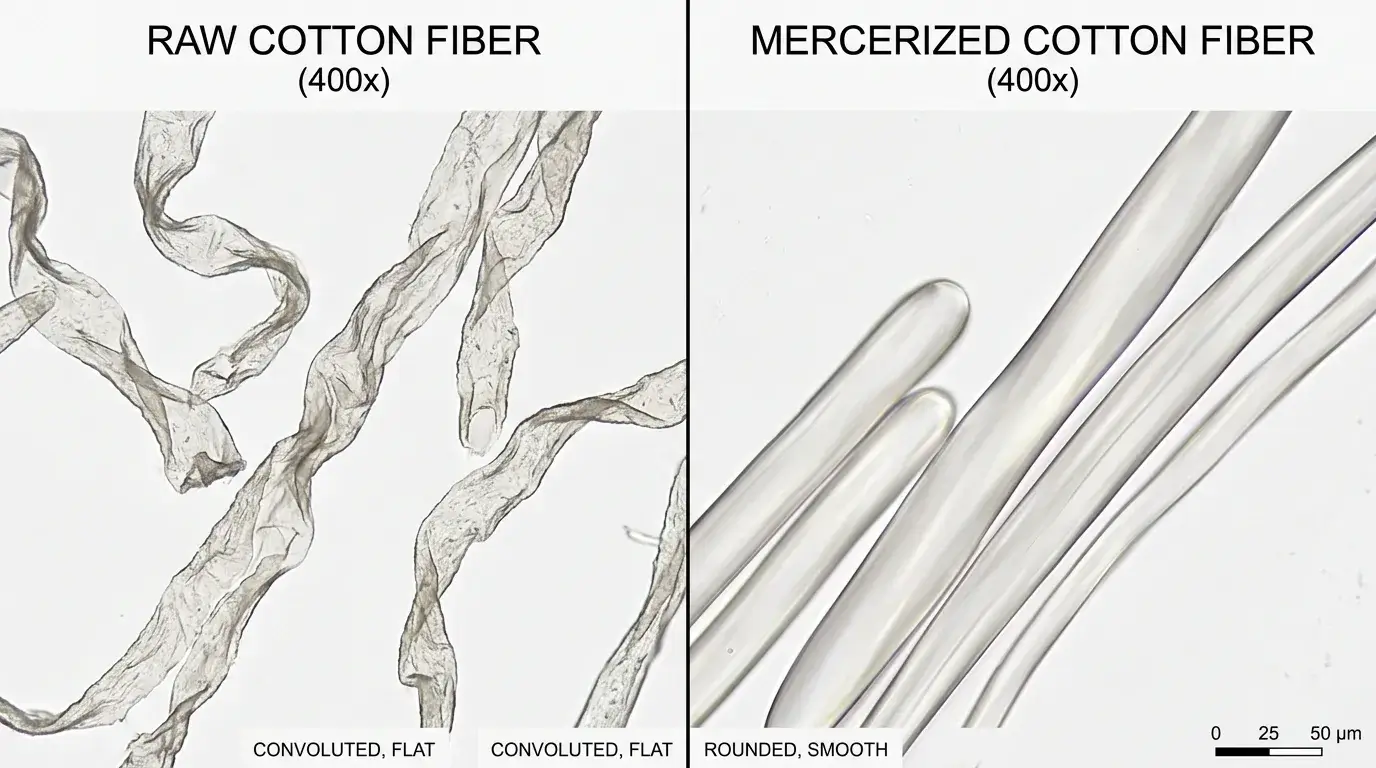
I often see hotels buy standard cotton sheets to save money. However, standard cotton breaks down quickly in heavy commercial washing. Mercerization changes the actual shape of the cotton fiber. Normal cotton looks like a flat, twisted ribbon under a microscope. When we apply the chemical bath, the fiber swells up. It turns into a smooth, round cylinder.
This new shape reflects light much better. That is why mercerized sheets look shiny and expensive.
The Dialectical View: Caustic Soda vs. Liquid Ammonia
Is the chemical process safe for the environment? This is a valid question. The traditional method uses sodium hydroxide, also known as caustic soda. It works well, but it can be harsh.
Today, top textile mills use a newer method. They use liquid ammonia2 instead of caustic soda. Ammonia molecules are very small. They go deep into the yarn without damaging the outside surface.
| Feature | Caustic Soda Mercerizing | Liquid Ammonia Mercerizing |
|---|---|---|
| Luster | Very high | Moderate |
| Softness | Good | Excellent |
| Tear Strength | Good | Superior |
| Cost | Lower | Higher |
"Liquid ammonia mercerization is taking over high-end textiles because it results in fabrics that are incredibly soft and less prone to seam-puckering." – Textile Industry Report
For hotel procurement, I suggest asking your supplier which method they use. If you want ultra-soft sheets that last for hundreds of wash cycles, the liquid ammonia method is often the better choice. It costs a bit more upfront. However, the extreme durability means you buy replacement sheets less often.
Is Calendering Just Industrial Ironing for Hotel Linens?
Wrinkled, rough fabrics ruin the guest experience. Calendering uses heavy rollers to flatten and smooth materials. This step creates the crisp feel guests love.
Calendering is a mechanical finishing process3 where fabric passes through heavy, heated rollers under extreme pressure. This flattens the yarns, closes the weave, and imparts a smooth, glossy, or textured finish to the textile.
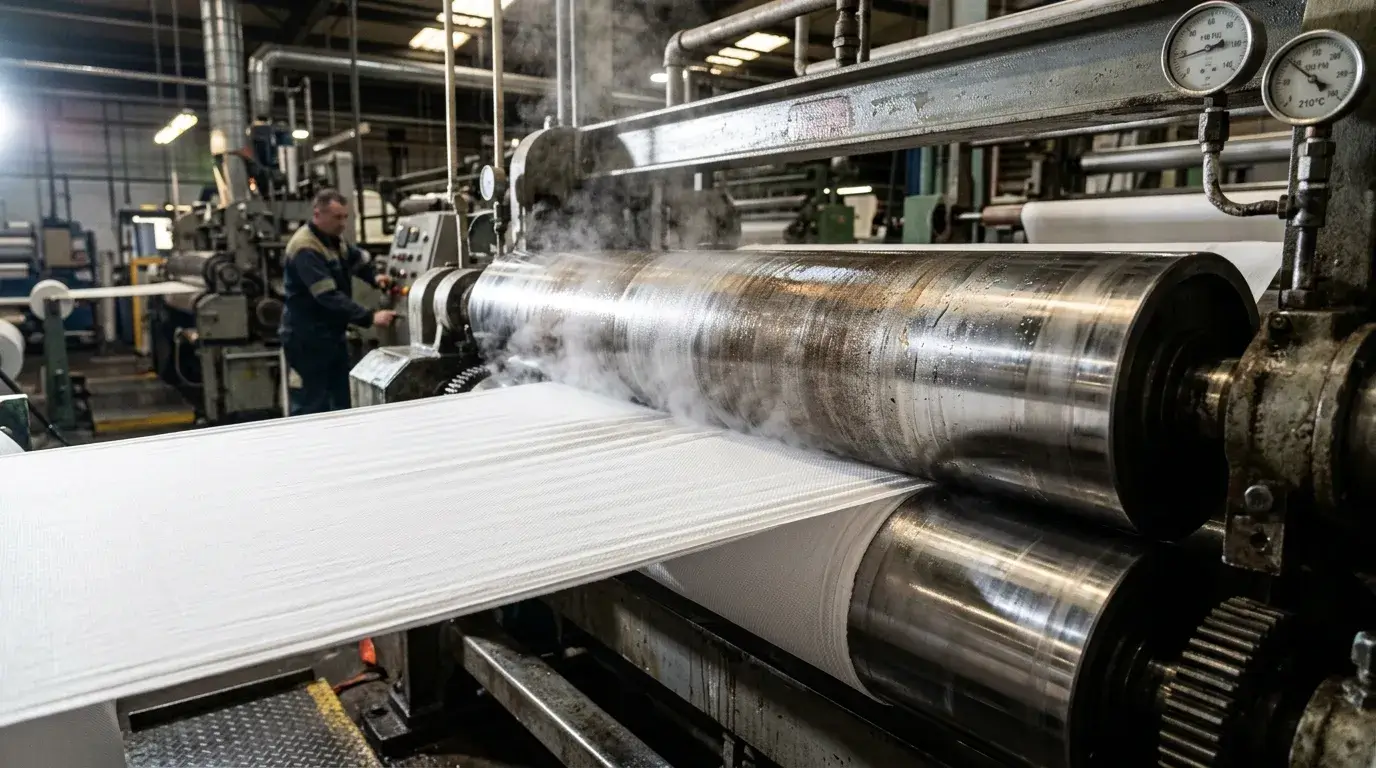
Yes, calendering is basically giant, industrial ironing. But it is much more powerful. Just like ironing a dry shirt does not work well, calendering requires moisture. The fabric must be slightly damp. The machine uses heat, steam, and extreme pressure.
This forces the woven yarns to flatten out.
I always tell hotel buyers to pay attention to the "hand" of the fabric. The "hand" is how the fabric feels when you touch it. Calendering changes the hand completely. It turns a rough piece of cloth into a smooth, silky sheet.
Temporary vs. Permanent Finishes
We must look at this from two sides. Is this smooth finish permanent? The answer depends on the fabric.
If you use 100% natural cotton, standard calendering is temporary. The shiny finish will wash out after the first few laundry cycles. However, we can make it permanent.
- Chemical Resins: We can coat the cotton with a chemical resin before it goes through the hot rollers. The heat bakes the resin into the fibers.
- Synthetic Blends: If the fabric has polyester in it, the heat slightly melts the plastic fibers. This locks the smooth shape in place forever.
Types of Calendering for Hotels
There are different machines for different looks.
- Standard Calendering: Smooths the fabric. Used for basic bed sheets.
- Friction Calendering: One roller spins faster to polish the fabric. Used for glossy decorative pillows.
- Schreiner Calendering4: Uses rollers with tiny engraved lines. It scatters light to create a soft glow.
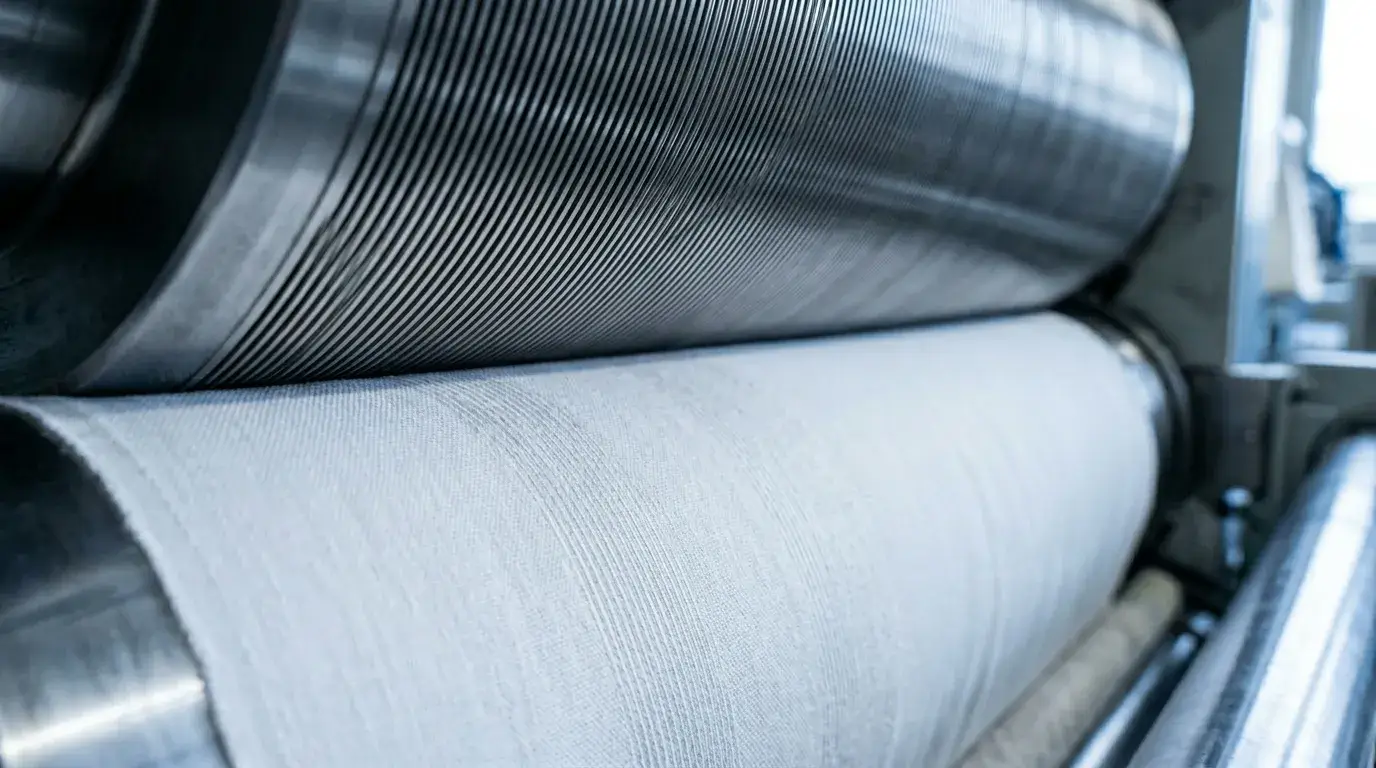
When you order table linens or napkins for your hotel restaurant, you want a friction or Schreiner finish. It gives the fabric a high-end, elegant look that guests notice immediately.
How Do Anti-Shrink Finishes Stop Hotel Uniforms and Towels from Shrinking?
Shrinking uniforms and warped towels waste your replacement budget. Anti-shrink finishes lock fabric shapes in place. I will explain how these treatments save you money.
Anti-shrink finishing includes mechanical methods like Sanforizing and chemical resin treatments. These processes pre-shrink the fabric or lock its molecular structure, ensuring residual shrinkage remains under 1% after commercial laundering.
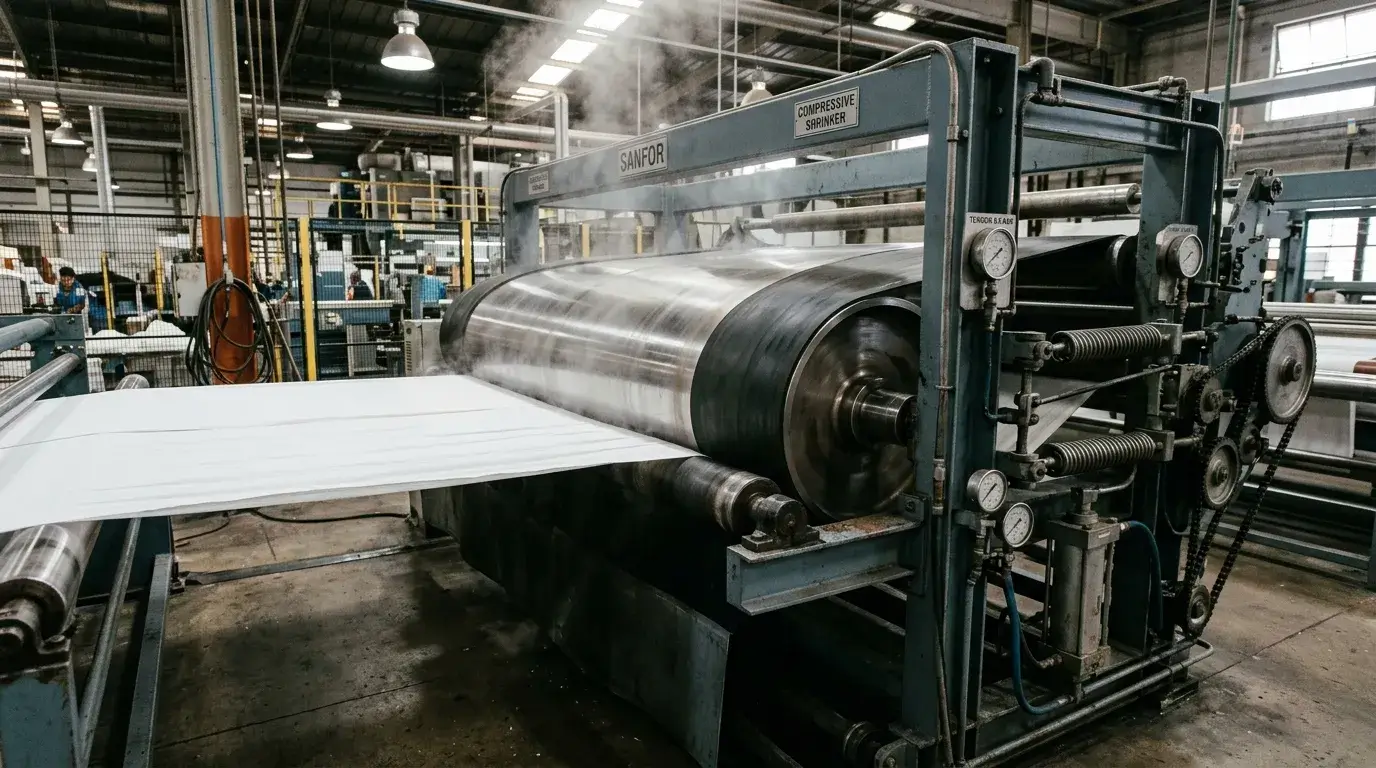
When a factory spins and weaves cotton, the machines pull the yarns very tight. The fibers are stretched out. When you wash that new fabric in hot water, the fibers relax. They shrink back to their normal, shorter size. This is why a new hotel uniform suddenly fits too tightly after one wash.
To fix this, we use anti-shrink finishes. There are two main ways to do this. We can use machines, or we can use chemicals.
The Mechanical Way: Sanforizing
Sanforizing is a brilliant invention5. It is purely mechanical. We use steam to get the fabric wet. Then we put it against a stretched rubber belt. As the belt moves over a heated drum, the rubber shrinks back to its normal size. This action physically forces the fabric yarns to push together and shrink.
We do this before we cut and sew the fabric into a garment. In the hotel supply world, we call this a "Zero-Zero finish." This means we want zero shrinkage in the length and zero shrinkage in the width.
The Chemical Way: Resin Cross-Linking
We must look at the chemical side, too. Sometimes mechanical shrinking is not enough. We use chemical resins to lock the cotton molecules together6.
| Feature | Mechanical (Sanforizing) | Chemical (Resin Finish) |
|---|---|---|
| Process Type | Heat, steam, and pressure | Chemical bath and baking |
| Fabric Feel | Soft and dense | Can be slightly stiffer |
| Toxicity | None | May contain trace chemicals |
| Best Used For | Heavy cottons, denim | Thin shirts, anti-wrinkle linens |
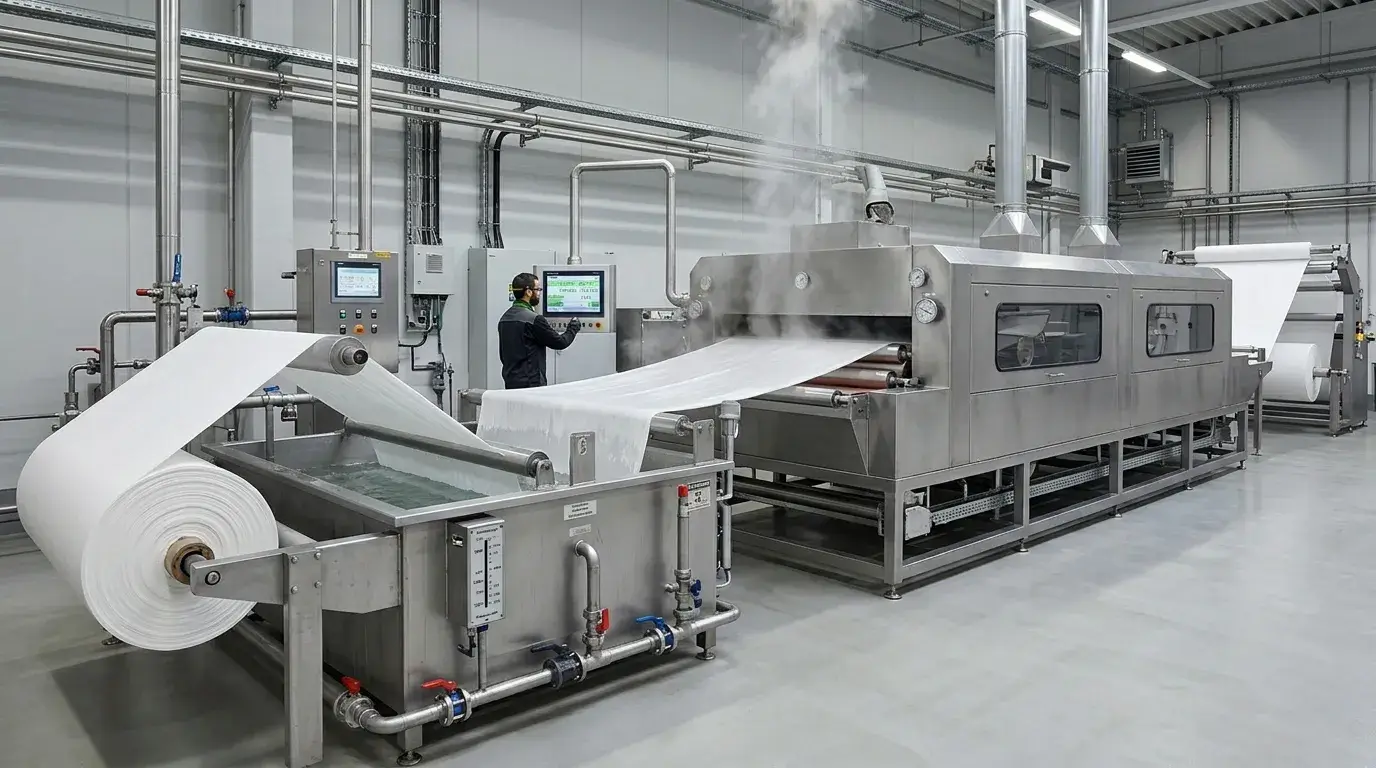
In the past, these resins used a lot of formaldehyde. This caused skin rashes for guests. Today, the industry uses low-formaldehyde or zero-formaldehyde resins7. I highly recommend asking your supplier for zero-formaldehyde certificates. This protects your guests and keeps your hotel safe from lawsuits.
How Do These Textile Finishes Impact Your Hotel Procurement Strategy?
Buying cheap, unfinished linens leads to constant replacements and bad reviews. Investing in properly finished textiles guarantees better durability. Here is how to buy smarter.
Hotel procurement teams must specify mercerized, calendered, and sanforized fabrics in vendor contracts. These finishing treatments directly increase the operational lifespan of linens, reducing long-term replacement costs despite a higher initial purchase price.
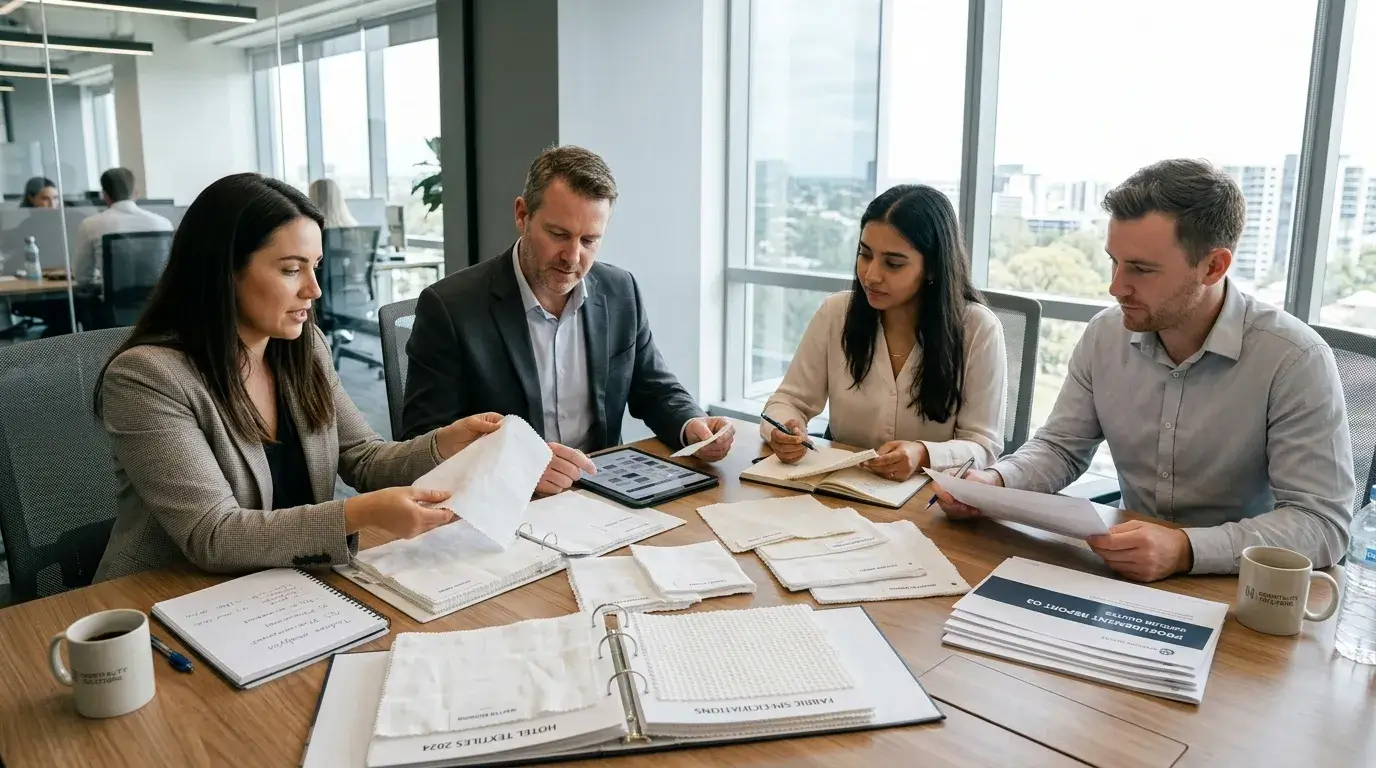
When I review hotel budgets, I see a common mistake. Procurement managers look only at the upfront cost of a towel or sheet. They see an unfinished sheet for $10 and a finished sheet for $14. They buy the $10 sheet.
This is a trap. We must look at the lifetime value of the product from a broader perspective.
The True Cost of Cheap Linens
Unfinished cotton sheets absorb stains easily. They tear after 50 washes. They shrink, so they no longer fit the mattresses. Housekeeping spends extra time trying to force tight sheets onto beds. This wastes labor hours.
On the other hand, fully finished linens perform differently:
- Mercerized sheets hold their bright white color longer because the fibers resist breaking down.
- Calendered table linens resist deep stains because the weave is pressed tightly closed.
- Sanforized uniforms fit your staff perfectly, even after a year of hot commercial washing.
"Quality is never an accident; it is always the result of high intention, sincere effort, intelligent direction and skillful execution." – William A. Foster8
I advise you to update your purchasing contracts today. Add strict requirements for textile finishes. Ask your vendors to prove their fabrics are mercerized and sanforized. You will pay a little more today, but your linens will last twice as long. This is the real secret to managing a profitable hotel supply chain.
Conclusion
Textile finishes like mercerizing, calendering, and anti-shrink treatments ensure hotel linens remain durable, luxurious, and perfectly sized.
-
Understand the chemical process of mercerization and how it alters cotton fiber structure to increase strength and luster. ↩
-
Learn about the benefits of liquid ammonia finishing, a gentler and eco-friendly alternative to traditional caustic soda. ↩
-
Explore the history and mechanics of textile calendering and its various types. ↩
-
Discover how Schreiner calendering imparts a silk-like luster using finely engraved lines. ↩
-
Learn about the mechanical pre-shrinking process patented by Sanford L. Cluett to prevent fabric shrinkage. ↩
-
Review technical literature on how formaldehyde-based chemical resins prevent wrinkling and shrinkage in cellulose textiles. ↩
-
Read the US Government Accountability Office report detailing the health risks of formaldehyde in textiles and the importance of zero-formaldehyde alternatives. ↩
-
Source of the famous quote on quality by William A. Foster. ↩