
Egypt welcomed a record 15.78 million tourists in 20241. This number will grow to 17.76 million in 2025. With 109 hotels and 26,250 rooms currently under development, Egyptian properties face a critical challenge. They need reliable suppliers who can deliver quality amenities at competitive prices.
I’ve seen many hotel procurement managers struggle with this search. The online information is outdated. Most lists show only 2-3 suppliers. And nobody talks about what really matters—certifications, pricing, and regional expertise.
This guide changes that. I’ll walk you through everything you need to know about sourcing hotel amenities in Egypt. You’ll learn how to evaluate suppliers, negotiate better deals, and avoid common mistakes.
What Types of Hotel Amenities Can You Source from Egyptian Suppliers?
Egyptian suppliers offer a complete range of products for your property. Let me break down the main categories.
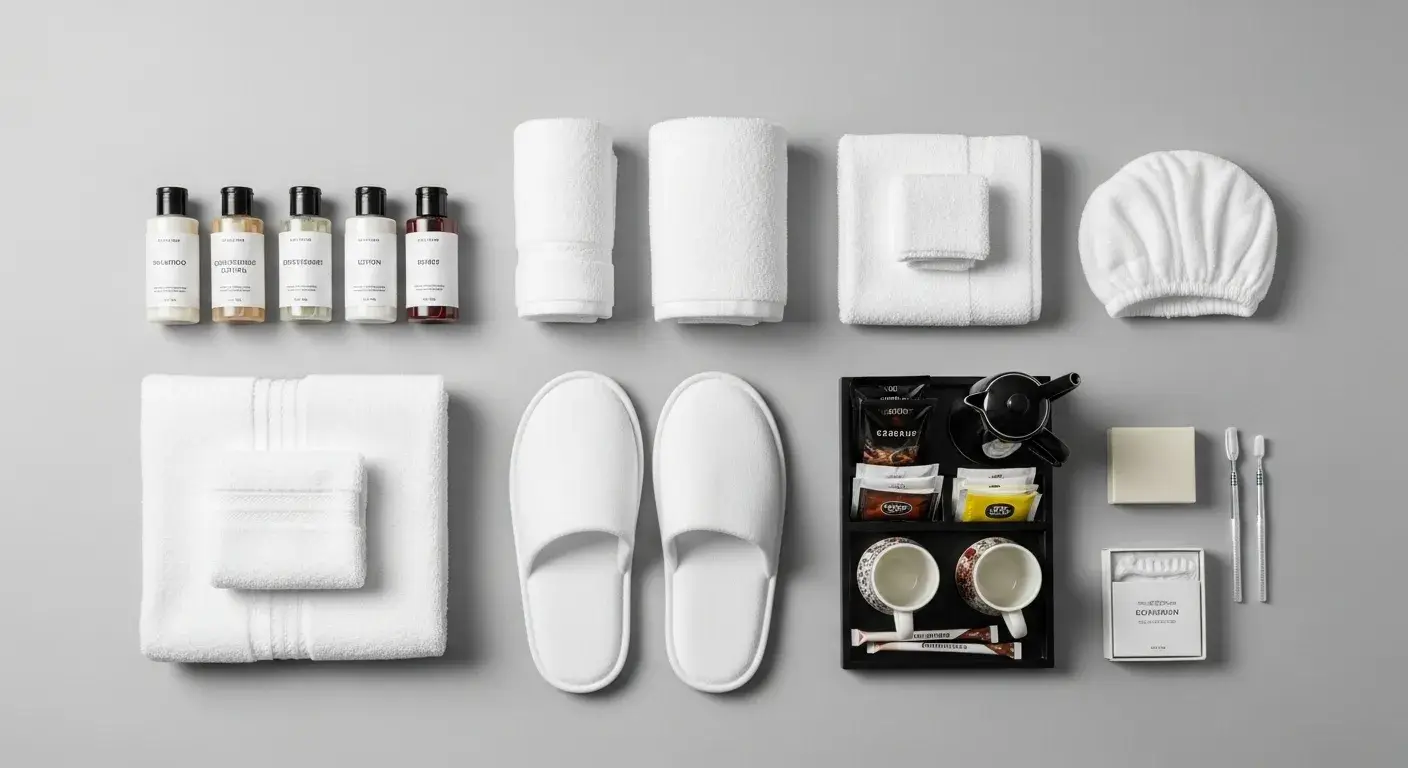
Bathroom Amenities and Toiletries
This category includes your everyday guest essentials:
- Shampoo, conditioner, body wash, and body lotion
- Bar soaps and liquid hand soap
- Dental kits with toothbrush and toothpaste
- Shaving kits and grooming accessories
- Shower caps and vanity kits
Textile Products
Egypt has a major advantage here. The country produces world-famous cotton. Your textile options include:
- Bath towels, hand towels, and washcloths (Egyptian cotton is the star)
- Bed linens—sheets, pillowcases, and duvet covers
- Bathrobes in terry velour, waffle weave, or kimono style
- Slippers in open-toe, closed-toe, disposable, or reusable versions
- Pool and beach towels for resort properties
Room Accessories
Don’t forget the small touches that guests notice:
- Laundry bags and shoe polish kits
- Sewing kits and first aid supplies
- Coffee and tea amenities
- Stationery sets and notepads
Specialty Items
Many Egyptian suppliers now offer premium options:
- Eco-friendly and biodegradable products
- Private label amenities with your hotel’s branding
- Luxury designer collections
- Spa and wellness products
How Do You Evaluate Quality and Certifications?
Choosing a supplier based on price alone is risky. Quality certifications tell you whether a manufacturer follows proper standards. Here are the certifications that matter most.

Essential Certifications to Look For
| Certification | What It Covers | Why It Matters |
|---|---|---|
| ISO 22716 | Cosmetics Good Manufacturing Practice | Ensures toiletries meet international safety standards |
| ISO 9001 | Quality Management Systems | Shows consistent quality control processes |
| ISO 14001 | Environmental Management | Verifies sustainable manufacturing practices |
| GMP | Production hygiene and safety | Required for cosmetics and personal care products |
| ECOCERT | Organic and natural products | Validates eco-friendly claims |
| OEKO-TEX Standard 100 | Textile safety testing | Confirms linens are free from harmful substances |
| GOTS | Global Organic Textile Standard | Verifies organic cotton claims |
ISO 22716 certification2 is particularly important for toiletries and cosmetics. It provides comprehensive guidelines for the production, control, storage, and shipment of cosmetic products. Suppliers with this certification have demonstrated their commitment to product safety.
For textiles, look for OEKO-TEX Standard 100 certification3. This is one of the world’s best-known labels for textiles tested for harmful substances. It ensures that every component of a textile product has been tested and found to be harmless to human health.
My 6-Step Quality Evaluation Process
I recommend following these steps before signing any contract:
-
Request third-party test reports. Ask for ingredient authenticity and microbial stability tests.
-
Conduct factory visits. Go during production runs. Watch their hygiene protocols in action.
-
Evaluate sample products. Check for consistency in texture, fragrance, and packaging.
-
Check batch records. Review their manufacturing documentation.
-
Verify on-time delivery rates. Target suppliers with 95% or higher performance.
-
Assess response times. Good suppliers respond within 4 business hours.
"The best suppliers invest in certifications because they understand that quality builds long-term relationships."
What Are Typical Minimum Order Requirements and Lead Times?
This is where many buyers get surprised. Egyptian suppliers have varying requirements based on what you order.
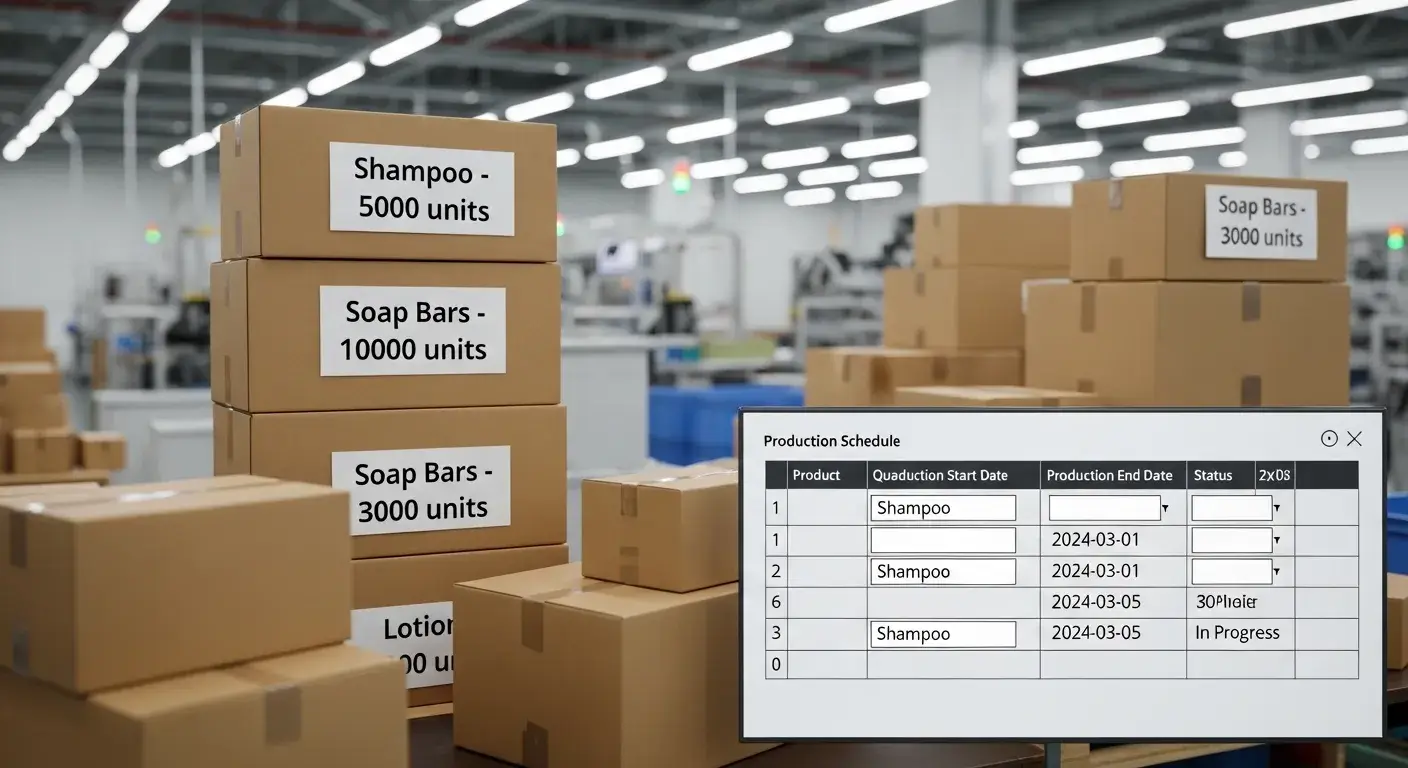
Typical MOQ Ranges
| Product Category | Typical MOQ | Notes |
|---|---|---|
| Stock toiletries (private label) | 1,000-5,000 units | Lower for established brands |
| Custom formulation cosmetics | 5,000-10,000 units | Requires development time |
| Hotel linens and towels | 100-500 pieces | Varies by customization level |
| Disposable slippers | 500-1,000 pairs | Often sold by case |
| Custom branded amenities | 10,000+ pieces | Includes design and setup |
Lead Time Expectations
Plan your orders based on these timelines:
- Stock products: 1-2 weeks
- Private label with existing design: 2-4 weeks
- Custom formulation development: 6-12 weeks
- First orders: Add 1-2 extra weeks for quality checks
How to Negotiate Lower MOQs
You have more leverage than you think. Try these approaches:
- Commit to long-term contracts. Many suppliers drop MOQs by 20-50% for guaranteed business.
- Accept volume commitments spread over time.
- Request sample orders of 50-100 units at premium pricing to test the relationship first.
Which Suppliers Specialize in Eco-Friendly Amenities?
Sustainability matters more than ever. Egypt’s government is pushing for sustainable tourism. International travelers increasingly expect eco-friendly options.
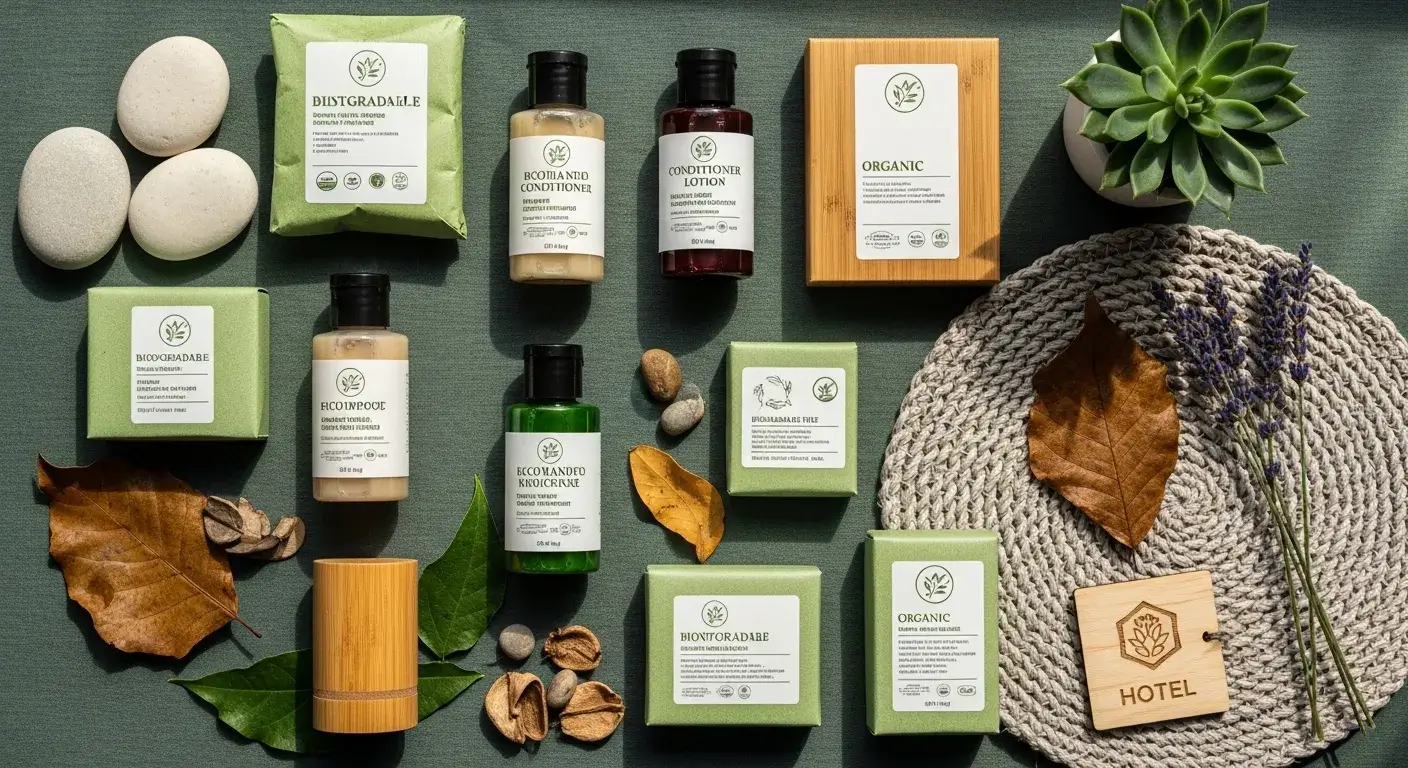
What Sustainable Options Are Available?
Egyptian suppliers now offer:
- Biodegradable toiletries with plant-based ingredients
- Refillable dispenser systems that eliminate single-use plastics
- Recycled and recyclable packaging like kraft paper pouches and aluminum tubes
- Organic Egyptian cotton textiles with GOTS certification4
- Paraben-free and sulfate-free formulations
- Cruelty-free products never tested on animals
A Word of Caution About Sustainability Claims
Here’s something important. Many Egyptian suppliers now market "eco-friendly" products. But verification varies widely. Unlike European suppliers with established certification systems, Egyptian eco-claims may be based on partial changes. Maybe they changed one ingredient. Or switched one packaging element.
My advice: Request specific certifications like ECOCERT or FSC. Don’t accept general sustainability statements without proof.
How Can You Negotiate Better Pricing and Payment Terms?
Hotel supply costs have increased significantly. Research shows 79% cost increases on housekeeping supplies and 77% increases on linens since 2021. Smart negotiation helps control these pressures.
Pricing Optimization Strategies
-
Aggregate purchasing across properties. If you manage multiple hotels, combine your orders.
-
Join purchasing groups or cooperatives. Combined buying power can reduce costs by 15-25%.
-
Negotiate annual contracts. Lock in pricing for 12 months. This protects against currency fluctuations. The Egyptian pound has experienced significant volatility.
-
Compare landed costs. Factor in shipping, customs, and duties when comparing local versus international suppliers.
Common Payment Terms in Egypt
| Term Type | Description | When It’s Used |
|---|---|---|
| Cash in Advance | Payment before shipment | First orders, smaller suppliers |
| Letter of Credit (L/C) | Bank-guaranteed payment | Large international orders |
| 30-60 Net | Payment within 30-60 days | Established relationships |
| D/P (Documents Against Payment) | Pay upon document receipt | Medium-risk transactions |
Your Negotiation Leverage Points
Use these factors to get better deals:
- Promise recurring orders
- Show your prompt payment history
- Accept larger lot sizes
- Offer reference and testimonial agreements
- Guarantee long-term contracts
What Challenges Do Egyptian Hotels Face in Procurement?
Understanding the obstacles helps you prepare. Here are the main issues I see.

Primary Challenges
Currency Volatility. The Egyptian pound fluctuates. Construction material costs have surged 18% year-over-year. This affects all supply chains.
Supply Chain Fragmentation. The hospitality industry faces challenges from fragmentation, cost consciousness, and lack of standardization.
Quality Consistency. Maintaining uniform quality across multiple suppliers requires robust quality control processes.
Seasonal Demand. Egypt’s tourism peaks from December to April. Ramadan creates additional variations. This makes inventory management tricky.
Import Logistics. Complex customs procedures for international products can delay deliveries and increase costs.
Solutions That Work
Hotels are adopting these strategies:
- E-procurement systems for better supply chain visibility
- Multiple supplier relationships for backup options
- Local sourcing to reduce import dependencies
- Just-In-Time inventory to minimize carrying costs
- AI-powered analytics for demand forecasting
Which Regions Have the Highest Demand for Hotel Supplies?
Location matters when choosing suppliers. Different regions have different needs.
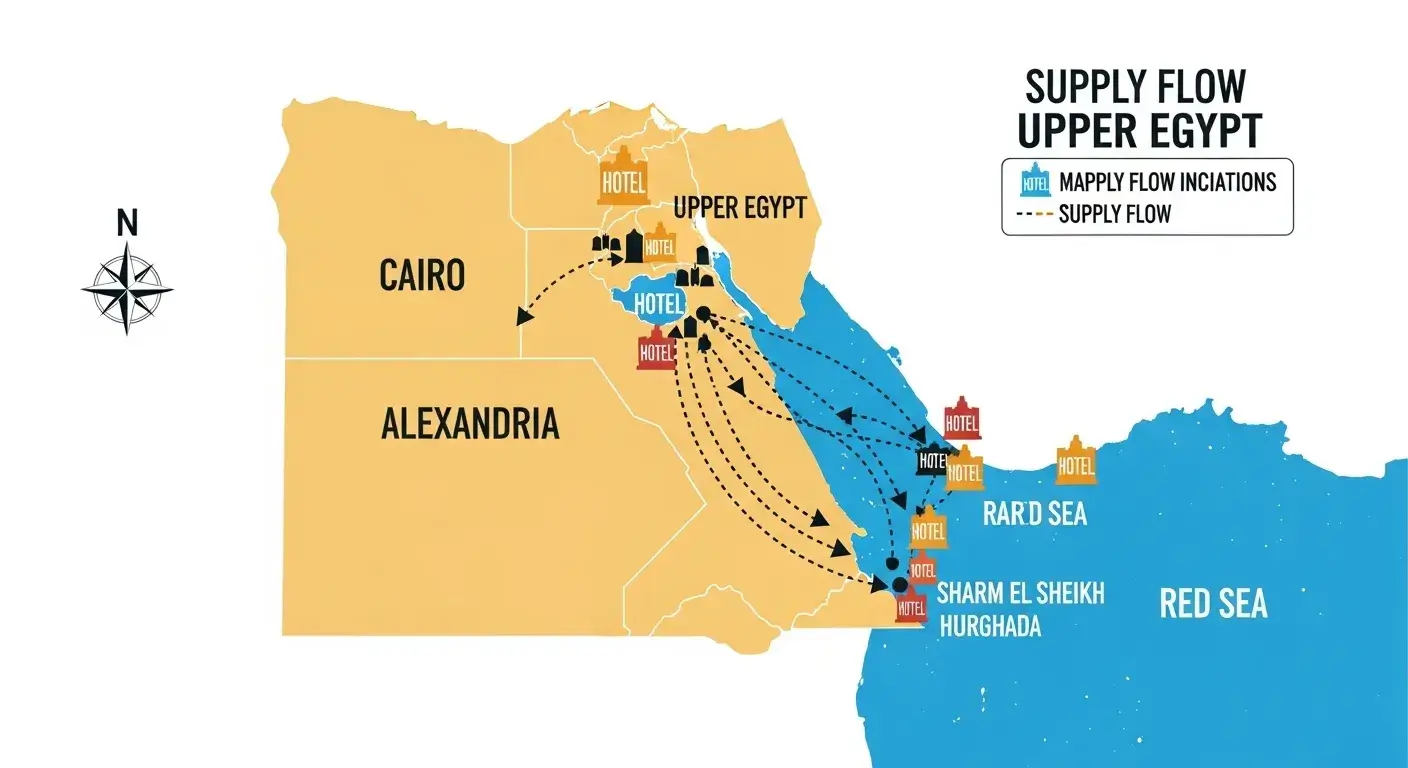
| Region | Market Share | Key Characteristics |
|---|---|---|
| Greater Cairo | 52.26% | Political, cultural, commercial hub. Year-round demand. Luxury and business hotels. |
| Red Sea & Sinai | Significant | All-inclusive beach resorts. Diving destinations. 75%+ occupancy in peak season. |
| North Coast & Alexandria | Fastest growth (12.88% CAGR to 2030) | Ras El-Hekma development. Seasonal summer demand. |
| Upper Egypt (Luxor/Aswan) | Growing | Nile cruise market. Cultural tourism. Grand Egyptian Museum spillover. |
Regional Supplier Considerations
Cairo suppliers work best for Greater Cairo, Upper Egypt, and nationwide distribution.
Red Sea-based suppliers often specialize in resort-specific needs. They understand pool towels, beach amenities, and coastal challenges.
Alexandria suppliers are your textile manufacturing hub. They excel at Egyptian cotton products.
International suppliers may have regional warehouses in Cairo or free trade zones.
How Do Local Manufacturers Compare to International Suppliers?
This is a question I hear often. The answer isn’t simple—both have advantages.
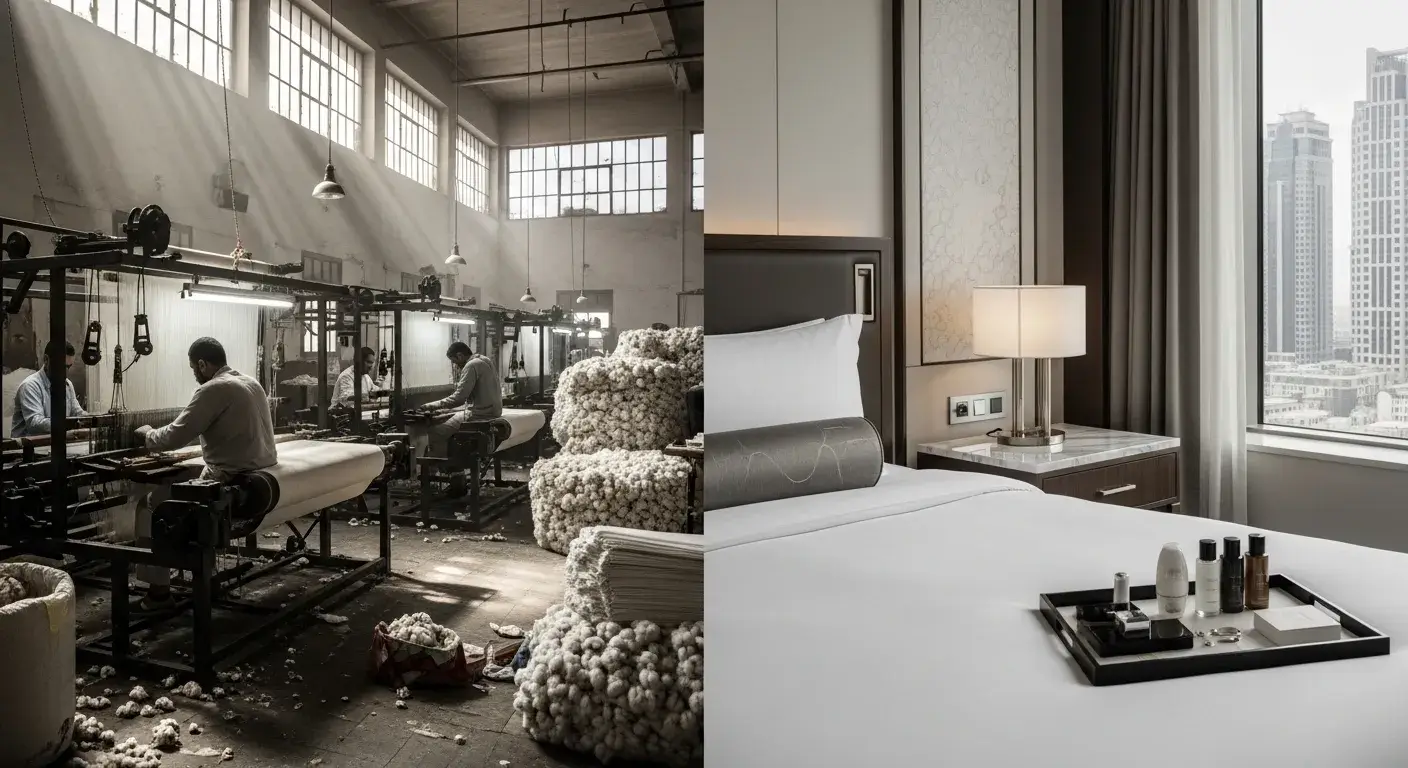
Egyptian Manufacturer Advantages
- Egyptian Cotton Specialty. World-renowned for superior absorbency, softness, and durability.
- Cost Competitiveness. Lower labor costs and reduced shipping expenses.
- Faster Turnaround. Proximity reduces lead times by 2-4 weeks.
- Cultural Understanding. Better grasp of local hospitality needs.
- Currency Benefits. Payments in Egyptian pounds reduce forex exposure.
- Local Support. On-ground customer service and faster issue resolution.
International Supplier Advantages
- Brand Recognition. Luxury brands like Aesop, Le Labo, and Molton Brown enhance guest perceptions.
- Established Quality Systems. Often have more mature ISO and GMP certifications.
- Innovation. Access to cutting-edge formulations and packaging.
- Global Supply Chains. Proven logistics capabilities.
- Sustainability Leadership. More advanced eco-friendly options in some categories.
My Recommendation: Use a Hybrid Approach
Most successful Egyptian hotels combine both. Use local suppliers for textiles and basics. Partner with international brands for premium toiletries and specialty items.
What Private Label and Custom Branding Options Are Available?
Egyptian manufacturers have developed strong private label capabilities. This is especially true for cosmetics and toiletries.
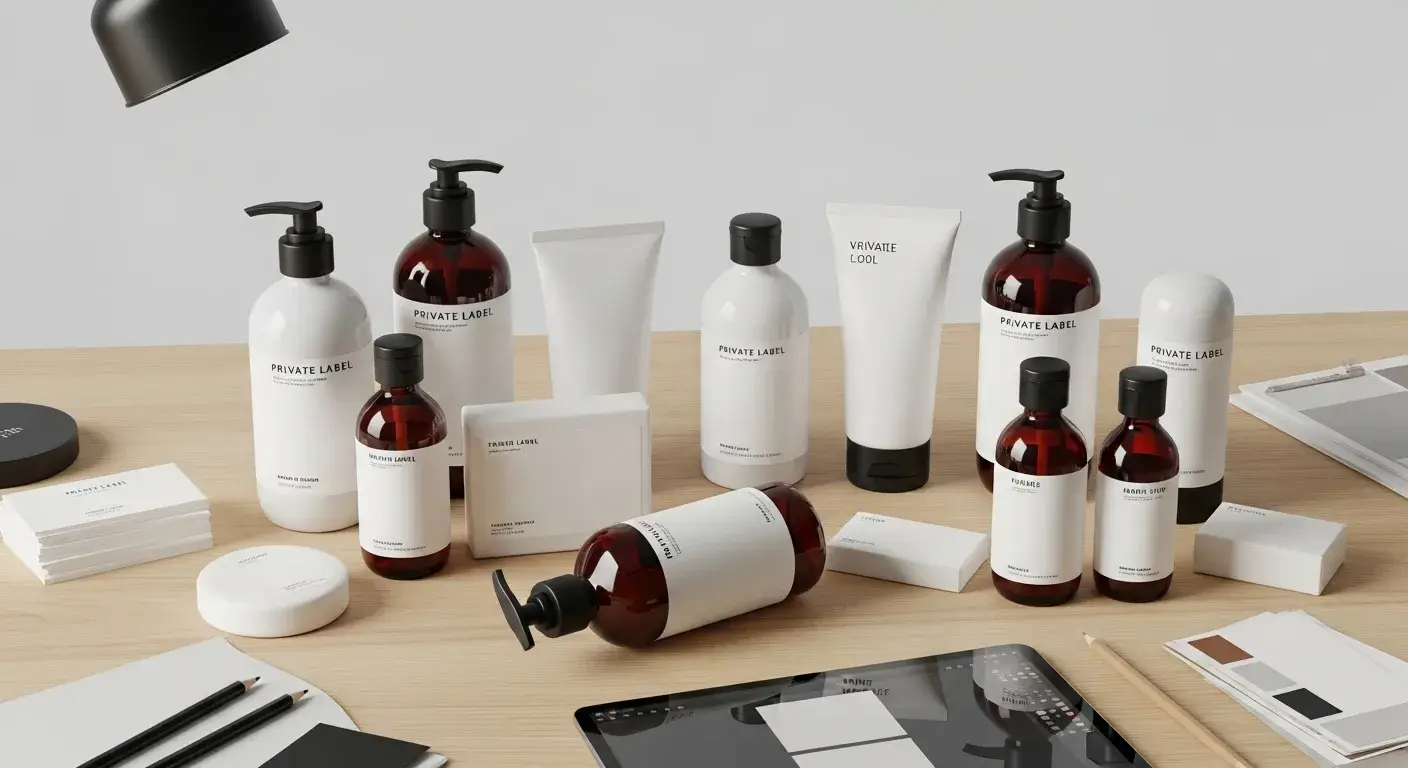
The Private Label Process
- Concept Development. Work with supplier design teams on brand identity.
- Formulation Selection. Choose existing formulas or develop custom blends.
- Packaging Design. Select bottle shapes, cap styles, labels, and materials.
- Fragrance Customization. Create signature scents unique to your property.
- Sample Production. Review prototypes before bulk production.
- Quality Approval. Sign off on final specifications.
- Production Run. Full manufacturing with your branding.
What Can Egyptian Manufacturers Do?
MAMIBA Cosmetics, for example, has manufactured for internationally renowned brands. Their client list includes Crabtree & Evelyn, Acca Kappa, Aromatherapy Associates, and Peter Thomas Roth. Hotels can access the same manufacturing capabilities at regional pricing—often 30-40% below European manufacturers.
Typical Private Label Timeline
- New concept development: 8-12 weeks
- Existing formula with new packaging: 4-6 weeks
- Reorder production: 2-3 weeks
Cost Considerations
- Setup fees: $500-$2,000 depending on complexity
- Design services: Often included for minimum order commitments
- Per-unit costs: 20-40% lower than branded alternatives at volume
Top Hotel Amenities Suppliers in Egypt
Based on my research, here are the leading suppliers worth considering.
For Toiletries and Cosmetics
MAMIBA Cosmetics (Cairo)
- Specialization: Hotel amenities manufacturing, private label development
- Capabilities: R&D, custom formulation, sustainable packaging
- Key Differentiator: International brand manufacturing experience
- Website: mamibacosmetics.com
ECC – Egyptian Company for Cosmetics (Cairo)
- Established: 1981 (40+ years)
- Specialization: Private label cosmetics, toiletries manufacturing
- Certifications: GMP compliant
- Export Markets: 50+ countries
- Website: ecc-hub.com
For Linens and Textiles
Top Trade (Cairo)
- Established: 1997 (28+ years)
- Specialization: Comprehensive hotel equipment, bathroom amenities, housekeeping supplies
- Key Differentiator: Full after-sales service, spare parts availability, extended warranties
- Website: toptradeeg.com
Al Azima Linen (Alexandria)
- Specialization: Egyptian cotton hotel linens, towels, restaurant supplies
- Key Differentiator: Direct manufacturing with custom printing and embroidery
- Website: alazima-linen.com
Standard General Supplies (Red Sea)
- Specialization: Hotel linens, towels, amenities, safety deposit boxes
- Service Area: Red Sea Governorate hotels and resorts
- Key Differentiator: After-sales service focus, warranty renewal services
- Website: standardegy.com
For Comprehensive Hotel Supplies
El Shahed Group (Cairo)
- Established: 1985 (40 years)
- Specialization: Full hotel supplies range, front of house, guest amenities
- Key Differentiator: Established market leader with premium brand partnerships
- Website: shahedgroup.com
Nourtex Company for Exports
- Specialization: Premium Egyptian cotton textiles
- Certifications: 100% Certified Egyptian Cotton
- Key Differentiator: Export-quality standards for domestic market
For Premium and Luxury Segments
DM Supply
- Specialization: In-hotel guest amenities, private-label cosmetics
- Focus: Premium and luxury hotel segment
- Key Differentiator: Customization aligned to hotelier brand identity
Nillens (Cairo)
- Established: 2011
- Specialization: Egyptian cotton bedding, towels, loungewear
- Key Differentiator: Design-focused with responsible local production
General Pricing Ranges for Egyptian Hotel Amenities
Understanding price ranges helps you budget and negotiate. Here’s what to expect.
| Product | Price Range | Unit |
|---|---|---|
| Shampoo/Conditioner (30ml) | $0.15-0.45 | per unit |
| Bar soap (20-40g) | $0.08-0.25 | per unit |
| Hotel slippers (disposable) | $0.30-0.80 | per pair |
| Bath towels (Egyptian cotton) | $4-12 | per piece |
| Bathrobes (waffle weave) | $12-35 | per piece |
| Complete amenity kit | $1.50-5.00 | per set |
Factors That Affect Pricing
- Order quantity: Volume discounts range from 10-25%
- Customization level: Private label premiums add 15-30%
- Material quality: Organic and premium ingredients cost more
- Packaging requirements: Eco-friendly packaging may cost more initially
- Delivery requirements: Expedited shipping adds to your cost
5 Unique Insights You Won’t Find Elsewhere
Let me share some insider knowledge about the Egyptian market.

Insight 1: The "Best Cotton Exported" Paradox
Egypt produces world-renowned cotton. But here’s what many procurement managers discover too late. The highest-quality Egyptian cotton products feature extra-long staple fibers5 that are often exported rather than sold domestically.
My tip: Specifically request "export-grade" or "100% certified Egyptian cotton" from suppliers. Standard domestic offerings may use lower grades.
Insight 2: Red Sea Suppliers Have Specialized Knowledge
Suppliers based in Hurghada and Sharm El Sheikh have developed unique expertise. They understand resort-specific challenges that Cairo suppliers may miss. This includes salt-resistant linens, chlorine-tolerant pool towels, and products designed for coastal humidity.
My tip: Consider region-specific suppliers for Red Sea properties.
Insight 3: Currency Timing Can Save 10-20%
The Egyptian pound experiences significant fluctuations. Smart procurement managers monitor exchange rates. They time large orders during favorable periods. Some suppliers offer fixed pricing in EGP for domestic clients. International hotels often negotiate USD or EUR pricing for budget predictability.
Insight 4: The Grand Egyptian Museum Creates a Premium Demand Window
The Grand Egyptian Museum officially opened on November 1, 20256. It will attract millions of visitors annually. Suppliers report 250% increases in inquiry rates from hotels preparing for this cultural tourism boom.
My tip: Hotels positioning as premium properties should secure supplier relationships now. Capacity constraints will emerge.
Insight 5: After-Sales Service Varies Dramatically
Egyptian suppliers range from transaction-focused to partnership-oriented. Before committing, ask detailed questions about defect handling, return policies, and ongoing support availability. The best suppliers explicitly emphasize after-sales service and warranty support.
How to Verify Supplier Reliability Before Placing Orders
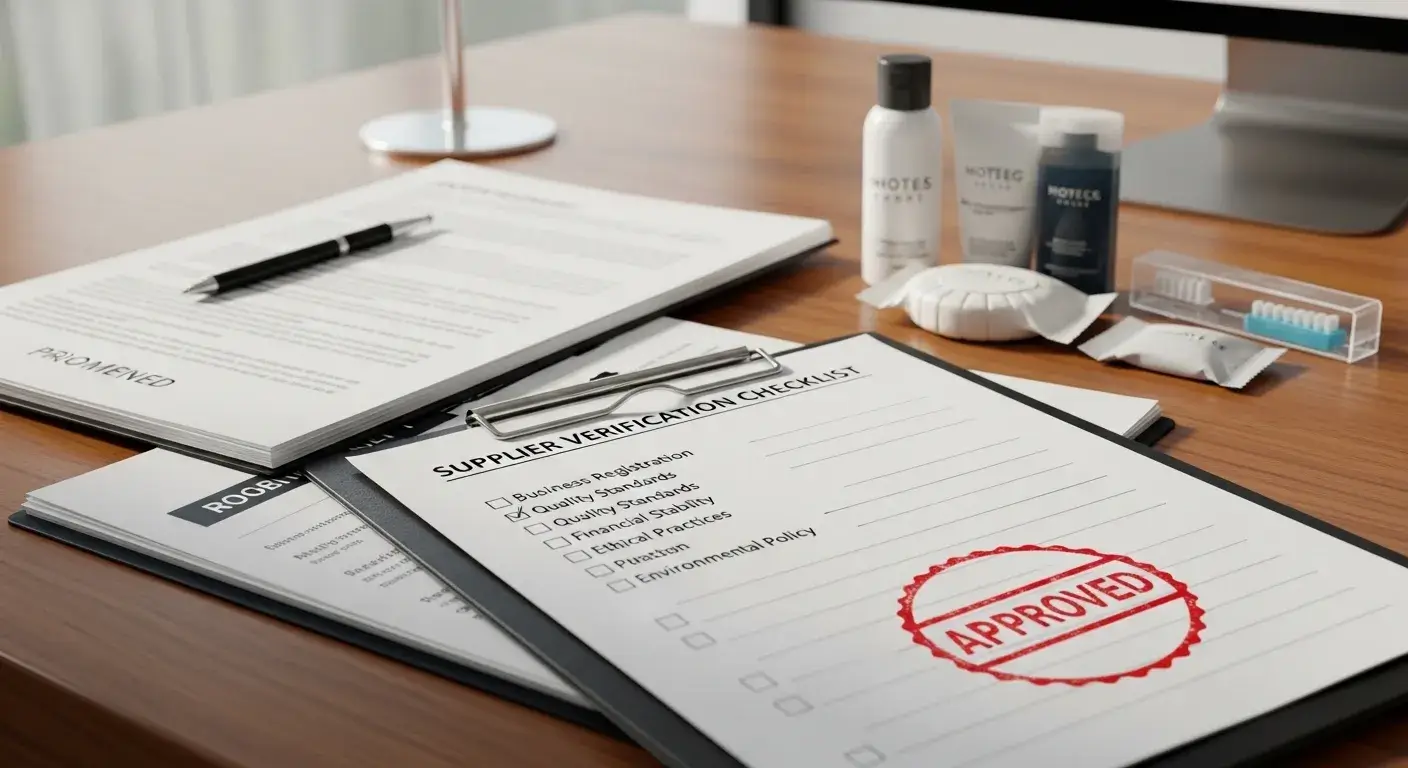
Don’t skip this step. Follow this verification process.
-
Check business registration. Verify the Commercial Registration (CR) number with Egyptian authorities.
-
Request certifications. Ask for ISO 22716, GMP, and relevant quality certificates.
-
Visit facilities. Arrange factory tours to observe production conditions.
-
Check references. Contact existing hotel clients for honest feedback.
-
Order samples. Test products before committing to bulk orders.
-
Review response times. Professional suppliers respond within 4-24 business hours.
Where to Find Suppliers
- Egypt Yellow Pages (yellowpages.com.eg)
- TradeKey Egypt (egypt.tradekey.com)
- Industry trade shows like HACE and Hotel & Hospitality Expo
- Hotel management company referrals
- Egyptian Tourism Federation recommendations
Delivery Times by Region
Plan your orders based on your location.
| Order Type | Cairo Delivery | Red Sea/Sinai | Upper Egypt |
|---|---|---|---|
| Stock products | 2-5 days | 5-7 days | 5-10 days |
| Private label | 2-4 weeks | +2-3 days | +3-5 days |
| Custom development | 6-12 weeks | +3-5 days | +5-7 days |
| Reorders | 1-2 weeks | +2-3 days | +3-5 days |
Factors That Affect Delivery
- Production capacity and current workload
- Raw material availability
- Custom requirements
- Shipping method (standard vs. express)
- Location accessibility
Conclusion: Your Action Plan for Better Amenities Sourcing
Egypt’s hospitality market is booming. Tourism revenues hit $15.3 billion in 2024. According to WTTC research, the sector contributed 8.5% to Egypt’s GDP7 and supported 2.7 million jobs. With Hilton planning to triple its Egyptian portfolio and Marriott undertaking record expansion, quality standards are rising across the industry.
Egypt leads hotel development in Africa8 with 143 hotels and over 33,000 rooms in the development pipeline. This creates ongoing demand for amenities suppliers who can scale.
Here’s your action plan:
-
Assess your needs by category. Know exactly what products you require.
-
Shortlist 3-5 suppliers per category. Use the supplier list in this guide as a starting point.
-
Verify certifications. Don’t accept claims without documentation.
-
Request samples. Test before committing to large orders.
-
Visit facilities. See production conditions firsthand.
-
Negotiate terms. Use the strategies I’ve outlined to get better pricing.
-
Start with smaller orders. Build the relationship before scaling up.
-
Consider the hybrid approach. Combine local and international suppliers for the best results.
The right supplier relationships can reduce your costs, improve guest satisfaction, and streamline your operations. Take the time to choose wisely.
Footnotes
-
Egypt Today reports official tourism statistics from the Egyptian Ministry of Tourism, confirming the record-breaking 15.78 million tourists in 2024 and projections for continued growth. ↩
-
The International Organization for Standardization (ISO) provides the official ISO 22716:2007 standard document, which defines Good Manufacturing Practice guidelines for cosmetics production, control, storage, and shipment. ↩
-
OEKO-TEX is the official certification body providing STANDARD 100 testing and certification for textiles, ensuring products are tested for harmful substances at every stage of production. ↩
-
The Global Organic Textile Standard (GOTS) is the worldwide leading textile processing standard for organic fibers, including ecological and social criteria backed by independent third-party certification. ↩
-
Parachute Home’s guide explains how Egyptian cotton’s extra-long staple fibers (3.8-4.4 cm) create superior quality textiles that are stronger, softer, and more durable than regular cotton. ↩
-
Wikipedia provides comprehensive information about the Grand Egyptian Museum, including its official opening date, construction history, and significance as the world’s largest archaeological museum. ↩
-
The World Travel & Tourism Council (WTTC) publishes authoritative economic impact research on Egypt’s tourism sector, providing verified statistics on GDP contribution, employment, and visitor spending. ↩
-
HospitalityNet reports on W Hospitality Group’s annual African Hotel Chain Development Pipeline Report, the industry’s most authoritative source for hotel development data across Africa. ↩