
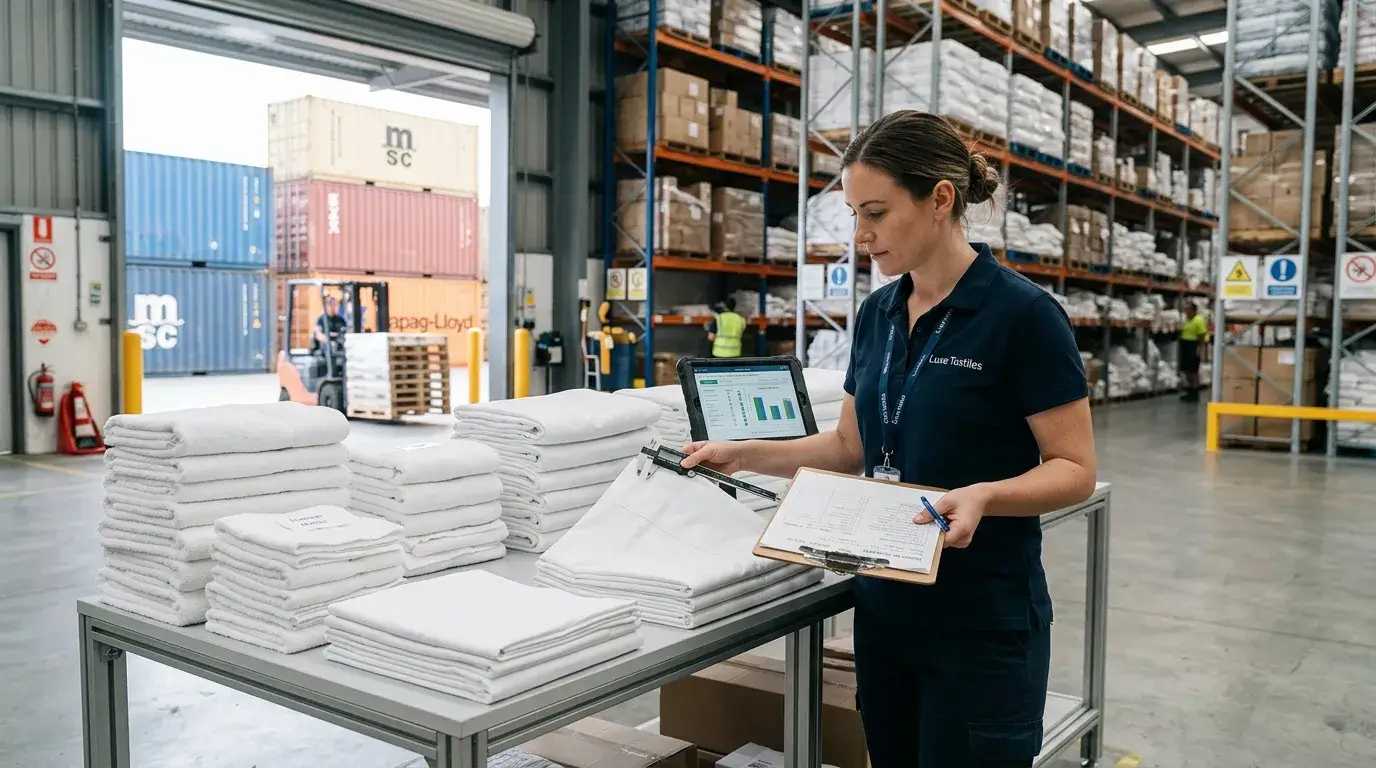
I work in quality and sourcing at Hotemax. We supply hotel textiles to properties across North America, Europe, and the Middle East. That means I deal with Chinese textile factories, freight forwarders, and third-party inspectors every week.
Over the years, I’ve watched hotel buyers make the same mistakes over and over. Late shipments. Towels that feel nothing like the approved sample. Sheets that shrink two sizes after the first commercial wash. These problems are common. But they’re also preventable — if you know where the risks actually sit in the process.
This guide covers the real causes of shipment delays and quality failures when importing hotel linens from China. I’ll share what we’ve learned from handling these situations firsthand, including the things most sourcing guides skip over.
Why Do Hotel Linen Shipments From China Get Delayed?
Most buyers assume delays are a shipping problem. They’re usually not. The majority of delays happen during production, long before goods reach the port.
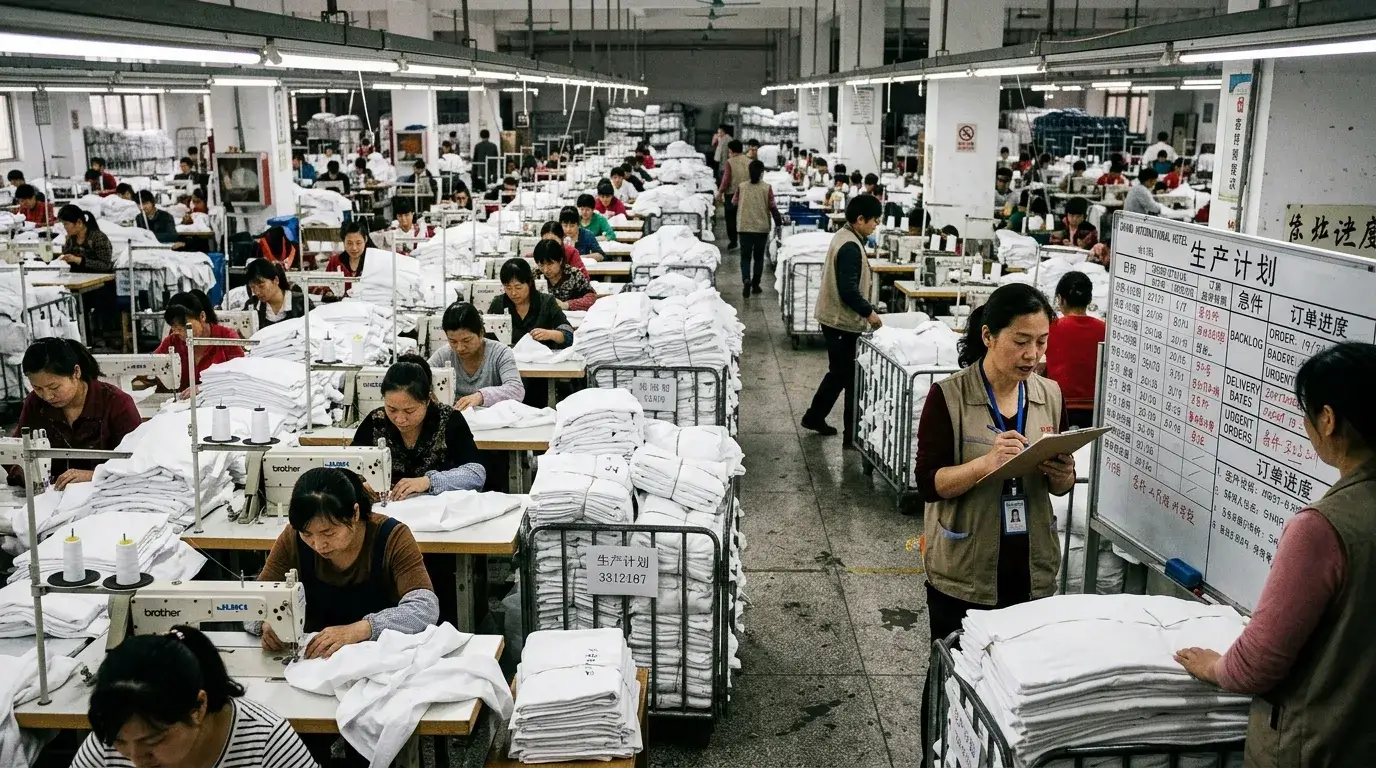
Here are the most common causes, in rough order of how often they come up:
Production scheduling conflicts. Your order can get bumped behind a larger client’s order. Factories prioritize volume. If a major chain places a rush order, your 5,000-piece towel order slides down the queue. We’ve had this happen even with factories we’ve worked with for years — it’s just how capacity allocation works when a factory is running near full load.
Raw material procurement delays. Cotton prices fluctuate. Some factories wait to purchase greige fabric until prices dip. That pause can add 1–3 weeks to your timeline, and the factory won’t always tell you it’s happening.
Failed QC inspections requiring rework. If an inline or pre-shipment inspection turns up defects above the acceptable threshold, the factory needs time to sort, rework, and re-inspect. This can easily add 1–2 weeks.
Port congestion. Shanghai and Ningbo ports get seriously backed up from September through November — peak export season. Your container might wait days for a berth.
Documentation errors. Incorrect commercial invoices, packing lists that don’t match the actual shipment, missing certificates of origin. Paperwork mistakes cause delays at both ends.
The one nobody warns you about: Unauthorized subcontracting. Factories sometimes accept more orders than they have capacity for. When they can’t keep up, they farm part of your order out to another facility — without telling you. If that subcontractor cuts corners or falls behind, your timeline and your quality both suffer. This is especially common with trading companies during Q3 and Q4.
The single best early warning system is an inline inspection at 20–30% production completion. It confirms whether production has actually started and whether the output matches your approved sample. We had a situation two years ago where a factory told us they were "70% done" on a 15,000-piece bed sheet order for a hotel group in Saudi Arabia. Our inspector arrived and found fewer than 2,000 units on the floor. We caught the problem early enough to push the factory, adjust timelines with the client, and avoid a complete mess at the destination end. Without that inline check, we wouldn’t have known until the shipping deadline passed.
What Are the Real Timelines You Should Plan For?
Here’s something that catches first-time importers off guard: Chinese factories quote production timelines based on best-case conditions, not realistic ones.
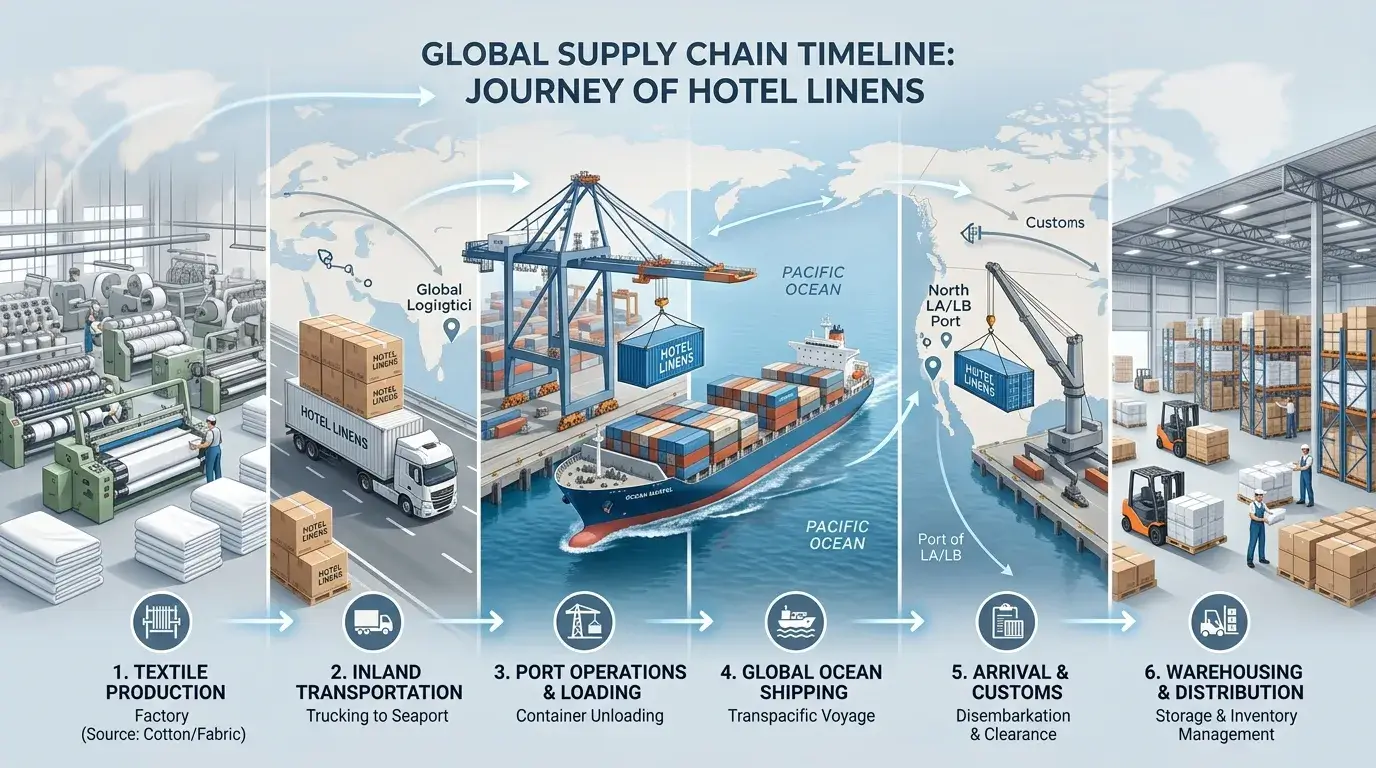
When a factory says "30 days," they typically mean 30 production days starting from when raw materials arrive at their facility. They don’t count raw material procurement time, holidays, QC checks, or packing and shipping prep.
For first orders, I’d add a 50–70% buffer to whatever timeline the factory quotes. For repeat orders with an established factory, the quote is more reliable — but I’d still pad it by 20–30% during peak season (September through January).
Full Import Timeline: First Order
| Phase | Realistic Duration |
|---|---|
| Supplier vetting and sampling | 2–4 weeks |
| Sample testing and approval | 1–2 weeks |
| Order confirmation and deposit | 1 week |
| Raw material procurement (by factory) | 1–3 weeks |
| Production (weaving, dyeing, sewing, packing) | 4–7 weeks |
| Pre-shipment inspection + any rework | 1–2 weeks |
| Inland transport to port | 3–5 days |
| Port handling and export clearance | 3–7 days |
| Ocean freight (to US/Europe/Middle East) | 3–5 weeks |
| Destination customs clearance | 3–10 days |
| Last-mile delivery | 2–5 days |
| Total | 16–26 weeks (4–6 months) |
Repeat orders with the same factory typically run 10–16 weeks because you skip vetting and sampling.
I know 4–6 months sounds like a long time. It is. But the alternative — rushing an order and skipping quality steps — usually costs more in the end. I’ve seen hotels pay 40–60% premiums for emergency domestic replacements because their China shipment was delayed and they had no buffer.
Calendar Disruptions You Must Plan Around
Chinese New Year (late January to mid-February): Production shuts down for 3–5 weeks. Factories also lose workers after CNY — some don’t return, and it takes time to train replacements. If you need goods before CNY, place your order by mid-November. If you place it in December expecting a January shipment, you will be disappointed.
Canton Fair periods (April and October): Factory management attention shifts to trade fair activities. Production can slow, especially at factories that depend on the Fair for new business.
Q4 export rush (September–November): Port congestion peaks. Container bookings get harder. Freight rates spike. Everyone is shipping holiday inventory.
Best months to place orders: March–April and August–September. Factories are fully staffed post-CNY, motivated for new business, and the ports aren’t yet congested.
What Are the Most Common Quality Control Failures in Hotel Linens?
Quality problems in Chinese-made hotel textiles follow predictable patterns. Here are the ones I see most often, along with what actually works to prevent them.
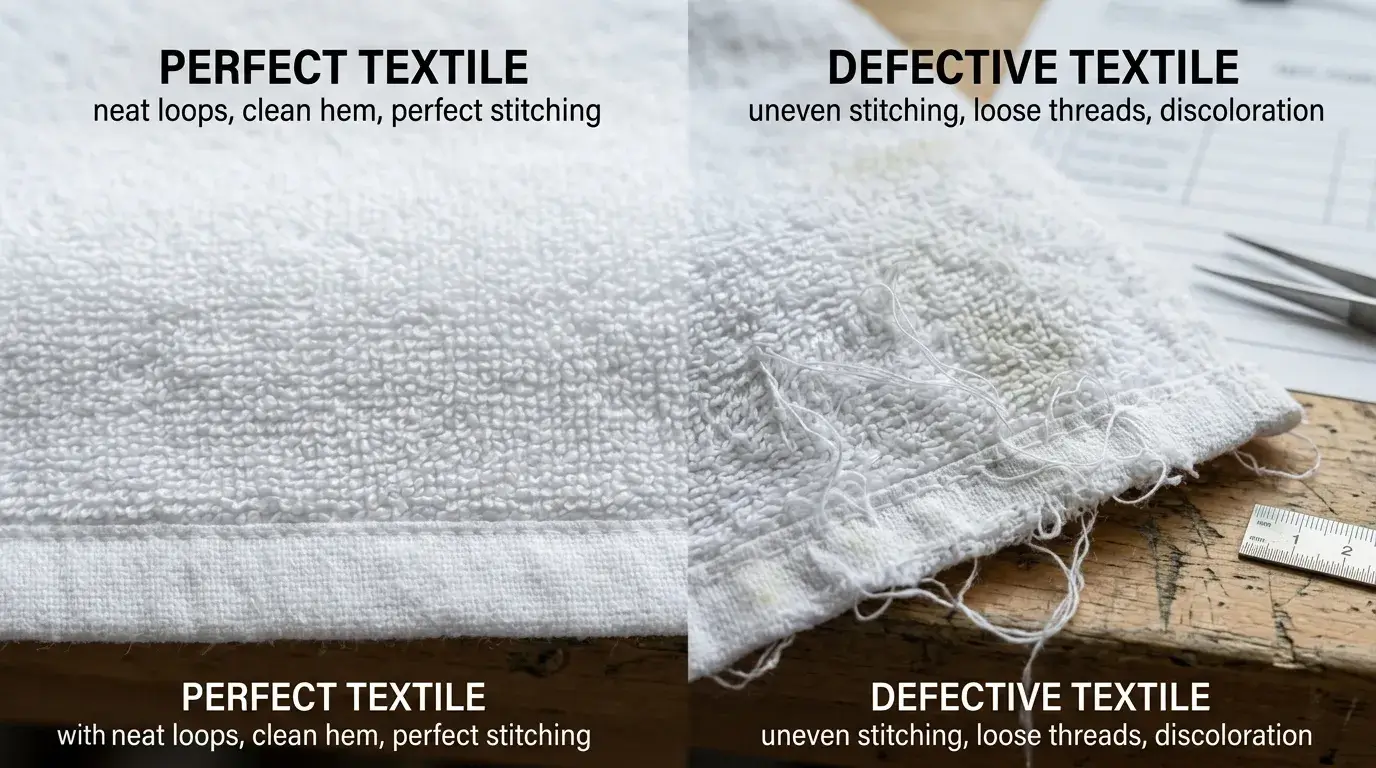
GSM Inconsistency — The #1 Problem
GSM (grams per square meter) measures the weight and density of the fabric. A factory quotes you 500 GSM towels but ships 450–470 GSM. This is the single most common quality failure in hotel textile imports.
Why it happens: the economics are simple. Cotton yarn typically runs $2.00–$2.50 per kilogram for medium-grade combed cotton. On a 50,000-piece towel order, shaving 30g off each towel saves the factory roughly $3,000–$3,750 in raw material cost. That’s meaningful margin on a product where the factory’s profit might only be $0.30–$0.50 per unit. The temptation is built into the business model.
How to catch it: Independent GSM testing — not the factory’s own test report. Cut and weigh a 100cm² sample through a third-party lab. Acceptable tolerance is ±5% of the contracted GSM. Anything beyond that is a legitimate rejection.
Shrinkage Beyond Specification
Cotton terry towels and cotton sateen sheets that shrink excessively after commercial laundering, making them dimensionally incompatible with the hotel’s bed sizes or standard towel folds.
A quick note on what "excessive" means, because I see confusion on this: for 100% cotton terry, up to 5% shrinkage after commercial washing is generally within industry norms. It becomes a QC failure when shrinkage exceeds 5% for terry or exceeds 3% for percale and sateen sheeting. The key is specifying these limits clearly in your contract — measured after 5 commercial wash cycles at the temperature your hotel actually launders at (typically 60–75°C). Don’t accept shrinkage data based on home laundering conditions. Hotel industrial laundering is far more aggressive.
Inconsistent White Shade
Different production batches yield visibly different whites. This is a real problem for hotels that replace linens in rotation rather than all at once. Two different shades of white on the same bed are immediately noticeable to guests.
How to prevent it: Specify the whiteness index (CIE Whiteness per ISO 105-J02) in your order, along with the light source for evaluation. I’ll be honest — most buyers skip this step because they don’t know it exists. But without a whiteness spec, the factory will use whatever optical brightening agents and levels are cheapest. You might get towels that look harsh blue-white under fluorescent lighting or dull yellowish under warm lobby light.
Stitching Defects
Loose hems, uneven seam allowances, skipped stitches, incorrect stitch density. Hotel linens go through industrial laundering hundreds of times over their lifecycle. Weak stitching doesn’t survive.
Fiber Content Misrepresentation
A supplier claims 100% long-staple cotton but actually uses blended or shorter-staple cotton. This affects hand feel, durability, and absorbency. The only reliable way to catch this is independent fiber composition testing through a lab using AATCC or ISO methods. The factory’s own certificate is not reliable evidence — I’ve personally seen certificates claiming 100% Egyptian cotton on products that tested as a cotton-polyester blend.
How Should You Structure a Pre-Production Approval Process?
Ordering a sample and approving it is not quality control. I need to be direct about this because it’s the biggest misconception I encounter. The sample is produced under controlled, small-batch conditions — often by the factory’s most experienced workers using hand-selected materials. Mass production quality diverges from sample quality almost every time. Sometimes slightly, sometimes dramatically.
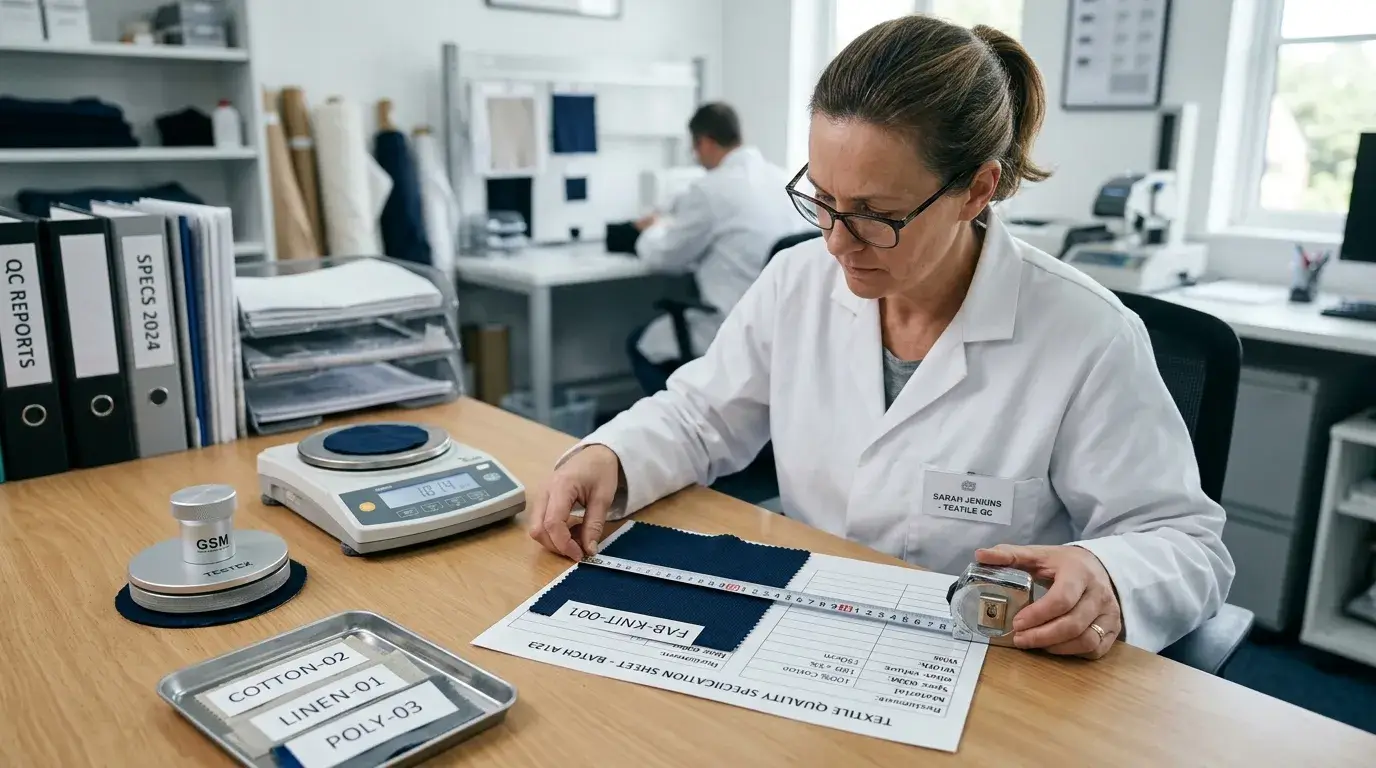
Here’s the approval process that actually reduces your risk:
Step 1: Create a Written Product Specification Sheet
This is the single most important document in your entire import program. It should include exact finished dimensions (not cut dimensions), fabric construction (thread count, weave type, yarn count), GSM target with acceptable tolerance (e.g., 500 GSM ±5%), fiber composition, color reference (Pantone code or approved physical swatch), shrinkage tolerance after specified wash conditions, colorfastness requirements (Grade 4+ on grey scale per ISO 105)1, stitching specifications (stitches per inch, seam allowance), and packaging and labeling requirements.
This document becomes a formal annex to your purchase contract. It’s what an arbitrator or mediator will reference if there’s ever a dispute.
Step 2: Approve Lab Dip or Strike-Off
For dyed or printed linens, approve the color on actual production fabric before bulk dyeing begins. For white linens, approve the bleaching and optical whitening result on production fabric — not on showroom sample fabric.
Step 3: Pre-Production Sample (PPS)
Request a sample made with actual production materials. Measure and test it against your spec sheet. Keep one sealed copy at your office. Send one back to the factory, sealed and labeled as the approved reference standard. This sealed sample becomes your legal benchmark.
Step 4: Inline Inspection at 20–30% Completion
Send an inspector (or go yourself, if the order justifies it) when roughly a quarter of production is done. Check the first finished units against your PPS. This is where you catch systemic issues — wrong yarn, incorrect dimensions, poor stitching — before the entire order is affected.
Step 5: Final Random Inspection (AQL-Based)
At 80–100% production completion, conduct a statistical inspection. For standard hotel textiles, AQL 2.5 for major defects and AQL 4.0 for minor defects2 is standard. For luxury or five-star properties, tighten to AQL 1.5 / 2.5.
One caveat I should mention: AQL sampling works best on larger orders (5,000+ units). On smaller orders — say 1,000 towels — the sample size becomes a large percentage of the total, and statistical sampling gives you less advantage over a thorough visual spot-check. For small orders, I’d focus your budget on the inline inspection and lab testing rather than a formal AQL final inspection.
What Should a Third-Party Inspection Actually Test?
"Hire a third-party inspector" is standard advice. But what should they actually check? Hotel linens have specific requirements that a generic garment or household textile inspection doesn’t cover.
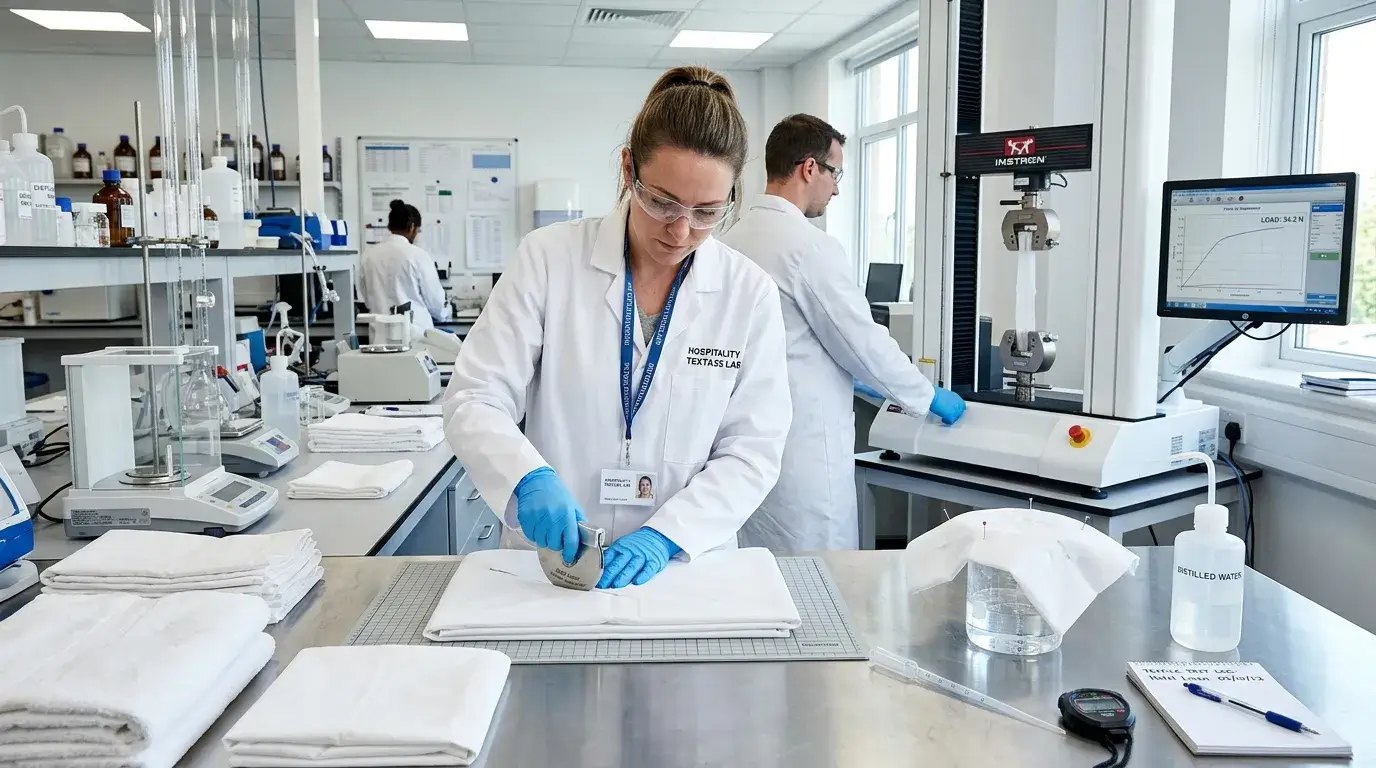
Visual Checks
Staining, holes, uneven surfaces, pilling, weave defects, color consistency across cartons, correct labeling and packaging.
Dimensional Checks
Measure a random sample against spec. For fitted sheets, check pocket depth against the specified mattress height. For towels, check all four dimensions. Dimensional errors are surprisingly common — we’ve received duvet covers that were 3cm short on one side, which made them visibly lopsided on the bed.
Physical Lab Testing
| Test | Standard | What It Tells You | Acceptable Result |
|---|---|---|---|
| GSM | Cut and weigh 100cm² sample | Fabric weight and density | Within ±5% of spec |
| Absorbency | AATCC 79 sink test | How quickly a towel absorbs water | Water absorbed in ≤5 seconds |
| Colorfastness (wash) | ISO 105-C06 | Whether dye bleeds during laundering | Grade 4+ on grey scale |
| Colorfastness (chlorine) | ISO 105-N01 | Resistance to hotel bleach use | Grade 3–4 minimum |
| Tensile strength | ISO 13934 | Whether fabric tears during industrial wash | Per spec |
| Shrinkage | AATCC 135 or ISO 6330 | Dimensional change after washing | ≤5% for terry, ≤3% for percale/sateen |
| pH level | Standard pH test | Skin safety and finishing quality | Between 4.0 and 7.5 |
Packing and Carton Checks
Correct carton markings, individually poly-bagged units, no mixed sizes or colors within cartons, shipping marks matching the bill of lading.
Reputable third-party inspection companies operating in China3 include Bureau Veritas, SGS, Intertek, and QIMA. A standard inspection costs roughly $250–$350 per man-day. For a typical hotel linen order, you’re looking at 1–2 man-days for the final inspection plus lab testing fees of $150–$400 depending on scope. That total investment of $400–$1,100 protects an order that might be worth $30,000–$200,000. It’s the cheapest insurance you’ll buy.
How Do You Choose the Right Incoterms to Reduce Risk?
Your shipping terms4 affect who bears the risk, who controls the logistics, and who pays for what. For hotel linens — which are bulky, moisture-sensitive, and vulnerable to mold — the choice has real consequences.
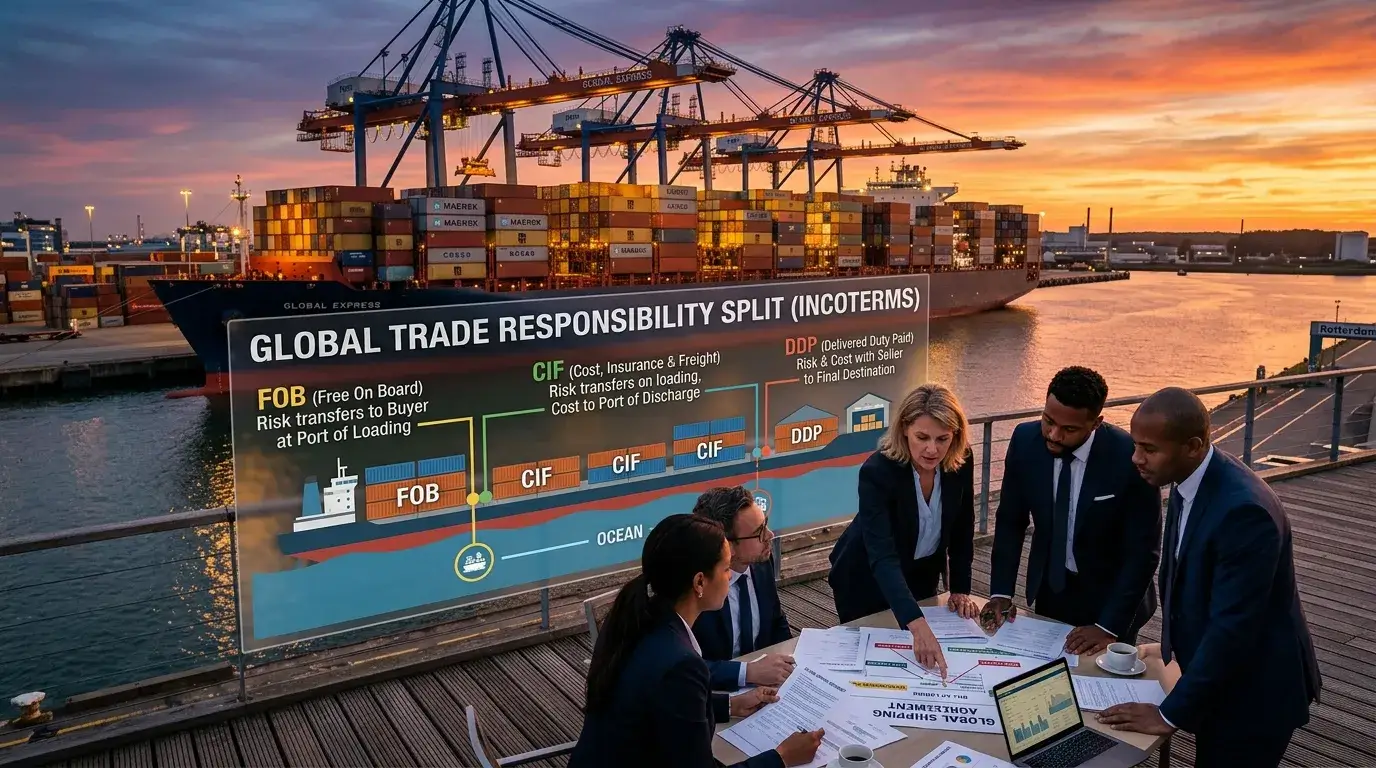
FOB (Free on Board) — Port of Loading
You take responsibility once goods are loaded onto the ship. You arrange ocean freight, insurance, and destination customs.
Best for: Experienced importers who have an established freight forwarder and understand cargo insurance. FOB gives you maximum control over shipping cost and routing.
Risk: You bear all transit risk. If you don’t arrange adequate insurance, damaged or lost goods are your problem.
CIF (Cost, Insurance, Freight) — Destination Port
The supplier arranges freight and basic insurance. You handle customs clearance and delivery from the destination port.
Caution: The insurance included in CIF is typically the bare minimum — Institute Cargo Clauses C, which excludes many common risks including moisture damage. For cotton textiles, you’ll almost certainly want supplementary coverage.
Best for: Buyers with some import experience who want the factory to handle the China-side logistics.
DDP (Delivered Duty Paid) — Your Warehouse
The supplier handles everything: shipping, insurance, duties, delivery to your door.
Best for: First-time importers or smaller orders where convenience matters more than cost optimization. The tradeoff is less visibility into the logistics process and higher total cost (the supplier marks up the freight and handling).
Which Should You Choose?
It depends on your experience level and order size. For buyers who have imported before and have a freight forwarder they trust, FOB with your own all-risks cargo insurance (Institute Cargo Clauses A) gives the best balance of cost control and risk management. For first-time importers or orders under $20,000, CIF with supplementary insurance — or even DDP — is often more practical. The cost premium of DDP might be 8–15% over FOB, but if you don’t have the logistics infrastructure, the convenience and reduced risk of errors can be worth it.
What Contract Clauses Actually Protect You?
Contract clauses matter in Chinese commercial practice, but I want to be realistic about what "protection" means here. For orders under $50,000–$100,000, formal arbitration is rarely practical — CIETAC5 filing fees alone can run $5,000–$15,000, and total arbitration costs can reach $30,000+. For most hotel linen orders, contract clauses function primarily as deterrents and negotiation leverage. Factories take them seriously because they signal that you’re a professional buyer who knows the process. And if a dispute does arise, written terms give you a much stronger position in commercial negotiation.
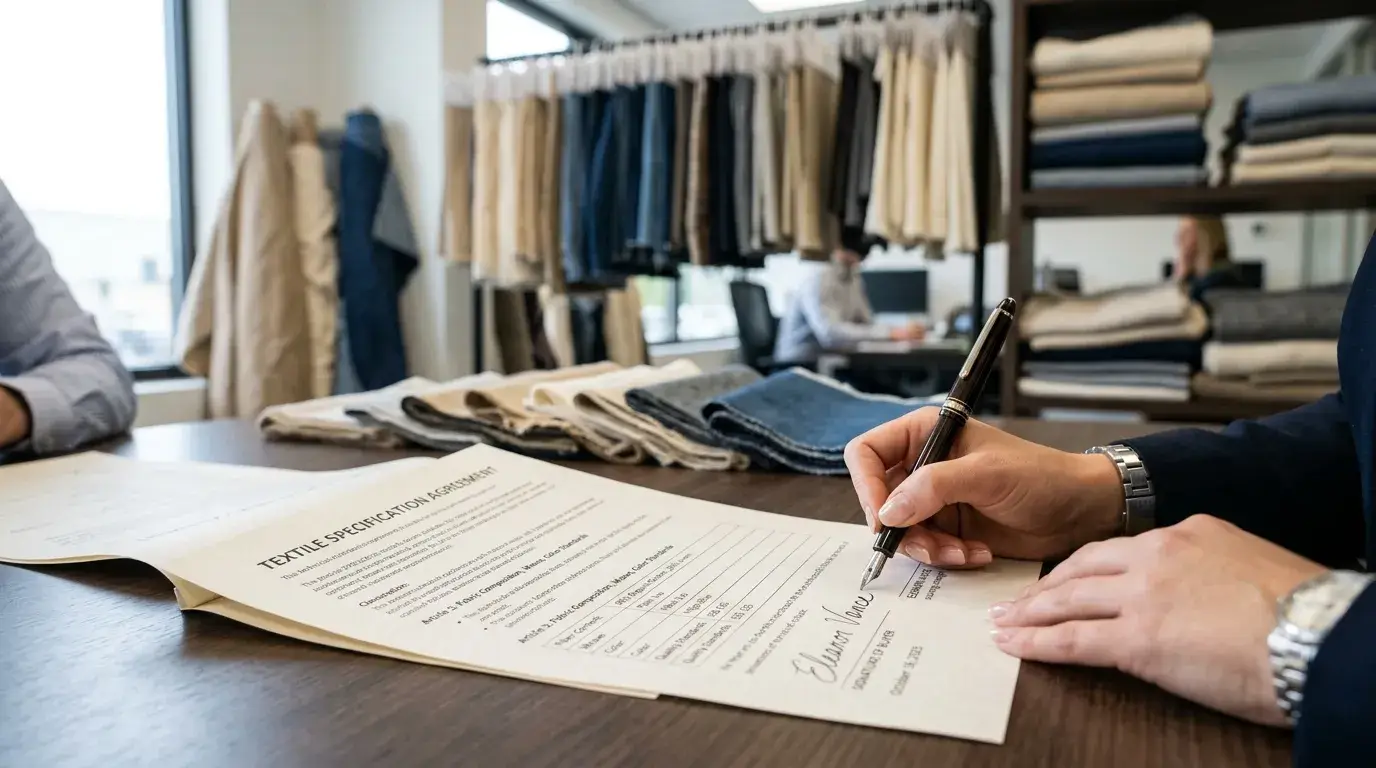
Here are the clauses that carry the most weight:
Delivery deadline with liquidated damages. Example: "For each week of delay beyond the agreed date, the supplier shall credit the buyer 1.5% of the order value, up to a maximum of 10%." Chinese commercial law generally recognizes reasonable liquidated damages clauses. Even if you never invoke it, the clause changes the dynamic.
Retention payment structure. Pay 30% deposit upon order confirmation, 60% against passing pre-shipment inspection, and hold 10% for 30–60 days after delivery to cover latent defects. That final 10% is real leverage — it’s money the factory hasn’t received yet, and they’ll work with you to resolve problems in order to get it.
Defect remedy clause. Spell out exactly what happens when defects exceed the agreed AQL threshold: rework at supplier’s cost, replacement shipment, price reduction, or order cancellation with deposit refund. Ambiguity here is your enemy.
Subcontracting restriction. "Supplier shall not subcontract any part of this order without buyer’s prior written approval." This prevents your order from being farmed out to an unknown factory.
Arbitration clause. For enforceability in China, specify CIETAC (China International Economic and Trade Arbitration Commission) or HKIAC (Hong Kong International Arbitration Centre). Chinese courts generally enforce awards from both bodies. For larger orders ($100,000+), this clause moves from theoretical to practically important.
How Do Lead Times Vary Across Chinese Textile Regions?
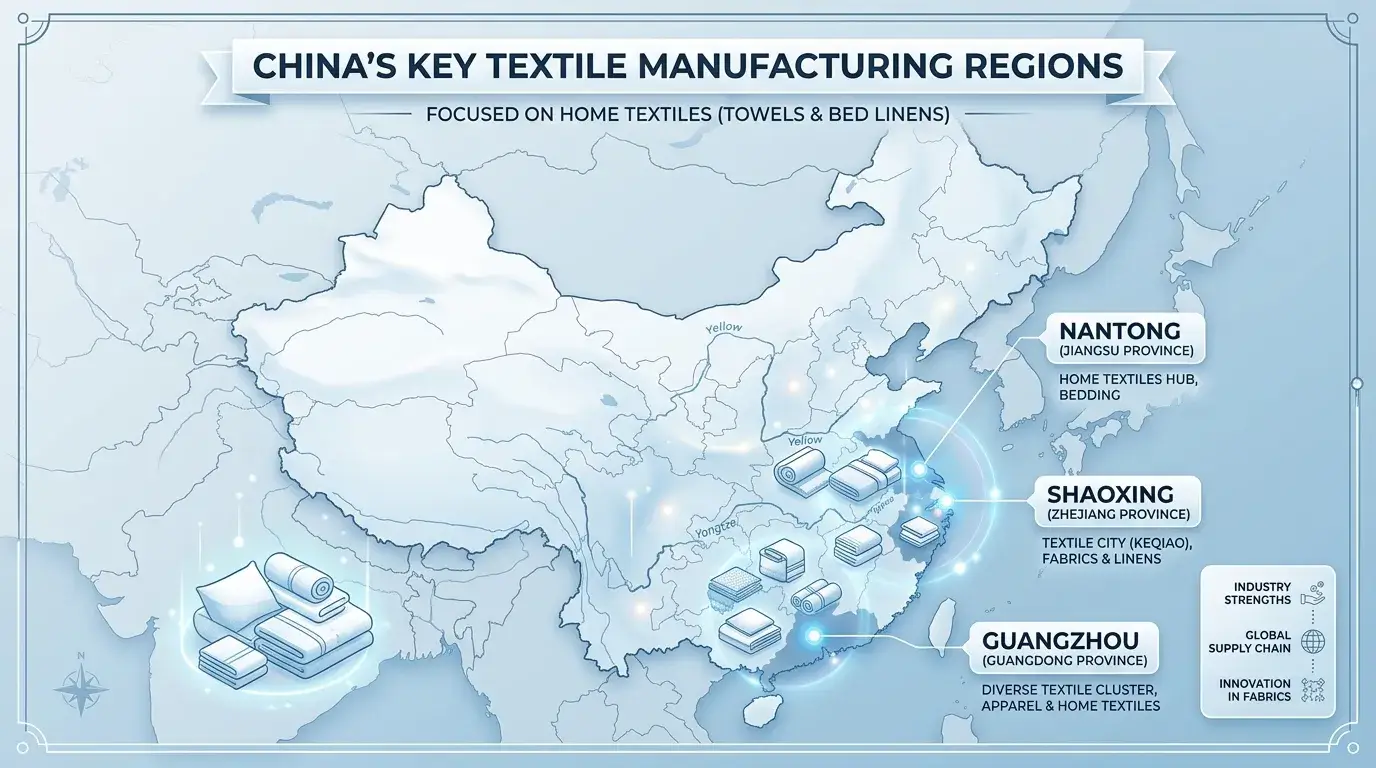
Not all Chinese textile manufacturing is the same. The region where your factory is located affects lead time, product specialty, and logistics efficiency. These are approximate ranges based on our experience — actual timelines vary by factory capacity, order size, and season.
| Region | Specialty | Typical Lead Time | Port Access |
|---|---|---|---|
| Nantong, Jiangsu | Bed linens, sheets, duvet covers | 35–50 days | Shanghai / Nantong Port (excellent) |
| Gaoyang, Hebei | Towels (China’s largest towel cluster) | 30–45 days | Tianjin Port (add 3–5 days trucking) |
| Binzhou, Shandong | Cotton yarn, vertically integrated towels | 35–50 days | Qingdao Port (good) |
| Shaoxing, Zhejiang | Dyed/printed fabrics, decorative textiles | 25–40 days | Ningbo Port (excellent) |
| Guangzhou / Shenzhen | Multi-product consolidation, trading companies | Variable (often longer) | Shenzhen / Guangzhou Port |
Why this matters practically: If you’re ordering towels from Gaoyang, which is inland in Hebei province, you need to account for 3–5 extra days of trucking to Tianjin Port. A factory in Nantong has essentially direct access to Shanghai port, saving you nearly a week on the logistics end.
A word about Gaoyang specifically, since it’s where a huge portion of China’s towel exports originate: the quality range there is enormous — from the cheapest budget towels you can imagine to genuinely good export-grade product. Factory vetting matters more in Gaoyang than almost anywhere else. A low price from a Gaoyang factory should make you more cautious, not less.
How Do You Prevent Moisture and Mold Damage During Shipping?
This is a risk that’s specific to cotton textiles and often overlooked by first-time importers. Ocean containers experience significant temperature swings during transit. Warm, humid air inside the container hits the cold steel walls and ceiling, creating condensation — known in the industry as "container rain."6 That moisture drips onto cartons and can cause mold on cotton linens.
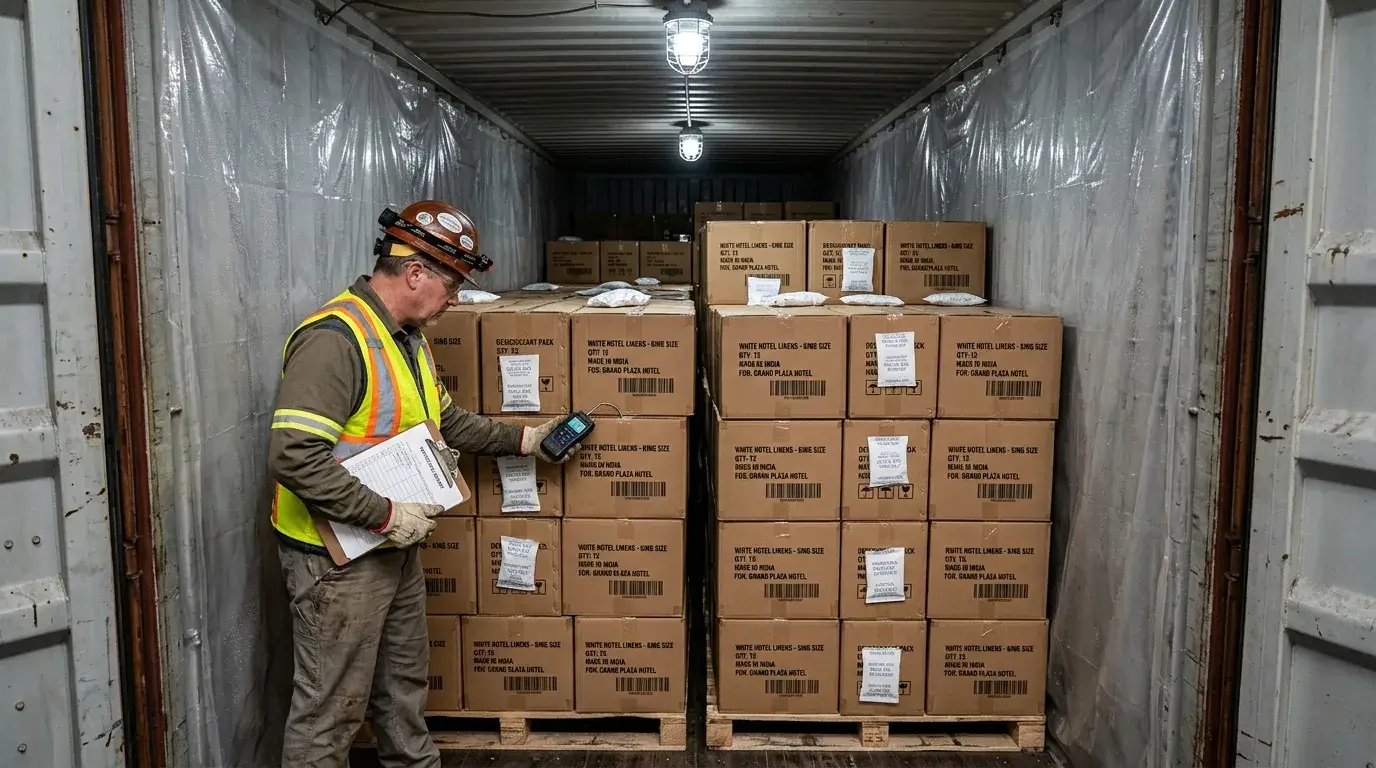
We had a case in 2023 where a hotel group received a container of white bath towels with visible mold spots on roughly 15% of the units. The cause was a combination of insufficient desiccant, no container liner, and the container being loaded during rain at the origin port. The insurance claim covered most of the loss, but the hotel still had to scramble for replacement stock. The whole situation was preventable.
Here’s what should be standard practice for every shipment:
- Individual poly-bagging. Every unit sealed in a poly bag before going into the carton. This is non-negotiable for white linens.
- Desiccant packs. Silica gel desiccant inside each carton — typically 100–200g per standard carton, depending on the volume of textile inside.
- Container liner. A large poly sheet lining the interior walls and ceiling of the container. This is the most effective single measure against container rain.
- Don’t load in rain. Sounds obvious, but it happens more than you’d think. Specify in your shipping instructions that loading must not proceed during rain.
- Container pre-inspection. Before loading, check the empty container for holes, rust, odors, residual moisture, and residue from previous cargo. Photograph the empty container interior with the container number visible.
Require your supplier or inspector to photograph the empty container, the loading process, and the sealed container with its seal number clearly shown. If you ever need to file an insurance claim, this documentation is the difference between getting paid and getting denied.
How Can You Build Supply Chain Redundancy Without Doubling Costs?
You don’t need to double your supplier list or your budget. Smart redundancy is about distributing risk, not duplicating everything.
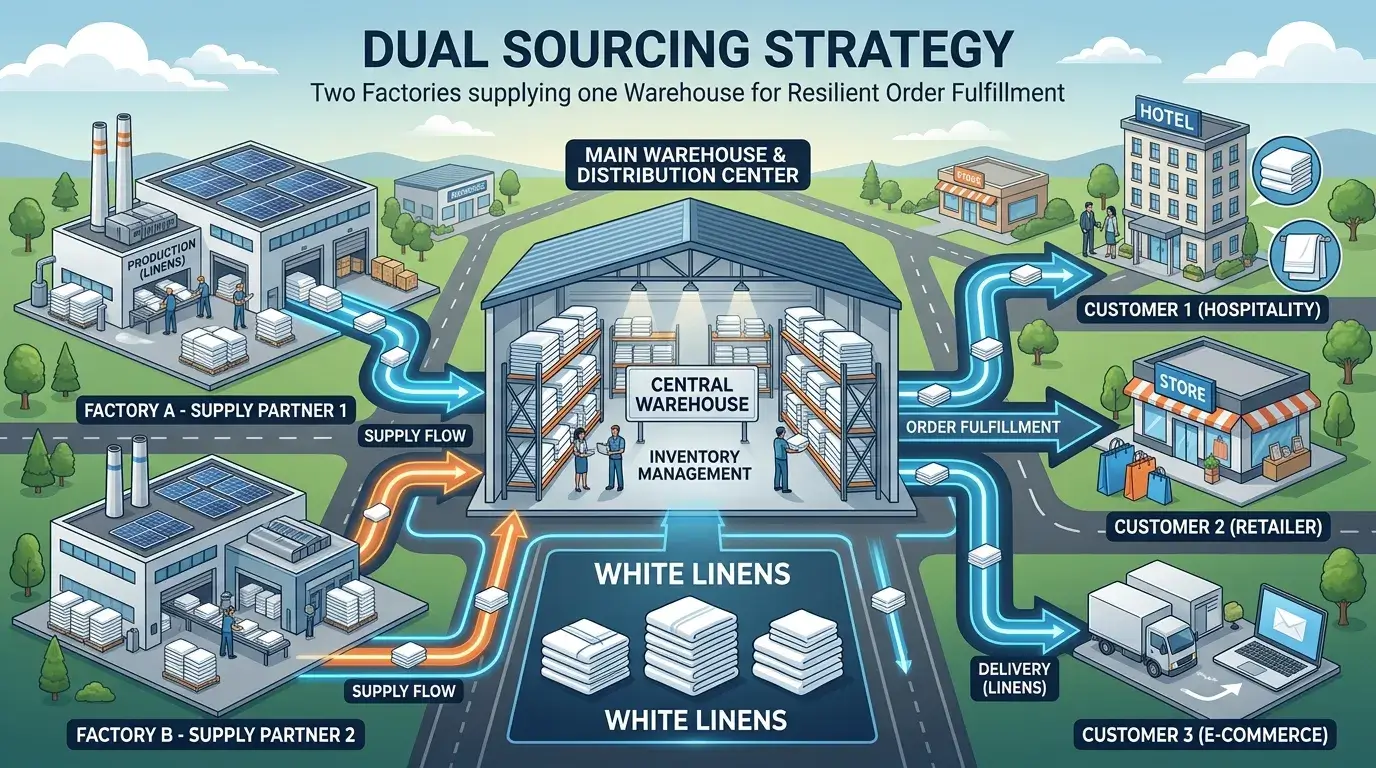
Dual-source your core items. Qualify two factories for your highest-volume products — typically towels and sheets, which represent 60–70% of most hotels’ linen spend. Split orders 70/30 between a primary and secondary supplier. You’re placing the same total volume; you’re just not putting it all in one basket. The secondary supplier stays warm, qualified, and ready to scale up if needed.
Keep 15–20% safety stock on critical items. For bath towels and fitted sheets, maintain a buffer in your destination warehouse. The carrying cost is far less than the 40–60% premium you’ll pay for emergency replacement stock from a domestic distributor.
Stagger order placement. Instead of one large annual order, place 2–3 smaller orders throughout the year. This spreads risk across multiple shipments and gives you more frequent quality checkpoints.
Pre-qualify a backup supplier in a different sourcing country. This is good advice in theory, but let me be honest about what it actually takes: you can’t just identify a factory in Turkey or India and call it a backup. For a backup to be real, you need to have sent specs, received and approved samples, agreed pricing, and ideally placed at least one qualifying order. That takes 2–3 months of upfront work. But once it’s done, you have a genuine alternative that can fulfill emergency orders in 2–4 weeks rather than the 3–5 months a fresh China order would take.
1. The "golden sample" trap is real — and deliberate. Some factories produce an exceptional sample using premium yarn and their most skilled workers, then switch to standard materials for bulk production. Your defense: seal two identical approved samples — one you keep, one the factory keeps — and make the sealed sample the contractual reference standard. If the production doesn’t match the sealed sample, you have a clear, documented basis for rejection.
2. Post-wash performance matters far more than out-of-bag appearance. Hotel linens get commercially laundered 150–300+ times. Some factories use temporary softeners and optical brighteners that wash out after 5–10 cycles, leaving towels that feel rough and sheets that look dull. Always request test results after 10 industrial wash cycles. Better yet, run your own wash tests before approving bulk production.
3. Container loading photos are your insurance policy. Require your inspector or supplier to photograph the empty container interior (checking for damage, moisture, odor), the loading process, and the sealed container with its seal number visible. Without this documentation, cargo insurance claims for transit damage are extremely difficult to win.
4. Factory excuses follow a script. "Raw material shortage" and "power restrictions" are the two most common delay explanations. Often, the real reason is that your order was deprioritized behind a larger client. The only way to know what’s actually happening is an inline inspection — not a phone call or a WeChat message.
5. Third-party inspectors aren’t all equal, and some are borderline useless. The big firms (SGS, Bureau Veritas, Intertek) deliver consistent results. Smaller or local inspection companies vary wildly. I’ve reviewed inspection reports from budget inspection services that missed obvious GSM shortfalls and dimensional errors. If you’re going to invest in inspection, use a reputable firm. The cost difference between a $280/day inspector and a $180/day inspector is trivial compared to the cost of a missed defect.
6. Fabric testing before bulk production costs $150–$400 and can save the entire order. Send a swatch of the production fabric (not sample fabric) to an independent lab for GSM, fiber composition, shrinkage, and colorfastness testing. Rejecting fabric at this stage costs you a few weeks. Rejecting 10,000 finished towels costs you the order and the relationship.
7. Your freight forwarder matters as much as your factory. A forwarder with specific experience in Chinese textile exports will catch documentation errors before they become customs problems, have stronger carrier relationships for booking space during peak season, and flag potential issues you wouldn’t think to ask about. Choose a forwarder based on textile export experience, not just price.
8. The way you pay affects the way you’re treated. Always paying 100% before shipment — the most common structure factories will suggest — removes all your post-production leverage. A 30% deposit / 60% against passing inspection / 10% retained for 30–60 days structure preserves your ability to negotiate if quality problems emerge at destination.
9. Factories don’t just remember your orders — they remember how you treat them. Chinese business culture places significant weight on long-term relationships. A factory that views you as a committed, fair, repeat customer will prioritize your orders, flag issues early, and often absorb costs on minor problems without being asked. The buyers who constantly shop for the lowest price, haggle aggressively on every order, and never visit the factory are the ones who get deprioritized and receive less attention to quality. This isn’t unique to China — it’s just more pronounced there.
10. The most overlooked specification in hotel linens is pH. After bleaching and finishing, cotton textiles should have a pH between 4.0 and 7.5. Alkaline residues from poorly rinsed bleaching processes can irritate skin — a particular concern for hotel bath linens. I rarely see pH testing included in standard inspection protocols, but it should be. It costs almost nothing to add to a lab test panel, and it catches a finishing quality issue that visual inspection will never reveal.
Conclusion
I’ll leave you with the thing I wish someone had told me early on: the biggest risk in importing hotel linens from China isn’t the factory, the shipping line, or customs. It’s the gap between what you assumed would happen and what actually happens.
Factories quote optimistic timelines. Samples look better than bulk production. Documentation errors happen. Containers develop condensation. None of these are unusual events — they’re the normal operating conditions of international textile trade.
The buyers who succeed aren’t the ones who find a "perfect" factory. They’re the ones who build enough structure into the process — clear specs, staged inspections, smart payment terms, realistic timelines — that problems get caught early and resolved before they become expensive.
And when something does go wrong (it will, eventually), having documentation, contract terms, and retained payment gives you the leverage to fix it without losing the order or the relationship.
If you’re evaluating a hotel linen import program or running into problems with your current one, feel free to reach out. This is what we do every day.
Hotemax is a global supplier of hotel textiles, linens, slippers, and toiletries. We work with hotels and hospitality brands worldwide to deliver quality products with transparent sourcing and quality control. Contact us to discuss your needs.
-
ISO 105-C06:2010 is the international standard for testing colorfastness to domestic and commercial laundering. This link takes you to the official ISO page where you can review the scope, applicable test methods, and the latest confirmed edition of the standard — essential reference when specifying wash-fastness requirements in your supplier contracts. ↩
-
QIMA’s AQL (Acceptable Quality Limit) guide explains how AQL sampling works, including how to determine sample sizes and defect acceptance thresholds based on lot size and inspection level. Useful for understanding the AQL 2.5 / 4.0 benchmarks referenced in this article and applying them to your own inspection protocol. ↩
-
QIMA’s China quality control page provides an overview of third-party inspection, audit, and lab testing services available across Chinese manufacturing regions. Helpful for buyers evaluating which inspection company to use and what services are available for textile-specific QC in China. ↩
-
The ICC (International Chamber of Commerce) is the creator and official authority on Incoterms® rules. This page covers the full Incoterms® 2020 framework, including detailed explanations of FOB, CIF, and DDP referenced in this article — essential reading before negotiating shipping terms with your supplier. ↩
-
CIETAC (China International Economic and Trade Arbitration Commission) is China’s most established arbitration institution for international trade disputes. This introduction page covers CIETAC’s scope, history, and enforcement record — relevant if you’re drafting arbitration clauses for your hotel linen supply contracts. ↩
-
Greencarrier’s guide to container rain explains the science behind moisture condensation in shipping containers, including how temperature fluctuations during ocean transit cause "container rain" that can damage cargo. Practical reading for anyone shipping moisture-sensitive goods like cotton hotel linens. ↩