
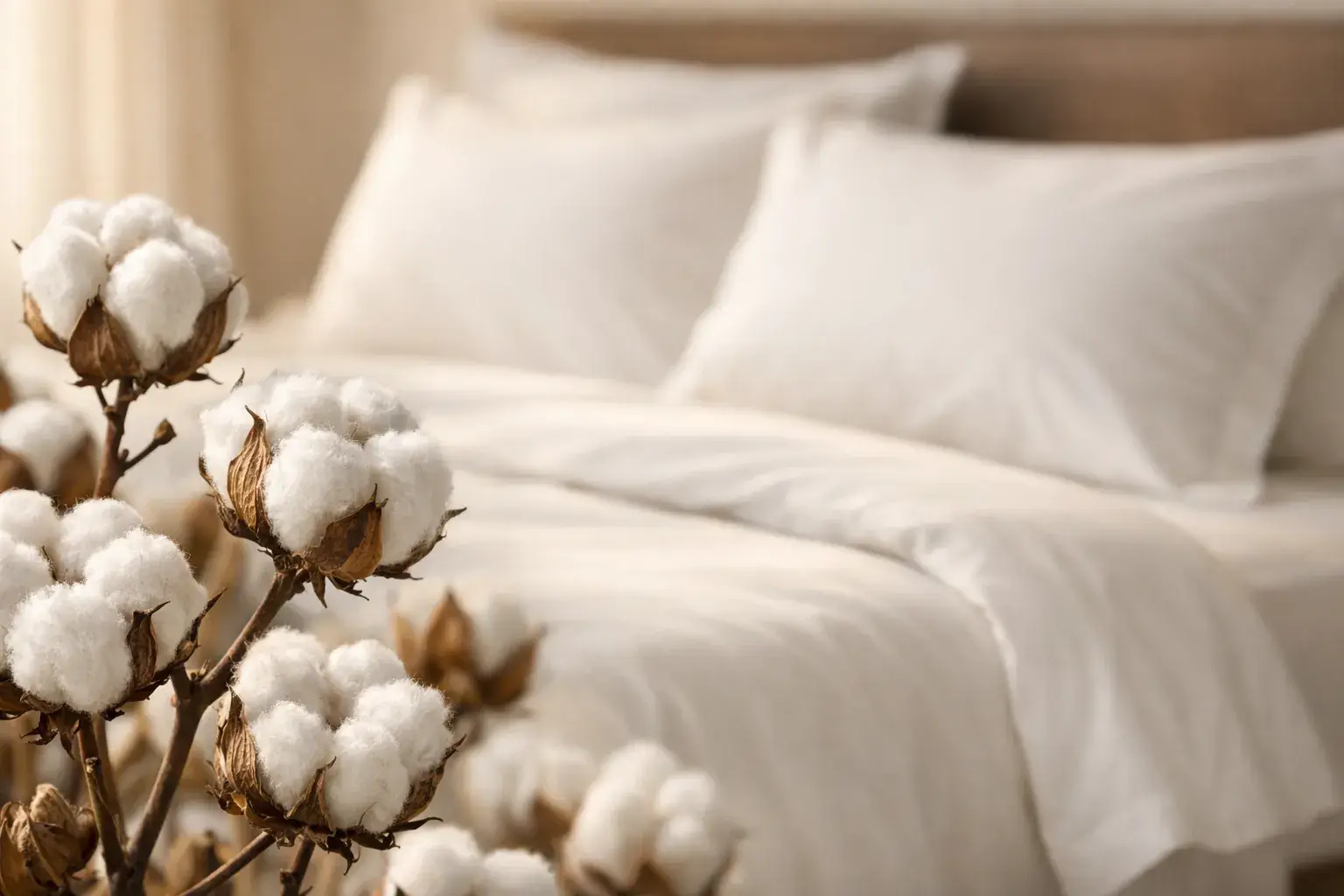
Hotel linens feel soft against guest skin. But what makes that comfort possible? Cotton dominates hospitality textiles, yet few procurement teams understand its true story—from ancient seed to modern bedsheet.
Cotton is a natural fiber harvested from the seed bolls of Gossypium plants, composed of 87-90% cellulose1. This soft, breathable material grows in warm climates across 85+ countries and serves as the foundation for most hotel textiles, from bed linens to towels, due to its absorbency and durability.
Understanding cotton helps us make better purchasing decisions. This knowledge impacts guest satisfaction, operational costs, and our sustainability commitments. Let me share what I’ve learned working with hotel suppliers worldwide.
What Exactly Is Cotton and Where Does It Come From?
We touch cotton every day in our hotels. But its origin surprises many buyers. Cotton is not just fabric—it’s a living plant fiber.
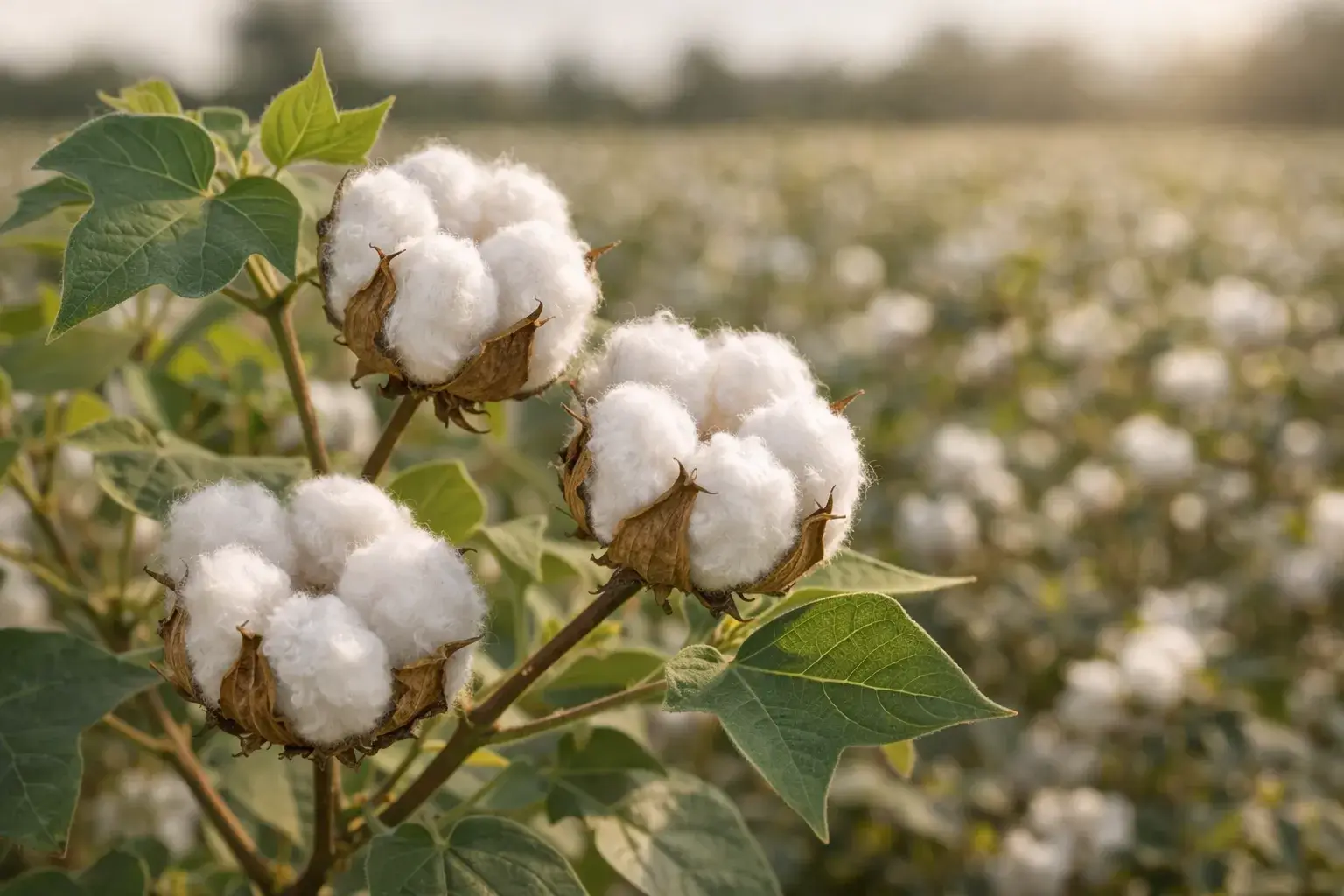
Cotton is a staple fiber that grows around the seeds of Gossypium plants. Each seed produces 10,000-20,000 individual fibers2 inside a protective boll. These fibers are harvested when the boll bursts open, revealing fluffy white material ready for processing into textiles.
The Biology Behind Hotel Comfort
Cotton fibers are actually single cells. Yes, each thread in your hotel sheets started as one elongated cell on a seed surface. This makes cotton unique among commercial fibers.
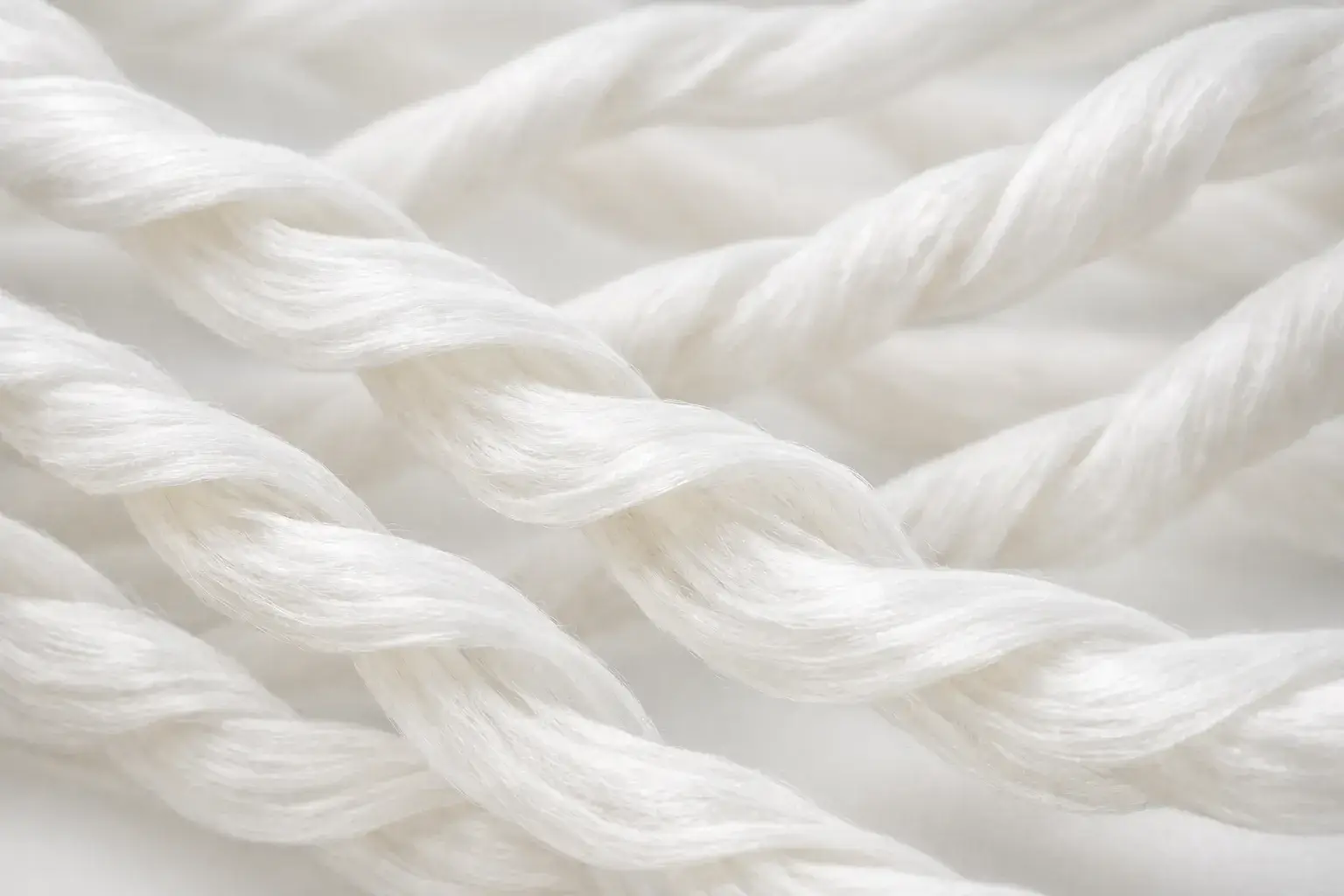
The plant needs specific conditions to thrive:
- Warm temperatures (60-95°F)
- Frost-free growing periods
- Adequate rainfall or irrigation
- Full sunlight exposure
When conditions align, cotton plants produce bolls that protect developing seeds. Inside each boll, those seeds sprout thousands of hair-like fibers. These fibers are nature’s packaging material, designed to help seeds disperse on the wind.
I find this fascinating because it means every hotel towel contains millions of individual plant cells. The Gossypium genus includes over 50 species, though only four account for commercial production. The most common is Gossypium hirsutum, or upland cotton, which provides 90% of global supply.
From Field to Your Linen Closet
Cotton cultivation is an agricultural art. Farmers plant seeds in spring, nurture plants through summer, and harvest in fall. Modern mechanical pickers separate bolls from plants efficiently. But hand-picking still occurs in some regions where labor costs remain competitive.
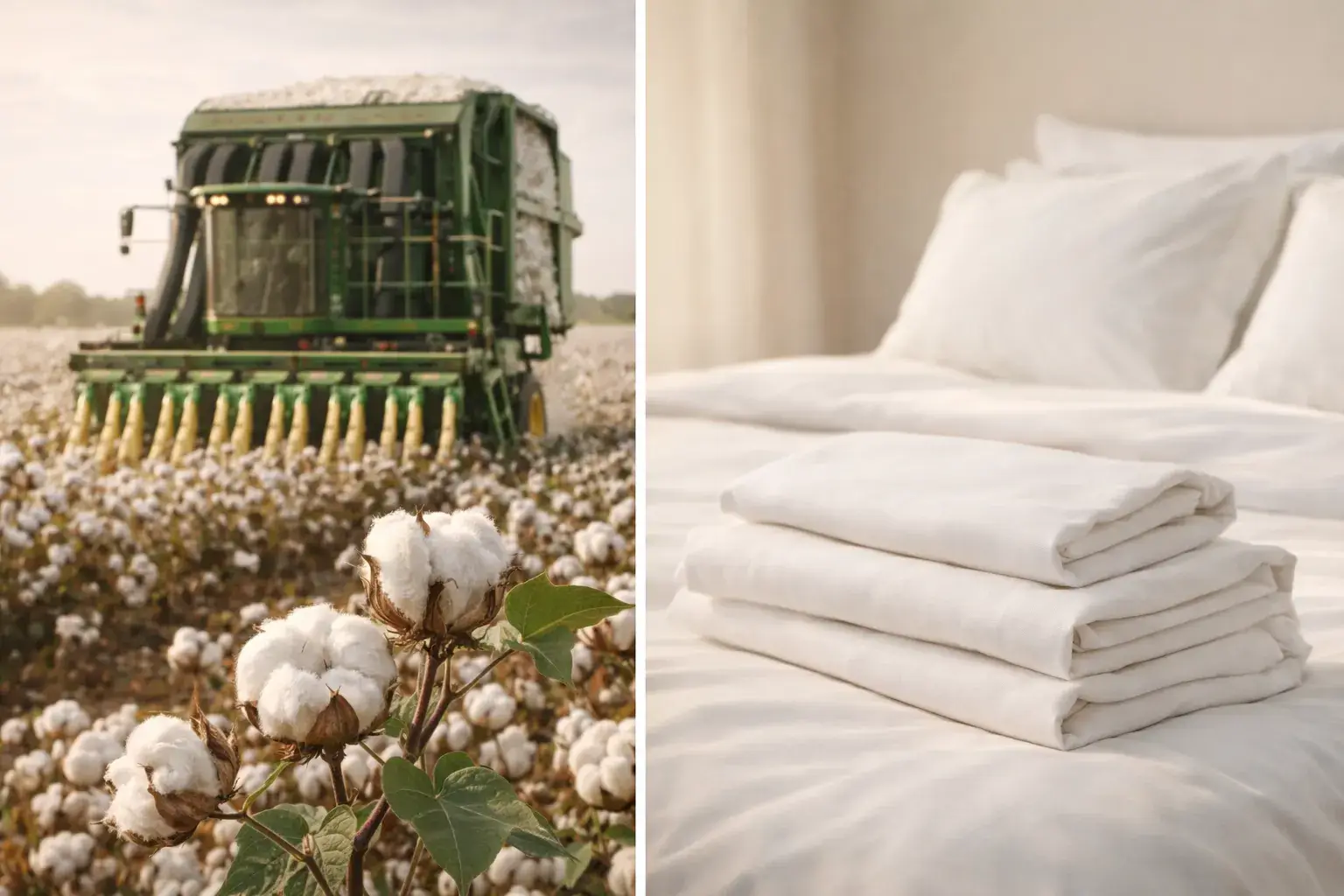
The harvest timing matters tremendously. Pick too early, and fibers lack maturity. Wait too long, and weather damages quality. This is why I always ask suppliers about their sourcing regions and harvest practices.
Key cotton-growing regions:
- United States (Texas, Georgia, Mississippi)
- India (Maharashtra, Gujarat)
- China (Xinjiang region)
- Pakistan (Punjab province)
- Brazil (Mato Grosso state)
Each region produces cotton with slightly different characteristics. American upland cotton offers consistency. Egyptian and Pima varieties deliver luxury softness. Indian cotton provides excellent value for mid-range products.
How Old Is Cotton and Why Does History Matter?
Cotton has dressed humanity for millennia. This history influences modern hotel procurement more than you might think. Understanding cotton’s journey helps us appreciate quality differences today.
Archaeological evidence places cotton cultivation at 6,000 BC in Peru and 5,000 BC in the Indus Valley. Arab traders spread cotton to Europe by 800 AD, while Eli Whitney’s 1793 cotton gin revolutionized mass production, making affordable cotton textiles possible for hotels and institutions worldwide.
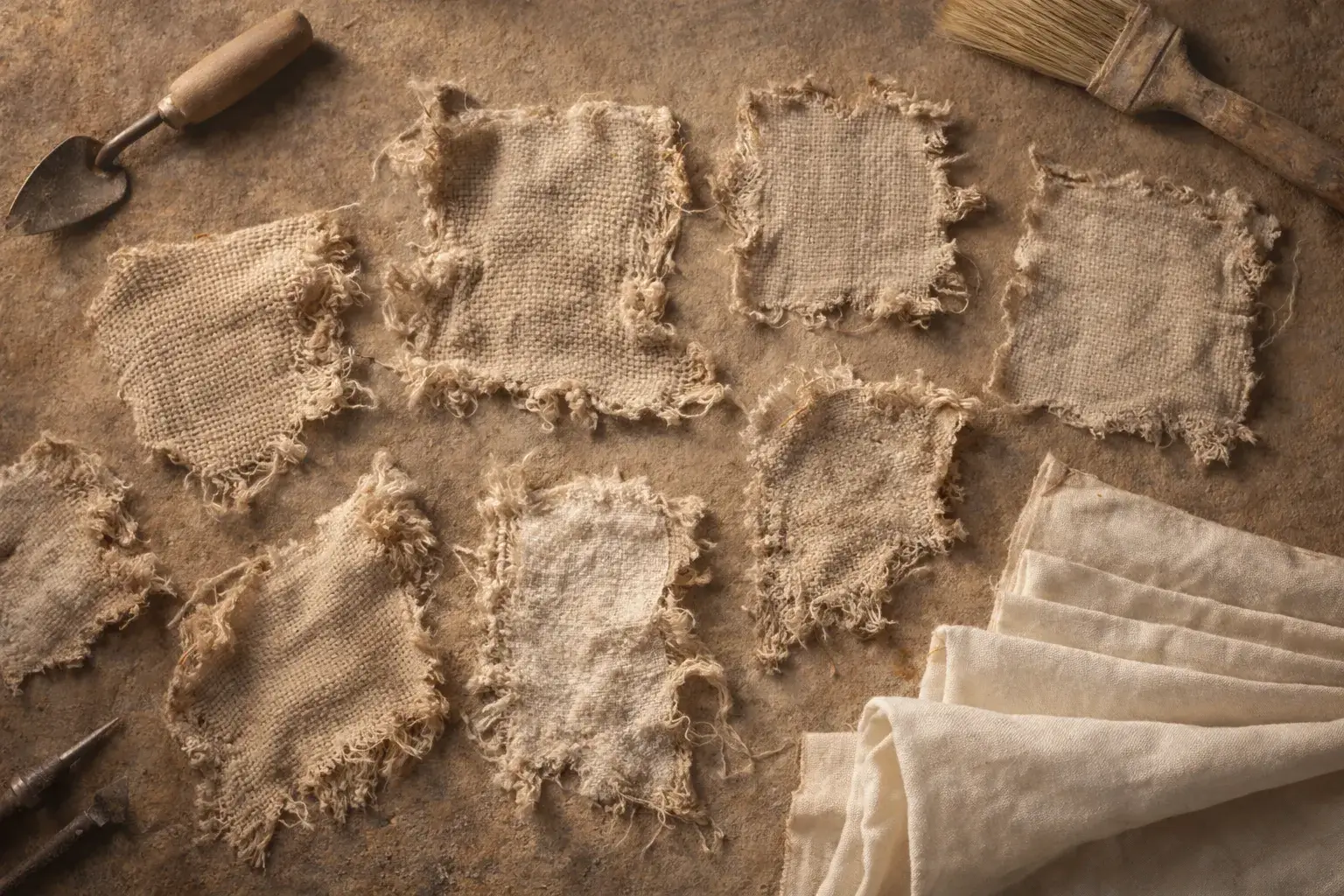
Ancient Beginnings Shape Modern Standards
Ancient civilizations valued cotton for the same reasons we do: comfort and breathability. Archaeological digs in Peru uncovered cotton fabric fragments dating to 6000 BC. In the Indus Valley, cotton production flourished by 5000 BC.
These early adopters understood cotton’s advantages over animal fibers. Unlike wool, cotton didn’t irritate skin. Unlike linen, it offered superior softness. Early cotton cultivation was labor-intensive, making it a luxury good.
The Industrial Revolution Changed Everything
Cotton remained expensive until mechanization arrived. The 13th century saw the first rudimentary cotton gins in India. But Eli Whitney’s 1793 invention transformed the industry completely.
Whitney’s gin could process 50 pounds of cotton daily—work that previously required weeks of hand labor. This innovation crashed prices and made cotton accessible to average people. Hotels could finally afford quality linens.
The textile mills of Manchester and New England built empires on cotton. By the 1800s, cotton dominated global trade. This industrial heritage still affects modern supply chains. Many current suppliers trace their lineage to 19th-century textile merchants.
Why This Matters for Hotel Buyers
Understanding cotton’s history helps us evaluate supplier claims. When a vendor mentions "traditional processing methods," I want specifics. Are they referencing outdated techniques or time-tested quality controls?
History also explains regional expertise. Egyptian cotton’s reputation stems from centuries of cultivation along the Nile Delta. The long-staple varieties developed there remain benchmarks for luxury bedding.
What Are the Different Types of Cotton Fibers?
Not all cotton is created equal. This truth is critical for hotel procurement. The cotton type directly impacts guest experience, durability, and replacement costs.
Cotton varieties are classified by staple length—the fiber’s physical length. Upland cotton (short-staple) accounts for 90% of production and offers good value. Pima and Egyptian cotton (long-staple) provide superior softness and durability, commanding premium prices for luxury hotel applications.
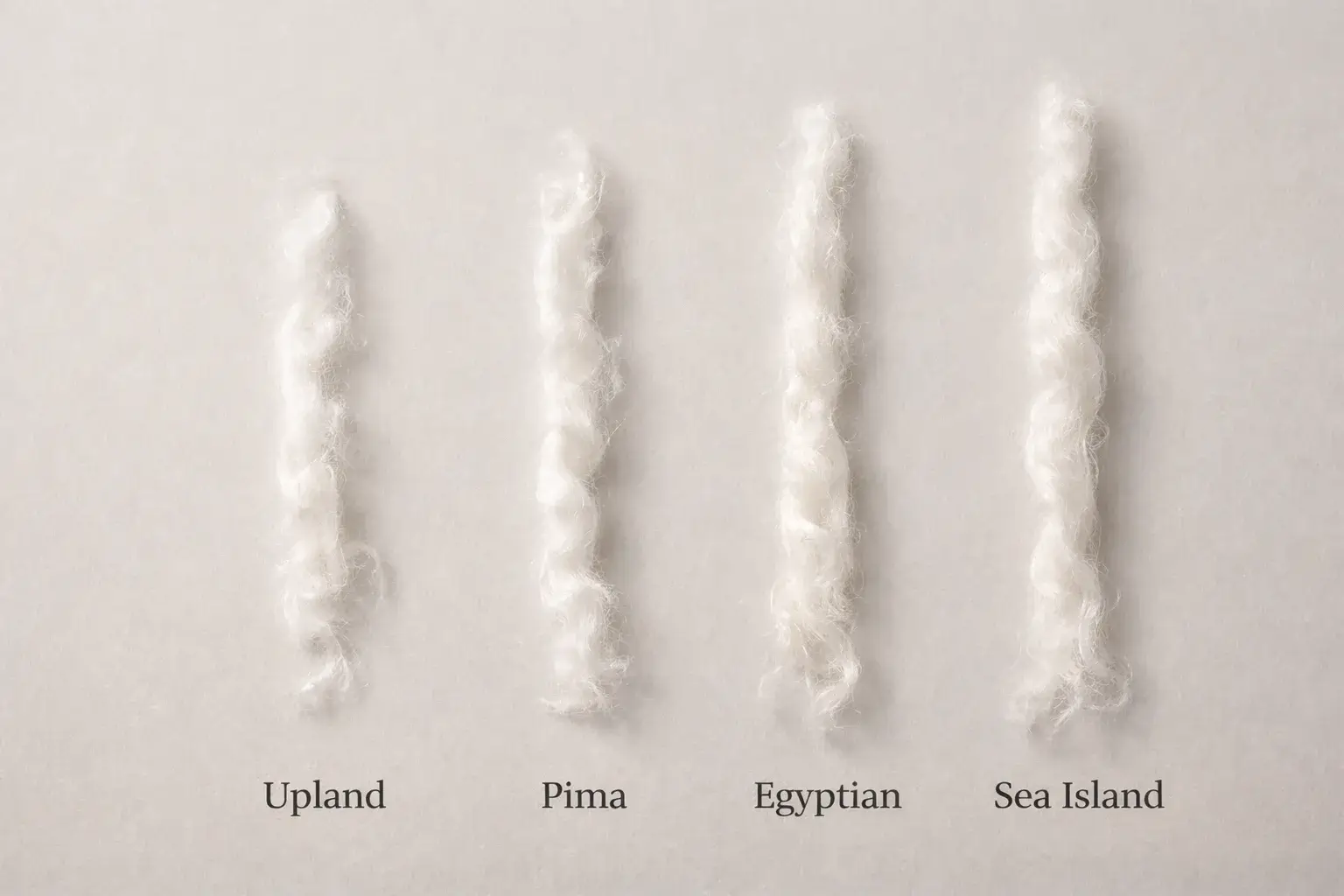
The Four Commercial Cotton Types
I evaluate cotton based on four main varieties:
1. Upland Cotton (Gossypium hirsutum)
- Staple length: 22-28mm
- Global production: 90%
- Best for: Mid-range hotel linens, towels
- Price point: Budget to moderate
- Durability: Good with proper thread count
2. Pima Cotton (Gossypium barbadense – American)
- Staple length: 35-38mm
- Production: Primarily southwestern USA
- Best for: Upscale hotel bedding, premium towels
- Price point: 30-50% higher than upland
- Durability: Excellent, resists pilling
3. Egyptian Cotton (Gossypium barbadense – Nile Delta)
- Staple length: 38-44mm
- Production: Egypt only
- Best for: Luxury hotel suites, five-star properties
- Price point: Premium (2-3x upland)
- Durability: Superior, improves with washing
4. Sea Island Cotton (Gossypium barbadense – Caribbean)
- Staple length: 45mm+
- Production: Extremely limited
- Best for: Ultra-luxury boutique hotels
- Price point: Highest available
- Durability: Exceptional, but rare availability
Organic vs. Conventional: A Practical View
Organic cotton eliminates synthetic pesticides and fertilizers. This appeals to eco-conscious guests and properties pursuing sustainability certifications.
But organic cotton costs 20-40% more than conventional. The yield per acre runs lower, and processing requires separate facilities to maintain organic certification. I recommend organic cotton for properties where guests specifically value sustainability and are willing to pay premium rates.
Conventional cotton uses integrated pest management in modern operations. Many farms have reduced pesticide application by 37% through Bt-engineered varieties. These cotton plants naturally resist boll weevils and other pests.
Staple Length Determines Everything
Here’s what I’ve learned: staple length predicts performance. Longer fibers create smoother yarn with fewer protruding ends. This reduces pilling and extends linen life.
A comparison table clarifies the differences:
| Cotton Type | Staple Length | Thread Count Potential | Laundry Cycles | Best Application |
|---|---|---|---|---|
| Upland | 22-28mm | 200-400 | 100-150 | Guest rooms, economy properties |
| Pima | 35-38mm | 400-600 | 200-300 | Boutique hotels, upscale rooms |
| Egyptian | 38-44mm | 600-1000+ | 300-500 | Luxury suites, presidential rooms |
| Sea Island | 45mm+ | 1000+ | 500+ | Ultra-luxury only |
I’ve tested these ranges across multiple properties. The numbers hold true when proper laundering protocols are followed.
How to Verify Cotton Quality
Suppliers make big claims. I verify quality through these methods:
1. Request fiber test reports
Independent labs can measure staple length, strength, and uniformity. These reports don’t lie.
2. Feel test comparison
Order samples of claimed Egyptian cotton and certified organic. The difference in hand feel is obvious.
3. Wash test
Run samples through 50 commercial laundry cycles. Count how many withstand this without significant deterioration.
4. Certification check
Egyptian Cotton Association3 licenses genuine products. GOTS certification4 validates organic claims. Ask suppliers for documentation.
What Are the Main Uses of Cotton in Hotels?
Cotton dominates hotel operations beyond guest rooms. Understanding these applications helps optimize purchasing across departments.
Hotels primarily use cotton for bed linens, towels, and bathrobes, which account for 70% of cotton consumption. Additional applications include table linens, spa textiles, staff uniforms, and decorative pillows. Cotton’s absorbency, comfort, and durability make it essential for guest satisfaction.

The Guest Room Cotton Ecosystem
Walk through a typical hotel room. Cotton appears everywhere:
- Bed sheets and pillowcases
- Duvet covers and bed skirts
- Mattress pads and protectors
- Decorative throw pillows
- Window treatments (cotton blends)
The bed alone consumes substantial cotton. A king-size sheet set requires approximately 12-15 yards of fabric. Multiply this by room count and replacement cycles, and the volumes become significant.
I calculate that a 200-room hotel needs 600-800 sheet sets in rotation—allowing for active use, laundering, and reserve inventory. At 3-year replacement cycles for quality cotton, this means purchasing 200-270 sets annually.
Bathroom Textiles: The High-Impact Category
Towels receive the most abuse in any hotel. Guests use them multiple times daily. Housekeeping launders them at high temperatures with industrial-strength detergents.
Cotton’s performance in bathroom applications is irreplaceable:
Absorbency factors:
- Cotton absorbs 27 times its weight in water
- Hollow fiber structure wicks moisture from skin
- Quick-drying reduces mildew in humid bathrooms
- Maintains absorbency after 100+ wash cycles
I recommend 600-700 GSM (grams per square meter) for bath towels in upscale properties. Budget hotels can use 400-500 GSM successfully. Below 400 GSM, guest satisfaction drops noticeably.
Beyond the Guest Experience
Cotton serves many operational needs:
Food & Beverage:
- Table linens for restaurants
- Napkins (cloth vs. paper sustainability choice)
- Kitchen towels and chef uniforms
- Bar mops and cleaning cloths
Spa & Wellness:
- Treatment table linens
- Spa robes and wraps
- Hot towel treatments
- Facial cloths and headbands
Housekeeping Operations:
- Cleaning rags (recycled from retired linens)
- Dusting cloths
- Staff uniforms
- Laundry bag liners
The cotton plant delivers value beyond fiber, though this matters less for hotel buyers. Cotton seeds produce cooking oil. The remaining seed meal becomes livestock feed. Even cotton stalks find use as compost or biofuel.
This zero-waste characteristic appeals to sustainability-focused properties. When we purchase cotton linens, we support an agricultural system that maximizes resource efficiency.
Is Cotton Sustainable for Hotel Operations?
Sustainability concerns dominate procurement discussions. Cotton’s environmental impact is complex. Simple answers mislead—we need nuanced understanding.
Conventional cotton production uses 2.5% of global agricultural water and 16% of insecticides worldwide, requiring approximately 20,000 liters per kilogram of fiber5. However, organic cotton reduces pesticide use to zero6 and can cut water consumption by 91% through efficient irrigation methods like drip systems.
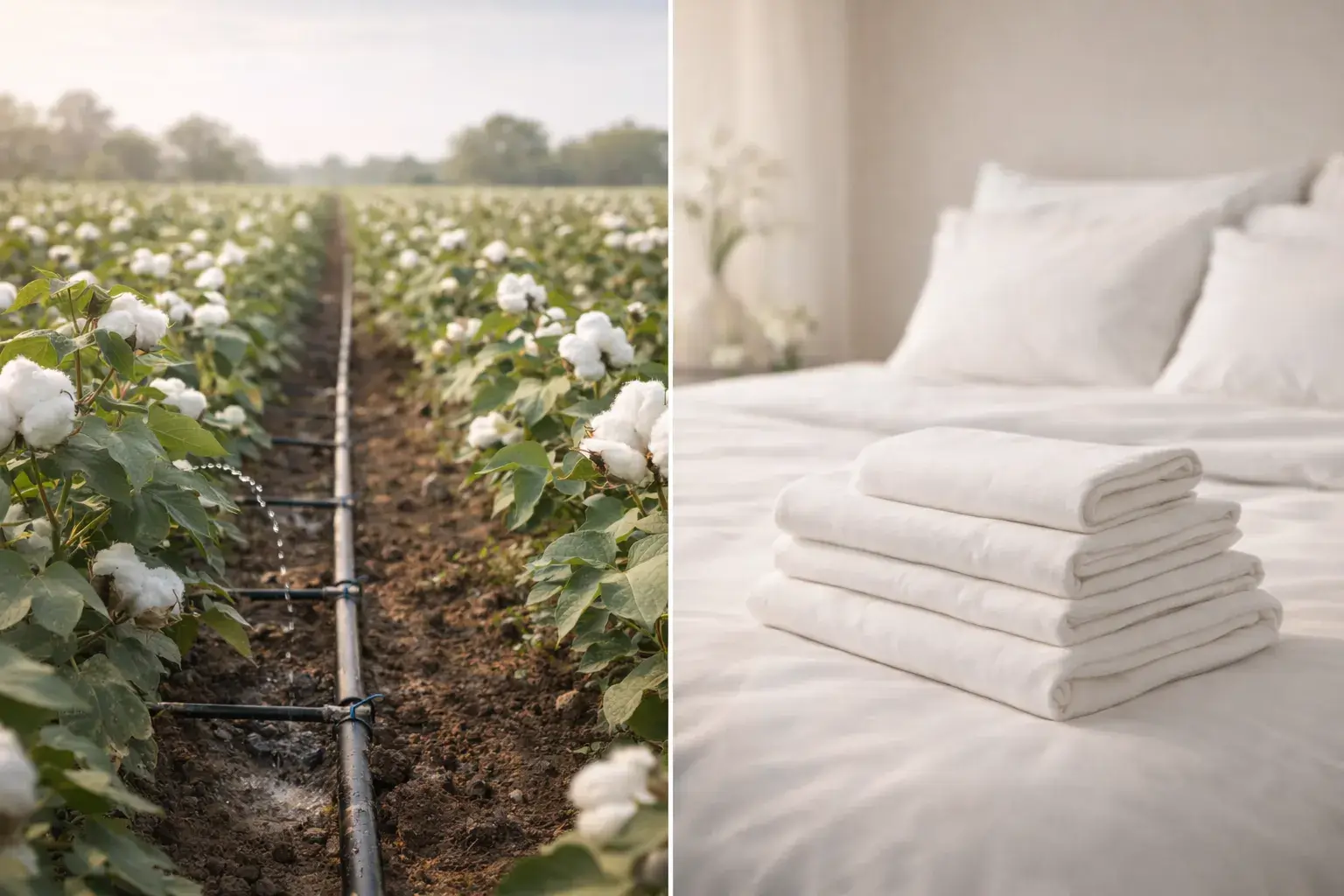
The Water Question Everyone Asks
Cotton’s water footprint varies dramatically by region and farming method. That 20,000 liters per kilogram figure comes from inefficient flood irrigation in water-scarce regions.
Modern drip irrigation reduces water use by 30-50%. Rain-fed cotton in suitable climates needs minimal supplemental irrigation. I’ve toured farms in Texas where water consumption dropped to 8,000 liters per kilogram through precision agriculture.
Context matters here. A hotel in a water-stressed region should prioritize cotton sourced from rain-fed or drip-irrigated farms. Properties with abundant water access can focus on other sustainability metrics.
The Pesticide Reality
Conventional cotton does use significant pesticides. The statistic is real: cotton accounts for 16% of global insecticide use despite covering only 2.4% of agricultural land.
But this picture has improved. Integrated Pest Management (IPM) reduces chemical applications. Bt cotton varieties—genetically modified to resist boll weevils—cut pesticide use by 37% in adopting regions.
Organic cotton eliminates synthetic pesticides entirely. But organic farming requires more land for equivalent yield. The tradeoff becomes: fewer chemicals but more land use. Neither option is perfectly "green."
Comparing Cotton to Alternatives
I analyze textile options through multiple lenses:
| Fiber Type | Water Use (L/kg) | Land Use | Chemical Use | Durability | Guest Preference |
|---|---|---|---|---|---|
| Conventional Cotton | 10,000-20,000 | Moderate | High | Good | Excellent |
| Organic Cotton | 2,000-8,000 | Higher | None | Good | Excellent |
| Hemp | 2,500 | Low | Minimal | Excellent | Moderate |
| Bamboo (rayon) | 2,500 | Low | Very High (processing) | Moderate | Good |
| Polyester | Low | Low | Petroleum-based | Excellent | Poor (comfort) |
| Linen (flax) | 6,500 | Low | Low | Excellent | Good |
Hemp deserves attention. It produces 250% more fiber per acre than cotton with 50% less water. But guest perception remains a challenge. Hemp textiles feel stiffer initially, though they soften with washing.
Bamboo marketing claims mislead buyers. Most "bamboo" textiles are rayon produced through chemical-intensive processing. The environmental benefit is minimal despite plant sustainability.
Polyester blends offer durability and cost savings. I use 60/40 cotton-poly blends for high-turnover properties. But guest surveys consistently show preference for 100% cotton on direct skin contact items.
Recycled Cotton: The Circular Option
Recycled cotton diverts textile waste from landfills. The process collects post-consumer or post-industrial cotton, shreds it into fibers, and re-spins it into new yarn.
Benefits are substantial:
- Saves 20,000 liters of water per kilogram
- Eliminates pesticide and fertilizer needs
- Reduces landfill waste
- Uses 90% less energy than virgin cotton
Drawbacks exist too. Recycled cotton fibers are shorter than virgin fibers. This limits thread count potential and reduces durability. I recommend recycled cotton for:
- Back-of-house linens
- Staff uniforms
- Lower-traffic guest rooms
- Properties emphasizing sustainability credentials
Blend recycled cotton with virgin fibers (30/70 ratio) to balance sustainability and performance.
Making Sustainable Choices That Work
Sustainability must align with operational reality. A few principles guide my recommendations:
1. Match cotton type to guest expectations
Luxury properties need premium cotton for brand alignment. Budget properties can use sustainable mid-range options.
2. Extend linen lifespan
The most sustainable textile is the one you don’t replace. Proper laundering protocols double useful life.
3. Source regionally when possible
Cotton from California to a West Coast hotel reduces transportation emissions significantly.
4. Demand transparency
Ask suppliers for water consumption data, pesticide use reports, and farming practice documentation.
5. Consider certification
GOTS (Global Organic Textile Standard), OEKO-TEX, and Better Cotton Initiative7 provide third-party verification.
I’ve seen properties achieve LEED certification through textile procurement alone. The key is documentation and continuous improvement, not perfection.
How Is Cotton Processed from Plant to Hotel Linen?
Understanding cotton processing helps us evaluate supplier quality and pricing. The journey from field to finished product involves multiple steps—each affecting final performance.
Cotton processing begins with mechanical harvesting using picker or stripper machines. Ginning separates fibers from seeds and debris. Clean fibers are carded, drawn, and spun into yarn with specific thread counts. Finally, yarn is woven or knitted into fabric, then finished through scouring, bleaching, and dyeing.
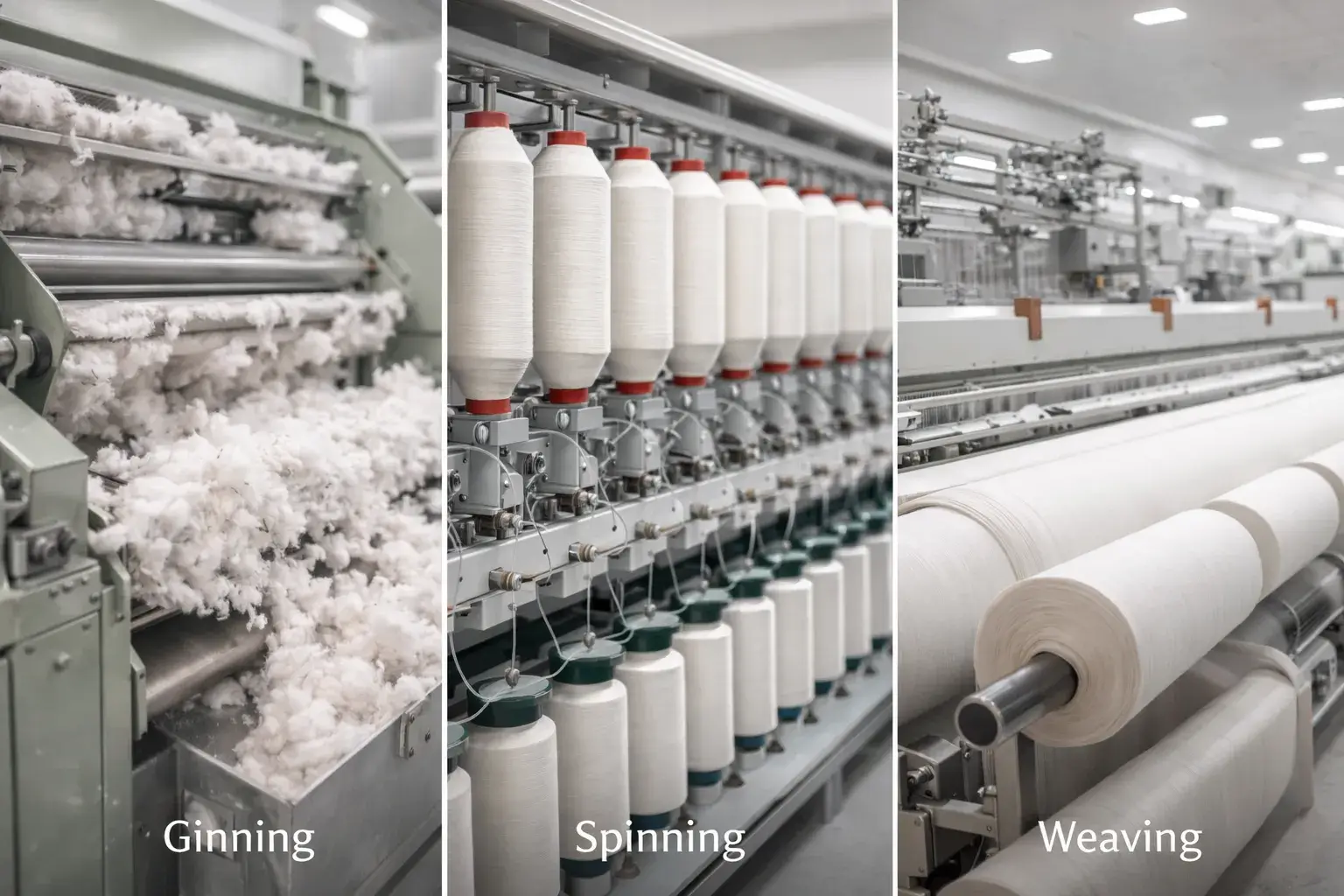
Stage One: Harvest and Ginning
Mechanical harvesters collect cotton bolls in late summer or fall. Two machine types exist:
Pickers use rotating spindles that extract cotton from bolls while leaving the plant intact. This method works best for high-quality cotton where gentle handling matters.
Strippers pull entire bolls from plants, collecting more debris but working faster. Budget cotton often uses stripper harvest.
The harvested cotton contains seeds, leaves, dirt, and boll fragments. Raw cotton goes directly to gins—facilities that clean and separate fibers.
Modern gins process 15-60 bales per hour. Saw-type gins use circular saws with small teeth to pull fibers through slots too narrow for seeds. This separates cotton from seeds mechanically. Roller gins, used for long-staple varieties, are gentler but slower.
After ginning, cotton emerges as "lint"—pure fiber compressed into 500-pound bales. These bales are the raw material suppliers purchase.
Stage Two: Spinning and Yarn Creation
Spinning transforms loose cotton fibers into strong, continuous yarn. This process involves several sub-steps:
Carding:
Machines with thousands of fine wires align fibers in the same direction and remove remaining impurities. Think of it as combing hair.
Drawing:
Multiple carded strands are combined and stretched to create uniform thickness. This blends fibers for consistency.
Roving:
Drawn cotton is slightly twisted and wound onto bobbins, preparing it for final spinning.
Spinning:
The roving is drawn out and twisted into finished yarn. The amount of twisting affects yarn strength and softness. More twists create stronger, rougher yarn. Fewer twists produce softer, less durable yarn.
Thread count originates here. A yarn’s ply (number of strands twisted together) determines the thread count potential of finished fabric.
Stage Three: Weaving or Knitting
Yarn becomes fabric through two main methods:
Weaving interlaces vertical (warp) and horizontal (weft) yarns at right angles. This creates stable, durable fabric for sheets and towels. Weave patterns include:
- Plain weave: Simple over-under pattern, durable
- Twill weave: Diagonal pattern, softer drape
- Satin weave: Long floats create smooth, lustrous surface
Knitting loops yarn together, creating stretchier fabric. T-shirts, some bathrobes, and jersey sheets use knit cotton.
I specify woven cotton for most hotel applications. Knit cotton works well for staff uniforms and casual robes but lacks the crisp presentation guests expect from bed linens.
Stage Four: Finishing Treatments
Raw fabric, called "greige goods," requires finishing to become usable hotel textiles:
Scouring:
Hot water and detergent remove natural waxes, oils, and sizing compounds. This increases absorbency dramatically.
Bleaching:
Hydrogen peroxide or chlorine bleaches create white fabric. This step boosts cellulose purity from 87-90% to 99%. Over-bleaching weakens fibers, so quality control matters here.
Mercerizing:
Treating cotton with caustic soda under tension increases luster, strength, and dye uptake. Mercerized cotton feels silkier and resists wrinkles better.
Dyeing:
Reactive dyes bond chemically with cellulose, creating colorfast fabric. Piece dyeing (entire fabric) provides uniform color. Yarn dyeing (before weaving) creates deeper, more colorfast results.
Softening:
Mechanical or chemical softeners improve hand feel. I prefer mechanical tumbling over chemical softeners, which can reduce absorbency.
Quality Control Checkpoints
Throughout processing, multiple quality checks occur:
- Fiber strength testing after ginning
- Yarn uniformity measurements during spinning
- Weave density verification during fabric production
- Colorfastness testing after dyeing
- Dimensional stability tests after finishing
Reputable suppliers provide test reports for each production run. I request these reports before large purchases. The data reveals actual quality versus marketing claims.
Why This Matters for Procurement
Understanding processing helps us ask better supplier questions:
- Where was the cotton ginned?
- What spinning method produced the yarn?
- Is the fabric mercerized?
- Which bleaching method was used?
- Can you provide tensile strength data?
These questions separate quality suppliers from middlemen reselling generic products. Processing choices directly impact linen durability, comfort, and appearance retention.
I once switched suppliers because fabric tests revealed their "Egyptian cotton" was actually mercerized upland cotton. The processing created a smooth feel that mimicked Egyptian cotton, but durability testing exposed the deception.
What Are Common Myths and Facts About Cotton?
Misinformation about cotton affects purchasing decisions. Let me clear up confusion I encounter repeatedly in hotel procurement.
Cotton myths include beliefs that all cotton is inherently sustainable, that thread count alone determines quality, and that cotton weakens when wet. In reality, conventional cotton has significant environmental impacts, thread count can be manipulated, and cotton actually becomes 30% stronger when wet8—a unique property among natural fibers.
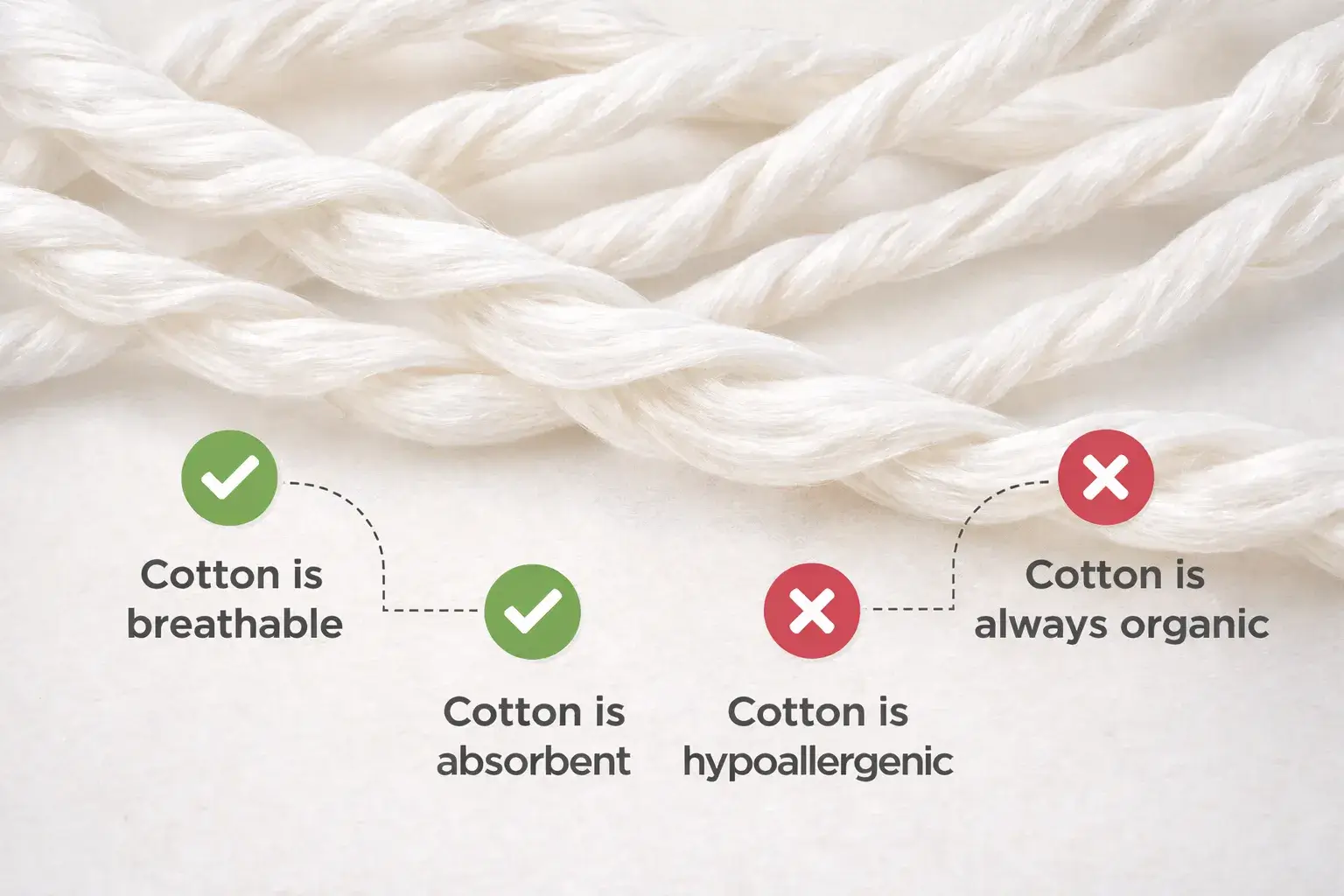
Myth 1: Higher Thread Count Always Means Better Quality
Thread count measures threads per square inch. Marketing teams love promoting 1000+ thread counts as luxury indicators. This oversimplifies quality.
The truth is more complex:
Thread count plateau:
Above 400-600 threads per square inch, additional threads provide diminishing returns. Ultra-high thread counts often use multi-ply yarns (3-4 thin strands twisted together), inflating the number without improving quality.
Fiber quality matters more:
400-count Egyptian cotton outperforms 800-count upland cotton. Long-staple fibers create smoother fabric regardless of thread count.
Weave affects feel:
A 300-count sateen weave feels softer than a 500-count plain weave due to the surface structure, not thread density.
I recommend focusing on fiber type and weave quality over thread count alone. For hotels, 300-400 thread count with quality long-staple cotton provides optimal guest satisfaction at reasonable cost.
Myth 2: Cotton Is Always Natural and Sustainable
Cotton grows naturally, yes. But modern cotton farming is industrial agriculture with environmental impacts.
The complete picture includes:
- High water requirements in arid growing regions
- Pesticide and fertilizer application in conventional farming
- Soil degradation from continuous monoculture
- Energy-intensive processing and transportation
Calling cotton "sustainable" requires qualification. Organic cotton, rain-fed cotton, and recycled cotton significantly improve sustainability metrics. But generic "100% cotton" claims don’t guarantee environmental friendliness.
I advise hotels pursuing sustainability credentials to demand specific certifications: GOTS for organic, Better Cotton Initiative for improved conventional farming, or OEKO-TEX for chemical safety.
Myth 3: Cotton Becomes Weak When Wet
This myth persists despite being completely backwards. Cotton actually gains strength when wet9—approximately 30% stronger than dry cotton.
The science is straightforward: Water molecules hydrogen-bond with cellulose molecules, temporarily strengthening the fiber structure. This unique property makes cotton ideal for towels and items requiring frequent washing.
Other natural fibers like wool and silk weaken when wet. This is why cotton dominates hotel laundry operations. We can use hot water, strong detergents, and mechanical action without excessive fiber degradation.
Myth 4: Egyptian Cotton Is a Specific Cotton Variety
"Egyptian cotton" is a geographic designation, not a botanical variety. It refers to Gossypium barbadense cotton grown in Egypt’s Nile Delta region.
The confusion arises because some suppliers market any long-staple cotton as "Egyptian-type" or use Egyptian imagery for cotton grown elsewhere. True Egyptian cotton must be grown in Egypt and certified by the Egyptian Cotton Association.
I’ve tested side-by-side: certified Egyptian cotton versus uncertified "Egyptian-style" cotton. The certified product consistently shows longer staple length and superior durability. The geographic designation matters due to Egypt’s unique soil and climate conditions.
Myth 5: Organic Cotton Feels Different
Many buyers believe organic cotton has a rougher texture or different hand feel than conventional cotton. This is false.
Organic certification refers only to farming practices—no synthetic pesticides, no GMO seeds, no chemical fertilizers. Processing organic and conventional cotton uses identical methods after harvest.
Fabric hand feel depends on staple length, yarn quality, thread count, and finishing treatments. An organic upland cotton and conventional upland cotton of equal grade feel identical.
Organic cotton’s benefits are environmental and health-related (reduced pesticide exposure for farmers, reduced chemical runoff), not tactile.
Myth 6: Cotton Doesn’t Require Ironing
Marketing sometimes claims modern cotton finishing eliminates ironing needs. This exaggerates reality.
While wrinkle-resistant chemical treatments exist, they reduce absorbency and can release formaldehyde during laundering. True 100% cotton wrinkles naturally due to hydrogen bonding between cellulose molecules.
Hotels have three options:
- Accept natural wrinkling as part of cotton’s authentic character
- Use cotton-polyester blends (60/40 or 50/50) that resist wrinkles
- Implement proper laundering protocols: extract at lower speeds, tumble dry with cool-down cycle, fold promptly
I find option three works best for maintaining 100% cotton’s benefits while minimizing wrinkles. Proper technique matters more than fabric treatments.
Fact: Cotton Has Been Used for Over 7,000 Years
This isn’t a myth—it’s a remarkable fact. Cotton cultivation dates to 6000 BC in Peru and 5000 BC in the Indus Valley. Humans have grown and processed cotton for seven millennia.
This longevity demonstrates cotton’s unmatched combination of comfort, durability, and versatility. No synthetic fiber has displaced cotton’s dominance in direct-skin-contact applications after decades of polymer innovation.
Fact: The Entire Cotton Plant Gets Used
Cotton farming generates minimal waste. The industry utilizes every plant component:
- Fibers: Textiles and paper products
- Seeds: Cooking oil, livestock feed, biodiesel
- Linters (short fibers): High-grade paper, explosives manufacturing
- Hulls: Animal feed, mulch, fuel
- Stalks: Compost, particle board, biofuel
This efficiency appeals to circular economy initiatives. Hotels purchasing cotton support a closed-loop agricultural system.
Conclusion
Cotton remains essential to hospitality because science and 7,000 years of human experience confirm its unmatched comfort, versatility, and durability for textiles that touch guest skin daily.
-
Learn about the scientific composition of cotton fibers and how cellulose content affects textile performance—essential knowledge for evaluating linen quality and durability in hotel operations. ↩
-
Discover how cotton plants produce thousands of fibers per seed and why this biological process creates the soft, absorbent material your guests experience in quality hotel linens. ↩
-
Verify authentic Egyptian cotton suppliers through the official certification body that uses DNA testing to prevent fraud—protect your investment by confirming supplier claims before purchasing premium linens. ↩
-
Understand the comprehensive environmental and social criteria required for organic cotton certification—use this standard to evaluate supplier sustainability claims and meet your hotel’s green procurement goals. ↩
-
Review peer-reviewed research on cotton’s water consumption across different growing regions—use this data to make informed decisions about sourcing cotton from water-efficient farms for your sustainability strategy. ↩
-
See documented evidence of how organic cotton reduces water use by up to 91% compared to conventional methods—justify the premium price of organic linens with quantifiable environmental benefits. ↩
-
Explore the world’s largest cotton sustainability program that helps conventional farmers improve practices—a practical certification option for hotels seeking responsibly-sourced cotton at more accessible price points than organic. ↩
-
Understand the science behind cotton’s unique property of becoming 20-30% stronger when wet—explains why cotton towels and linens withstand repeated industrial laundering better than other natural fibers. ↩
-
Read technical analysis comparing cotton’s wet strength performance against synthetic and regenerated fibers—helps justify cotton’s higher cost by demonstrating superior durability in high-humidity hotel environments like bathrooms and spas. ↩