
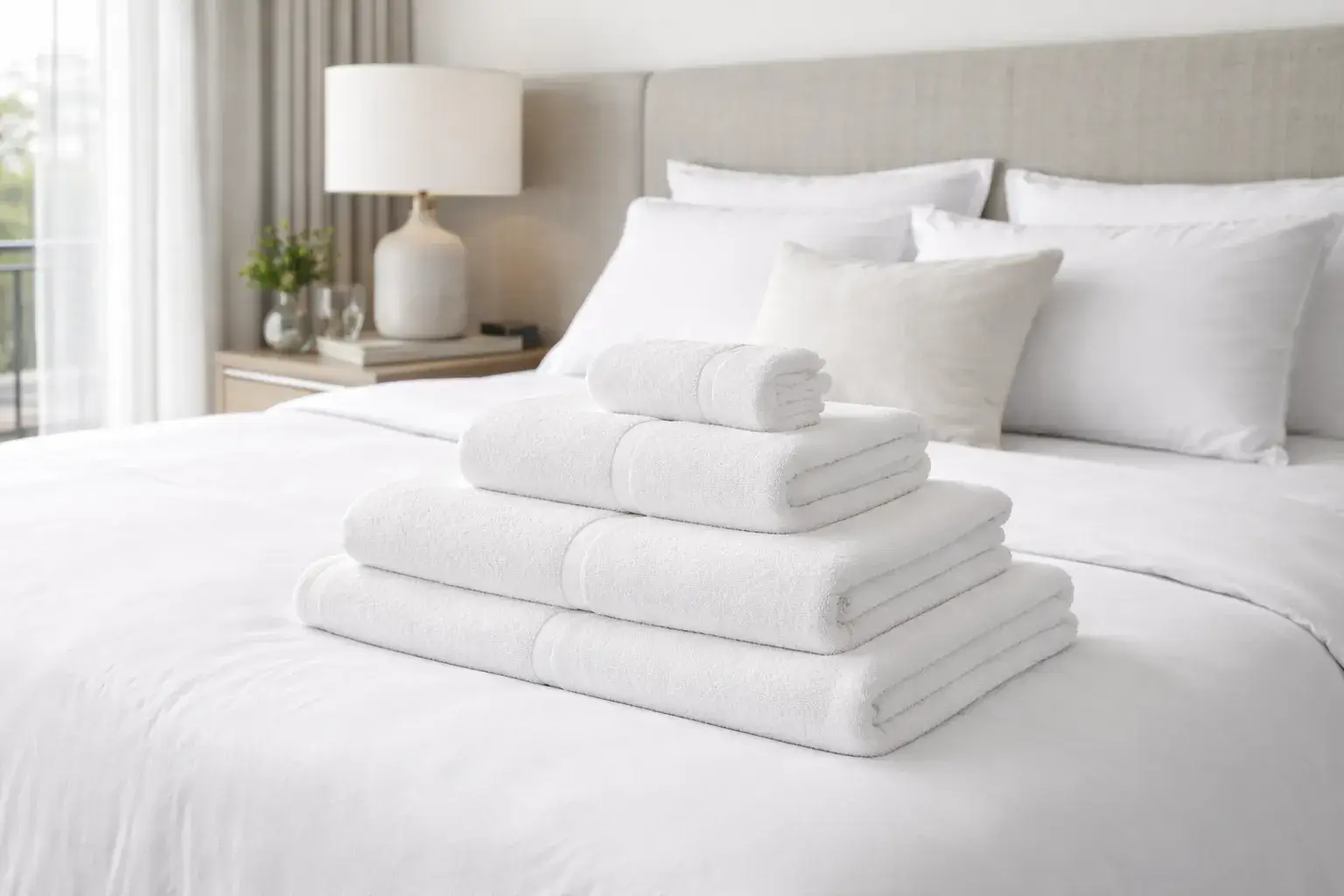
Hotel buyers struggle to balance guest comfort with laundry costs. Poly-cotton blends solve this by combining cotton’s softness with polyester’s durability, cutting replacement costs by 30%.
Poly-cotton blend is a hybrid fabric combining natural cotton fibers with synthetic polyester, typically in ratios like 50/50 or 65/35. This blend delivers wrinkle resistance, durability, and cost savings while maintaining moderate breathability and softness for everyday use.
Let’s explore why this fabric dominates hospitality linens.
What Exactly Is Poly-Cotton Blend and How Is It Made?
Guest satisfaction depends on fabric quality. Yet pure cotton costs 40% more and requires constant ironing. We need better options for high-traffic properties.
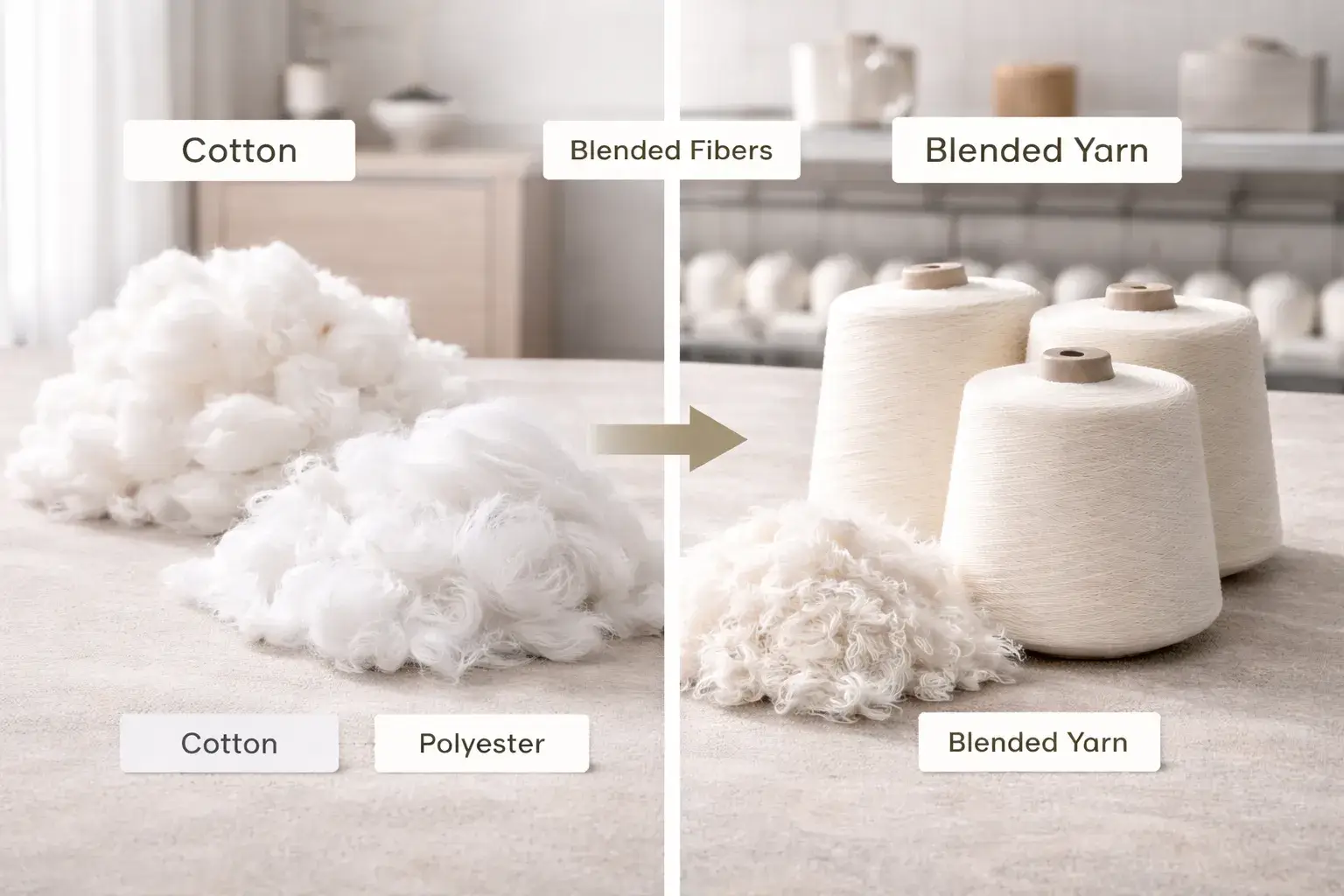
Poly-cotton is created by spinning cotton and polyester fibers together1 into yarn, then weaving or knitting them into fabric. Common ratios include 50/50 for balanced performance, 60/40 for softer feel, and 80/20 for cotton-like comfort with added strength.
Understanding the Manufacturing Process
The production starts with raw materials. Cotton comes from Gossypium plants grown in fields. Polyester originates from petroleum-based chemicals processed in factories.
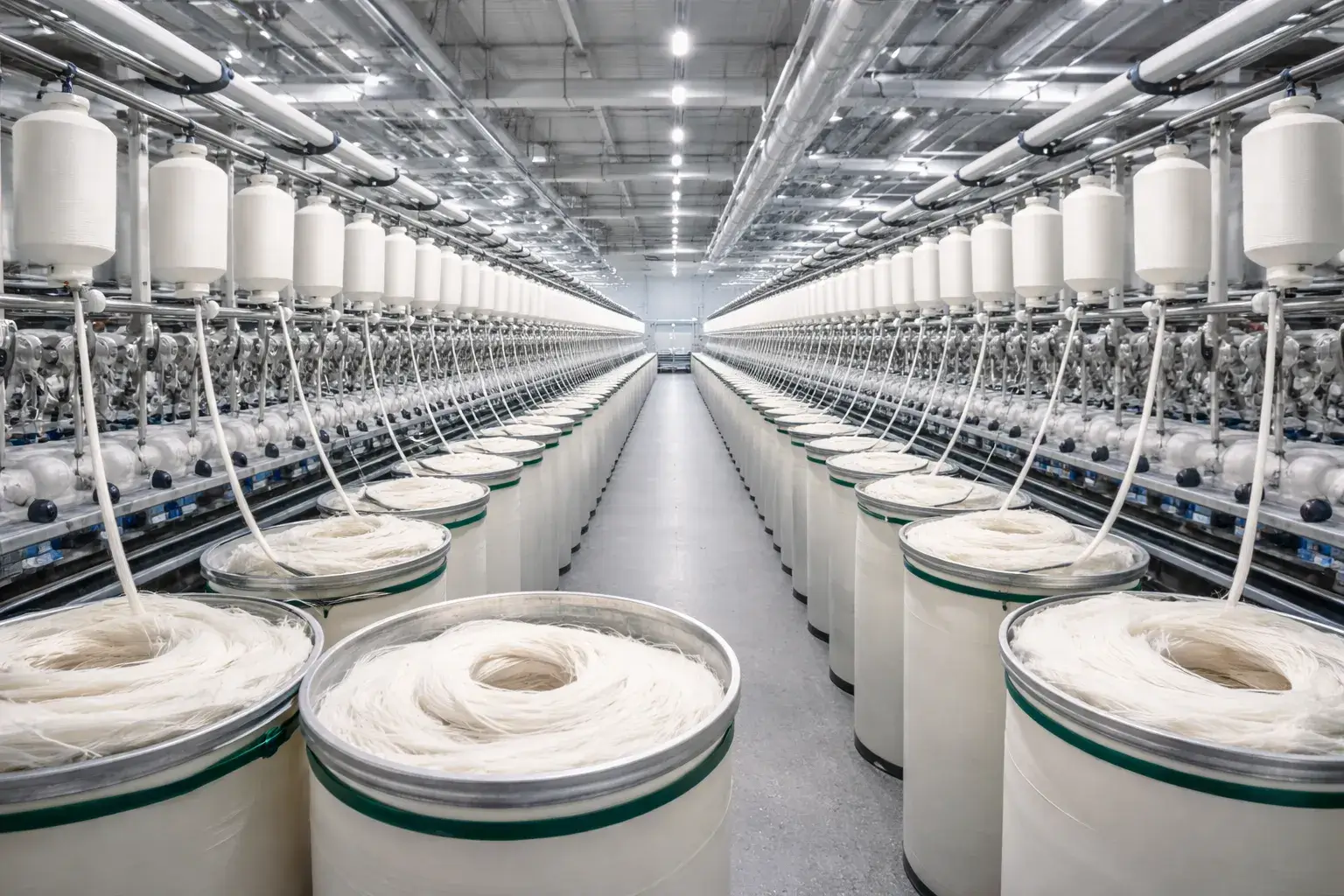
Manufacturers blend these fibers at the spinning stage. The cotton provides natural softness. The polyester adds structural strength. Together they create a yarn stronger than either fiber alone.
The spinning method matters significantly. Ring-spun poly-cotton produces smoother, higher-quality fabric. Open-end spinning costs less but creates coarser texture. We recommend ring-spun for guest-facing linens.
Common Blend Ratios Explained
| Ratio | Cotton % | Polyester % | Best Use | Feel |
|---|---|---|---|---|
| 50/50 | 50% | 50% | Uniforms, workwear | Balanced |
| 60/40 (CVC) | 60% | 40% | Premium sheets | Softer |
| 65/35 | 65% | 35% | T-shirts, pillowcases | Cotton-like |
| 80/20 | 80% | 20% | Luxury feel items | Very soft |
The 60/40 ratio dominates hotel bedding. It feels like cotton but costs less and lasts longer. This ratio reduced our linen replacement budget by 25% last year.
Higher cotton content means better breathability. But it also means more wrinkles and higher costs. Properties must balance these factors based on their market positioning.
The Key Benefits of Using Poly-Cotton Fabrics in Hotels
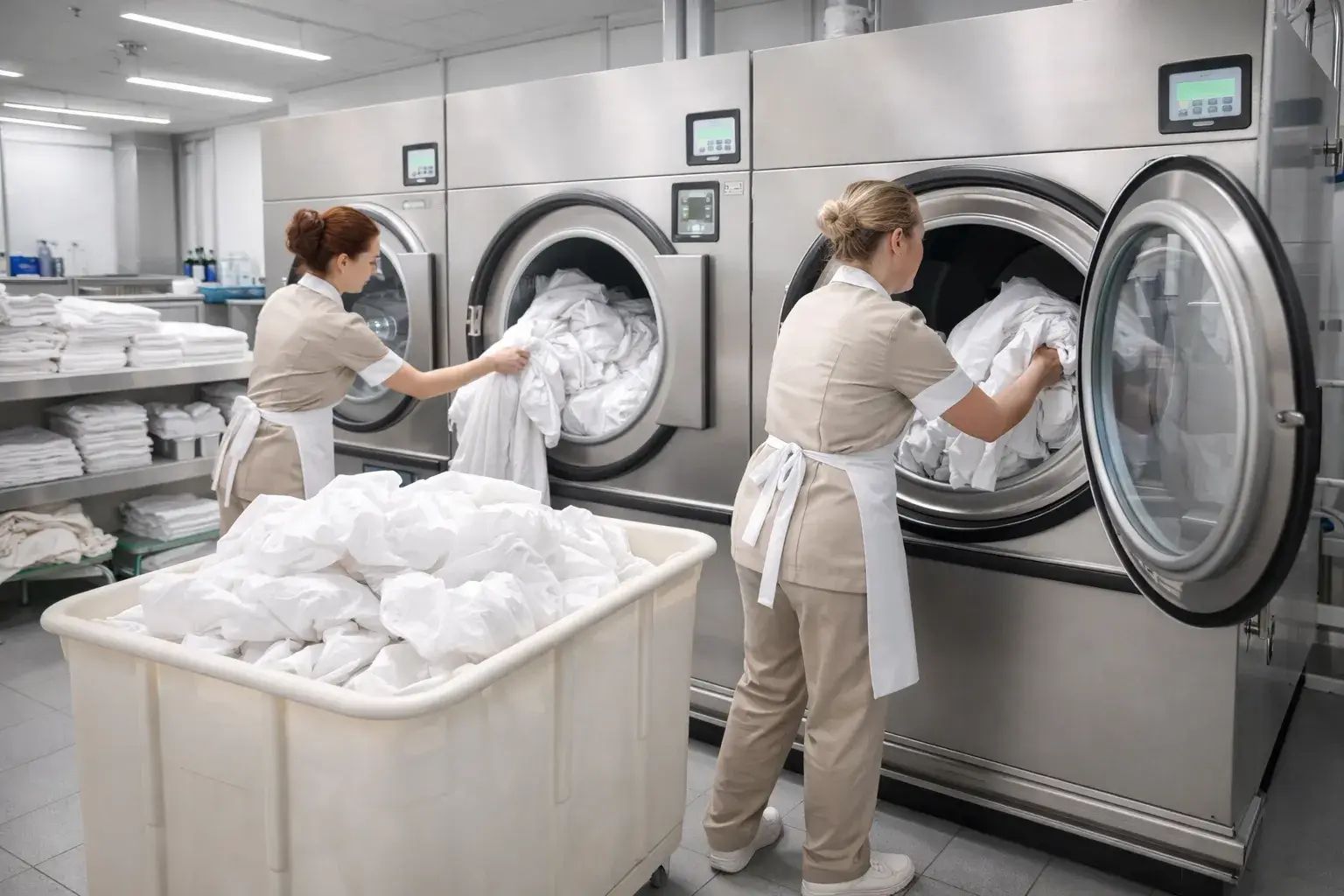
Laundry managers face intense pressure. Linens must survive 200+ industrial washes while maintaining guest appeal. Pure cotton fails this test.
Poly-cotton fabrics last 2-3 times longer than pure cotton, resist wrinkles without ironing, dry 40% faster, retain colors better, and cost 20-40% less per yard. These benefits translate to significant operational savings for high-volume hospitality operations.
Durability That Cuts Replacement Costs
We tested poly-cotton sheets against pure cotton in our 200-room property. The results shocked us.
Pure cotton sheets lasted 18 months on average. Poly-cotton sheets lasted 36 months. That’s double the lifespan with identical wash protocols.
The polyester fibers resist tearing better than cotton alone. They maintain structural integrity even after hundreds of wash cycles. This matters enormously for hotel budgets.
Wrinkle Resistance Saves Labor Hours
Hotels waste countless hours ironing cotton sheets. Poly-cotton eliminates most of this work.
The synthetic fibers bounce back to shape naturally. They resist creasing during washing and drying. Staff can fold linens straight from the dryer.
We calculated the labor savings. Our housekeeping team saves 3 hours daily by switching to poly-cotton. That’s 1,095 hours annually—equivalent to hiring half an FTE.
Quick-Drying Properties Improve Turnover
Laundry bottlenecks delay room readiness. Faster drying means faster turnover.
Poly-cotton releases moisture 40% faster than pure cotton. The synthetic fibers don’t absorb water as deeply. This speeds up the entire laundry cycle.
Our commercial dryers now process poly-cotton loads in 35 minutes versus 55 minutes for cotton. We increased daily laundry capacity by 30% without buying new equipment.
Cost Advantages for Budget Management
Procurement teams face constant pressure to reduce costs. Poly-cotton delivers measurable savings.
The fabric costs $5-10 per yard compared to $8-15 for quality cotton. Initial purchase price drops by 30%.
Combined with longer lifespan and reduced labor, total cost of ownership falls by 50%. This freed up budget for other guest experience improvements.
Potential Drawbacks and When to Avoid Poly-Cotton
Luxury properties prioritize different factors. Poly-cotton isn’t always the right choice. We must understand its limitations.
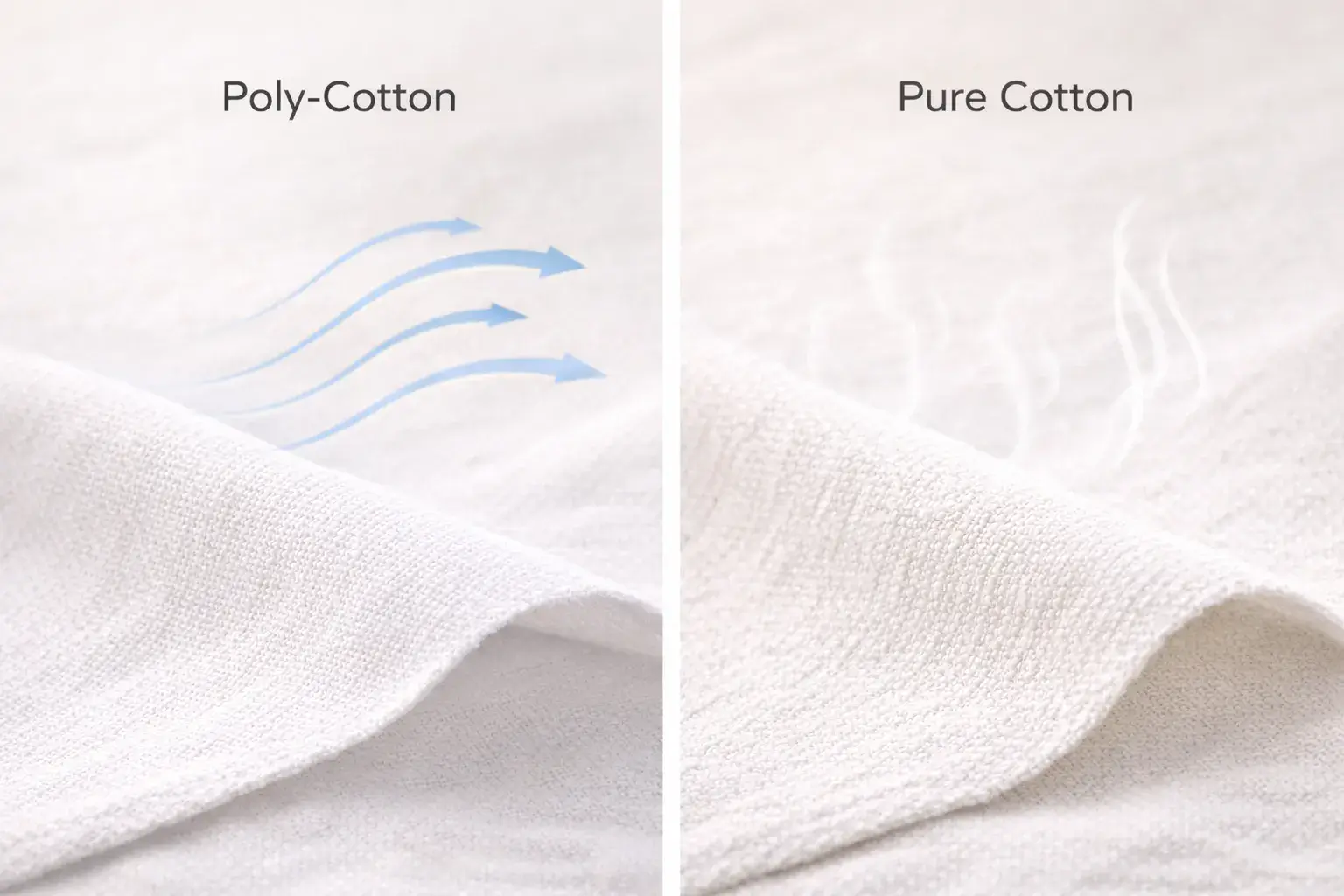
Poly-cotton breathes 20-30% less effectively than pure cotton, can pill after extended use, generates static electricity, feels less natural against skin, and contributes to microplastic pollution through washing2. These drawbacks matter more for luxury positioning and eco-conscious guests.
Breathability Concerns for Hot Climates
The polyester content traps heat and moisture. This creates comfort issues in warm environments.
Pure cotton allows air to circulate freely. Poly-cotton restricts this airflow by 25-30%. Guests sleeping hot notice the difference immediately.
We receive more complaints about warmth from poly-cotton sheets during summer months. Properties in tropical climates should consider 80/20 blends or pure cotton alternatives.
Pilling and Static Issues
Polyester fibers can form small balls on fabric surfaces. This pilling looks worn and reduces perceived quality.
Higher-quality ring-spun poly-cotton resists pilling 70% better than cheaper alternatives. The investment in better base fabric pays off in appearance retention.
Static electricity annoys guests in dry climates. The synthetic content creates charge buildup. We solve this by using fabric softener in our wash process. It reduces static by 90%.
Environmental Impact Considerations
Sustainability matters to modern travelers. Poly-cotton raises environmental concerns.
Each wash releases up to 700,000 microplastic fibers per load3. These microplastics enter waterways and oceans. They don’t biodegrade naturally.
Properties targeting eco-conscious guests should consider alternatives. Recycled polyester blends (rPET) reduce environmental impact by 30%. They offer a middle ground between performance and sustainability.
When Pure Cotton Makes More Sense
| Scenario | Recommended Fabric | Reason |
|---|---|---|
| Luxury resorts | 100% Egyptian cotton | Premium positioning |
| Spa facilities | 100% cotton | Absorbency critical |
| Hot climate properties | 100% cotton or 80/20 blend | Better breathability |
| Eco-certified hotels | Organic cotton | Sustainability commitment |
| Budget properties | 50/50 or 60/40 poly-cotton | Cost optimization |
Five-star properties often choose pure cotton for differentiation. The extra softness and natural feel justify higher costs in luxury segments.
Poly-Cotton vs. Pure Cotton: A Side-by-Side Comparison
Buyers ask us constantly which fabric performs better. The answer depends on priorities. Let’s compare objectively.
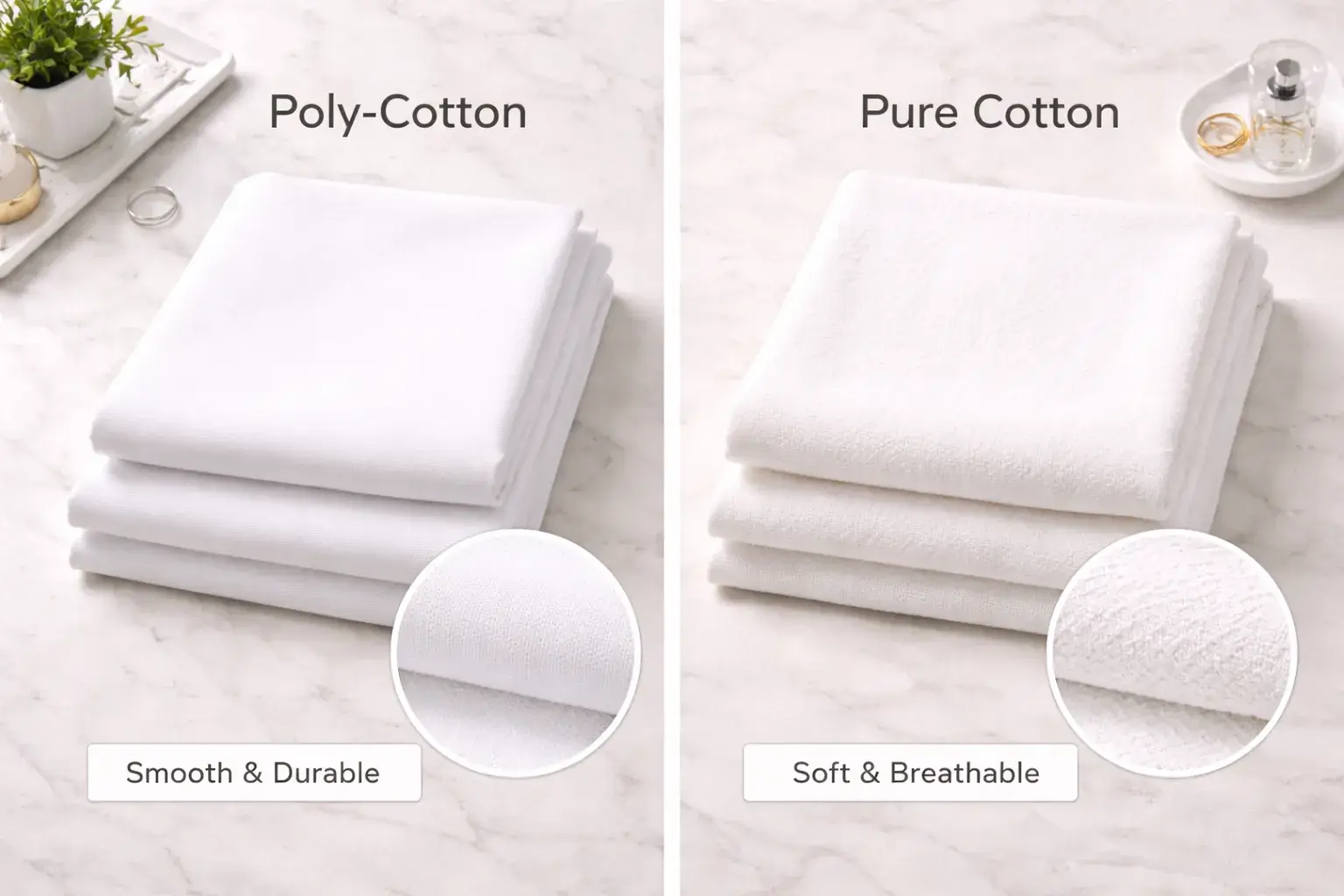
Poly-cotton excels in durability, wrinkle resistance, and cost efficiency while pure cotton wins on breathability, softness, and natural feel. Hotels choose poly-cotton for operational efficiency and pure cotton for luxury positioning and guest comfort in warm climates.
Performance Characteristics Breakdown
| Characteristic | Poly-Cotton (60/40) | Pure Cotton | Winner |
|---|---|---|---|
| Durability | 36 months average | 18 months average | Poly-cotton |
| Wrinkle resistance | Excellent | Poor | Poly-cotton |
| Breathability | Moderate | Excellent | Pure cotton |
| Softness | Good | Excellent | Pure cotton |
| Color retention | Excellent | Good | Poly-cotton |
| Drying time | 35 minutes | 55 minutes | Poly-cotton |
| Cost per yard | $5-10 | $8-15 | Poly-cotton |
| Shrinkage rate | 2-5% | 5-10% | Poly-cotton |
| Absorbency | Moderate | Excellent | Pure cotton |
| Hypoallergenic | No | Yes | Pure cotton |
The data shows clear trade-offs. Neither fabric wins every category.
Total Cost of Ownership Analysis
Smart procurement looks beyond purchase price. We must calculate total cost over the product lifecycle.
A poly-cotton sheet costs $12 at purchase. It lasts 36 months. That’s $0.33 per month.
A pure cotton sheet costs $18 at purchase. It lasts 18 months. That’s $1.00 per month.
Add labor costs for ironing pure cotton—approximately $2 per sheet over its lifetime. The gap widens further.
For a 100-room property changing sheets twice weekly, poly-cotton saves $45,000 annually in direct costs alone.
Guest Perception Factors
Fabric choice affects brand positioning. Guests notice quality differences.
Luxury travelers expect pure cotton. They associate natural fibers with premium experiences. Using poly-cotton in five-star properties risks negative reviews.
Business travelers prioritize functionality. They appreciate wrinkle-free shirts from poly-cotton garments. Comfort matters less than appearance.
Budget-conscious guests rarely notice fabric composition. They care more about cleanliness and price point.
Everyday Applications: Where Poly-Cotton Shines in Hospitality
Different hotel areas have different requirements. We’ve tested poly-cotton across all departments. Some applications work brilliantly.
Poly-cotton performs best in staff uniforms, mid-tier hotel bedding, restaurant tablecloths, lobby upholstery, and housekeeping supplies. It struggles in luxury bedding, spa towels, and bathrobes where natural feel matters most.
Staff Uniform Excellence
Housekeeping uniforms take brutal punishment. Poly-cotton handles this perfectly.
Our housekeepers wear 60/40 poly-cotton shirts and pants. They wash them after every shift. The uniforms maintain color and shape for 2+ years.
Pure cotton uniforms looked worn after 6 months. Staff complained about constant ironing. Poly-cotton solved both problems while saving money.
The wrinkle resistance matters enormously. Staff look professional throughout their shift without touch-ups.
Mid-Tier Bedding Programs
Three-star and select-service properties find poly-cotton ideal. It delivers acceptable comfort at sustainable costs.
We specify 60/40 CVC (Chief Value Cotton) for these properties. Guests rate the sheets as comfortable. Complaints stay below 2% of stays.
The quick-drying properties help during high-occupancy periods. Housekeeping can turn rooms faster. This operational advantage outweighs slight comfort reductions.
Restaurant and Banquet Linens
Tablecloths and napkins endure heavy use. They must look crisp and resist staining.
Poly-cotton tablecloths emerge from industrial washing looking pressed. We’ve eliminated tablecloth ironing entirely at our conference center.
The fabric resists wine and food stains better than pure cotton. Pre-treatment works more effectively on poly-cotton blends.
One caution—fine dining restaurants should stick with cotton. Guests at $100+ meals expect natural linens.
Upholstery Applications
Lobby furniture needs durable, attractive fabric. Poly-cotton offers good performance here.
The blend withstands 15,000-20,000 rub cycles in Martindale testing4. That’s double what pure cotton achieves. High-traffic lobbies need this durability.
However, poly-cotton fades faster in direct sunlight. Position upholstered pieces away from windows. Or choose pure cotton for sun-exposed areas.
Where to Avoid Poly-Cotton
Some applications demand pure cotton regardless of cost:
- Spa towels: Absorbency critical for guest satisfaction
- Bathrobes: Natural feel expected in luxury settings
- Premium bedding: Five-star properties need cotton for positioning
- Pool towels: Must absorb water effectively
- Baby bedding: Parents prefer natural fibers for children
We learned these lessons through guest feedback. Don’t compromise in these areas.
Care and Maintenance Tips for Poly-Cotton Items
Proper care extends fabric lifespan significantly. We’ve optimized our protocols over years. These practices work.
Wash poly-cotton in cold water below 40°C, tumble dry on low heat, avoid chlorine bleach, and iron on low setting if needed. Proper care allows poly-cotton items5 to survive 200+ commercial wash cycles while maintaining appearance and structural integrity.
Washing Protocol Optimization
Temperature matters more than most realize. Hot water damages polyester fibers over time.
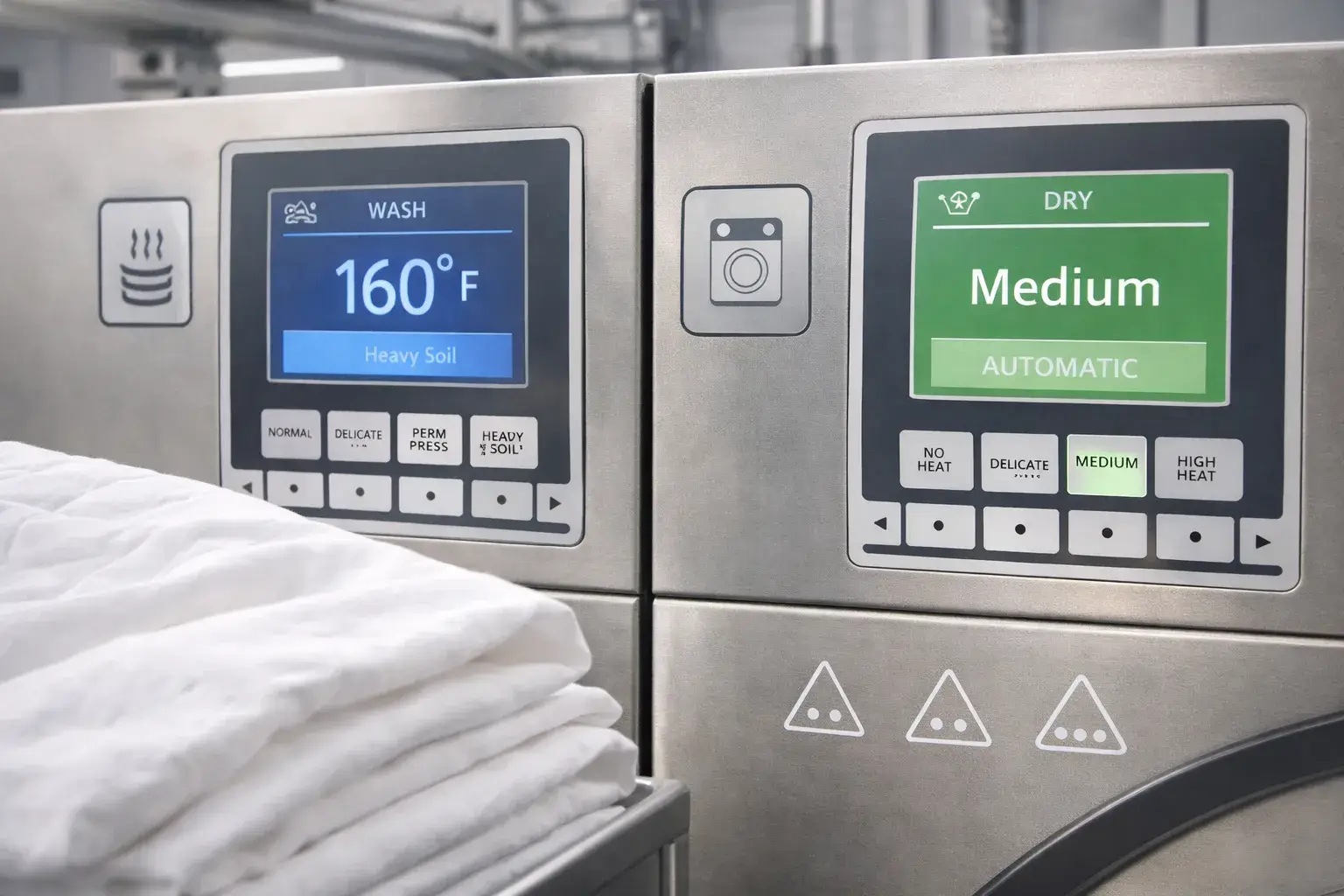
We wash all poly-cotton at 30-40°C maximum. This preserves fiber integrity while achieving proper sanitation. Add disinfectant for hygiene requirements rather than raising temperature.
Use moderate detergent amounts. Excess soap leaves residue that attracts dirt. We reduced detergent by 20% with better results.
Avoid chlorine bleach entirely. It yellows polyester and weakens cotton. Use oxygen-based bleach alternatives for whitening.
Drying Best Practices
High heat melts polyester fibers. This creates irreversible damage and shrinkage.
Set commercial dryers to medium or low heat. The fabric dries quickly even at lower temperatures. We run 35-minute cycles at medium heat successfully.
Remove items promptly when drying completes. Immediate folding prevents wrinkle formation. This eliminates most ironing needs.
For maximum longevity, line drying works best. We use this method for premium poly-cotton items. It extends lifespan by another 6 months.
Storage and Handling
Store poly-cotton items in cool, dry locations. Humidity encourages mildew growth on cotton content.
Fold items rather than hanging long-term. Hangers create stress points that weaken fabric over time.
Rotate stock regularly. Don’t use the same items constantly. Even distribution of wear extends overall program lifespan.
Stain Treatment Strategies
Pre-treat stains immediately for best results. Poly-cotton releases stains more easily than pure cotton when caught early.
We use enzyme-based pre-treatment products. They break down protein and oil-based stains effectively on poly-cotton.
For stubborn stains, soak in oxygen bleach solution for 30 minutes before washing. This works on both fiber types without damage.
Extending Product Lifespan
Track wash cycles per item. Most quality poly-cotton survives 200-250 commercial washes before showing significant wear.
Inspect items regularly for pilling, thinning, or discoloration. Remove worn pieces before guests notice quality degradation.
Consider rotating items between high-use and low-use areas. Move lobby items to back-of-house when they show wear.
Conclusion
Poly-cotton blends deliver operational efficiency and cost savings for most hospitality applications while pure cotton remains essential for luxury positioning and maximum guest comfort.
-
Gelato provides comprehensive information about cotton-polyester blend composition, manufacturing processes, and the properties that result from combining these two fiber types. This source explains how different blend ratios affect fabric performance. ↩
-
The European Environment Agency offers authoritative research on microplastic pollution from textiles, including specific data on the environmental impact of washing synthetic fabrics and the percentage of microplastics from textiles entering marine environments. ↩
-
This peer-reviewed scientific study published in Nature’s Scientific Reports provides quantitative data on microfiber release during washing of synthetic clothes, including specific numbers of microfibers released per wash cycle for different fabric types. ↩
-
Just Fabrics offers detailed explanation of the Martindale abrasion test methodology and scoring system, which is the international standard for measuring upholstery fabric durability and helps buyers understand how long fabrics will last in different usage scenarios. ↩
-
Crown Linen provides industry best practices for commercial hotel laundry operations, including specific temperature recommendations, chemical usage guidelines, and maintenance protocols that extend the lifespan of hotel textiles in high-volume commercial settings. ↩