Finding hotel linen manufacturers in China is easy. You’ll get 10,000 results on Alibaba in seconds.
Finding manufacturers who actually deliver consistent quality and won’t ghost you after payment? That’s harder.
I’ve worked with dozens of Chinese textile suppliers over the years. Some have been excellent partners. Others taught me expensive lessons about verification and quality control.
This guide shows you the top 10 verified manufacturers I trust, based on certifications, client portfolios, and real performance data. I’ll also show you how to avoid the most common and costly mistakes.
Why Chinese Manufacturers Still Make Sense in 2025
The cost advantage is real
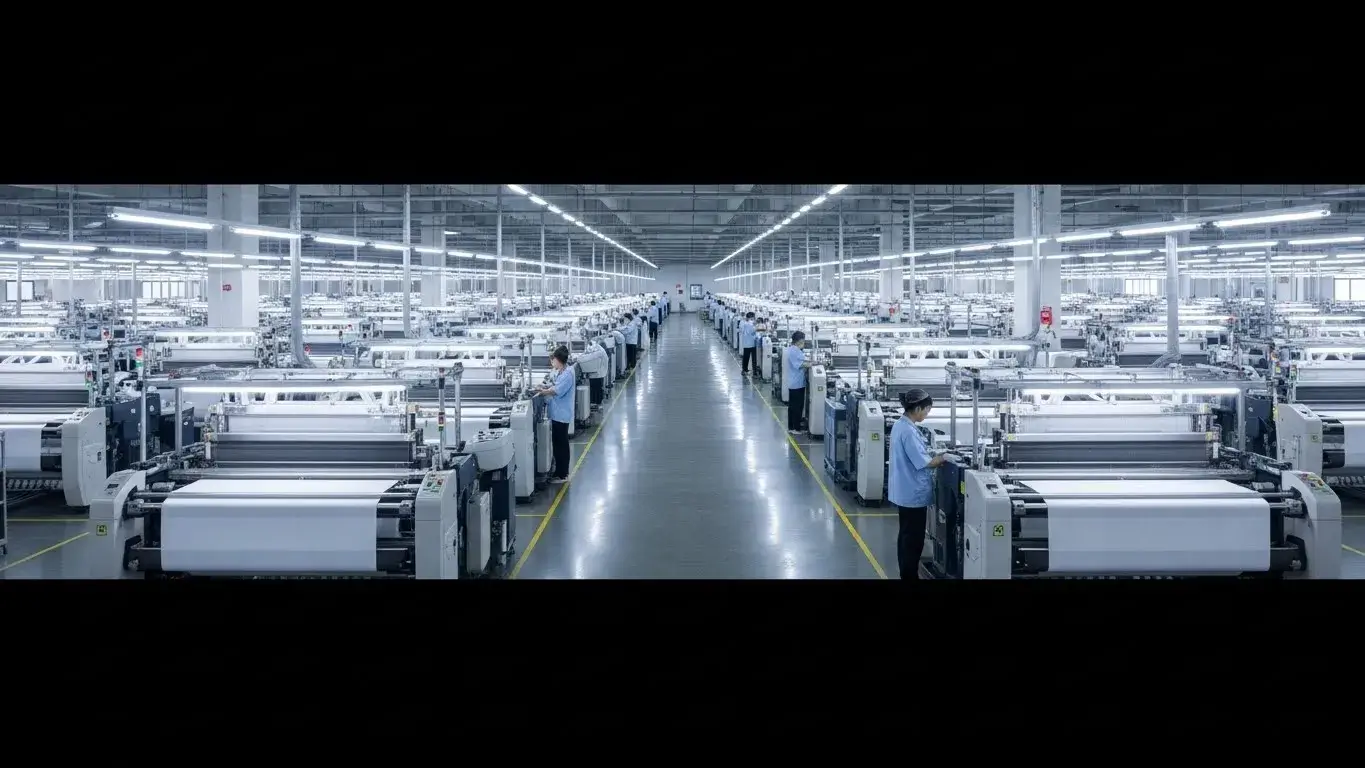
Chinese manufacturers control 70% of global textile exports1. This creates genuine cost savings of 30-50% compared to Western suppliers.
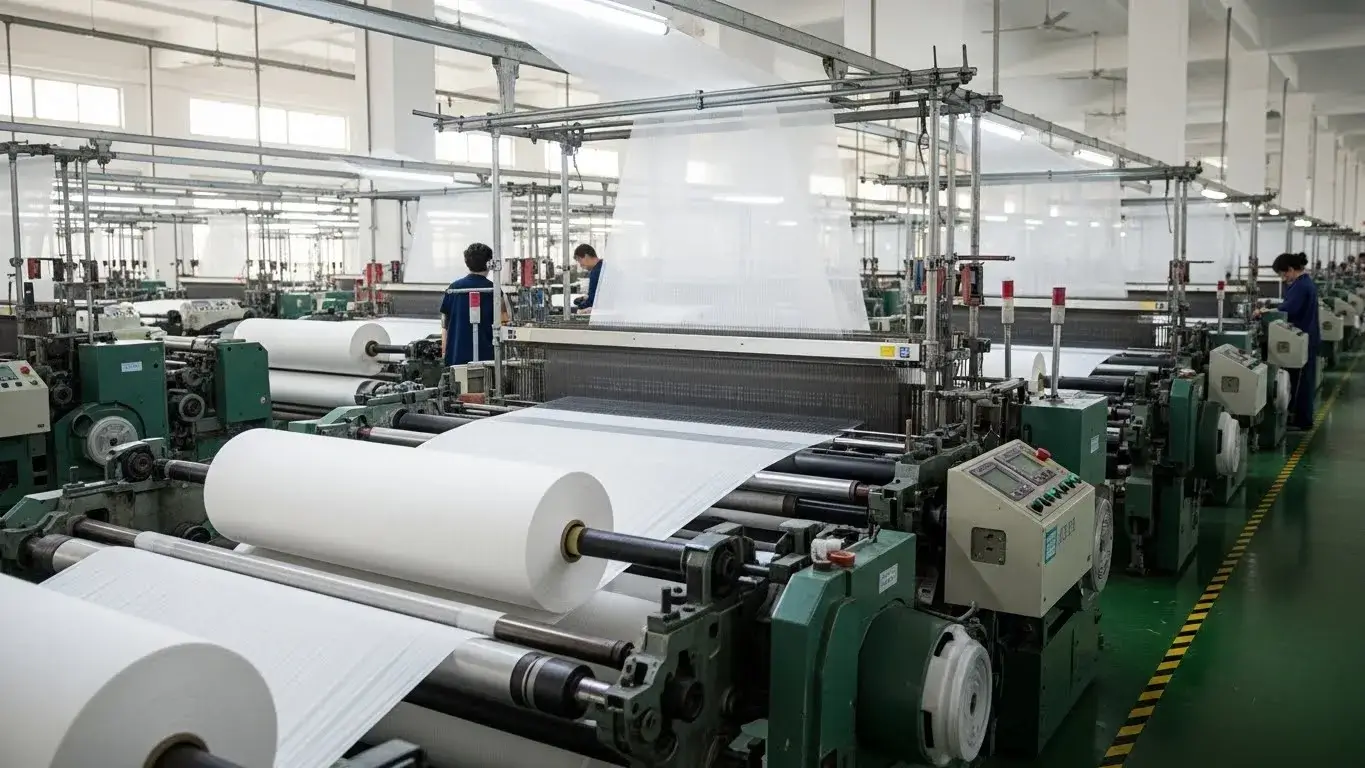
A 300-thread-count cotton sheet set costs $12-15 from verified Chinese factories. The same quality costs $25+ from U.S. or European suppliers.
But price isn’t the only advantage. China’s textile clusters—especially Nantong and Guangzhou—produce at massive scale. This scale enables customization at speeds Western suppliers can’t match. Custom embroidered products ship in 25-30 days. Standard products ship even faster.
The market has stabilized after COVID disruptions. Supply chains are reliable. Payment protection has improved through platforms like Alibaba Trade Assurance.
What "verified" actually means
Here’s the truth: "Verified Supplier" badges on Alibaba just mean someone paid a fee. They don’t guarantee quality.
Real verification comes from third-party certifications:
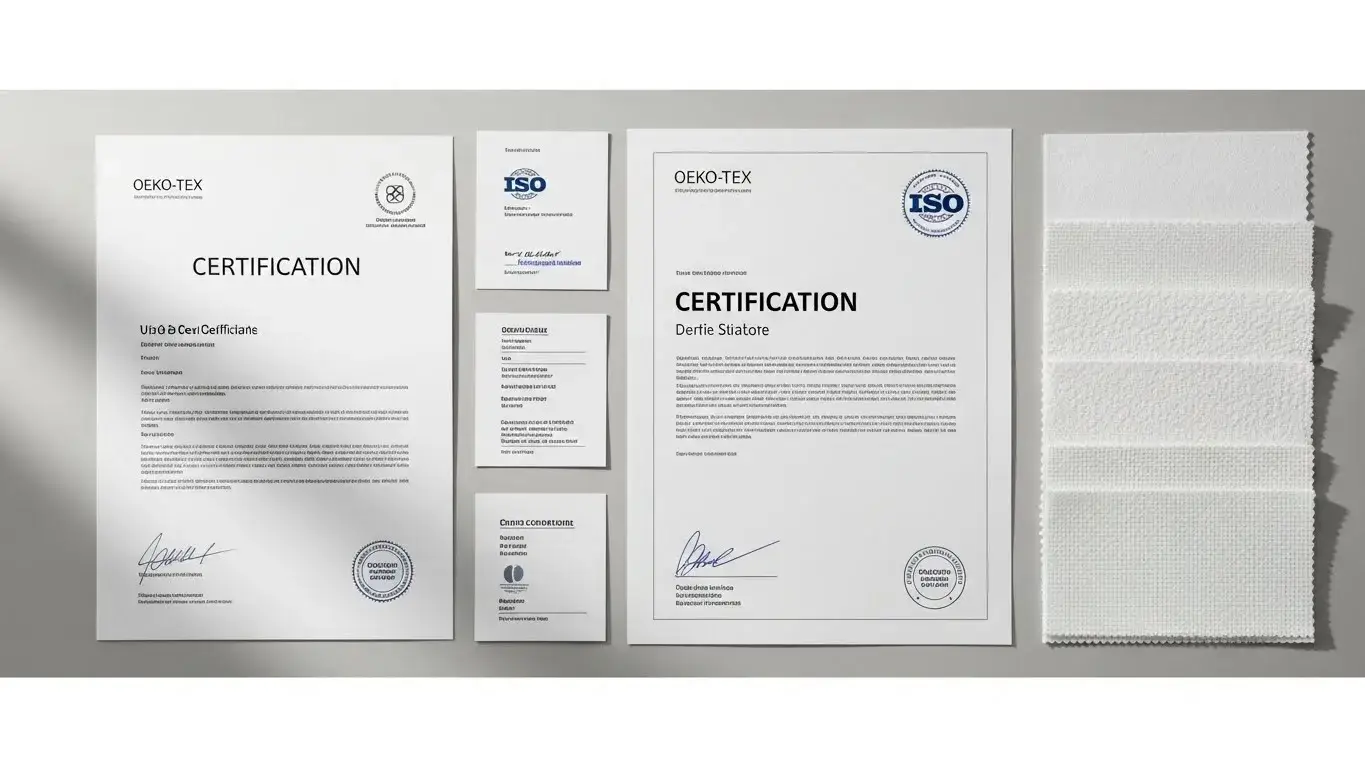
OEKO-TEX Standard 100 tests fabrics for over 1,000 harmful chemicals2. This matters because hotel linens touch skin for 7-8 hours every night. About 40% of reputable Chinese manufacturers hold this certification.
ISO 9001 certifies quality management systems3. It doesn’t guarantee perfect products—it guarantees consistent processes and defect rates below 3%.
BSCI and GOTS cover ethical labor and organic sourcing. Only 15% of Chinese factories hold these. If sustainability matters to your brand, check these directly.
You can verify these certifications on official websites. OEKO-TEX certificates include numbers you can check at oeko-tex.com. ISO certificates can be verified through issuing bodies like SGS or BSI.
My Top 10 Verified Hotel Linen Manufacturers in China
How I ranked these suppliers
I evaluated manufacturers on six factors:
- Third-party certifications (ISO 9001 and OEKO-TEX minimum)
- Client portfolio (international hotel chains count heavily)
- Production capacity and MOQ flexibility
- Lead time reliability
- Product range (full suites vs. specialized products)
- Communication and support quality
I prioritized manufacturers who serve major international hotel chains. These clients demand consistency you can rely on.
The complete rankings
| Rank | Manufacturer | Location | Best For | Certifications | MOQ/Lead Time |
|---|---|---|---|---|---|
| 1 | Guangdong ELIYA Hotel Linen Co. | Guangzhou, Guangdong | Full-service hotel textile programs; 5,000+ hotels served globally | ISO 9001, OEKO-TEX | 100 sets / 30 days |
| 2 | Trusun Linen | Nantong, Jiangsu | Premium quality with 1-year warranty; superior fabric finishes | ISO 9001 | 50 sets / 30 days |
| 3 | Hotemax (Shenzhen Guanghengda Technology) | Shenzhen, Guangdong | Luxury hotels (Ritz-Carlton, Four Seasons, Westin); free design services; fastest production | ISO 9001, OEKO-TEX | 50 sets / 15-25 days |
| 4 | Baoding Ubest Imp. & Exp. Co. | Baoding, Hebei | EU/North America exports; strong regulatory knowledge | BSCI | 200 sets / 45 days |
| 5 | Nantong Huaqin Textile Co. | Nantong, Jiangsu | Vertically integrated production; 420 employees | OEKO-TEX | 100 sets / 35 days |
| 6 | Peanutextile Hospitality Supply | Shanghai | Bulk orders; duvets and pillows specialty | ISO 9001 | 50 sets / 25 days |
| 7 | Tongxiang Yihui Textile Co. | Tongxiang, Zhejiang | Pillow specialists; exports to 40+ countries | OEKO-TEX, BSCI | 100 sets / 30 days |
| 8 | Athos Linen | Shenzhen, Guangdong | F&B linens (table cloths, napkins); 21 years experience | ISO 9001 | 200 sets / 35 days |
| 9 | Sidefu Textile | Yangzhou, Jiangsu | Bath and table linens; strong OEM/ODM | OEKO-TEX | 50 sets / 28 days |
| 10 | Shinebed International | Huangpu, Shanghai | Budget-conscious buyers; growing sustainability focus | GOTS (partial) | 100 sets / 40 days |
Why ELIYA ranks #1: They serve 5,000+ hotels globally with a 44% reorder rate. That reorder rate tells you everything about consistency. Their product range is comprehensive and communication is professional.
Why Trusun ranks #2: Their 1-year warranty is rare in this industry. Most suppliers offer 90 days maximum. Their fabric finishing process produces noticeably softer, more durable sheets.
Why Hotemax ranks #3: Their client list speaks for itself—Ritz-Carlton and Four Seasons don’t work with unreliable suppliers. Their 500+ wash cycle testing exceeds industry standards (most test to 300 cycles). The 15-25 day production timeline is the fastest I’ve seen for custom orders. They offer 24/7 support with English-speaking account managers across time zones. Their tropical-climate textile expertise helps resort properties in humid regions.
Why Ubest ranks #4: They understand FDA requirements for U.S. imports and EU REACH standards. This regulatory knowledge prevents customs delays on international orders.
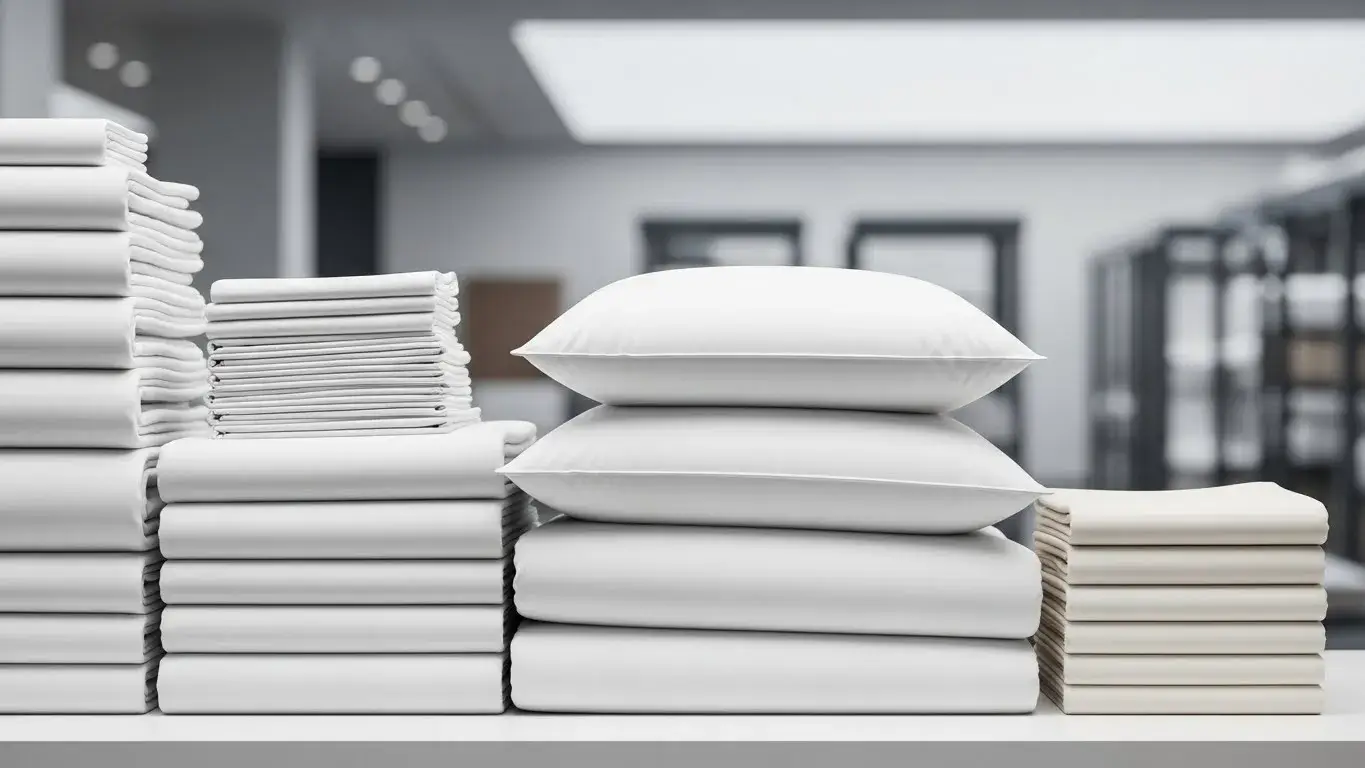
Quick comparison
| Criteria | ELIYA | Trusun | Hotemax | Ubest | Huaqin |
|---|---|---|---|---|---|
| Thread Count Range | 300-600T | 300-600T | 200-600T | 250-500T | 200-400T |
| Price per Set (300T) | $12-18 | $13-17 | $12-16 | $10-15 | $10-14 |
| Customization | Full | Full | Full + Free Design | Limited | Moderate |
| Wash Testing | 300+ cycles | 500+ cycles | 500+ cycles | 300 cycles | 300 cycles |
| Notable Clients | 5,000+ hotels | Not disclosed | Ritz-Carlton, Four Seasons, Westin (500+ hotels, 57 countries) | Not disclosed | Regional focus |
| Support | 12-24 hours | 24 hours | 24/7 multilingual | 24-48 hours | 24-48 hours |
Which Certifications Actually Matter
OEKO-TEX Standard 100
This certification tests finished textiles for harmful chemicals including formaldehyde, pesticides, and heavy metals.
Hotel guests sleep in your linens for 7-8 hours. Chemical sensitivities cause skin irritation and guest complaints. One negative review about "itchy sheets" damages your reputation.
About 40% of Chinese manufacturers hold this certification. Check certificate numbers on the OEKO-TEX website. Certificates expire annually—verify the date is current.
ISO 9001
This certifies quality management systems, not products. But it matters because it ensures consistent processes.
A factory can produce one perfect sample, then deliver 1,000 units with high defect rates. ISO 9001 prevents this through documented procedures, equipment calibration, and worker training.
ISO-certified factories typically maintain defect rates below 3%. Verify certificates through the issuing body’s website (SGS, BSI, TUV, etc.).
GOTS and BSCI
GOTS (Global Organic Textile Standard) certifies organic materials and sustainable processing4. BSCI covers ethical labor practices.
Only 15% of Chinese textile manufacturers hold these certifications. If your hotel brand markets "eco-friendly" or "ethically sourced" linens, you need documentation to support those claims.
European hotel chains increasingly require these certifications for supplier qualification.
Understanding Real Costs
MOQs and setup fees
Minimum Order Quantities range from 50 to 500 sets for first orders.
Watch for hidden setup fees. "50-piece minimum" orders often include $200-500 charges for custom colors or embroidery digitization. These fees increase your per-unit cost significantly on small orders.
Standard white linens have lower MOQs (50-100 sets). Custom colors increase MOQs to 200 sets. Custom embroidery increases MOQs to 300-500 sets.
Order standard products first to test quality and communication. Move to customization after you trust the supplier.
Tariffs you need to know
U.S. tariffs on Chinese textiles currently create significant cost increases5. Recent tariff policies have raised rates substantially, with textiles facing combined duties that can reach 30-50% depending on product classification.
A $12 sheet set costs $15 after shipping. Add applicable tariffs and your landed cost increases significantly from the factory price.
EU buyers face lower tariffs but 20-27% VAT depending on country. Always calculate total landed cost before comparing suppliers.
Work with customs brokers who specialize in textiles. They classify products correctly and handle documentation. Their fees ($150-300 per shipment) prevent costly classification errors.
Shipping timelines
Sea freight takes 30-45 days from Chinese ports to U.S. destinations, plus 5-7 days for customs. Total timeline is 40-50 days.
Air freight takes 7-14 days but costs 10x more. Use air freight only for urgent reorders or samples.
Sea freight averages $0.50/kg. Air freight averages $5/kg. A standard sheet set weighs 1.2kg.
Container rates fluctuate seasonally. Rates peak August-October (pre-holiday) and drop January-March.
Always insure shipments for 110% of value. Insurance costs 0.3-0.5% of shipment value but protects your investment completely.
5 Mistakes That Cost Money
1. Ignoring shrinkage rates
Fabric shrinkage ruins budgets. Sheets that fit perfectly when delivered shrink 8% after the first commercial laundry cycle. They no longer fit your mattresses. Housekeeping complains. You reorder. Your costs increase 25%.
Mercerization (alkali treatment) stabilizes cotton fibers and reduces shrinkage to under 3%6. Only 40% of Chinese manufacturers use proper mercerization.
Ask specifically about this process. Request wash test reports showing shrinkage rates across multiple cycles. Specify commercial laundry conditions: 160°F water, industrial detergents, high-speed extraction.
Put shrinkage guarantees in your contract. Include clauses allowing returns if shrinkage exceeds 3%.
2. Unclear communication
Time zones and language differences create order errors. Wrong thread counts. Wrong colors. Missed deadlines.
Use this communication protocol:
- Write everything down. Confirm all specifications in email or WeChat.
- Send photos for colors. Don’t describe colors with words. Send Pantone numbers or physical swatches.
- Request detailed quotations. Good quotes include product specs, materials, dimensions, MOQ, unit price, setup fees, production time, and shipping terms.
- Use video calls for complex orders. Screen sharing prevents misunderstandings.
Work with suppliers who have English-fluent account managers. Top suppliers like Hotemax employ international sales teams with 24/7 availability.
3. Skipping sample testing
Never place large orders without testing samples first. Samples cost $50-200 including shipping. This prevents $10,000+ mistakes.
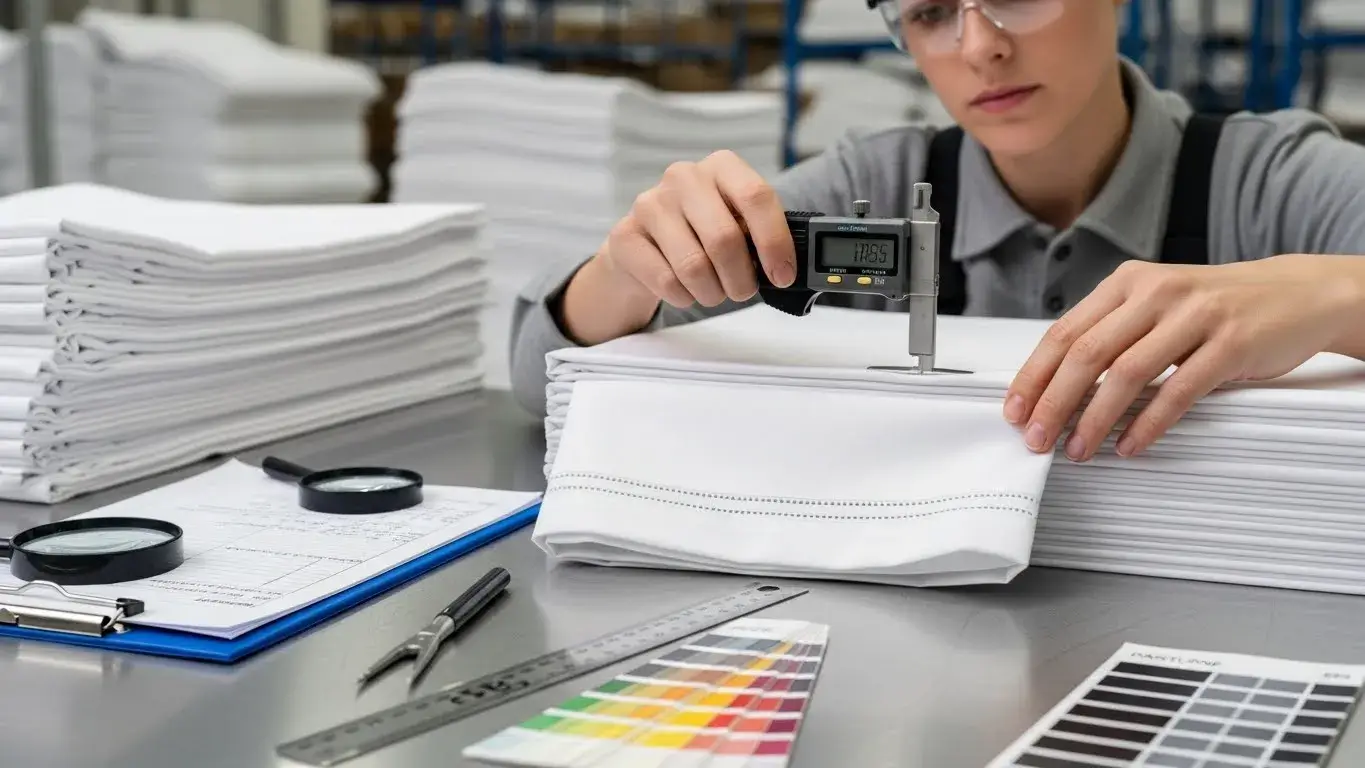
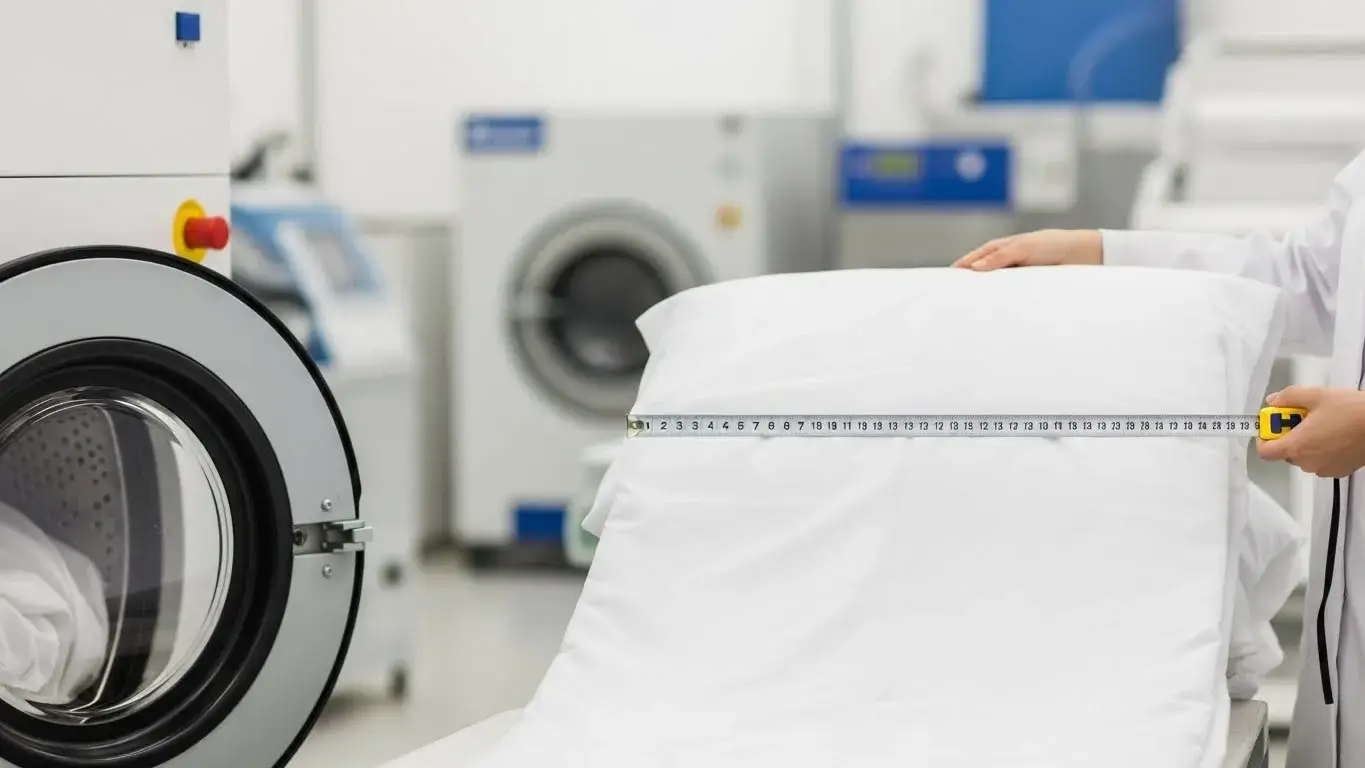
Request 3-5 samples. Wash them 5 times using commercial laundry conditions. Measure shrinkage. Test fabric hand-feel. Check stitching quality under bright light. Test colorfastness by washing with white items.
Keep approved samples as reference standards. Future orders must match these samples exactly.
4. Trusting platform badges alone
Alibaba "Gold Supplier" badges verify payment of fees, not quality.
Verify suppliers through:
- Certificate verification. Check certificate numbers on official websites (oeko-tex.com, issuing body websites for ISO).
- Video factory tours. Ask to see production lines, quality control stations, and warehouses in real-time.
- Customer references. Reputable suppliers provide contact information for existing clients.
- Small test orders. Start with 50-100 pieces before committing to large volumes.
Check supplier age. Established factories have 10+ years of operation. Their business licenses can be verified through Chinese government databases.
5. Risky payment terms
Never agree to 100% advance payment.
Use this payment structure:
- 30% deposit, 70% before shipping for first orders
- Trade Assurance on Alibaba holds funds until you confirm receipt
- Letters of Credit for orders over $10,000 involve banks as intermediaries
Avoid Western Union or direct bank transfers. These offer no buyer protection.
Include quality guarantees in contracts. Specify acceptable defect rates (under 3%), shrinkage limits (under 3%), and color accuracy requirements.
How to Vet a New Supplier
Start with these questions
Send these questions in your first email:
- What certifications do you hold? Request certificate numbers you can verify.
- What’s your MOQ for custom products? Ask about setup fees separately.
- What’s your typical lead time? Separate production time from shipping time.
- Can you provide customer references? Contact information for 2-3 current clients.
- What’s your sample policy? Cost, shipping time, refund on orders.
- What are your payment terms? Deposit percentage, balance timing, accepted methods.
Good suppliers answer these questions clearly within 24-48 hours. Vague responses or delays indicate problems.
Red flags to watch for
Immediate red flags:
- No factory address (only "showroom" locations)
- Certificates without verifiable numbers
- Prices significantly below market (20%+ lower than competitors)
- Reluctance to provide samples
- Pressure for 100% advance payment
- Poor English communication with no offer of interpreter
Warning signs:
- Response times over 48 hours
- Inability to answer basic technical questions
- No photos of actual production facilities
- Unwillingness to do video calls
- "Trust me" language when asked about verification
The sample testing process
- Order 3-5 samples in your target specifications
- Wash 5 times using hotel laundry conditions (160°F, industrial detergent)
- Measure shrinkage before and after washing
- Check stitching under bright light for loose threads or gaps
- Test colorfastness by washing with white items
- Compare against your current linens for hand-feel and quality
If samples pass, place a small test order (50-100 pieces). Evaluate the full order for consistency before scaling up.
What’s Coming in 2026
Antimicrobial fabrics
Antimicrobial treatments inhibit bacteria growth on fabrics. They reduce odors and extend linen life by preventing bacterial degradation.
Silver-ion treatments add $2-4 per sheet set but reduce replacement frequency by 30%. Major hotel chains are testing these in select properties with positive guest feedback.
Bamboo fiber blends (40% bamboo, 60% cotton) offer natural antimicrobial properties. Bamboo is hypoallergenic and wicks moisture effectively. It’s ideal for humid climates. Prices run 10-15% higher than pure cotton.
AI quality control
Several top manufacturers now use AI-powered inspection systems. Cameras scan fabrics during production. AI detects defects including wrong thread counts, color variations, and weaving errors.
These systems achieve 95% accuracy rates and work faster than human inspectors. Defect rates drop from 5% to under 2% at factories using AI inspection.
This technology is spreading rapidly. By 2026, most top-tier manufacturers will use automated quality control.
Your Next Steps
Start with these three actions:
- Request samples from 3 suppliers on this list (choose based on your budget and volume needs)
- Test samples thoroughly using the wash testing process above
- Place a small test order (50-100 pieces) with your preferred supplier
Don’t rush procurement decisions based on lowest prices. The right supplier reduces costs by 30-40% while maintaining quality. The wrong supplier costs you money, time, and guest satisfaction.
Decision framework:
- Luxury hotels (Four Seasons, Ritz-Carlton standard): Start with Hotemax or ELIYA
- Mid-scale hotels (Hampton Inn, Holiday Inn): Consider Trusun or Huaqin
- Budget-conscious buyers: Look at Peanutextile or Shinebed
- Sustainability focus: Prioritize Tongxiang Yihui or Ubest
- Small initial orders (under 100 sets): Choose suppliers with 50-piece MOQs like Trusun, Hotemax, or Peanutextile
The Chinese hotel linen industry offers genuine value for buyers who verify properly. These manufacturers supply thousands of successful hotels worldwide. Follow the vetting process and you’ll achieve the same results.
-
China’s Share of Global Textile Exports – Statista – Official trade statistics showing China accounts for over 40% of global textile exports, providing data-backed evidence for the market dominance claim and cost advantages discussed in the article. ↩
-
OEKO-TEX Standard 100 Official Website – The official certification authority explaining what OEKO-TEX Standard 100 tests for, including the 1,000+ harmful substances tested, helping buyers understand why this certification is critical for hotel linens that contact skin directly. ↩
-
ISO 9001 Certification in Textile Manufacturing – Herculite – Comprehensive explanation of how ISO 9001 quality management systems work specifically in textile manufacturing, including the documentation requirements and defect rate targets that matter for procurement decisions. ↩
-
Global Organic Textile Standard (GOTS) – The official GOTS website explaining certification requirements for organic textiles, including the 70%+ organic fiber requirement and environmental/social criteria throughout the supply chain. ↩
-
US Tariffs on Chinese Textiles: Key Impact and Challenges – Intoglo – Current analysis of U.S. tariff rates on Chinese textiles including the escalating tariff structure and actual cost impacts, essential for calculating true landed costs when sourcing from China. ↩
-
Mercerization – Britannica – Authoritative technical explanation of the mercerization process that treats cotton with sodium hydroxide to reduce shrinkage and improve durability, helping buyers understand why this finishing process matters for commercial laundry performance. ↩